The order a Mars Hill wall repair actually follows
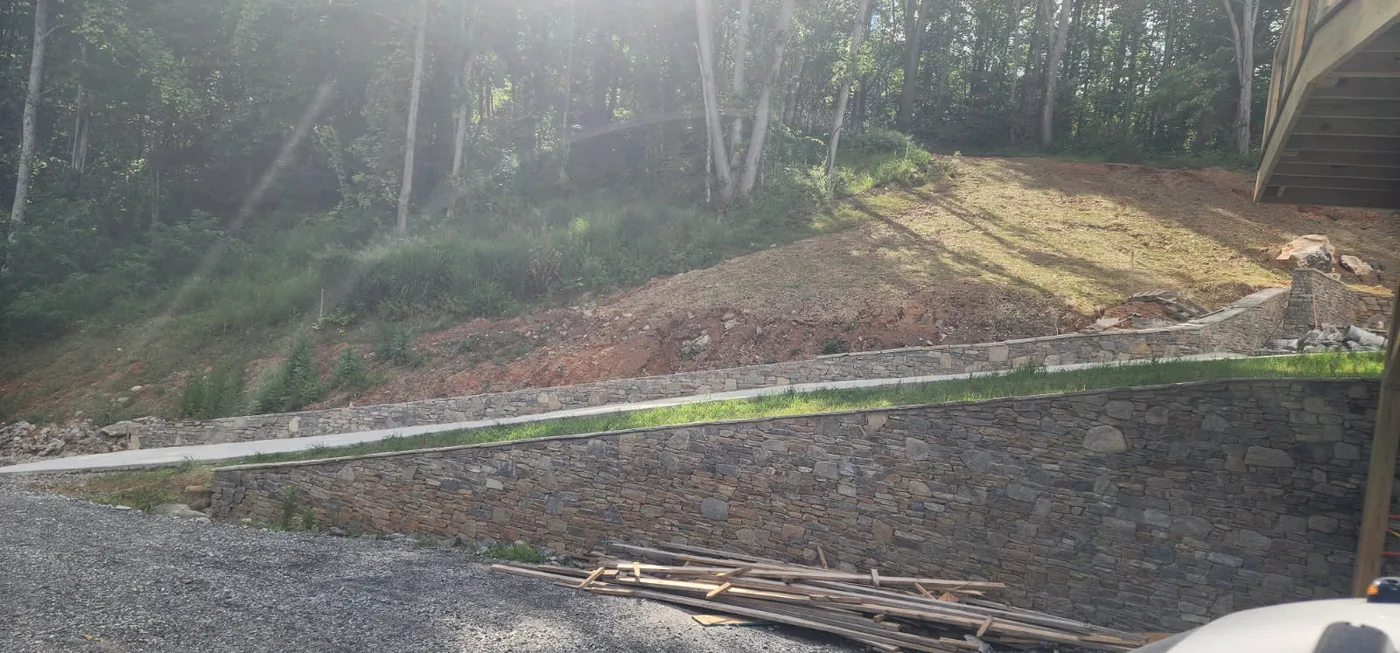
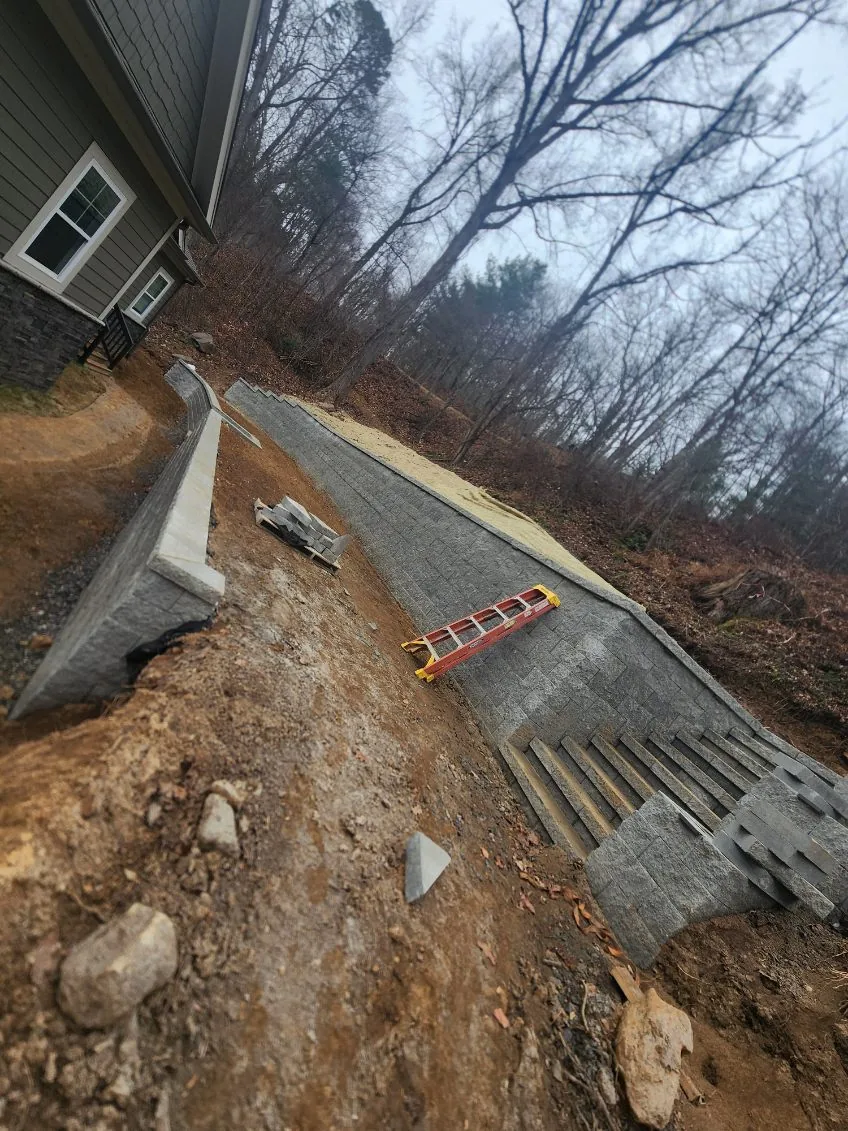
Nobody starts with the wall. On a Madison County slope, the repair sequence begins uphill of the failure and works down: first the water source, then the wall's footing and base, then the wall face, then the finish. A crew that opens with the face is selling cosmetics. A typical Mars Hill job moves like this: day one, drain the site and expose the wall base to see whether the footing exists and how deep it sits. Days two through four, rebuild or re-seat the base course and reset any wall that has rotated. Day five, install the drainage layer and backfill in lifts. Day six, cap, grade, and seed. Small crack-and-repoint work compresses into a single day; a full tear-out on a tall wall with no footing can stretch past a week.
That order matters more here than in flat country. Mars Hill sits in a bowl of steep lots, and the soil behind almost every wall on those lots is a mix of residual clay and old fill. Both shed water poorly. The wall is usually a symptom, and the slope behind it is the cause.
Madison County's terrain makes this sequence non-negotiable. The county seat sits in a valley where residential lots climb at grades that would be considered unbuildable in the Piedmont. Drive through Mars Hill, Mars Hill College area, or the roads feeding off Highway 213, and you'll see retaining walls doing structural work that flatland walls never face. When one fails, the water that caused it is still coming. Skipping straight to the wall face is how a $2,000 repair becomes a $9,000 rebuild.
What each kind of repair costs in Madison County
Ranges below reflect the working table for the county — the full line-item version lives in the Madison County cost breakdown, and the general repair scope is covered in our retaining wall repair guide. Treat anything under these bands as a bid that is missing drainage, hauling, or engineering.
| Scope of work | Typical range | Time on site |
|---|---|---|
| Repoint, crack repair, cap replacement | $1,800–$4,500 | 1–2 days |
| Drainage correction behind an existing wall | $2,500–$6,500 | 2–4 days |
| Rebuild one section, reset base, new footing | $4,000–$9,000 | 3–5 days |
| Full wall replacement, steep lot | $8,000–$12,000+ | 5–10 days |
| Engineering review, permits, haul-off | $500–$3,000 | Parallel |
Height is the single biggest mover. Walls above four feet on a Mars Hill slope tend to require design work, and the state threshold for licensed general contracting is set by project value, not wall height — check the current rules at the NC Licensing Board for General Contractors before you sign anything.
Access is the second cost driver. A wall at the back of a level lot is straightforward. A wall behind a house on a switchback driveway off Laurel Valley Road or near the Mars Hill exit, where a mini-excavator can barely fit and every bucket of gravel has to be carried by hand, adds days. Haul-off of failed material costs more here too because the nearest approved dump sites require a drive down the mountain. None of that shows up in a per-square-foot price, which is why a written scope beats a phone quote every time.
Water, clay, and why these walls keep failing
Madison County has a long federal disaster record tied to storms and flooding — 21 declared events over 1978-2026 — and that record shows up as hydrostatic pressure behind older walls. A saturated clay backfill can roughly double the load a wall was built for. Building codes treat drainage and backfill as structural requirements, not optional details, for exactly this reason; the state's code resources sit at the NC Building Code Council.
The Mars Hill version of this: walls built with no gravel behind them, no weep points, and no footing. They hold for a decade or two, then rotate outward after a wet spring. If a wall is leaning more than an inch or two off plumb, drainage correction alone will not save it. If you're not sure whether your wall needs repair or replacement, the crew vetting process is spelled out in our Mars Hill retaining wall contractor guide.
There's a specific pattern here worth knowing. Many walls around Mars Hill were built during the same development pushes, using native clay as backfill because it was on site and free. That clay holds water like a sponge through the wet months and shrinks hard in July. The wall gets a seasonal cycle of pressure and settling that no timber, block, or dry-stack stone was designed to absorb indefinitely. You'll see it most often on walls retaining a driveway cut, where the uphill side is graded to shed toward the wall rather than around it, and where a downspout or a spring seep feeds the same patch of ground for years.
Permits, safety, and what to verify before work starts
Two things routinely trip up Madison County homeowners. First, retaining walls above a certain height generally need a permit and often stamped design, and the height test is measured, not eyeballed — take a real measurement before getting quotes. Second, any crew doing excavation on a slope should be able to describe its shoring and its utility-locate process without prompting. Call 811 before digging; that step is not optional and it is free.
For anything involving a septic line or a well line crossing behind the wall, plumbing-side permitting rules apply — the NC State Board of Examiners of Plumbing, Heating and Fire Sprinkler Contractors handles those licenses. Ask any bidder for proof of general liability insurance and, where the job crosses the licensing value threshold, a license number you can verify.
On a slope, the safety question is not abstract. Excavation behind a failing wall can trigger the collapse it was meant to fix, and crews working in a Mars Hill backyard are often working above a neighbor's property line, a driveway, or a structure. A competent bidder will walk the site, note where the wall drains, and talk about how the excavation will be supported before any dirt moves. If the conversation never touches those points, that is your signal.
A realistic repair timeline from first call to finished wall
Week one: inspection and a scope that separates water from structure. Expect a written description of what will be drained, what will be footed, and what will be faced — not a single number with no breakdown. Week two: engineering if the wall is tall or the slope is steep, plus any permit filing. Week three or four: mobilization and the actual build. Materials lead time matters more than most homeowners expect; block and stone are usually available, but engineered drainage panels and geogrid can take a few days.
If a bidder offers to start tomorrow with no inspection and no drainage line item, that is not speed — it is a shortcut you will pay for in three years. The honest answer to "how long" is: one to two days for cosmetic repair, three to six days for a drainage-and-reset job, and one to two weeks end-to-end once you include permits and scheduling.
Season plays a real role in Madison County. Late fall and winter ground here stays wet, and a crew cannot compact backfill properly in saturated clay, so repairs scheduled in a wet stretch may sit until the site drains. Spring and early summer are the busiest window because that is when homeowners discover the lean and the cracks after the ground thaws. Booking an inspection as soon as you notice movement is faster than waiting for the schedule to fill.