The four-foot line runs the whole job
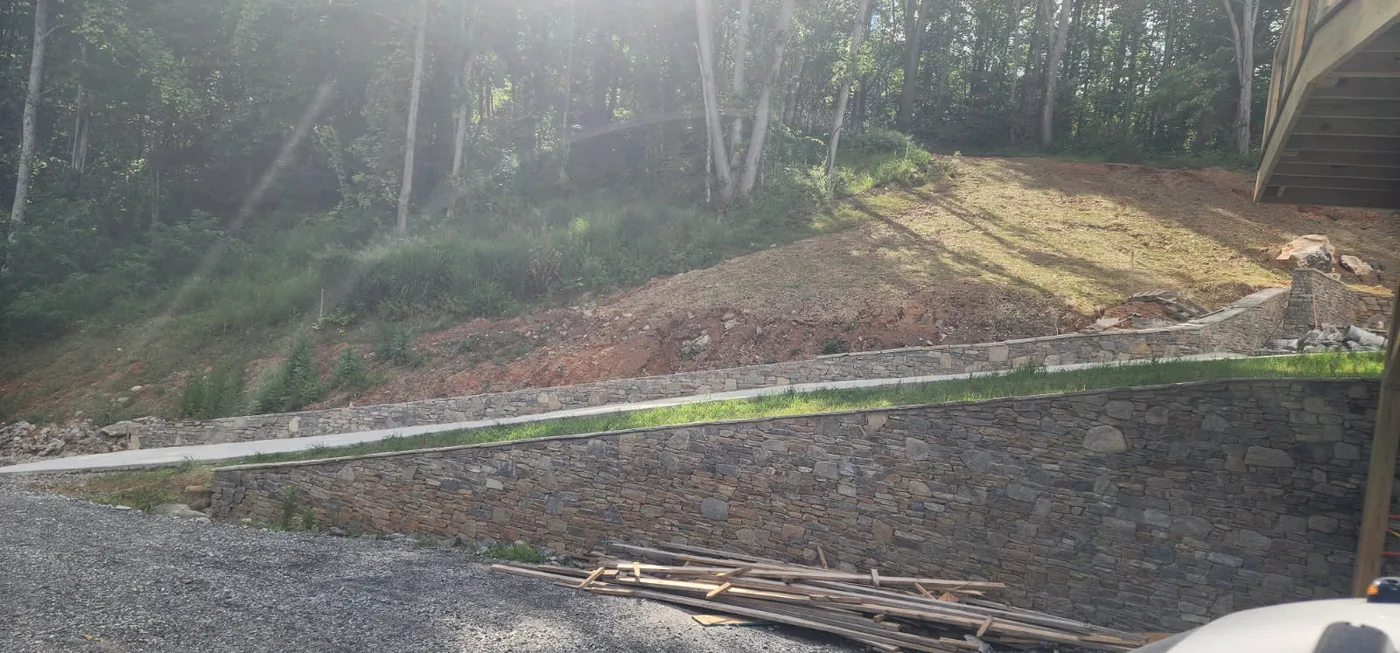
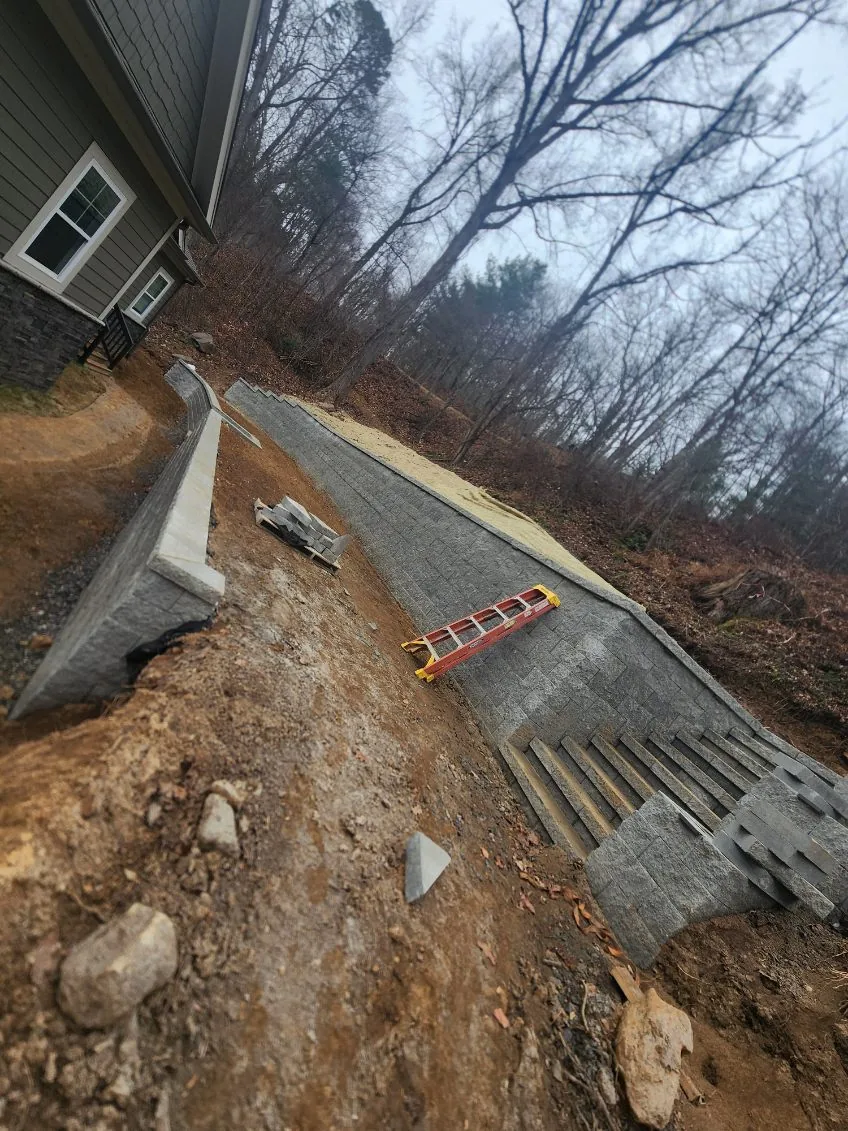
Most of Mills River drains toward the French Broad, and most lots worth building a waterfall on tilt enough that the feature and a retaining wall are the same project. That is where the four-foot line starts deciding things. A stone wall holding back less than four feet of soil is generally treated as a landscape wall locally; once it retains four feet or more, it typically crosses into permitted structure, and an engineered stamped plan usually becomes part of the package. On a waterfall, the basin edge, the terraced planting beds beside it, and the boulder wall that hides the pump vault can each push past that threshold independently.
So the honest first question on a Mills River slope is not how many drops the fall should have. It is how many feet of soil the stone is holding, and whether that lands above or below four. Get the answer wrong and the build can stall at inspection after the rock is already on site. The Mills River retaining wall guide walks through what the wall half of this looks like before you commit to the water.
In practice, the four-foot line is rarely a single wall. A waterfall on a slope often stacks two or three short tiers that each sit under the threshold, and the sum of those tiers is what actually holds the hillside. That matters because each tier has to bear on stable ground, not on the fill placed for the tier below it. When the tiers are capped by planting beds, patios, or the pond's own edge, the loads compound, and the engineer's look at the whole assembly is what keeps a pretty feature from moving after the first wet winter.
What the county's ground does to a pond
Henderson County sits in the mountain-and-valley terrain that makes water features look effortless and build stubborn. Slopes shed stormwater fast, so a pond has to manage the water arriving from above it, not just the water it holds. Over the last few decades, 16 federal disaster declarations have touched this county across a record stretching 1978-2026, and the dominant family is storm and flood. That history is the reason a Mills River pond almost always needs an uphill interception plan — a swale, a French drain, or a boulder check — before the liner goes in. The National Weather Service publishes the local precipitation and flash-flood patterns that drive those numbers, and they are worth reading before you size anything.
Clay-heavy pockets are common enough here that some basins need a clay blanket under the liner; other lots hit rock within a foot and need blasting or a raised-bed design instead. That single ground condition can swing a bid by thousands, which is why a site walk beats a phone quote on every slope lot in this part of the county.
Fall color, leaf drop, and the summer thunderstorms that roll off the Blue Ridge ridge line all affect a pond's maintenance load. Leaves need a skimmer or a net fall, and rain that arrives in a hard afternoon burst has to be routed around the basin rather than through it. A feature sized for the average week can still be overwhelmed by a single storm, which is why the overflow and the upland swale are designed together with the liner, not added after.
Where the money actually goes
Regionally, a modest waterfall and pond on a gentle Mills River yard starts around $8,000 and scales with boulder tonnage, liner area, pump and filtration capacity, and the wall work above the four-foot line. Engineered walls add design and inspection line items a landscape-only quote never shows.
| Scope | Typical range |
|---|---|
| Small pondless waterfall, easy grade, no permit | $8,000–$15,000 |
| Mid-size pond with waterfall and filtration | $15,000–$28,000 |
| Terraced feature on a steep slope with drainage | $24,000–$45,000 |
| Retaining wall under four feet, landscape tier | Priced per square face foot |
| Retaining wall four feet and over, engineered | Adds design, permit, and inspection |
Wall pricing at square-face-foot scale lives on the Henderson County retaining wall cost page; pair that with the water scope above and you have a realistic total for a real lot.
The boulders themselves are a quiet line item. On a lot where the ground yields usable stone, some of the material can come from the site and stay out of the trucking budget. Where it does not, every ton has to be hauled up a driveway that may not be built for a loaded dump truck, and access improvement becomes part of the job. Pump and filtration are the other recurring cost, because moving and cleaning water every day is a piece of equipment that has to be right-sized, not just present. A builder who asks about head height, run length, and the filter you can actually maintain is quoting the feature you will live with, not the one that photographs well on day one.
Permits, licensing, and who signs the plan
North Carolina treats retaining structures and grading as buildable work, and the NC State Building Code governs how they are reviewed. Contractors on projects that cross the state's general contracting threshold fall under the NC Licensing Board for General Contractors, so it is fair to ask any waterfall or wall builder how they are licensed for your scope and whether the wall needs a separate permit and engineer. Water features that alter a stream, wetland, or shoreline can also touch NC DEQ rules, particularly where the work sits near a creek feeding the French Broad.
There is no shortcut around the four-foot line. If a wall retains four feet or more, plan for a stamped plan, a permit, and inspection before the first boulder is set. It is cheaper to design around the threshold than to fix it after.
Henderson County issues building permits through its own offices, and grading or erosion-control review can sit on a separate track from the structural permit, so a project on a slope may carry two approvals before work starts. The practical order is design, then engineering where required, then permit, then build. A waterfall builder who is comfortable with that sequence will say so up front. One who promises to sort out paperwork later is telling you the sequence will become your problem, and in a county this wet, an unpermitted wall that retains soil is a liability that does not age well.
Designing a feature that fits the property
The best Mills River waterfalls are read as part of the land, not dropped on top of it. On a slope, that means the fall runs down the natural grade, the basin sits where water already wants to collect, and the boulder wall doubles as the seating and planting edge. Review the stone waterfalls and ponds service for the design and build approach, then bring the site walk. Choose the builder after you have answers on grade, drainage, and where the four-foot line falls on your lot, not before.
Native and adapted plantings along the boulder edges knit the stone into the hillside and shade the water surface, which cuts algae pressure through the long Carolina summer. Water that disappears into a hidden vault and returns at the top is often a better fit than an open pond on a tight or steep lot, because there is no standing water to manage, no mosquito surface, and no fish to feed. Whether you land on a pondless fall or a full pond with fish and plants, the design question is the same: where does the water go when it is not on display, and what holds the hill while it gets there.