Stone in a town that grows its own
Leicester sits west of Asheville in Buncombe County, on ground that gives up fieldstone and river rock without much ceremony. Walk the older parcels along the Leicester Highway and the roadside walls are quarry-run, not catalog stock. That local stone supply is why patios here often end up as irregular flagstone or fieldstone rather than the squared bluestone slabs that dominate newer Asheville builds. The stone is cheaper; the labor to lay it well is not, and a patio built on a Leicester slope has to answer a drainage question the same way a wall does. That's the real split in local pricing, not the stone itself.
The other local reality is the housing stock: a good share of Leicester homes are on wells and septic systems, on parcels of an acre or more, and many sit on grades that were never meant to hold a flat surface. A patio here isn't a cosmetic slab on a graded lawn; it's a small engineered platform. The flagstone patio work we build reflects that: more base, real edge restraint, and drainage designed before anyone lays the first stone.
Four material choices, four price personalities
Flagstone is not one product. In Leicester, four material families show up repeatedly, and each carries its own cost logic:
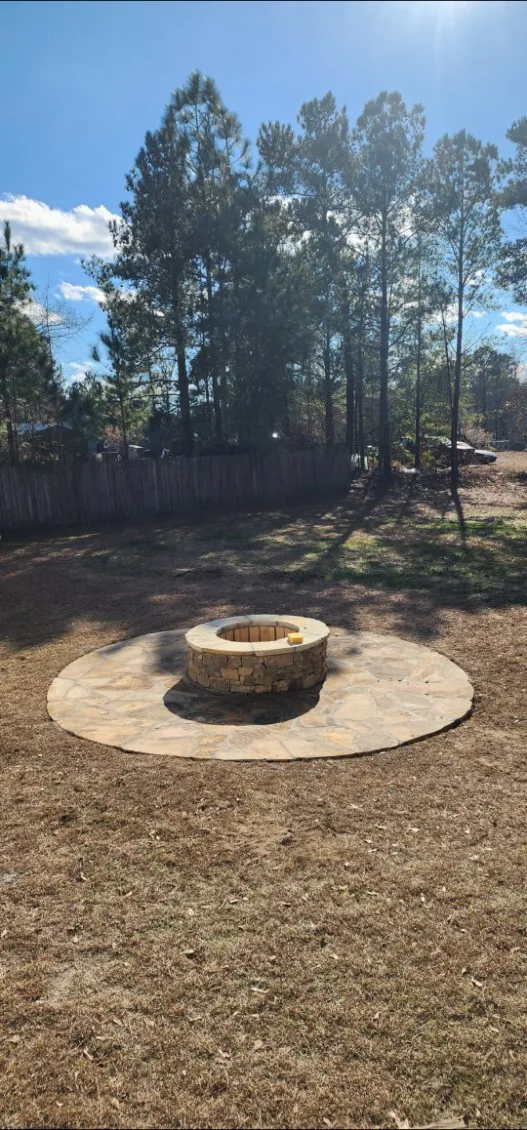
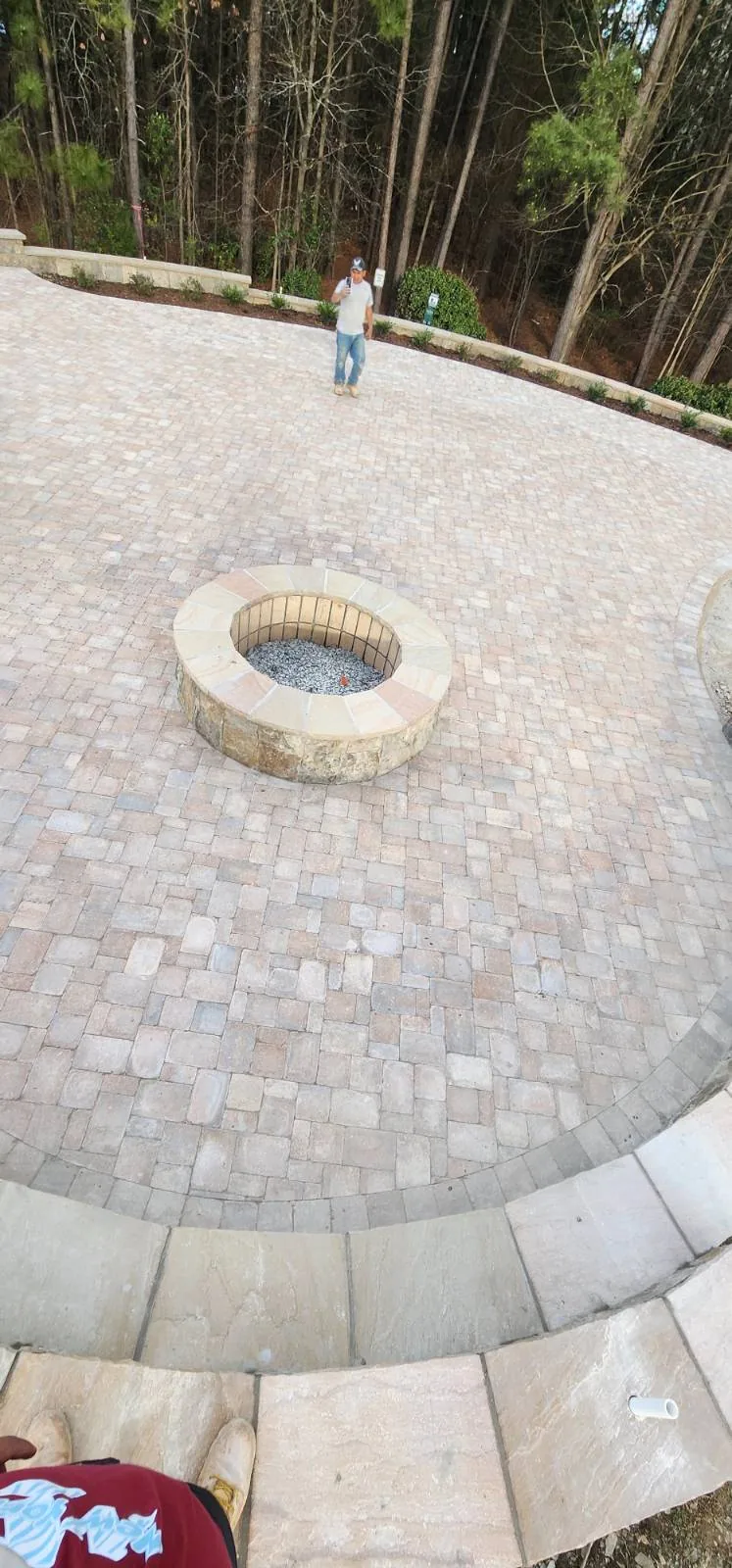
Fieldstone and river rock — the local, irregular option. Cheapest material per ton, but hand-fitting an irregular stone takes more labor per square foot than laying a uniform slab, and the joints are wider, so pointing mix is a real line item. Quarried flagstone (typically sandstone or quartzite) — cut in relatively predictable thickness, more consistent to lay, and it handles freeze-thaw better when correctly bedded. Boulder and ledge work — boulders pulled on site or delivered for accent steps, seat walls, and fire features; sold by the ton, unpredictable to move, and priced accordingly. Block-and-timber — for clients who want the shape of a patio without the stone bill, or who are matching an existing timber-frame or log home; it's a different aesthetic and a different sub-trade.
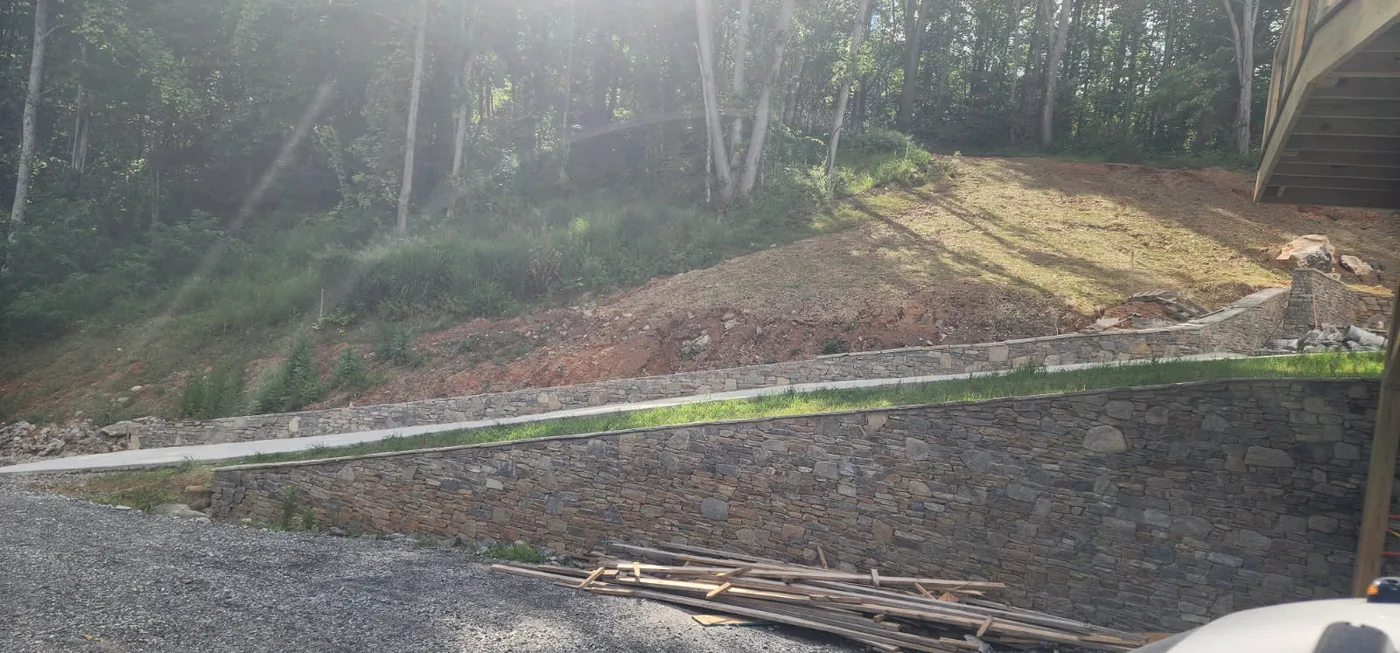
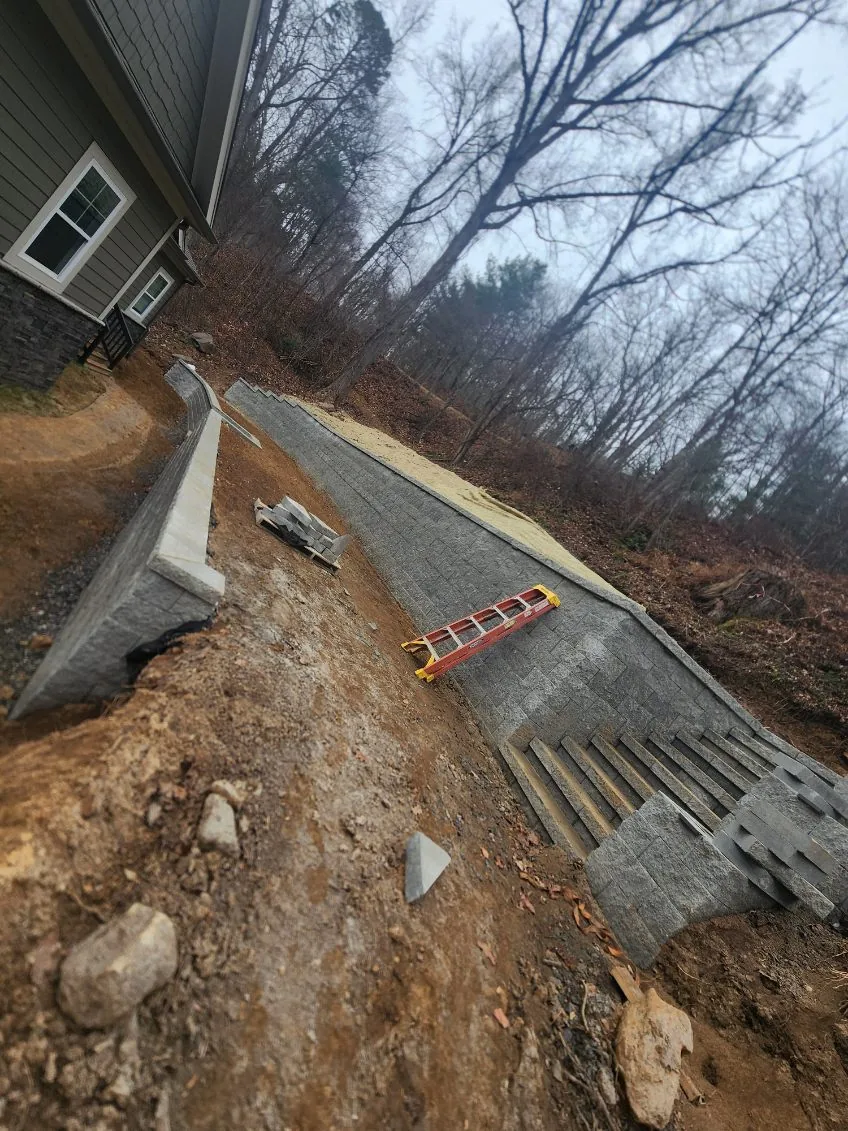
What matters for budget is not which one is "best" but which fits the site. A flat half-acre behind a ranch is a fieldstone job. A terraced hillside behind a boulder retaining wall is a flagstone-and-boulder job, with the wall priced separately.
Leicester patio pricing, by scope
Ranges below reflect working Buncombe County numbers for spring-through-fall installs on level-to-moderate ground. Steep lots, long haul distances, and difficult access push the top of each band. For comparison, the wall work that usually shares these projects is priced on its own page: Buncombe County retaining wall costs.
| Scope | Typical range | What drives it |
|---|---|---|
| Small fieldstone patio, 100-200 sq ft, level ground | $4,200-$7,500 | Stone source, joint width, access |
| Flagstone patio, 250-400 sq ft, with steps | $7,500-$13,500 | Base depth, step count, edge restraint |
| Flagstone over sloped or terraced ground | $11,000-$19,000 | Cut-and-fill, drainage, wall integration |
| Boulder accents, seat walls, fire features | $1,500-$6,000 add-on | Boulder tonnage, haul, equipment access |
| Block-and-timber patio, timber-frame style | $8,500-$16,000 | Timber species, block, fastening detail |
Base preparation is where most of the money hides. A properly built patio in this climate runs several inches of compacted aggregate under the stone, with fabric. On Leicester's clay soils, base prep is the difference between a patio that settles evenly and one that punishes every freeze-thaw cycle. Read the bids for base depth and compaction, not for the pretty picture on the front page.
Water, code, and who can legally take the job
Western North Carolina's storm record explains a lot of local construction decisions. 19 federally declared disaster events have touched Buncombe County over 1973-2026, and the overwhelming majority are storm and flood related. That matters for patios: grading, surface pitch, and where the uphill neighbor's runoff lands decide whether a stone patio is a feature or a problem within two winters. The National Weather Service tracks this pattern year over year via weather.gov, and it's the reason serious local installers design drainage first.
On the code and licensing side: hardscape that touches structural elements, retaining walls above a certain height, and patio work that includes impervious surface expansion can trigger permitting and inspection. General contracting thresholds and licensing questions are governed by the NC Licensing Board for General Contractors, and the applicable construction codes are administered through the NC Office of State Fire Marshal. Ask any contractor you consider whether the project will require a permit and who pulls it. If they hesitate, that's your answer. For sites that also need wall reinforcement or grading, the Leicester retaining wall contractors page covers the credentials and questions to ask.
For current official guidance, see the North Carolina State Board of Examiners of Plumbing, Heating & Fire Sprinkler Contractors. For current official guidance, see the U.S. Environmental Protection Agency (EPA).
What a good first visit looks like
A proper site visit for a Leicester flagstone patio should take 30 to 60 minutes, not 10. The person quoting should walk the actual site, not just photograph it: they should probe the soil, check the grade at the uphill and downhill edges, ask where the downspouts and septic field are, and look at how water currently leaves the property. If the quote comes back with only square footage and a stone color, it's not a quote yet.
Two things to see in writing before you commit: a schedule that accounts for the curing time on any base work, and a clear statement about what happens if the patio abuts an existing structure or retaining wall. In Leicester's clay-heavy ground, honest contractors build in that conversation up front. Anything less is a future callback.