What retaining wall problems look like in Woodfin
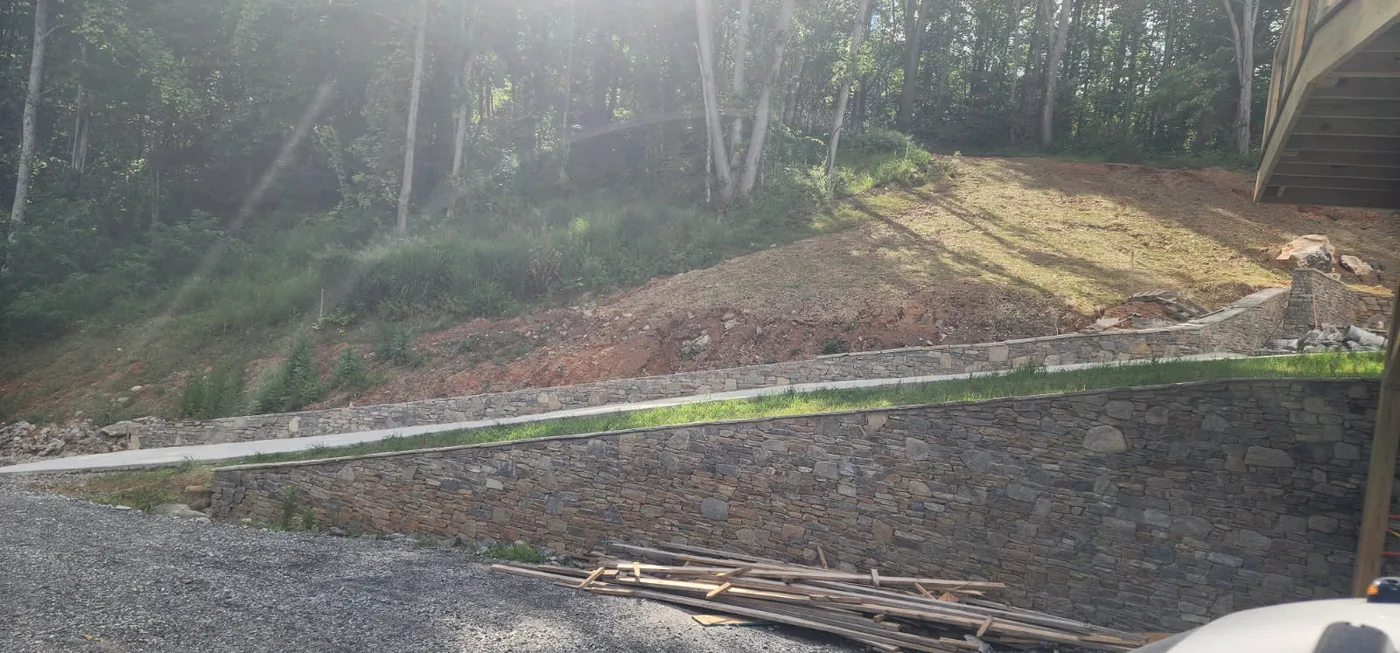
Woodfin sits on the French Broad River floodplain and the steep slopes that rise off it. A riverfront home on Riverside Drive may have a wall built to hold back fill from a 1950s road widening; a house on a cut-and-fill lot off Old Marshall Highway might be leaning on a mortared rock wall that predates code; a newer build near the Beaverdam Creek confluence is holding back engineered fill that gets tested every time the river rises. All three fail — for three different reasons.
The tells worth acting on: a wall that bulges at the middle, mortar that is crumbling to sand, a lean of more than an inch or two out of plumb, and cracks that have opened enough to let soil weep through. Movement that accelerates after heavy rain is drainage; movement that shows up year-round is structural. Woodfin's proximity to the river means water plays a role in most wall failures here — the National Weather Service flood records for Buncombe County back that up, and so does the ground itself. On the steep lots off Ox Creek Road, the red clay turns to slick mud after a three-day soak, and walls that held for a decade can start creeping in a single wet spring.
One condition we see often in this part of Buncombe County that surprises newcomers is the old dry-stack rock wall. These were built without mortar, without footing, and without any drain tile — just carefully placed river rock and field stone. They look timeless and they can last generations, but they fail differently than a modern block wall. You'll see individual stones working loose and falling out, leaving voids that let the hillside push through. That's not a job for a general landscaper; it takes a mason who understands gravity and water. If that wall holds up a driveway or sits within 10 feet of a structure, the repair needs engineering input before anyone starts rebuilding. The International Code Council residential provisions that Buncombe County enforces treat these as structural elements, not garden features.
The Woodfin price picture
Hillside lots price like the county they sit in — see the full retaining wall cost breakdown for the working table. The short version: a small residential timber or interlocking block wall in the 20–30 foot range runs $2,800–$6,500; a mid-size engineered wall of 50–80 feet with drainage runs $7,000–$14,000; and a tall retaining structure over 6 feet with engineered plans, permits, and any tie-back or pier work starts at $15,000 and climbs. Steep-lot jobs in Woodfin above the river routinely carry engineering and drainage line items that flatland quotes never show — treat any bid without them as incomplete rather than cheap.
To make the range more concrete, here is what the working table looks like for the three wall types we most commonly scope between the French Broad and Elk Mountain Scenic Highway:
| Typical Woodfin Project Scope | Wall Length | Price Range (Installed) |
|---|---|---|
| Timber or interlocking block, low garden wall (under 3 ft) | 20–30 ft | $2,800 – $6,500 |
| Segmental block or mortared rock, mid-slope driveway wall with drain tile | 50–80 ft | $7,000 – $14,000 |
| Engineered reinforced wall over 4 ft, geogrid, engineered fill, permit, tie-back or pier work | 60+ ft | $15,000 – $35,000+ |
That top row of the table is where the surprises hide. A wall over 4 feet tall — measured from the bottom of the footing to the top of the wall — triggers the North Carolina building code's structural requirements. If your wall is 6 feet tall and the county map shows it on a slope steeper than 3:1, you are not in handyman territory. The price jump between a 4-foot wall and a 6-foot wall is often larger than the jump between 20 feet and 60 feet of length, because the engineering, the geogrid, and the excavation all change character.
Slope, drainage, and Woodfin's water history
The federal disaster record explains most Woodfin wall calls: 19 declared events touch this county (1973-2026), overwhelmingly storm and flood family. Every one of those events pushed water at hillsides that were built for a drier assumption. Before anyone sells you a taller wall, the drainage question has to be answered — where water goes when it comes off the slope, how the French drain exits, and what happens during a 100-year rain event. The NC Office of State Fire Marshal administers the state building code, which treats retaining wall drainage as a first-class requirement for walls over 4 feet. A wall without a proper drain is a dam, not a retaining wall.
What does that mean on a Woodfin lot specifically? It means the crew needs to look past the wall itself and read the whole drainage path. On a lot off Broadway Street that backs up to the slope, we've seen walls fail because the gutter downspout was dumping onto the high side of the wall — no amount of wall strength fixes that until the water is routed away first. On the riverfront side, the issue is often the opposite: the water table itself rises and falls with the French Broad, and the wall needs to handle pressure from both sides. A proper drainage system for that condition includes a perforated pipe at the base of the wall, clean crushed stone behind the blocks, and a positive outlet to daylight or a storm line. If the outlet is buried or clogged, the system is decorative.
The EPA has guidance on sediment and erosion control that applies when you're excavating a hillside in a floodplain-adjacent area. The practical point for a homeowner is this: if the crew starts digging without a plan for where the spoil goes and how runoff is contained during the job — not just after — you're hiring the wrong crew. Woodfin hillsides are steep enough that a rain event mid-project can turn a small excavation into a silt problem for your neighbor's yard or the creek below.
Matching the wall to the Woodfin hillside
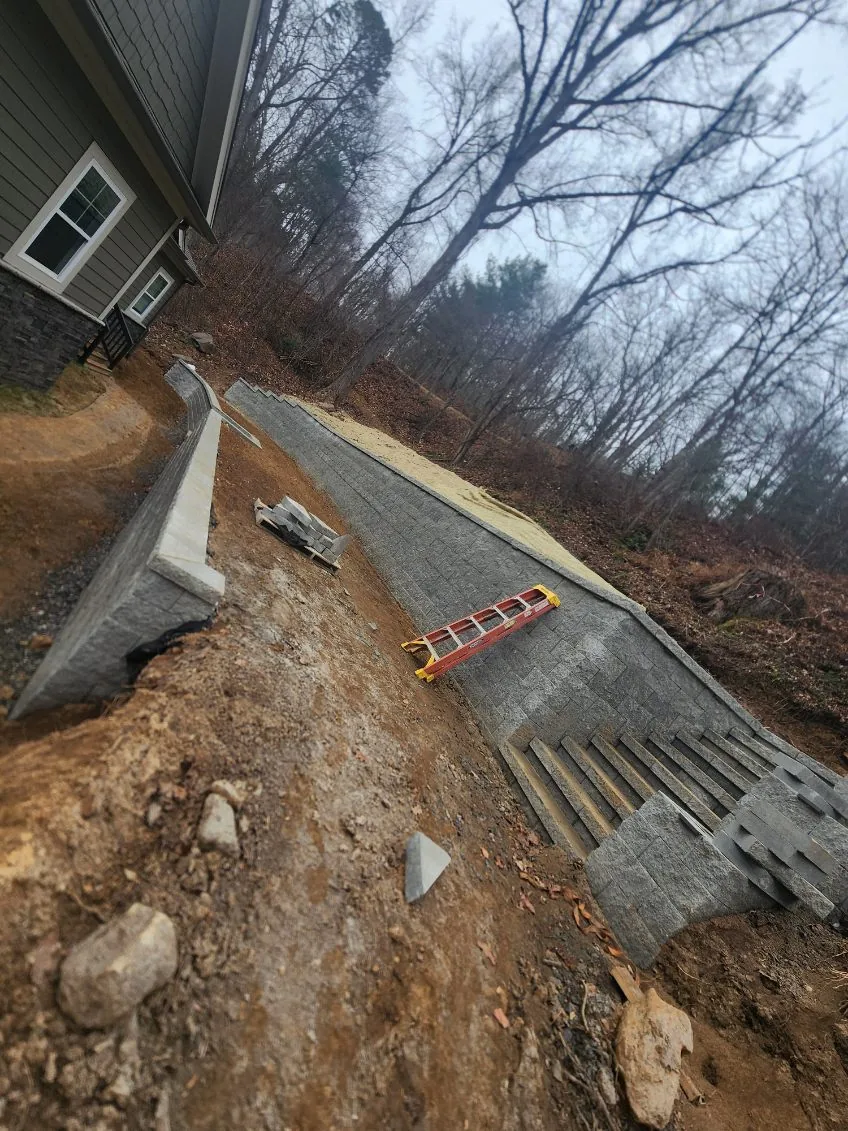
Woodfin's terrain spans three distinct conditions. Riverfront properties on the French Broad need walls that handle hydrostatic pressure from rising water — that means reinforced block or poured concrete with weep holes, not segmented block that collects water. Mid-slope properties off Ox Creek or Elk Mountain Scenic Highway often have old mortared rock walls that look charming but were built without footing or drainage; repairing those is a separate skill covered in our retaining wall repair guide. Newer hillside development on cut-and-fill lots requires engineered walls with geogrid reinforcement.
Let's take those one at a time, because the fix that works on one Woodfin hillside is wrong for the next. A riverfront wall that sits within the floodplain has to survive being underwater. The blocks need to be heavy enough and the base wide enough that the wall doesn't float or tip when saturated soil pushes from behind and the river pushes from the front. Weep holes every 4 to 6 feet are not optional. On the mid-slope properties, the old rock walls were built with whatever the property had — granite field stone, river rock, sometimes brick from an old chimney — and the mortar is likely lime-based and soft. Repointing that with modern Portland cement mortar is a classic mistake; it traps moisture and accelerates the failure of the original stone. The right repair matches the original materials or rebuilds with drainage that was never there.
For the cut-and-fill lots — the ones built in the last 20 years as Woodfin has grown — the wall is only as good as the engineered fill behind it. Geogrid layers every 12 to 18 inches, each one mechanically locked into the wall face, spread the load so the wall doesn't act like a dam. The North Carolina licensing board rules apply when the project crosses structural thresholds, which for most of these walls means a licensed general contractor and a stamped set of plans. When you talk to a crew, ask which condition they've worked — walls for riverfront are not the same trade as walls for a steep driveway. We serve Woodfin and the surrounding Weaverville and Asheville area with crews who know the difference.
Hiring well in this market
Three Woodfin-specific checks: ask whether the crew has worked your wall condition (riverfront hydrostatic pressure, hillside drainage, or old rock wall stabilization); ask for the engineer's stamped plans on any wall over 4 feet tall (NC licensing rules apply once the project crosses structural thresholds); and ask how they sequence drainage versus the wall itself. The answer to the third question separates the crews that fix slopes from the crews that stack blocks. For a full rundown of what a proper first visit should include, the retaining wall guide covers it wall-by-wall.
A fourth check that's worth adding in Woodfin specifically: ask about access. Many of the lots off Old Marshall Highway and Elk Mountain Scenic Highway were carved out of steep ground decades ago, and the driveway you use daily may not accommodate a full-size excavator. A crew that has to hand-dig a footing because the machine can't reach the back of the house is a different cost picture than one that drives a track hoe right up to the wall. A good crew will ask about access before they quote, not after. And if the wall is on a slope that feeds toward the French Broad or Beaverdam Creek, ask what they do if they hit groundwater during excavation. The honest answer is they adjust the drainage plan and call the engineer — not that they keep digging and hope it stays dry.