The four-foot line decides everything in Henderson County
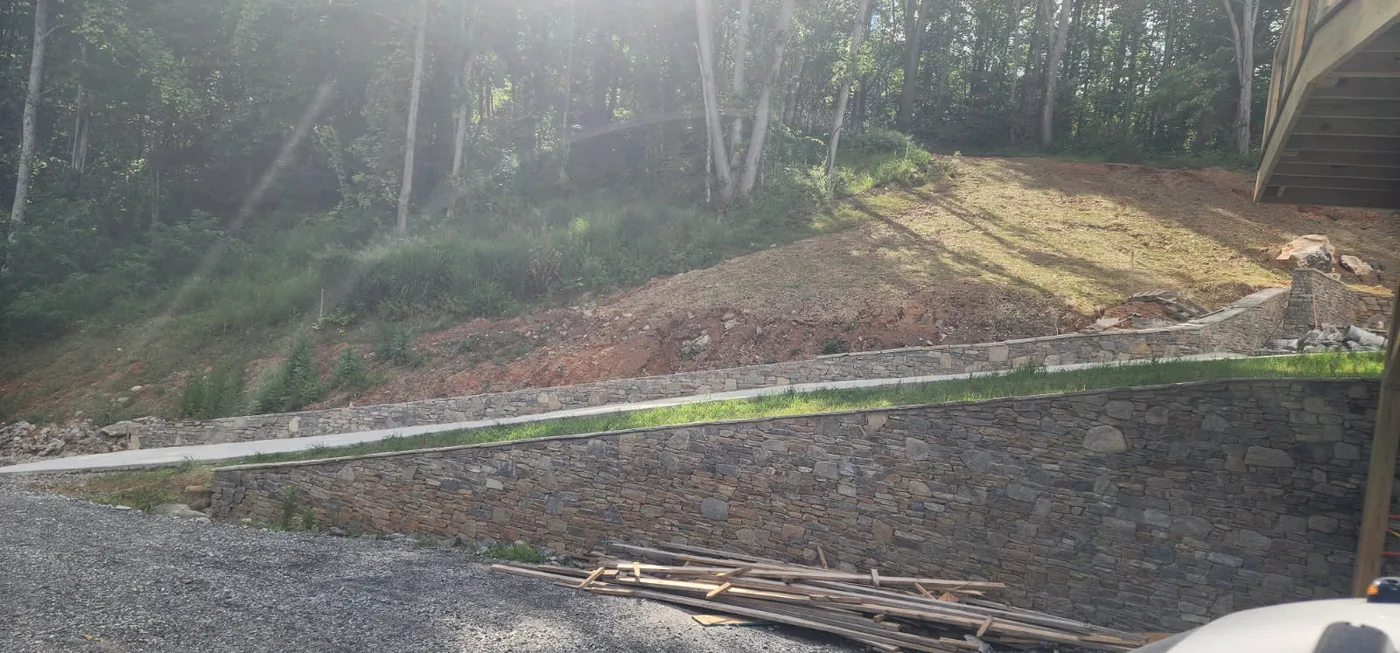
Drive Highway 25 south out of town and the ground tells you why masonry here is really drainage work. Hendersonville sits on a plateau that keeps dropping toward the Green River and the North Saluda, so a great many properties are cut into grade, with an uphill side that wants to push water and soil downhill. The retaining walls holding those cuts are where the money and the risk live, and the first question a mason should ask is not what stone you like. It is how tall the wall will be.
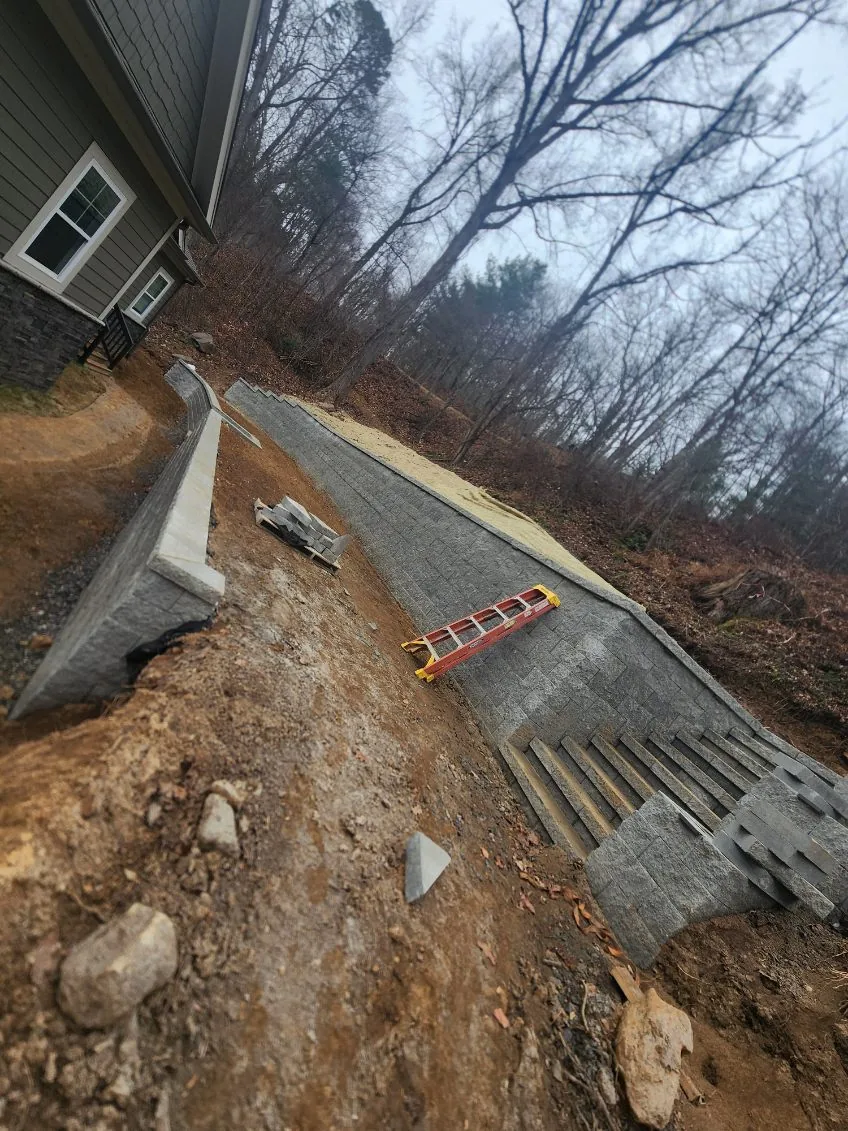
Four feet is the practical dividing line. A wall under that height, set back from any structure and not stacked in tiers, is usually a straightforward building-permit question for the county and can go up on a compacted gravel footing with a batter and weep points. Once a wall retains more than four feet of unbalanced soil — or sits in a tiered system where the combined height counts — the state building code treats it as a structure that needs an engineer's design and sealed drawings before the permit is issued. That engineering line item is real money on top of the stonework, and it is also the reason two equal-looking walls a mile apart can differ by several thousand dollars.
So when you call, have the number ready. Measure from the bottom of the exposed face to the top of the soil it holds back, and note whether it sits on a slope. That one figure routes the whole project.
What stonework actually costs here
Henderson County stone is its own economy. Local fieldstone and the granite and gneiss that show up in older foundations are heavy, irregular, and slower to lay than a tumbled veneer from a supplier, and labor reflects that. Below are honest working bands for typical jobs around Hendersonville. Treat them as ranges, not quotes, because footing conditions on a hillside site can move any of these by a third.
| Scope | Typical range | What moves the number |
|---|---|---|
| Garden or seat wall, under 2 ft, dry-stacked or mortared | $1,800-$4,500 | Stone source, curves, whether a footing is poured |
| Mortared retaining wall, 2-4 ft, engineered footing | $4,500-$11,000 | Drainage behind wall, drain tile, wall length |
| Retaining wall over 4 ft (engineered) | $9,000-$22,000+ | Sealed design, geogrid, excavation, tiered layout |
| Stone veneer, per sq ft of wall face | $18-$40/sq ft | Real stone vs. manufactured, backing prep, height |
| Chimney, step, or foundation repointing and repair | $600-$3,500 | Access, matching existing stone, amount of rebuild |
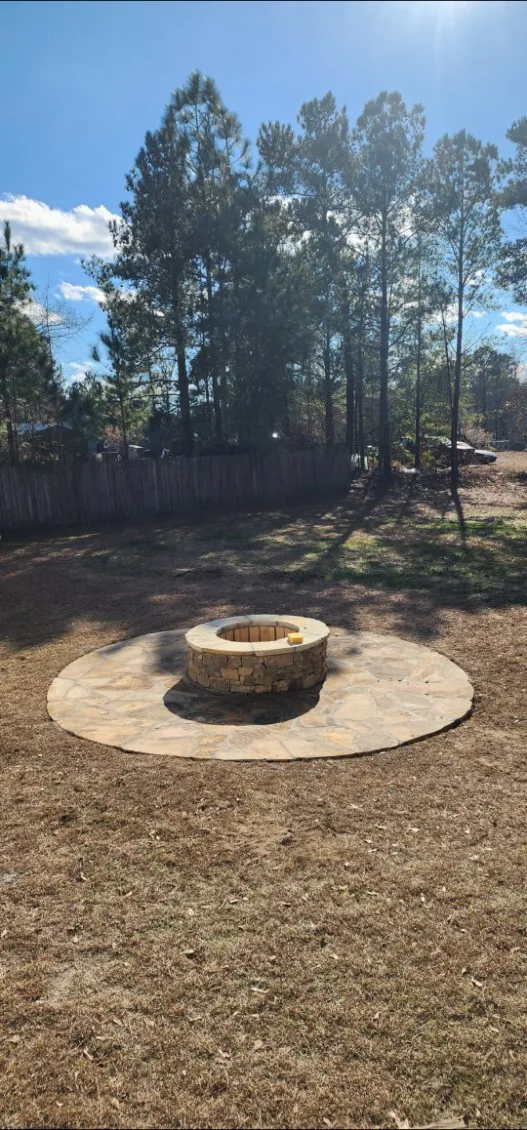
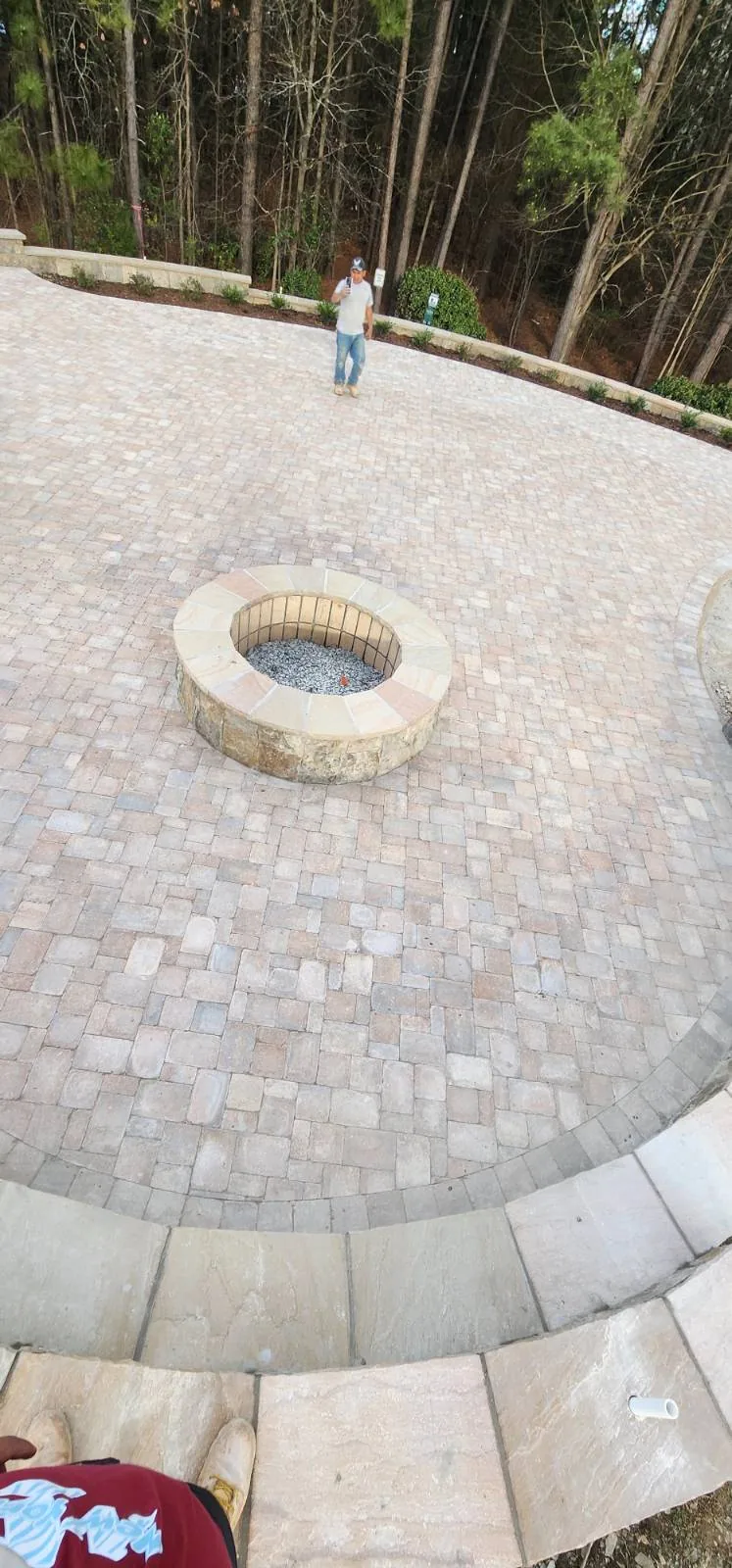
| Walkway, patio, or step installation | $14-$38/sq ft | Base depth, slope, pattern, edge restraint |
The full line-item view lives on the Henderson County retaining wall cost page, and the structural side of tall walls is covered under retaining walls.
Slope, water, and the storm record behind the call
Most failing walls in this county did not fail because the mason laid bad stone. They failed because water got behind the wall and had nowhere to go. Henderson County's federal disaster record bears this out — 16 declared events across 1978-2026, overwhelmingly storm, flood, and slope-movement family. Every one of those events loaded water into hillside soils that were already saturated. A wall built without gravel backfill, filter fabric, and a drain pipe at the base is a dam waiting for its test.
That is why a proper scope here always budgets for what goes behind and under the stone, not just the face you see. The National Weather Service records for this region, at weather.gov, show the rainfall intensity that drives the design. Before anyone quotes you stone, the grading question has to be answered: where does the uphill water go today, and where will it go when the wall is finished.
Permits, engineers, and who can legally do the work
Two separate rules govern masonry jobs in Henderson County, and they are often confused. The first is the building code. Retaining walls above the four-foot threshold, and retaining walls of any height that support a structure or sit in a tiered system that adds up past four feet, require a permit and an engineered design. The design standard lives in the International Code Council's published codes, referenced at iccsafe.org. Skipping the engineer does not make the wall cheaper. It makes it an unpermitted structure that will surface at resale.
The second is who may contract the work. North Carolina's licensing rules, administered by the NC Licensing Board for General Contractors, set dollar thresholds above which a project must be run by a licensed general contractor, even when the trade work is masonry. A large engineered wall with excavation and drainage frequently crosses that line. Ask any mason whether the job falls under a licensed GC and who pulls the permit, because on a tall wall the answer is rarely just the mason.
When comparing bids on anything structural, a wall of verified references in the county — especially on slope lots — tells you more than the price column. The Hendersonville retaining wall contractor guide covers what a complete bid should itemize.