What a Woodfin stone quote is actually made of
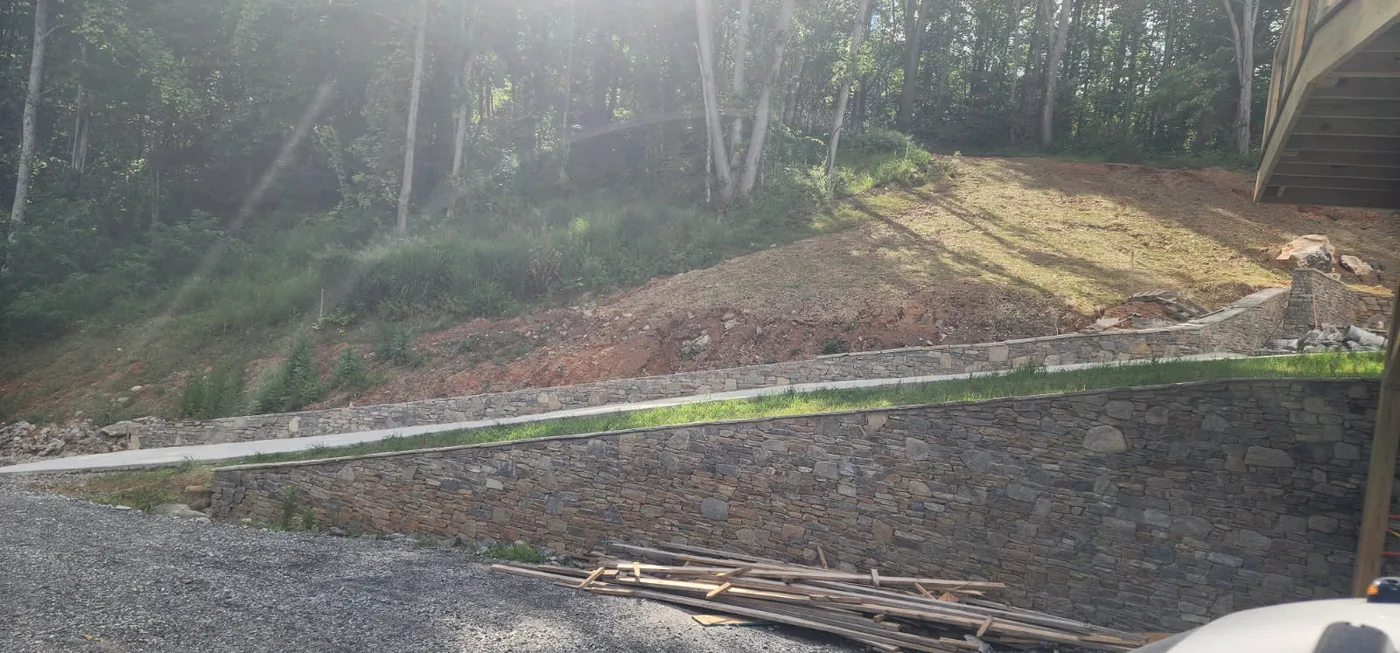
Woodfin's residential geography is narrow and steep: lots drop toward the French Broad, run up against the ridges that flank the river valley, and in a lot of cases give a mason less than a full truck-width to work with. That geography is the single biggest line item on a Woodfin stone quote, and it is the line item homeowners skip past when they compare bids.
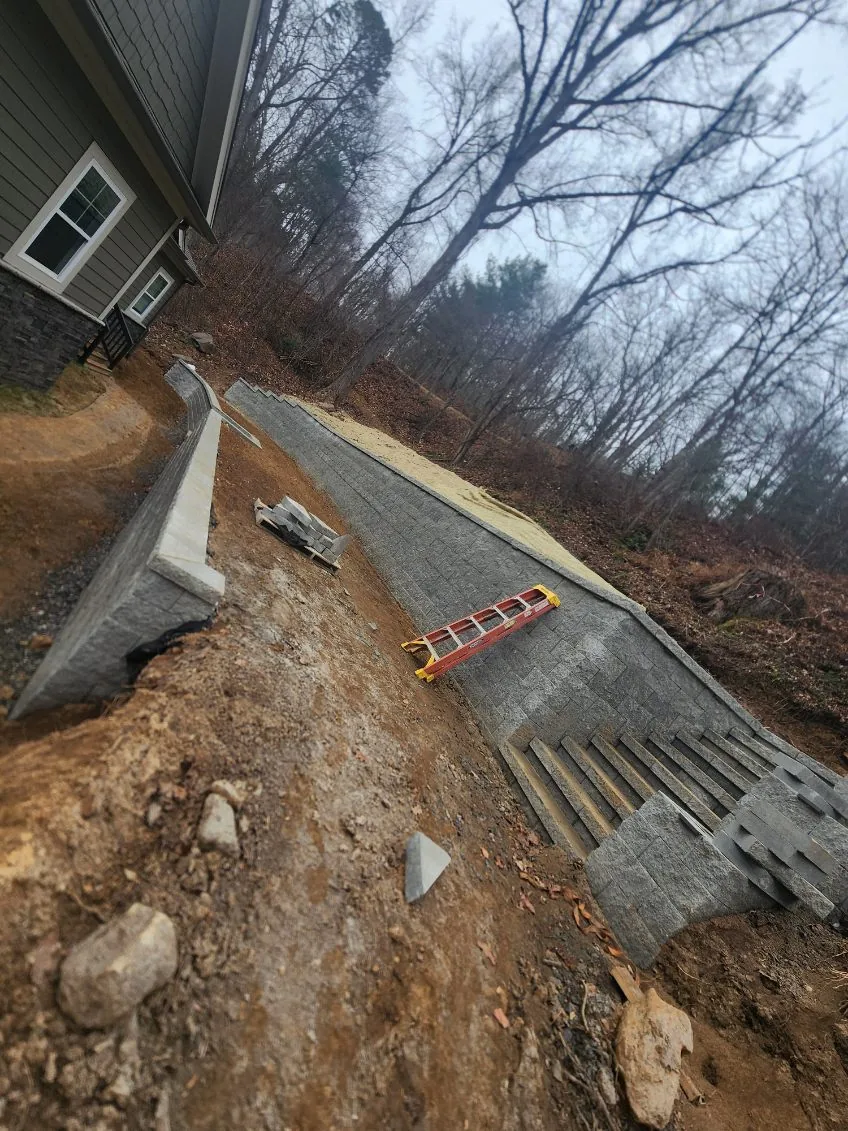
Break a typical job into its parts. There is the stone itself, priced by the ton for fieldstone or by the piece for sawed and dimensional material. There is the base, which on a sloped lot can run two or three times the cost of a flat-lot base because it has to be cut into the hill, compacted, and drained rather than simply spread. There is labor, which climbs fast when material has to be carried by hand or moved with a mini machine instead of a full-size skid steer. There is drainage, which is a real draw on a retaining wall and an afterthought on a decorative one. And there is the finish, meaning whether the face is dry-stacked, mortared, or full veneer. In Woodfin, the access and base lines are what separate a $6,000 job from a $14,000 job on the same-looking wall.
Typical Woodfin scope and price ranges
The table below is what regional work tends to land at, not a bid. On any given lot, the low end assumes good machine access and easy digging; the high end assumes hand-carry, steep grade, or a wall that needs geogrid and drainage designed before a stone goes down.
| Scope | Typical price range | What drives it up |
|---|---|---|
| Garden or seat wall (under 2 ft) | $1,200-$3,500 | Dry-stack vs. mortared cap, curved layout |
| Retaining wall, 2-4 ft | $3,500-$12,000 | Cut-in base, drainage, geogrid on taller runs |
| Stone steps, 3-5 risers | $900-$3,000 | Site-cut treads, rail anchoring, frost base |
| Stoop or porch pier rebuild | $1,500-$5,000 | Matching existing stone, structural tie-in |
| Veneer over existing block or frame | $45-$95 / sq ft of face | Scratch coat, lintel work, corners and returns |
| Stone facing on a chimney chase | $3,000-$9,000 | Height, staging, cap and flashing detail |
The same wall on a flat Oakley lot and a cut-in Woodfin lot can differ by thousands with nothing else changed. For the deeper line-item view on hillside work, the Buncombe County retaining wall cost breakdown walks the base, drainage, and engineering items that push the number.
Water is the reason most Woodfin walls get rebuilt
Federal disaster records tell the story of why stone work around here fails: 19 declared events have touched Buncombe County across 1973-2026, and the overwhelming share are storm and flood family. Every one of those events threw water at walls, steps, and foundations that were built on a drier assumption about how much water moves downhill and how fast.
A retaining wall that has no drainage behind it is a dam, not a wall. Water builds, hydrostatic pressure pushes, and the face bulges or the whole thing leans out within a few seasons. Before anyone prices stone on a sloped lot, the drainage question has to be settled: where the uphill water goes, whether the wall needs a perforated drain and gravel backfill, and whether the base was cut to undisturbed soil or stacked on fill. The NC Building Code Council treats foundation and retaining drainage as a real requirement for exactly this reason. A quote that does not mention drainage on a Woodfin hillside is incomplete, not cheap.
If your wall is already leaning, the retaining wall service overview covers what a rebuild involves versus a repair, and when the honest answer is to take it down and start the base over.
Stone selection, and why local matters less than people think
Western North Carolina has a good supply of fieldstone, and a lot of Woodfin jobs use material that came off the same property or a nearby one. That is a nice story, but it is not automatically the cheaper option. Loose fieldstone has to be sorted, cleaned, and often shaped on site, and the labor to do that can be higher than buying sawed stone that goes up predictably. Native stone looks right in this landscape, and many homeowners want it. Sawed dimensional stone gives cleaner lines, dries more predictably, and often prices out lower once you account for the sorting time. The right call depends on the wall's height, whether it is structural, and how much the visual character matters to you.
Hiring and permitting in this town
Two checks matter in Woodfin specifically. First, on any retaining wall of real height, ask whether a permit is required and who is pulling it. Local requirements vary with wall height and location, and a structural wall that holds back a slope above a house is a different animal from a decorative knee wall. Statewide, the NC Licensing Board for General Contractors sets the threshold at which a project needs a licensed general contractor, and a reputable mason will tell you plainly when your job crosses it. Second, on any job tied into a structure, chimney, or foundation, ask how the stone is anchored and whether flashing is being redone. Veneer that traps water against a frame wall causes damage a mason cannot fix later.
If you are comparing crews rather than materials, the Woodfin retaining wall contractor guide covers the questions that separate a real mason from a landscaper who stacks rock.