What a stone waterfall actually is (and what it is not)
A stone waterfall is a recirculating water feature: a liner or basin, a pump, a buried plumbing run, and stacked natural stone that the water spills over before returning to the reservoir. A pond version adds a biological filter, a skimmer, and usually fish habitat. The stone is the visible product; the liner, the plumbing slope, and the basin volume are what determine whether it works or becomes a weekly chore.
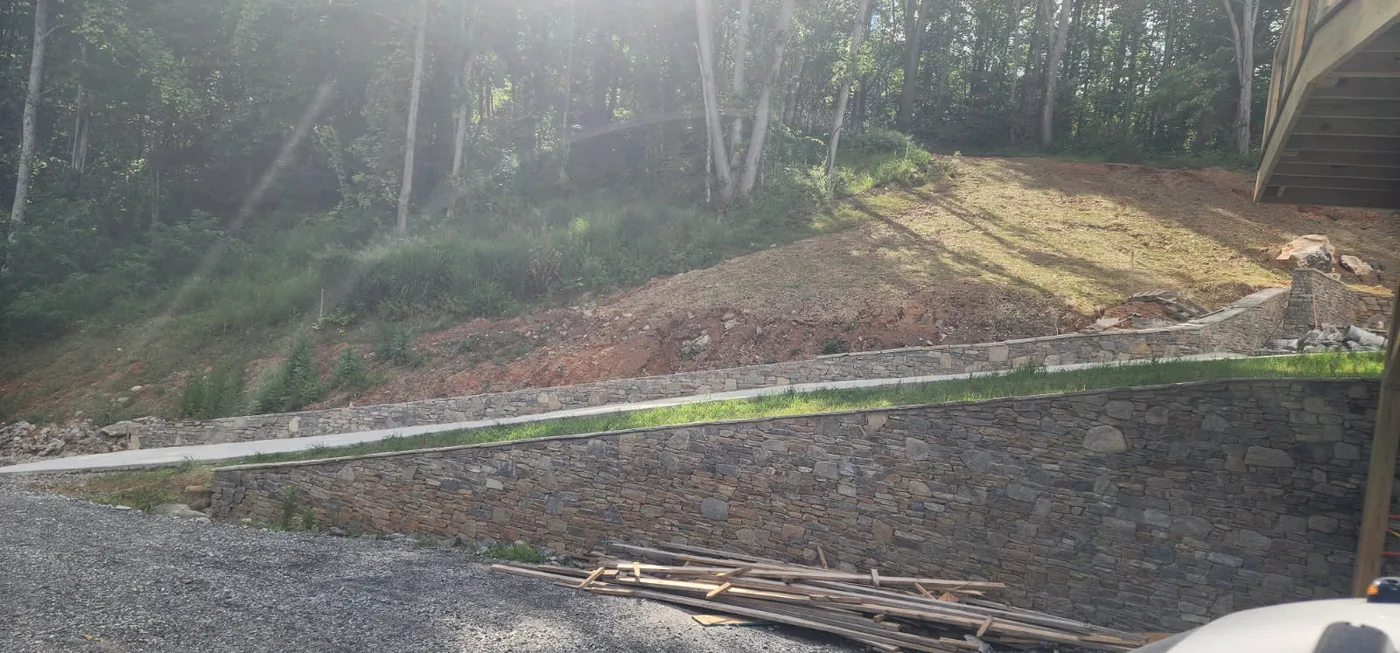
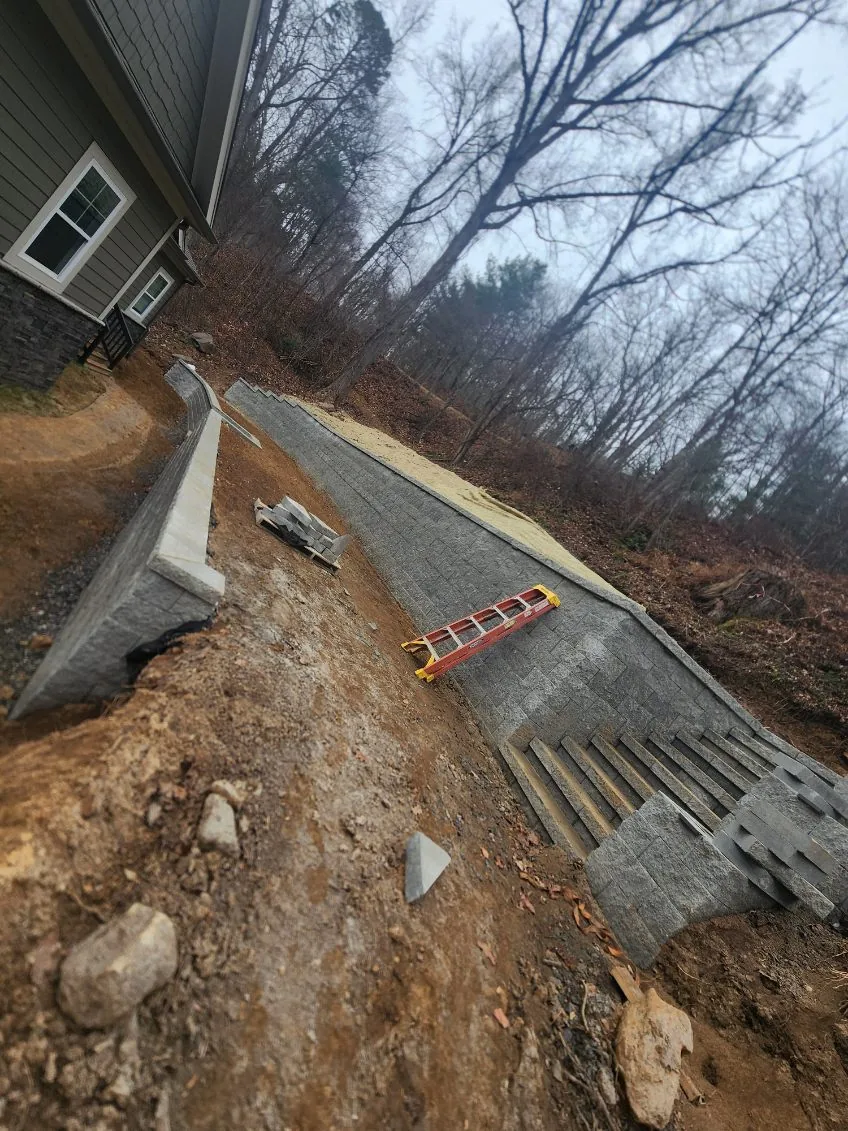
The honest part most brochures skip: in Buncombe County's terrain, the build is a drainage project first and a decorative project second. Water that leaves the feature has to go somewhere. If the discharge, the overflow, and the surrounding grade are not planned before the first rock is set, the feature will find its own path — usually into your crawl space or a neighbor's yard. This is why a real site read matters here more than in flat country, and why the same discipline used on retaining walls on these slopes applies directly.
How mountain terrain changes the build
Asheville sits in a bowl of the Blue Ridge, and most residential lots here are cut into a slope. That changes three things:
- Haul and access. Boulders and palletized stone rarely land next to the build site. On steep driveways and narrow mountain roads, moving material by machine or by hand adds real labor hours before any stone is placed.
- Natural elevation. A hillside gives you grade for free. A builder who reads the slope right needs less pumped head and less stacked height to get a convincing multi-drop waterfall.
- Stormwater. Western North Carolina's saturated-soil seasons are when marginal features announce themselves. Storm and flood history is genuinely relevant to how a basin is sized and where overflow exits — this county carries 19 federal disaster declarations across 1973-2026 of record, and features built on unengineered fill or in a swale tend to be the ones that fail. The National Weather Service outlooks are worth checking before scheduling a dig during the wet months.
What it costs and what moves the number
Regional pricing for a professionally installed stone feature, including pump, liner, plumbing, stone, and labor:
| Scope | Typical installed range |
|---|---|
| Small pondless waterfall, single drop, under 10 ft of stream | $4,500-$9,000 |
| Pondless waterfall, two to three drops, 15-25 ft of stream | $9,000-$18,000 |
| Waterfall into a lined koi or goldfish pond (8x10 ft typical) | $12,000-$25,000 |
| Large naturalistic build, multiple drops, boulder work, wide stream | $25,000-$30,000+ |
| Pump, liner, or plumbing replacement on an existing feature | $1,500-$6,000 |
| Annual maintenance and cleanout (typical) | $300-$900 |
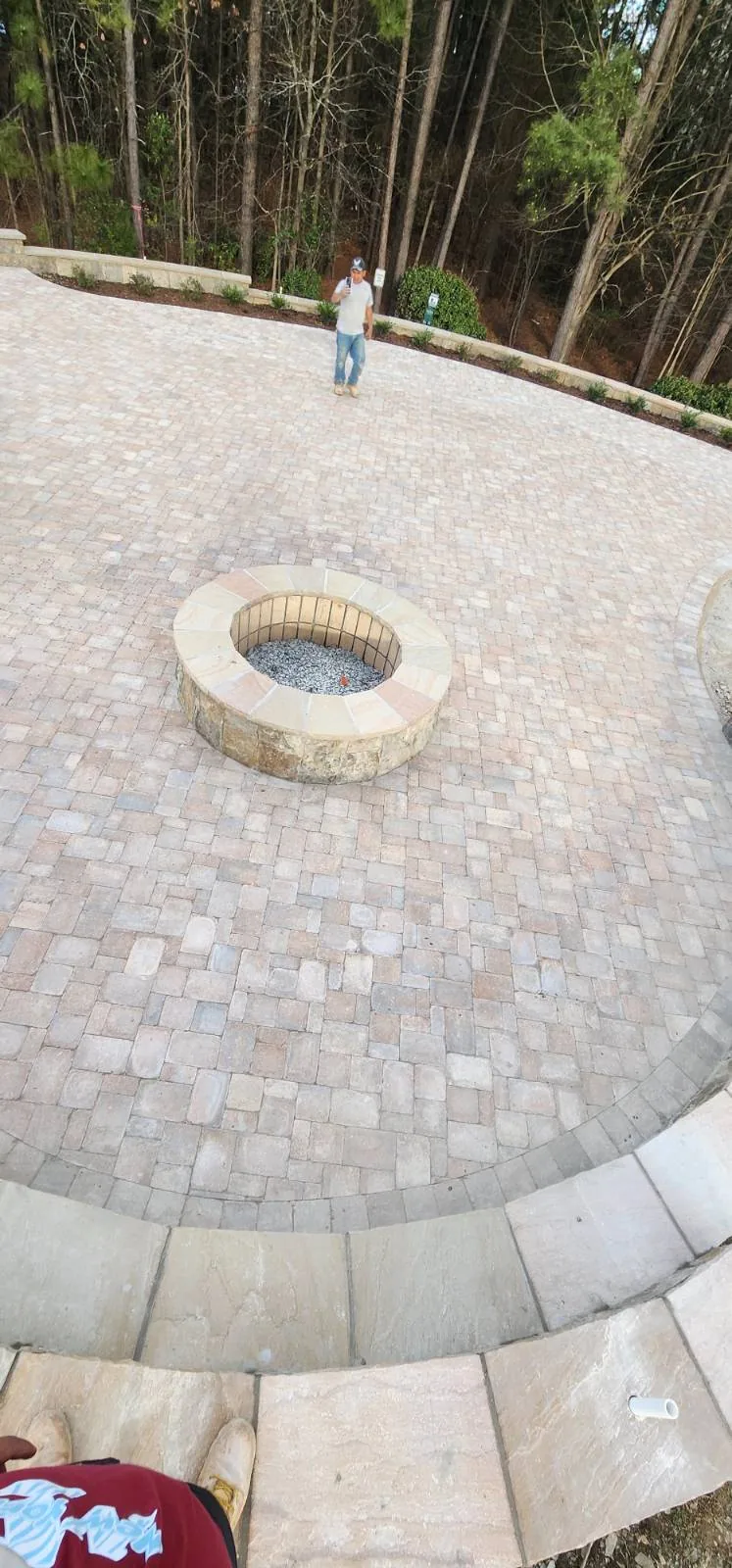
Four things move the number more than any other: slope and access (steep lots and long hauls price up), stone source (local fieldstone is cheaper than select boulders hauled in), basin size (a pond needs more liner, more filtration, more edge stone than a pondless basin), and electrical run (a dedicated GFCI circuit is required for any outdoor pump, and the distance from your panel is labor). None of those are cosmetic, which is why the flagstone patio that frames the feature and the water feature itself should be quoted together — one excavation, one grading plan, one restoration.
Permits, licensing, and the water rules that actually apply
Most residential water features in Buncombe County do not require a building permit, but two things can pull you into one. First, if the build disturbs a stream, a wetland, or a designated buffer, the North Carolina Department of Environmental Quality has jurisdiction and permits may be required before any ground is broken. Second, if the project crosses the general contractor threshold — the North Carolina Licensing Board for General Contractors sets that dollar figure and updates it, so verify the current number directly — the person contracting the work must be licensed. Ask for the license before the first load of stone arrives, and verify it on the Board's site rather than taking a business card's word for it.
Two more honest points. A recirculating feature is not a stormwater control device; do not let anyone sell it to you as one. And any outdoor pump needs GFCI protection per electrical code — the International Code Council publishes the electrical and plumbing standards that local inspectors adopt, and a feature wired without that protection is a hazard, not a shortcut.
Three questions that keep a waterfall bid honest
"Where does the overflow go, and can you show me on the grade?" If the answer is a shrug, the feature has no exit plan, and in this county's storms it will find one. "What pump, what liner, and who warranties the electrical?" A written equipment list with model numbers is the difference between a bid and a guess — and the electrical scope should name who pulls the circuit. "Is the basin sized for the stream, or undersized so the pump starves?" An undersized reservoir is the most common reason a new waterfall runs dry at the top of the drop, and it reflects a builder who sized by eye instead of by volume.
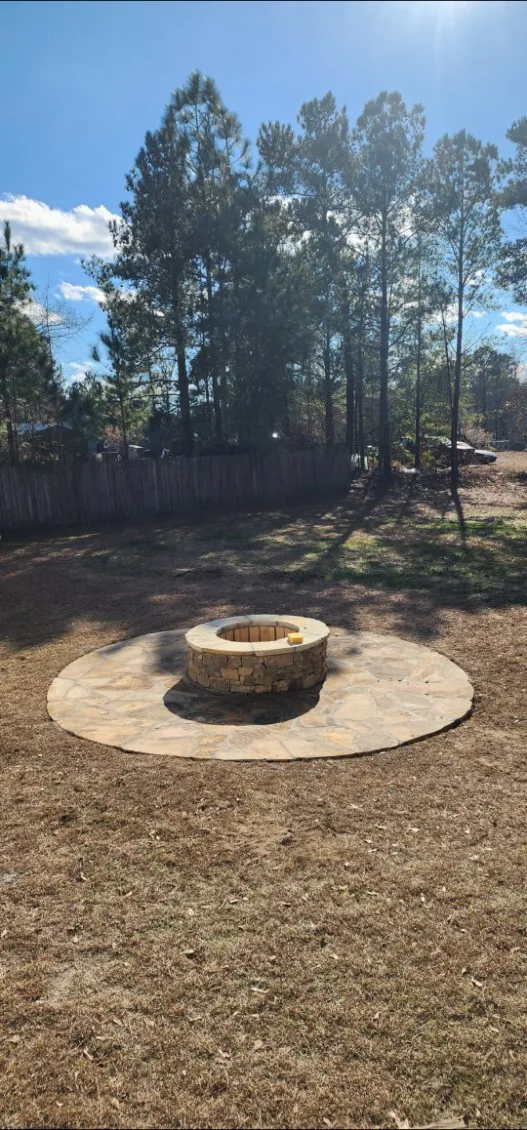
One more that costs nothing to ask: "What does this need from me every spring?" A well-built feature is a cleanout, not a rebuild. If the maintenance answer is vague, the design probably is too. Pairing the feature with a fire pit and patio is common here, and doing that work in one plan usually saves money over three separate visits.