What Asheville-area homeowners actually pay per square foot
Patio pricing in the Asheville market does not track the flat-sand quotes you see quoted nationally. Buncombe County lots are cut into ridges and creek bottoms, frost depth reaches the base course, and a surprising share of backyards drain toward the house before anyone touches a shovel. All three of those push the installed number up relative to the Piedmont.
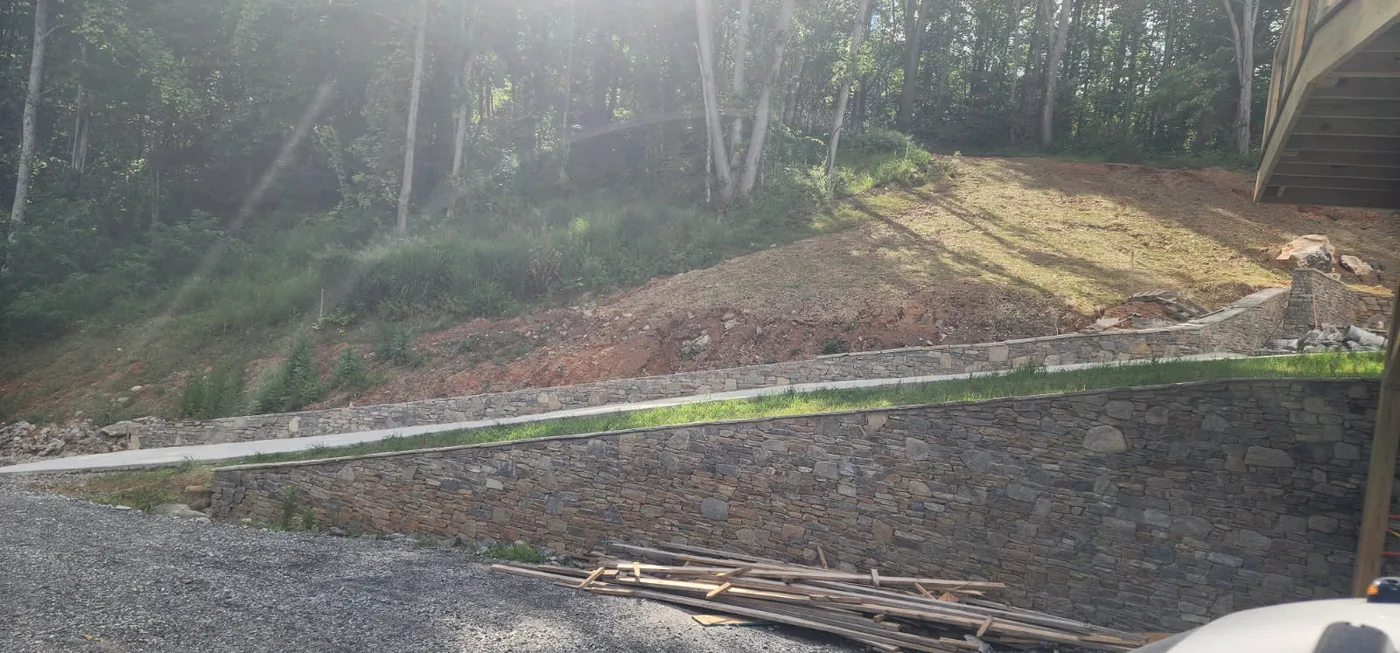
Drive through the older neighborhoods inside the Asheville city limits and you will see what the terrain does to a yard. Lots off Town Mountain, Sunset Mountain, and the slopes above the French Broad are short and steep, and a patio often has to be carved into a grade rather than set on one. Cross the river into West Asheville or head out toward Leicester and Weaverville and the lots flatten out some, but you trade slope for heavy clay and a high water table in the bottoms. Either way, the site, not the catalog, sets the price.
| Scope of work | Typical range per sq ft | What drives it |
|---|---|---|
| Concrete paver, simple rectangle, easy access | $18 – $26 | paver line, base depth, haul distance |
| Concrete paver, curved or multiple levels | $24 – $34 | cuts, edge restraint, step construction |
| Clay brick or tumbled paver, detailed pattern | $28 – $40 | material cost, pattern waste, hand work |
| Natural stone or flagstone, sloped grade | $35 – $55+ | stone selection, thickness, retaining and drainage |
| Base rebuild and drainage correction only | $8 – $18 | excavation depth, drainage run, disposal |
Those are honest working bands. A firm per-square-foot number given before anyone probes the subgrade is not a quote, it is a coin flip with your deposit.
Access is the quiet cost nobody mentions on the phone. A patio in a fenced Arden backyard that a wheelbarrow can reach in thirty seconds prices differently than one behind a steep Candler driveway where every pallet has to come down a slope by hand. When you compare bids, make sure each contractor is pricing the same access reality, because a low number built on an easier assumption is not a lower price, it is a future change order.
Why slope and freeze-thaw change the price here
Most patio failures we see around Asheville trace to water, not pavers. This county sits in a wet, freeze-thaw climate where saturated base material heaves in January and settles in March, and the federal record backs up how often water arrives: 19 federally declared disaster events touch Buncombe County (1973-2026), most of them storm and flood family. That history shows up in backyards as washed-out base, rutted joints, and patios that tilt toward the foundation within a couple of seasons.
The freeze-thaw cycle is the part homeowners underestimate. Western North Carolina swings above and below freezing repeatedly through a single winter, and every one of those swings pulls and pushes on saturated ground. A patio sitting on a thin, poorly compacted base flexes with that movement, and once the bedding sand washes into the voids, joints open and the field starts to shift. Depth and compaction are what resist it, and both cost money to do right.
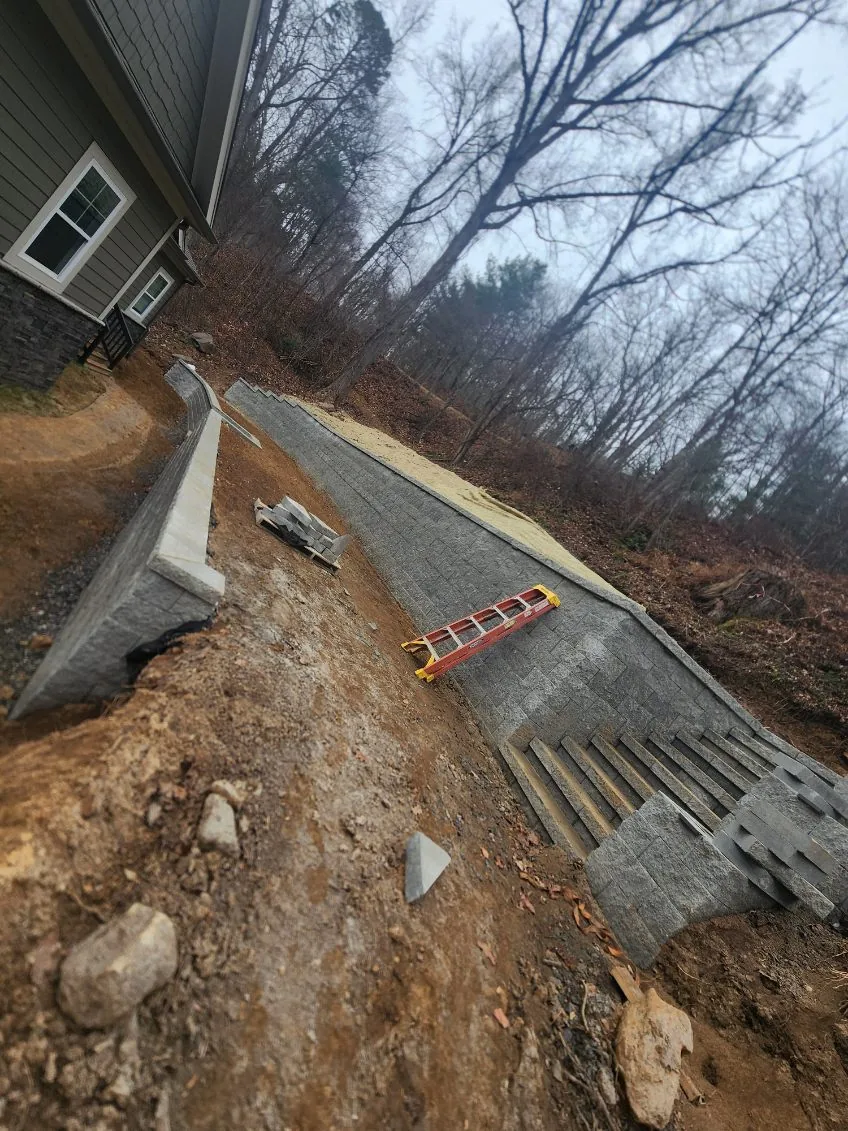
Practical consequence: on any sloped lot, the base and drainage are the job and the pavers are the finish. Budgeting a proper compacted base, geotextile separation, and a positive drain away from the house is what separates a patio that lasts twenty years from one that gets rebuilt in five. Where the grade drops hard, a short retaining wall or tiered design adds real cost but prevents real damage. If you want the natural-stone look on those grades, our flagstone patio guide covers how irregular stone is laid and priced.
Drainage design around here also has to think about where the water goes once it leaves your yard. On a ridge lot, a patio that sheds correctly still sends stormwater somewhere, and on a creek-bottom lot the ground may already be near saturation when a summer thunderstorm lands. That is why a good build routes roof runoff away from the patio field and ties the patio drain into a daylight outlet instead of just sloping it toward the property line.
Material choices and what they cost you per square foot
Paver selection swings the number as much as labor does. A standard 60mm concrete paver bought by the pallet is the value play. Tumbled, tumbled-edge, or clay brick units carry a premium and often need a deeper base because of how they interlock and drain. Natural stone sits at the top: thickness, source, and the sheer hand labor of fitting irregular pieces all add up. Locally quarried stone can look at home in a way manufactured pavers do not, especially against the older brick and native stone you see on homes near downtown and in Kenilworth, but the labor to fit it is real.
Two cost levers homeowners rarely think about: pattern and edge. A running bond rectangle wastes little material and cuts fast. A herringbone or ashlar pattern wastes more and takes longer. Edge restraint matters too. On a lot with any grade, flexible plastic edge may not hold the field in place, so a poured concrete or pinned edge is specified, and that is a real line item.
Color and finish are worth pricing up front as well. A tumbled, mottled paver hides the dust and leaf stain of a wooded lot better than a smooth uniform one, and in a place where oak and poplar drop something on the patio most of the year, that practical difference outlasts the trend. Ask to see full pallets in daylight rather than a small sample board, because a single tile never shows you how much shade variation the run actually carries.
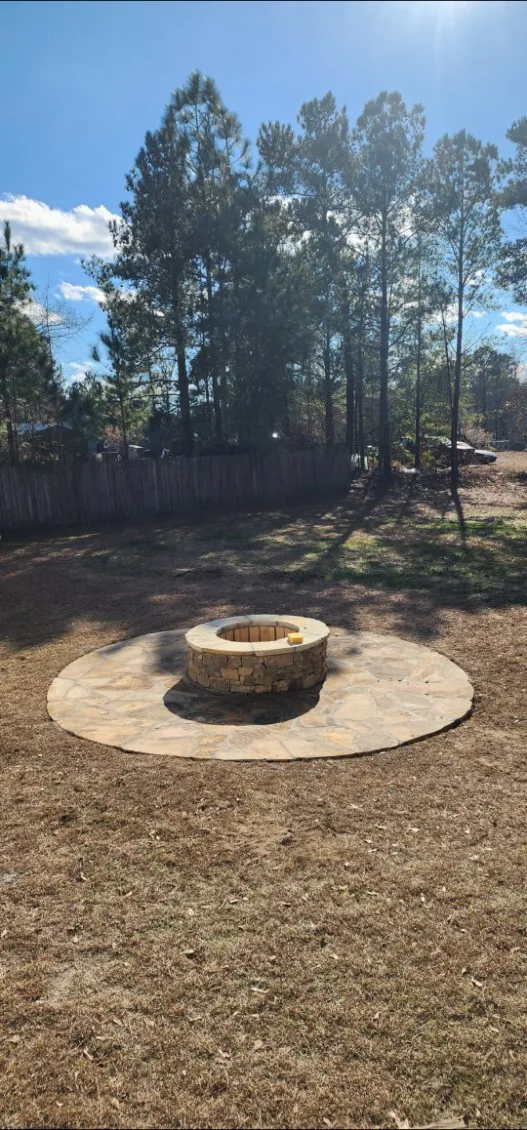
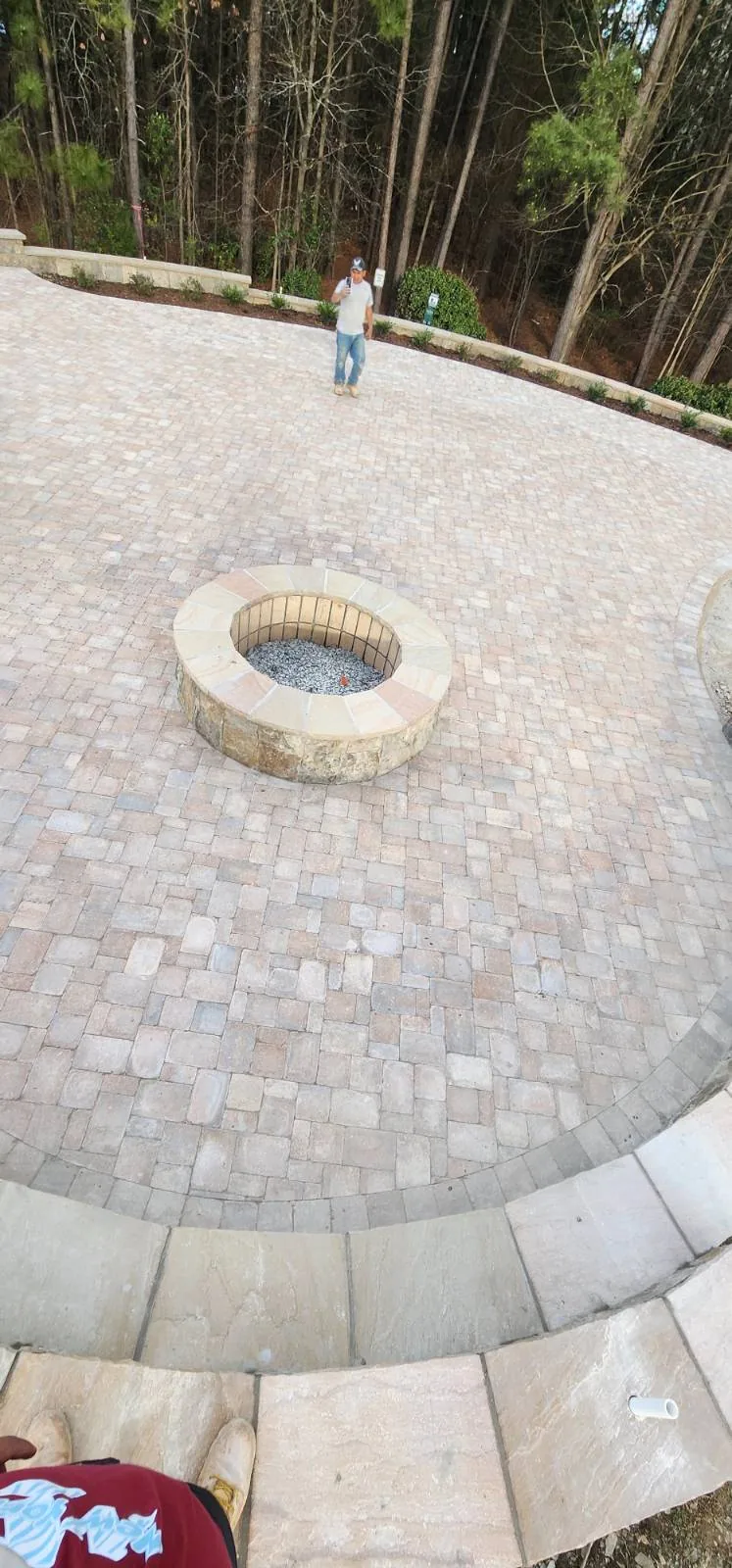
If you are trying to decide between a full patio and a smaller hardscape plus a focal feature, price the whole yard together. Adding a fire feature mid-project is cheaper than cutting into a finished patio later, and our fire pit cost breakdown shows what that line adds.
Permits, licensing, and code reality in Buncombe County
Patio work itself usually sits below the permit threshold in North Carolina, but any retaining structure over a certain height, any change to grade that redirects stormwater onto a neighbor, and any electrical run for lighting or a gas line for a fire feature can pull permits and inspections. The safest move is to ask the county before the crew starts, not after.
Contractor licensing is the piece homeowners get wrong. Under North Carolina law, a general contractor must be licensed by the NC Licensing Board for General Contractors once a project crosses the statutory threshold for the trade, and hardscape and masonry work is squarely in that category. Ask for the license, verify it on the board's lookup, and confirm the entity on the contract matches. An unlicensed crew that underbids everyone is not giving you a deal, it is transferring risk to you.
Building codes set the structural floor for anything that holds back soil or carries a load, and the model language most jurisdictions adopt comes from the International Code Council. You do not need to read the code yourself, but you should expect a competent contractor to know when a retaining wall stops being landscaping and starts being a structure that needs review.
Two more rules worth knowing. Any work that disturbs soil near a stream, ditch, or wetland can trigger erosion-control and stormwater requirements, and construction waste disposal is regulated too. That is not an abstraction in Buncombe County, where creeks thread through a lot of neighborhoods and the French Broad and Swannanoa carry whatever runs off the land. The EPA publishes guidance on stormwater runoff from construction sites that explains why the county cares about silt fencing and how you keep dirt out of the creek at the bottom of your street.
How to compare patio bids without getting burned
Three habits keep the number honest in this market:
- Make them describe the base. Ask how deep they excavate, what compacted material goes in, whether they use geotextile, and how they verify compaction. If the answer is vague, the price is too.
- Price the drainage separately. A bid that lumps drainage into the square-foot rate hides the line item that most affects your foundation and your neighbor's yard.
- Get per-square-foot and total. Per-square-foot lets you compare apples to apples across bidders. Total tells you what you are actually signing. A bid far below the table above deserves a hard look at what was left out.
Two more questions separate the pros. Ask who handles the excavation spoils, because on a steep lot there is no easy place to put a pile of clay and hauling it off is a cost someone has to own. Ask for a written scope that names the paver, the base depth, the edge type, and the drainage outlet, then hold every bidder to the same document. When the scopes match, the prices finally mean something.
Timing matters too. Late spring into early fall is the busy stretch for hardscape work in the mountains, and the freeze risk that closes the window in the dead of winter can also stretch a fall start into spring. Booking early and building before the ground hardens usually beats squeezing a rushed job in before the first freeze.
Ready to compare scope and finish options side by side? Start with our paver patio overview to see the systems and patterns we install around Asheville, then match it to the numbers above.