Fieldstone, boulder, block, timber: what fits a Woodfin yard
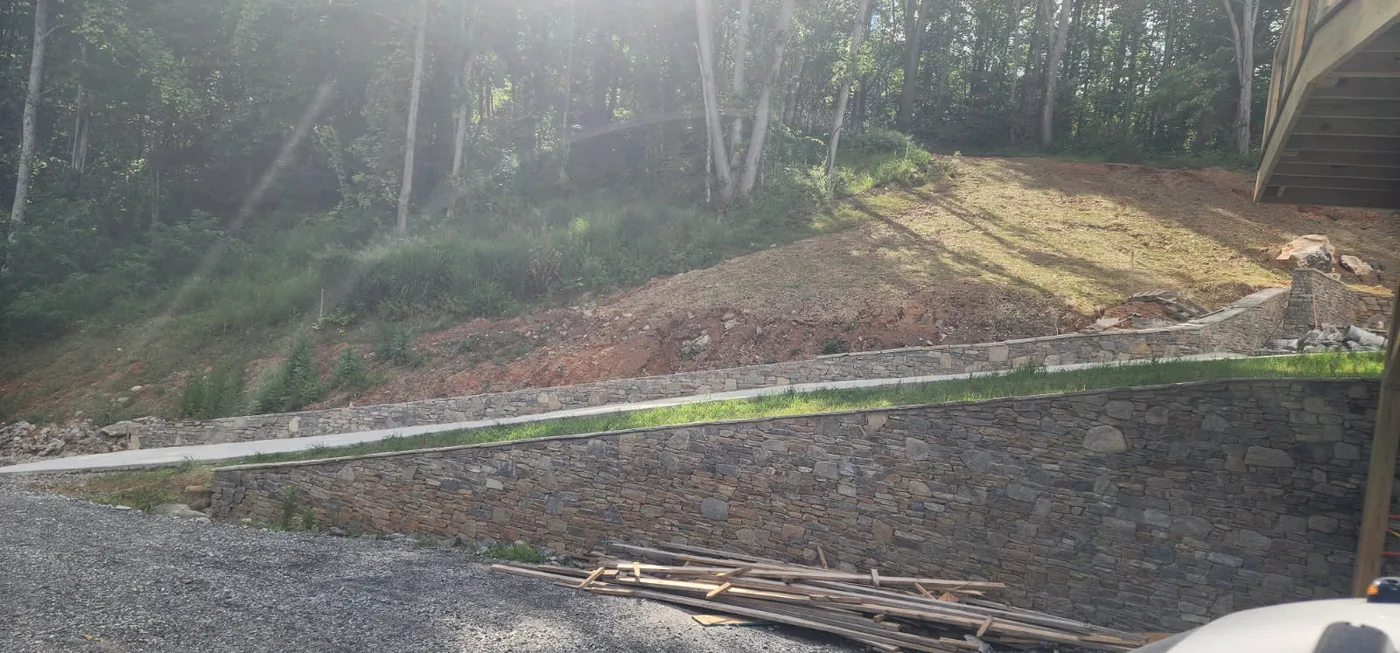
Woodfin sits north of Asheville along the French Broad, and its yards reflect that: narrow riverfront strips behind older homes off Riverside Drive, wooded ridge lots where the grade drops two or three feet across a single patio pad, and post-war ranch properties with flat-ish lawns that have never had a real retaining wall. The material choices aren't aesthetic first here, they're terrain-first. Fieldstone (local, irregular, mortar-set or dry-stacked) suits the small cottage and bungalow stock and the tighter budgets. Boulder work — big, machine-set native stone — is often the only honest answer on a cut bank above the river. Segmental block and timber are the fast, engineered options for long straight runs and permit-visible walls. Matching the material to the slope and the house is what separates a hardscape that holds from one that walks downhill in three winters.
The housing stock tells you a lot about what a Woodfin hardscape should be. Mid-century ranches along the flats often have a simple concrete stoop and a strip of lawn that used to be a garden. Those yards want a modest fieldstone patio set just below the back door, a short dry-stacked wall to hold the grade where the lot tips toward the creek, and a walkway that connects the driveway to the front entry without turning the whole yard into a hard surface. On the river side, older cottages sit on piers or low foundations, and the ground around them is often fill placed decades ago. A boulder wall set slightly back from the bank reads as deliberate, uses the stone that already exists in the region, and doesn't require the kind of tight, engineered footing that a block wall on saturated ground would demand.
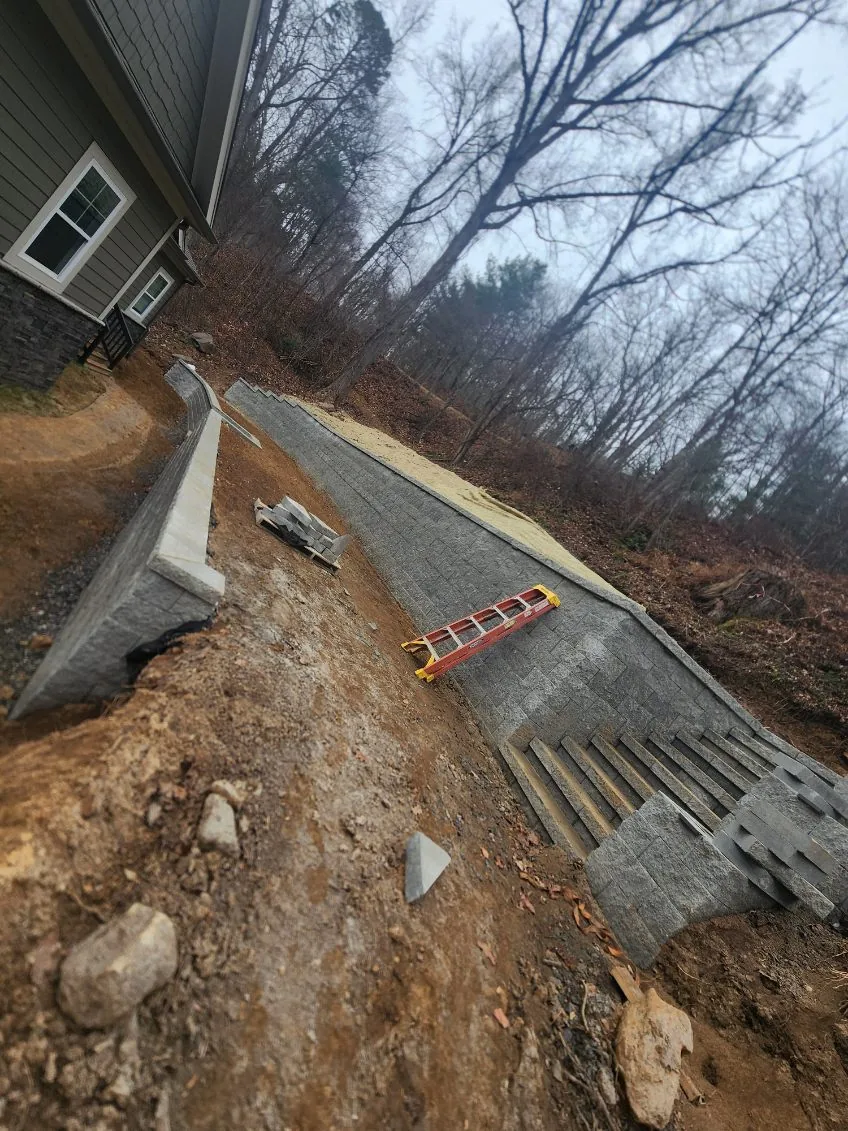
Up on the ridge cuts off Reynolds and Webb Cove, the story is different. Lots are steeper, driveways switchback, and the natural building pad is small. Here a fieldstone or boulder retaining wall isn't decoration, it's what makes the yard usable. Block can work when the wall is long and straight and the homeowner wants a clean face, but a block wall on a cut bank in this terrain needs proper drainage behind it and a footing that goes below the frost line. Timber is the budget option for low walls and planting terraces, but it has a lifespan, and in Woodfin's wet winters that lifespan is shorter than most people expect.
What terrain and weather do to a Woodfin build
Buncombe County's federal disaster record is the single best argument for doing drainage before ornament: 19 declared events touch this county across 1973-2026, overwhelmingly flood and storm-driven. Riverfront and creek-adjacent yards in Woodfin feel that history directly, and every patio or wall project starts with a water question — where does the uphill neighbor's runoff go, where does the gutter discharge, and where does the pad shed. The NC Department of Insurance, Engineering & Codes division treats foundation and site drainage as a code-level matter for a reason, and the same logic applies to a wall that is holding back a hillside. See the regional breakdown in our Buncombe County retaining wall cost table before you commit to a scope.
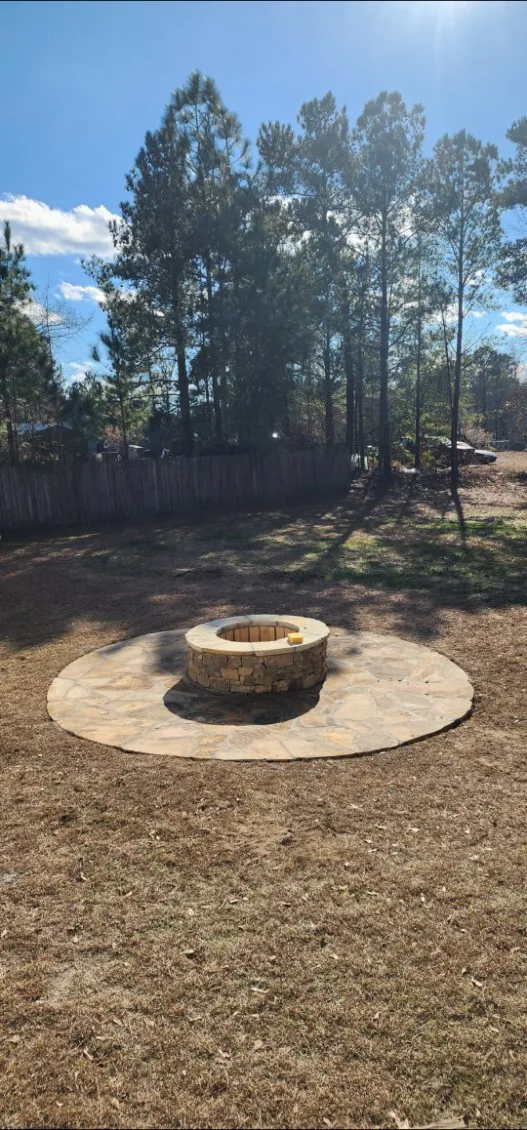
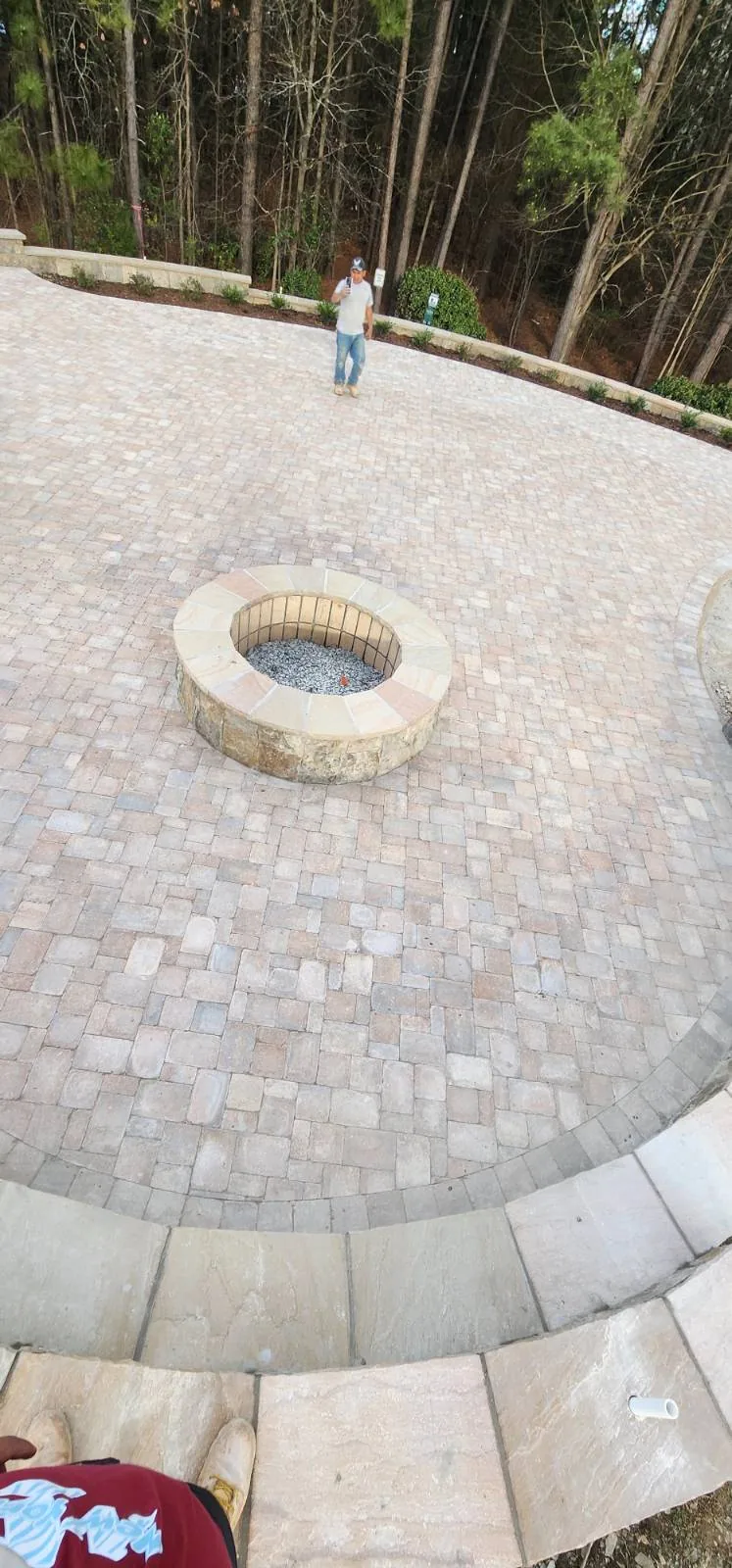
The terrain here compounds the water problem. Woodfin's ridge lots sit on slopes that shed water fast, and a patio cut into that slope acts like a dam unless the base is built to move water through it. A properly built patio starts with a compacted gravel base, a drainage layer, and a slope away from the house. On riverfront lots the water table is often high enough that a fire pit pad needs a gravel reservoir underneath so it doesn't turn into a bathtub after a storm. These aren't upgrades, they're the difference between a hardscape that settles evenly and one that heaves or sinks within a couple of seasons.
The National Weather Service tracks the rainfall and flood patterns that shape this county, and the practical takeaway for a Woodfin homeowner is simple: assume water will move through your yard, not around it. That means routing downspouts into a drainage bed, not just kicking them out onto the lawn. It means a French drain or swale along the uphill side of a retaining wall to relieve hydrostatic pressure. And it means a patio base that drains, not one that holds water against the foundation. Crews that skip these steps are saving a day of labor and creating a problem that shows up two winters later.
Typical Woodfin hardscape ranges
These are honest regional bands for planning, not quotes. On a Woodfin job the price movers are almost always access (can the machine reach the back yard without a crane or a hand-carry crew), slope (retained height drives the base depth), and material weight.
| Scope | Typical range |
|---|---|
| Fieldstone or paver patio, 200–400 sq ft, easy access | $3,200–$7,800 |
| Patio on a grade change with steps and base correction | $6,500–$14,000 |
| Dry-stacked fieldstone wall, under 3 ft | $45–$70 / sq ft of face |
| Mortared or block retaining wall, engineered, 3–6 ft | $65–$95 / sq ft of face |
| Boulder wall, machine-set native stone | $55–$90 / sq ft of face |
| Stone or block fire pit, plumbed or wood-burning | $1,500–$4,500 |
| Walkway, stone or paver, per linear foot | $35–$90 / lin ft |
Any wall over a few feet of retained height belongs in the engineered column — see our Woodfin retaining wall contractors page for how that changes the scope and the paperwork. A short fieldstone wall under three feet is mostly a labor and material job, and the cost tracks the square footage of the face. Once the wall crosses into engineered territory, the price includes an engineer's stamp, a deeper footing, drainage stone and pipe behind the wall, and often a permit. That jump is real, and it's why the per-square-foot number roughly doubles between a garden wall and a structural one.
A patio on a flat, easy-access yard is the simplest case. A patio that has to step down a grade, tie into an existing deck, or correct a base that was never properly built takes longer and may need a small machine for excavation. If the only way into the back yard is through a side gate or over the house, the material gets wheeled in by hand, and that labor shows up in the price. A fire pit is usually the smallest line item on the job, but it can climb if a gas line has to be trenched from the house and inspected. None of these numbers are arbitrary; they map to how much digging, hauling, and setting the site actually requires.
When a wall becomes a licensed-contractor job
Not every patio needs a general contractor license, but retaining walls and structural site work often cross the threshold where North Carolina's licensing rules apply. The NC Licensing Board for General Contractors publishes those thresholds, and any bid that includes a tall wall, footing work, or significant site grading should arrive with a licensed contractor's name on it. Ask before you sign — the contractor's status is public and the check takes a minute. The same applies to anything that touches drainage serving the house.
Why does this matter on a Woodfin job specifically? Because the terrain pushes more projects into structural territory. A three-foot wall on flat ground in a different county might be a landscaping project. The same wall holding a cut bank on a ridge lot, with a patio above it and a driveway below, is a structure, and if it fails, the consequences are not cosmetic. The licensing board's rules exist to make sure the person taking responsibility for that structure has the bond and the insurance to stand behind it. When you're comparing bids, ask for the license number and verify it. A contractor who hesitates on that question is telling you something.
Permits are a separate layer. A tall retaining wall or anything that changes drainage in a way that could affect a foundation may need a permit and inspection. The International Code Council publishes the model codes that North Carolina adopts and amends, and those codes cover footings, drainage, and structural requirements for walls above a certain height. A contractor who knows the local process will tell you upfront whether your project needs a permit, not after the wall is half-built. That conversation is a good sign, and it's worth having before any deposit changes hands.
Sequencing a Woodfin project without surprises
The useful order for a Woodfin yard is water, then structure, then surface, then fire. Water means grading, downspout routing, and any French drain or swale the site needs. Structure is the retaining wall, engineered if tall. Surface is the patio, walkway, or driveway apron. Fire — the pit or outdoor hearth — goes last because it needs a level, settled pad and, if plumbed, a gas line run. Crews that quote the fire pit first and the drainage never are telling you what they plan to skip. Start with our hardscaping overview for the full scope options, then request a site visit with your timeline flagged.
There's a practical reason for that order on a Woodfin lot. If you build the patio first and discover later that the uphill slope is dumping water onto it, you're either tearing out stone or living with a wet patio. If you build the retaining wall without drainage behind it, the wall takes the water pressure and starts to lean. If you trench for a gas line after the patio is set, you're cutting and patching. Doing water first is not a premium, it's the sequence that avoids rework. The structure comes next because walls and patios both need a stable base, and the wall changes the grade the patio sits on. Surface and fire follow naturally once the ground is settled.
Timing is worth planning too. Late spring and summer are the busy season for hardscape crews in Buncombe County, and a Woodfin project booked in April may not start until June. If your job involves a permit or engineered drawings, add lead time for that before anyone breaks ground. Materials matter as well: local fieldstone and boulder may come from a quarry within the region, but specialty pavers and block often ship from out of state, and delivery windows can slip. A contractor who orders materials early and confirms the lead time is a contractor who won't leave a half-finished patio sitting through a rainstorm.
Finally, be honest about scope creep. It's common to start with a patio and decide mid-project to add a walkway or a fire pit. That's fine if it's discussed before the base is closed up. It's expensive if it's added after the stone is down and the crew has to cut back into a finished surface. A good site visit will map out the whole yard, not just the first phase, so the drainage and base work account for what you might add later. That forward planning is what keeps a Woodfin hardscape from turning into a series of patches.