Asheville Stone Masonry

Services

Boulder Retaining Walls in Asheville, NCFire Pit Builders in Asheville, NCFlagstone Patios in Asheville, NCGas Fire Pit Installation in Asheville, NCHardscaping in Asheville, NCOutdoor Fireplace and Outdoor Kitchen Builders in Asheville, NCOutdoor Kitchen Builders in Asheville, NCPaver Driveways and Walkways in Asheville, NCPaver Patio Installers in Asheville, NCRetaining Wall Repair in Asheville, NCRetaining Wall Contractors in Asheville, NCStacked Stone Fireplaces in Asheville, NCStone Retaining Walls in Asheville, NC: Dry-Stack and MortaredStone Steps and Walkways in Asheville, NCStone Veneer Installation in Asheville, NCStone Waterfalls and Ponds in Asheville, NC

Cost & Rules

Backyard Waterfall and Pond Cost in NCBoulder Retaining Wall Cost in NCFire Pit Installation Cost in NCFlagstone Patio Cost per Square Foot in NCHow Much Does a Retaining Wall Cost in NC?Outdoor Fireplace Cost in NCOutdoor Kitchen Cost in NCPaver Patio Cost per Square Foot in NC

Areas

Fire Pit Builders in Arden, NCFire Pit Builders in Barnardsville, NCFire Pit Builders in Biltmore Forest, NCFire Pit Builders in Black Mountain, NCFire Pit Builders in Candler, NCFire Pit Builders in Canton, NCFire Pit Builders in Clyde, NCFire Pit Builders in Etowah, NC All pages → Get a free quote
Buncombe County, NC · Service Area

Stone Masons in Biltmore Forest, NC

Stone mason Biltmore Forest NC — retaining walls, steps, veneer. The 4-foot rule, permits, and real $8,500-$60,000+ wall ranges up front.

Free on-site estimateReal photos of our own workBased in Candler, west of AshevilleSe habla espanolWalls, patios, fire pits, veneer Free on-site estimateReal photos of our own workBased in Candler, west of AshevilleSe habla espanolWalls, patios, fire pits, veneer

Get a free quote

Fast reply — no obligation.

Goes straight to us. We never sell or share your info.

Quick answer
Stone Masons in Biltmore Forest, NC

For stone masonry in Biltmore Forest NC, expect most retaining and terrace work to run $8,500-$60,000+, with any wall over 4 feet drawing an engineered design and a Buncombe County permit that adds roughly $1,200-$4,500 in engineering and review before a single stone is set. Biltmore Forest sits on wooded, hilly ground where grade and mature trees decide the scope.

19
federal disaster declarations on record in Buncombe County
Hurricane Dorian
most notable event in the federal record
1973–2026
span of the declaration record
Asheville
Buncombe County hub

The four-foot line that governs most Biltmore Forest walls

Biltmore Forest is a wooded, hilly enclave just south of Asheville, most of it developed in the 1920s and after, laid out on slopes that drop away toward the Swannanoa and its tributaries. That history and that grade produce the defining condition of stone work here: walls that must hold a yard up rather than simply mark a line. And the single fact that reshapes a Biltmore Forest stone project is a wall's height, not its length. Once a retaining wall or terrace step assembly carries earth above about four feet, the code treats it as a structure, not landscaping. That triggers an engineered design, a stamped plan where the local authority requires one, and a permit — none of which appear in a quote from a mason who only lays stone.

Why four feet? Earth behind a wall pushes outward, and the taller the retained soil, the harder that push grows. It multiplies with surcharge — a driveway, a structure, or a big tree root zone sitting above the wall — and with the water Asheville's weather delivers against slopes that were already fragile. The result: a wall that was fine in year two can creep and lean by year ten unless it was designed for the load and drained behind. The International Code Council publishes the model provisions that most local amendments begin from; a serious mason knows them well enough to pull the plan review trigger early rather than after a failed inspection.

What engineered, permitted walls actually cost here

Pricing in Biltmore Forest tracks the retained height and the difficulty of getting to the back of the property, not just the square footage of face stone. The table below lays out the realistic bands for this area, phrased as ranges because no two grades in this community repeat. Add engineering and permit-gone-concrete to any band that crosses the four-foot line, and add significant cost when access needs a crane or a narrow drive.

ScopeTypical rangeWhat moves the price
Dry-stack garden wall under 2 ft.$45-$85 per sq. ft.Stone type, footing prep, curve count
Mortared retaining wall, 2-4 ft.$85-$140 per sq. ft.Drainage, capstone, footings, grade
Engineered wall above 4 ft.$120-$220 per sq. ft.Stamped design, tieback/geogrid, inspection
Stone steps and terrace treads$1,400-$6,500 per flightRise, stone dimensions, lighting, rail
Architectural veneer on a home addition$35-$75 per sq. ft.Backing type, stone, trim and lintels
Engineer + permit on an over-4-ft. wall$1,200-$4,500 addedSoils report, surcharge, municipal review

The bands shift with what is already there. A wall that incorporates an old stone retaining line on an estate lot usually costs less than a clean-slate build, because existing footings and alignment guide the new construction. Run the numbers against the full county breakdown in our Buncombe County retaining wall cost guide before you compare bids.

Stone, water, and a mature-tree canopy

Biltmore Forest's canopy is one of its defining features, and it is also the reason local stone work fails early when it is rushed. Tree roots pry at wall footings, draw moisture out of soil, and change the drainage regime of a slope over decades. Add the region's storm record — federal disaster declarations touch this county across 1973-2026, largely flood and storm family per the 19 events on record — and the drainage question becomes the wall's real design brief. The National Weather Service reports this corner of the mountains among the wetter in the Southeast: observation data show the pattern, and any wall built without a drainage plane and a clear path for that water will shorten its own life.

Sensible masonry starts underground. Footings bear below frost, a free-draining gravel backfill and perforated pipe move water away from the face, and weeps relieve hydrostatic pressure instead of waiting for it to crack the wall. Only after the water plan is set does the visible stone go up. If you are building the retaining wall as part of a broader site plan, our retaining wall service guide covers the design and material choices we walk you through before a quote.

Who pulled the permit — and who is allowed to

Buncombe County and the Town of Biltmore Forest run permits through their local building departments, and any wall tall enough to need engineering needs that stamped plan on file before work begins. The other threshold to know is state licensing: the North Carolina Licensing Board for General Contractors sets the dollar threshold above which a project must be run by a licensed general contractor and not just a specialized mason. Most large terrace and retaining builds cross that line, so ask early who will hold the license and who will hold the permit. A mason who says "we don't need a permit for that" on a six-foot wall is telling you how the rest of the job will go.

To work with masons who routinely pull permits on engineered walls and can show you the plans and inspection records from past jobs, our Biltmore Forest retaining wall contractor directory is the fastest starting point. It filters by who can carry a stamped job from design through final inspection, not just who can stack stone.

Reading a Biltmore Forest masonry quote

A sharp quote in this community shows the wall's height above grade at every point, names the drainage detail, states whether an engineer is included, and separates footings from face stone. A vague quote leaves those out on purpose, because each one is a place costs appear later. Ask three questions on every bid: is the engineered design in the number, who pulls the permit, and how water leaves the wall. If a quote does not answer all three in writing, treat it as an estimate of the easy part only. That instinct alone will save you more money here than any single negotiation.
Buncombe County, NC: the storm record

Federally declared disaster events19
Named storms in the recordHurricane Dorian, Hurricane Florence, Hurricane Fran, Hurricane Helene, Hurricane Ian, Hurricane Isaias
Incident typesFire, Flood, Hurricane, Severe Storm, Snowstorm
Record span (fiscal years)1973–2026
Source: FEMA OpenFEMA disaster declarations. County-level federal declarations, not individual claims.
Questions people ask

Straight answers

How much does a stone retaining wall cost in Biltmore Forest NC?
Dry-stack garden walls run about $45-$85 per sq. ft.; mortared walls two to four feet typically land $85-$140 per sq. ft.; engineered walls above four feet run $120-$220 per sq. ft. plus $1,200-$4,500 for engineering and permit. Steep lots and tight access push toward the top of each band.
Do I need a permit for a retaining wall in Buncombe County?
In general, walls that retain more than about four feet of earth require an engineered design and a building permit through the local authority, and taller or surcharged walls draw closer review. Confirm with the Town of Biltmore Forest or Buncombe County before you break ground, and see the NC Licensing Board for who may contract the work.
Can you match the old stonework on a 1920s Biltmore Forest home?
Usually yes. Local stone varies, so the honest first step is sourcing matching material or blending new stone where it reads naturally against the existing wall. We look at the original assembly before proposing anything.
How long does a permitted stone wall take?
Engineering and permit review often add two to six weeks before work begins; construction on a typical wall runs one to three weeks depending on size and access. Schedule the review phase early, since it is the part most likely to slip.
Is a retaining wall or a drainage fix the right first move?
In this terrain, water is almost always the first conversation. If a wall is leaning after storms, correcting the drainage before rebuilding avoids repeating the failure. See our retaining wall guide for how the two connect.
What stone types are used around Asheville?
Local options include the region's native fieldstone and granite, with bluestone and sandstone brought in for caps and treads. The right choice follows the wall's exposure, the load it carries, and the look of the surrounding home.
How do I compare stone masonry bids here?
Ask every mason three questions: is the engineer included, who pulls the permit, and how does water leave the wall. Bids that answer all three in writing are the ones worth comparing, and our contractor directory starts with masons who can do exactly that.
Our work

Our work

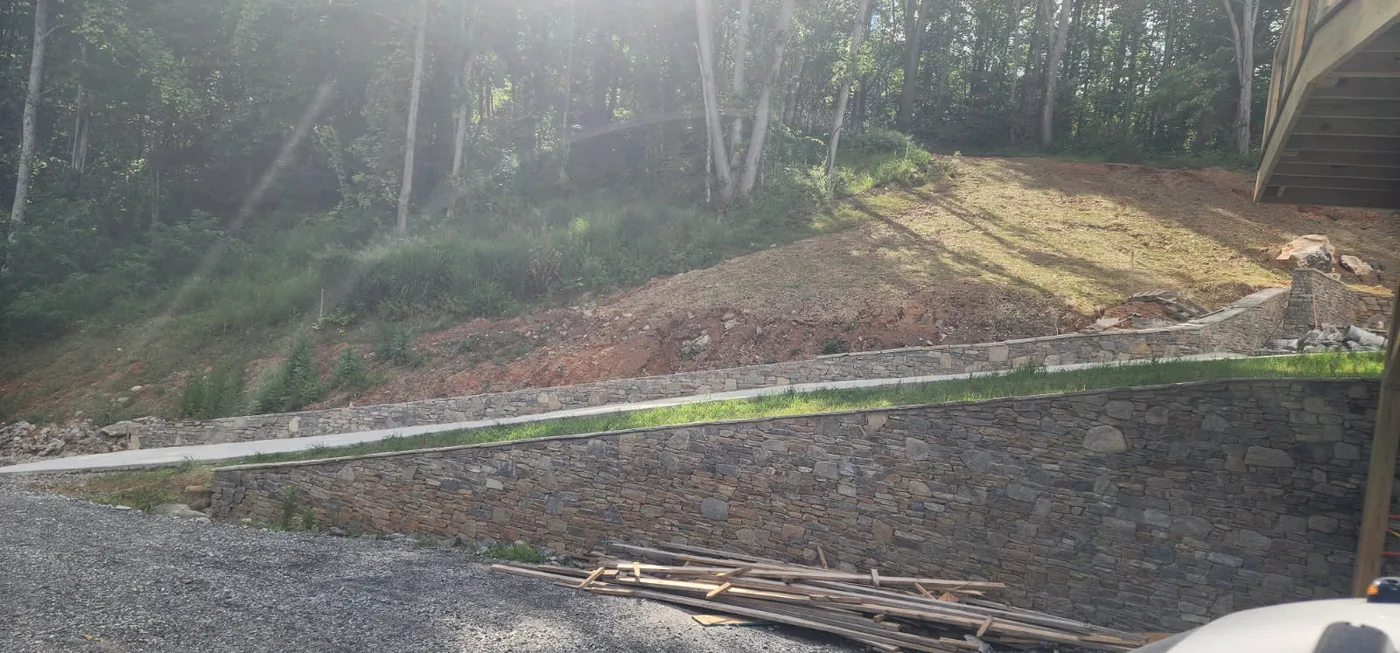
Mortared fieldstone retaining walls stepping up a mountain driveway, with fresh concrete poured between them. Built by Asheville Stone Masonry.
Mortared fieldstone retaining walls stepping up a mountain driveway, with fresh concrete poured between them.
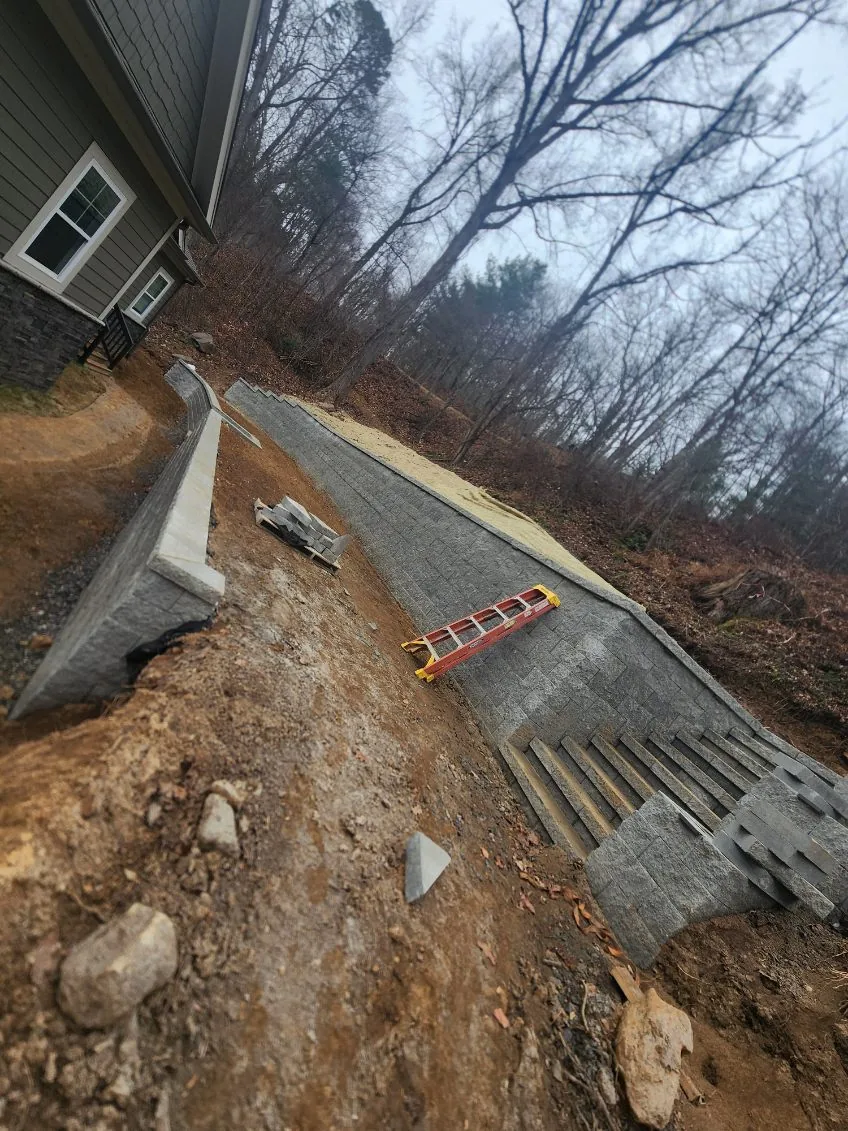
Segmental block retaining wall with a built-in stair run, holding the grade beside a new home. Built by Asheville Stone Masonry.
Segmental block retaining wall with a built-in stair run, holding the grade beside a new home.
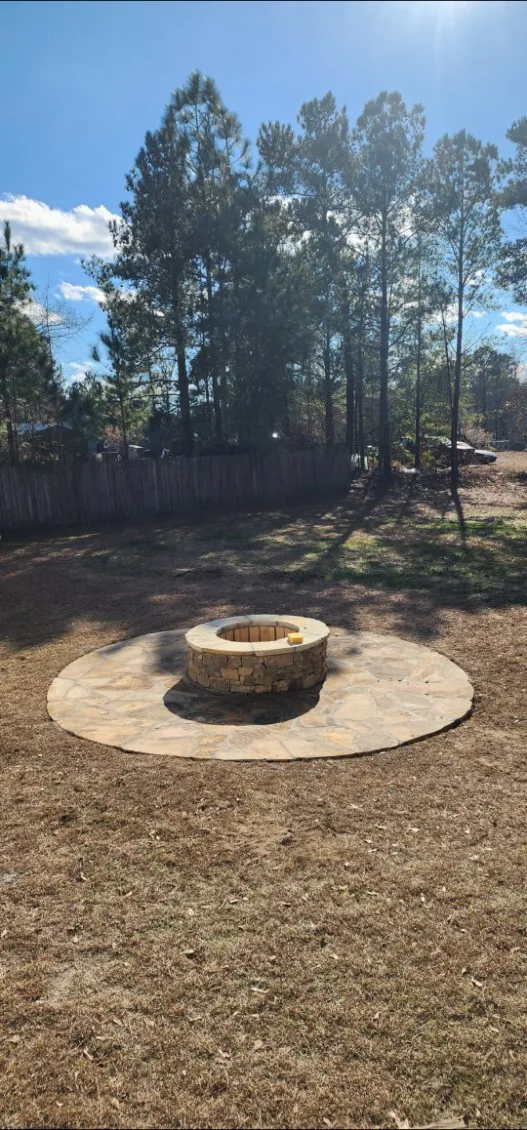
Finished fire-pit patio: a stacked-stone ring with a cut-stone cap inside a full circle of flagstone. Built by Asheville Stone Masonry.
Finished fire-pit patio: a stacked-stone ring with a cut-stone cap inside a full circle of flagstone.
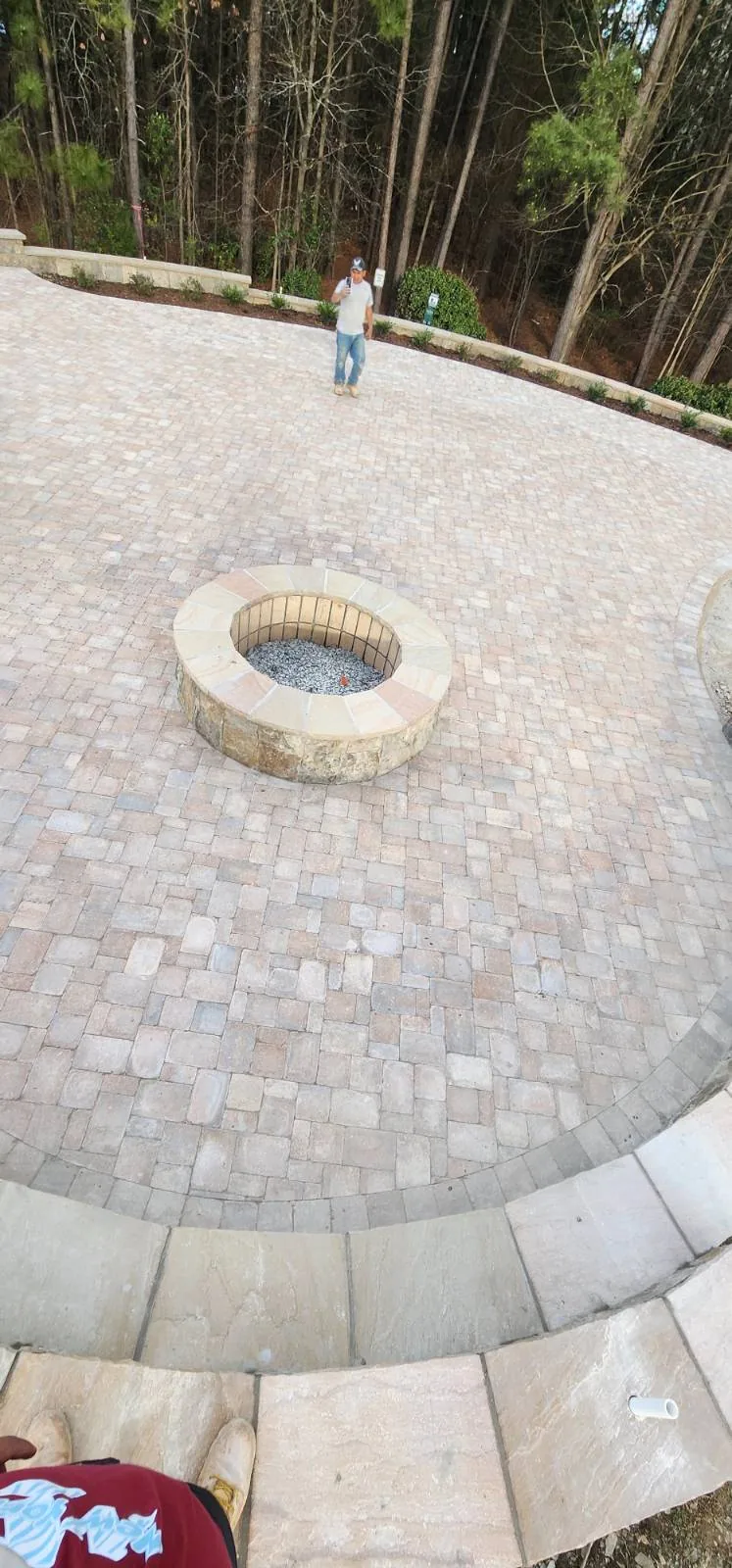
Circular paver patio with a stone fire pit and a curved seat wall at the tree line. Built by Asheville Stone Masonry.
Circular paver patio with a stone fire pit and a curved seat wall at the tree line.
Get a quote

Tell us about your project. We price it straight.

Where it is and what you need — that's all it takes to start. You get a clear scope and an honest number, and your info never gets sold to a list.

Or call — (828) 424-8873

Fast, free quote

Call now Text us