Why Clyde walls get stone veneer, and which stone
Drive the back roads between Clyde and the Crabtree community and you'll see the pattern: older block and brick ranches near the river bottoms, timber-framed homes on the graded benches above, and a steady run of new construction where a plain foundation wall faces the road. Stone veneer is the most common upgrade for all three, but the material choice splits along budget and terrain. Fieldstone reads regional and works well on long, low facades where a busier texture would overwhelm the roofline. Manufactured stone veneer — cast concrete with a molded face — now dominates Clyde-area budgets under roughly $30,000 because it installs faster, weighs less, and matches the fieldstone look closely enough at street distance. Natural boulder and full-dimension stone show up on statement columns, chimney chases, and entry surrounds where the wall is small and the stone can be the point. Block and timber walls, common on post-war homes here, often get a veneer face as part of a larger porch or carport rebuild.
The practical question isn't which stone looks best in a photo. It's whether the wall behind it can carry the load and shed water correctly — which is a different answer for a 1950s block ranch than for a house wrapped in modern weather-resistive barrier.
What Clyde stone veneer work actually costs
Prices below are installed ranges for Haywood County, not flat rates. Wall height matters more than square footage beyond about 10 feet, and anything above a single story typically adds scaffolding and a second-story access line item. Chimneys, columns, and curved walls price higher per square foot because of cutting waste and layout time.
| Scope | Typical installed range |
|---|---|
| Manufactured veneer over prepared wood frame (scratch coat + lath) | $18–$28 / sq ft |
| Manufactured veneer over existing clean block or brick | $14–$22 / sq ft |
| Natural fieldstone or thin-cut stone veneer | $28–$45 / sq ft |
| Full-dimension boulder or pillar stone accents | $45–$75 / sq ft |
| Foundation skirt (2–3 ft tall band around a house) | $2,800–$7,500 total |
| Entry surround, chimney chase, or single column | $1,600–$5,500 each |
| Whole-wall reclad, one story, including removal of old siding | $9,000–$22,000 total |
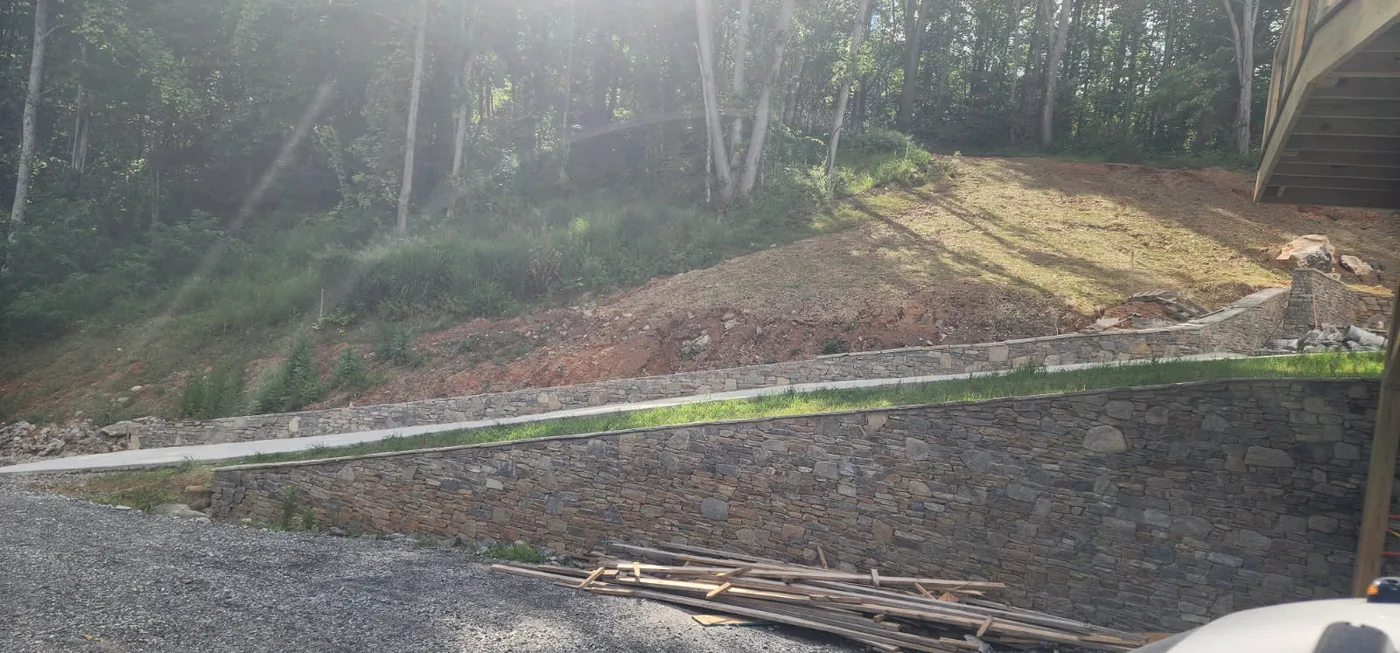
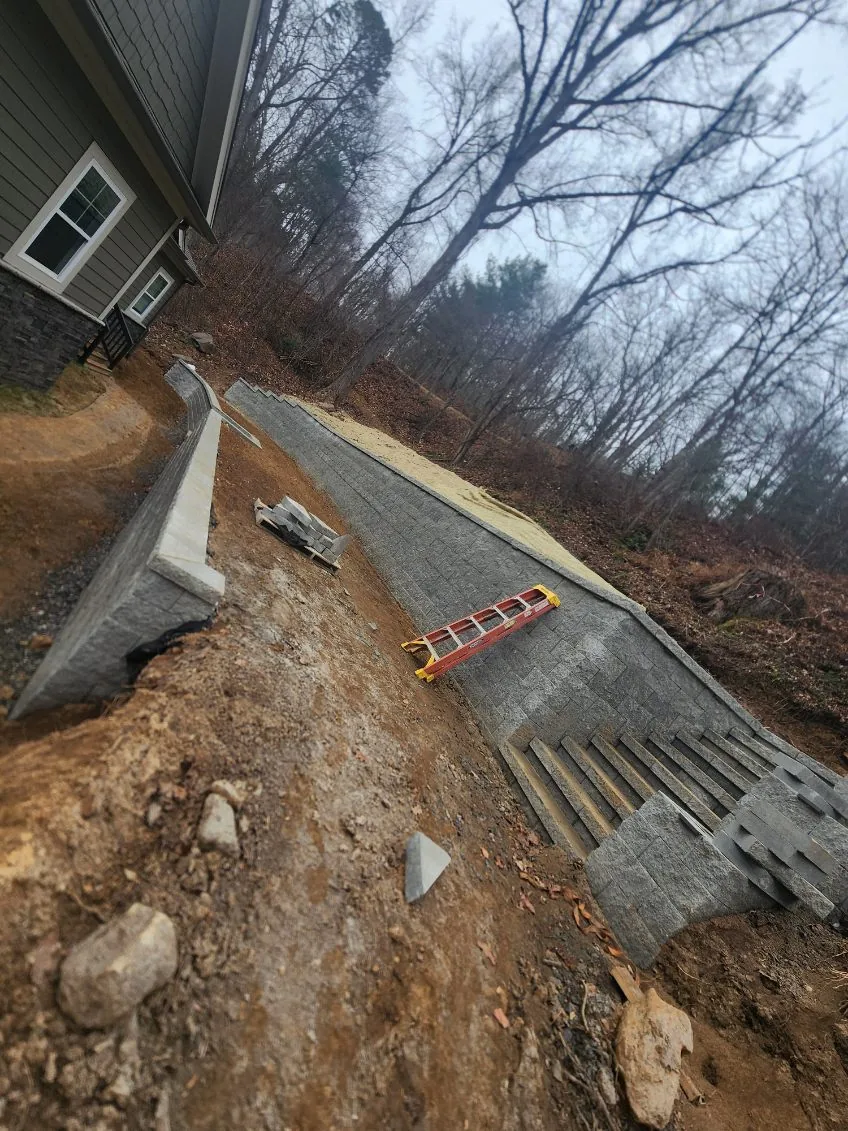
Add-ons that move the number: replacing rotted sheathing found under siding, adding a drainage plane and weep screed where the old wall has none, and any masonry that ties into an existing retaining wall or grade change. Those are not upsells — they are what separates a veneer that lasts thirty years from one that delaminates in eight. For the sitework side of a sloped yard, the Haywood County retaining wall cost breakdown covers how grade and drainage price separately from the veneer itself.
The code and moisture piece nobody quotes for
Adhered veneer over wood frame is not a cosmetic job — it's a drainage assembly. The relevant standard is the veneer installation chapter of the model code published by the International Code Council, and it requires a weather-resistive barrier, a corrosion-resistant metal lath, a scratch coat, and a weep screed at the base so water that gets behind the stone has somewhere to go. Clyde sits in a wet, humid pocket of the mountains, and walls that skip the drainage plane wick moisture into the framing behind them. That failure shows up years later as soft sheathing and popped stone, never as a visible crack on day one.
On the permitting side, cosmetic veneer over an existing wall usually doesn't trigger a general contractor license on its own, but a project that changes structure, adds a load-bearing column, or rebuilds a wall does. The threshold rules live with the North Carolina Licensing Board for General Contractors, and it's worth asking any bidder which side of that line your job falls on. Also relevant in this county: the storm and flood record. 19 federal disaster declarations touch Haywood County across 1973-2026, mostly storm and flood family, and every one of them pushed water at walls that were detailed for a drier assumption. See the National Weather Service for how that weather pattern behaves locally. If your veneer project touches a wall that has already taken water, the drainage detail is the part to get right first.
Matching the material to the Clyde house
A block ranch off the main road through town wears manufactured veneer well — the wall is flat, the square footage is predictable, and a mid-tone cast stone close to the region's gray-brown fieldstone reads honest from the street. A timber-framed home on a graded bench above the valley is a different animal: natural fieldstone or thin-cut stone on the lower band and columns, left unpainted, ages into the landscape instead of fighting it. On new builds, the cheapest moment to add veneer is before the siding goes up, because the lath and drainage plane can be detailed into the wall from the start rather than retrofitted. The stone veneer service page walks through the material options and the wall assemblies each one needs.
The one rule that holds across all three: never let a bidder quote veneer without specifying what's behind it. The stone is the visible 10 percent. The drainage plane, lath, and weep screed are the 90 percent that determines whether the wall is still there in fifteen years.