The four-foot line that decides your Lake Junaluska wall project
Drive almost any road that climbs away from Lake Junaluska toward the Waynesville side and you'll pass walls doing quiet structural work: stacked stone terraces holding a lawn above the water, segmental block walls shoring driveways, and older timber walls that have been leaning into the hillside since before anyone kept records. Lake Junaluska sits in a bowl of slopes, and every one of those walls is managing a grade change that has to go somewhere.
In Haywood County, a retaining wall under four feet of retained height and not surcharging a structure usually falls in the handyman or small-contractor range — nothing exotic, no engineering letter required by most local reviewers. Once a wall retains more than four feet, or sits close enough to a home, driveway, or property line to matter, the conversation changes. Plans, an engineer's stamp, and a permit enter the picture, and the price you were quoted for a simple rebuild no longer covers the job. That line is the single most useful thing to understand before you call anyone about retaining wall repair in Lake Junaluska, NC.
Where that four-foot line actually shows up around the lake
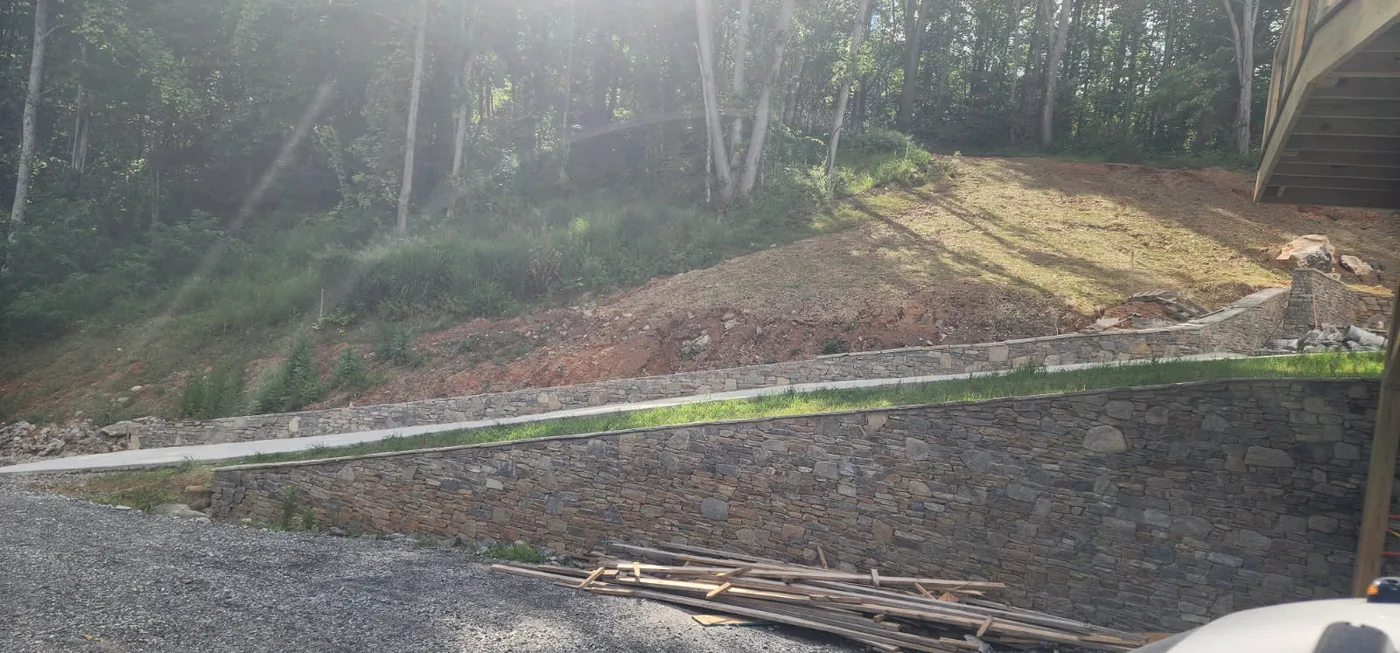
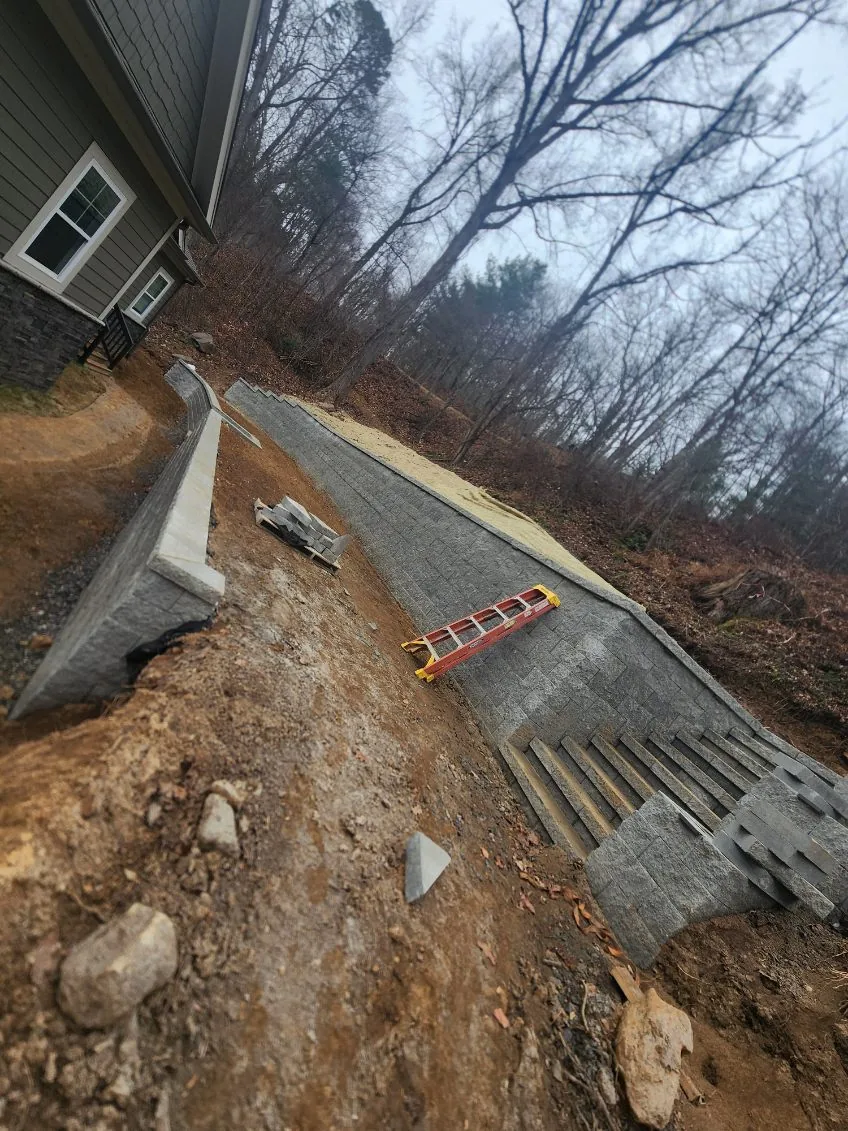
The terraces above the lake's shoreline are often short and decorative, well under the line. The walls that give people trouble are the ones holding driveways on the steep connector roads between the lake and Waynesville, and the walls that terrace backyards on the hillside neighborhoods. Those frequently exceed four feet of exposed face, and many were built decades ago with drainage that has long since clogged.
A wall that is failing shows it in specific ways: bulging in the middle, soil seeping through the joints, water pooling at the base after a storm, a visible lean that has grown over one season, or cracking that runs through the block. Any of those on a wall over four feet is a reason to get an engineer involved before a contractor starts pulling it apart. The NC Licensing Board for General Contractors sets the threshold where a general contractor's license is required, and wall projects with significant grading or structural scope can cross it.
Water is almost always why the wall failed
Haywood County sits in one of the wettest corners of North Carolina, and the disaster record reflects it: 19 federal disaster declarations have touched this county across 1973-2026, weighted heavily toward storm, flood, and landslide events. Every one of those pushed water at walls that were designed for a gentler assumption about runoff. When a retaining wall fails here, the soil behind it is usually saturated, the drainage stone is clogged with fines, and the wall has been fighting hydrostatic pressure it was never built to hold.
That is why a repair that only replaces the facing blocks and skips the drainage behind them is a repair you will repeat. Weep holes, a properly graded gravel column, and filter fabric are not optional on a hillside wall — they are the reason the wall survives the next wet winter. If a contractor quotes you a rebuild without addressing drainage, get a second opinion.
What repair scopes cost in Haywood County
Numbers below are regional bands for residential work in and around Waynesville and Lake Junaluska, not fixed prices. Actual cost depends on wall height, length, access for equipment on a slope, and whether engineering is required.
| Scope | Typical price range | Notes |
|---|---|---|
| Minor repair — re-pointing, replacing cracked caps, stabilizing a few blocks | $400–$1,200 | Walls under four feet, cosmetic or localized failure |
| Section rebuild — replacing a failed run, restoring drainage behind it | $1,500–$4,500 | Most common residential scope in the lake area |
| Full wall rebuild under four feet, with new drainage | $3,000–$6,500 | Depends heavily on access and wall length |
| Engineered wall above four feet, permit and design letter included | $8,000–$22,000+ | Adds plan review, engineering, and inspection to the base cost |
| Drainage-only retrofit (weep holes, gravel, fabric, surface grading) | $900–$3,000 | Often the right first step before structural repair |
The full Haywood County cost breakdown has line-item ranges if you want to sanity-check a bid. For the underlying repair methods, the retaining wall repair overview covers what each scope involves.
How to vet a wall contractor on this terrain
Ask three questions. First: who pulls the permit if the wall is over four feet, and will they put the engineer's letter in writing before work starts? Second: how do they handle drainage behind the wall, and can they explain it without hand-waving? Third: how do they get equipment onto a slope without tearing up the yard above or below? On Lake Junaluska's hillsides, access often drives cost more than the wall itself.
For any scope that involves plumbing, drainage tie-ins, or fire-related site work, verify the contractor holds the correct state license through the NC State Board of Examiners of Plumbing, Heating and Fire Sprinkler Contractors. And when a wall is failing because of chronic water, it is worth understanding how national guidance treats slope and drainage design — the EPA publishes stormwater and erosion resources that explain why this matters on steep residential ground. The Lake Junaluska contractor list is the next stop once you're ready to get bids.