Why access, not stone, sets the price in Fletcher
Fletcher sits in Henderson County between Asheville and Hendersonville, and the ground under it was never designed for delivery trucks. The town spreads from US-25 and Airport Road out to ridge and valley lots off Howard Gap Road, Cane Creek Road, and the Broadpointe side. A quarter of the residential lots here were graded so the house sits proud and the drive drops steeply, and that short stretch of asphalt decides what your stonework actually costs.
Every load of Tennessee fieldstone or North Carolina granite in this business starts at a quarry and ends at your wall. Quarry-to-truck distance is a line item almost every mason can estimate within a few miles. The last hundred feet is where bids diverge. A mason with a flat, two-car-wide drive and a pad near the front of the house can back a truck to the work and cut a crew of four to two. That is why a retaining wall quoted one budget line in a flat subdivision off Butler Bridge Road can run double on a $1.4M ridge lot in the same ZIP — the material is identical, the access isn't.
Before any number gets written down, a Fletcher quote should answer four questions: how many square feet of wall or patio are actually in the plan, what stone is being specified, how the stone gets to that point in your yard, and how long the crew stands on site. Three of the four are access questions. A bid that skips them hasn't seen your property yet.
What stonework Fletcher contractors actually build
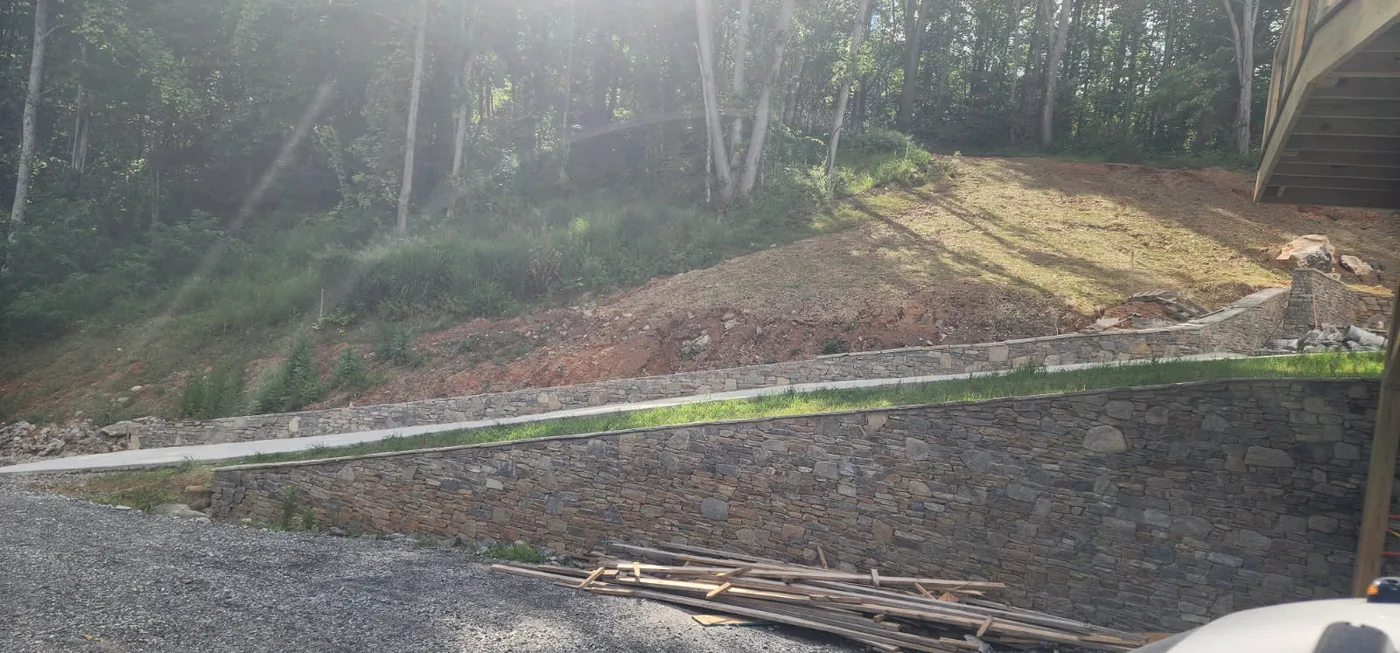
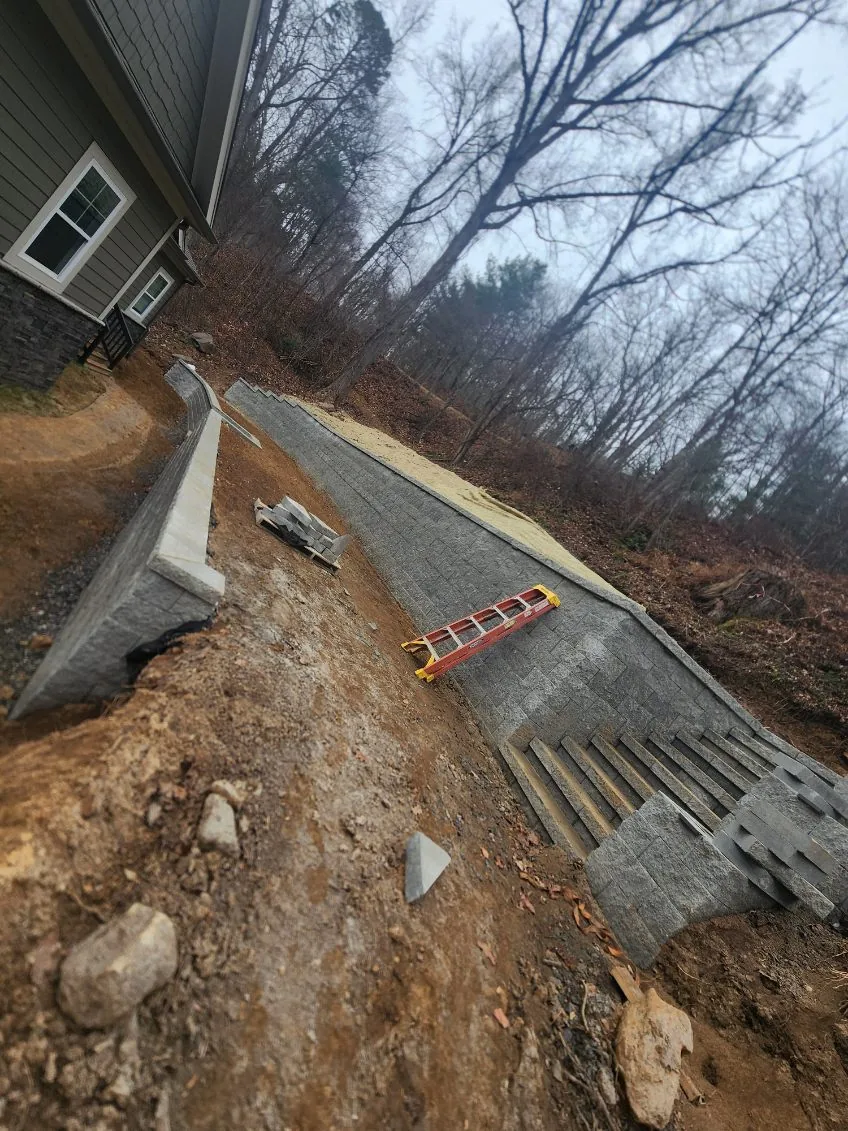
The properties here produce a predictable mix. Older farm-parcel homes use stacked stone retaining walls and steps where the grade has been fought for decades. Newer builds on cut-and-fill lots want a retaining wall at the drop-off, a pathway from driveway to front door, and often a patio in the same visit. Then there's the project that brings the most calls: a driveway that started at a 20-degree slope and now stands over a low wall that's leaning toward the county road.
Signs worth acting on early are the ones that change with rain. A wall face bulging by an inch after a storm, a step riser that no longer lines up with the sidewalk, a mortar joint that opens on the downhill end of a run, or weep holes that stopped running. Retaining wall repairs are far cheaper than rebuilds, and the engineering reason is simple: gravity walls fail either by sliding on the base or tipping at the face, and both advance faster once drainage behind the wall stops working.
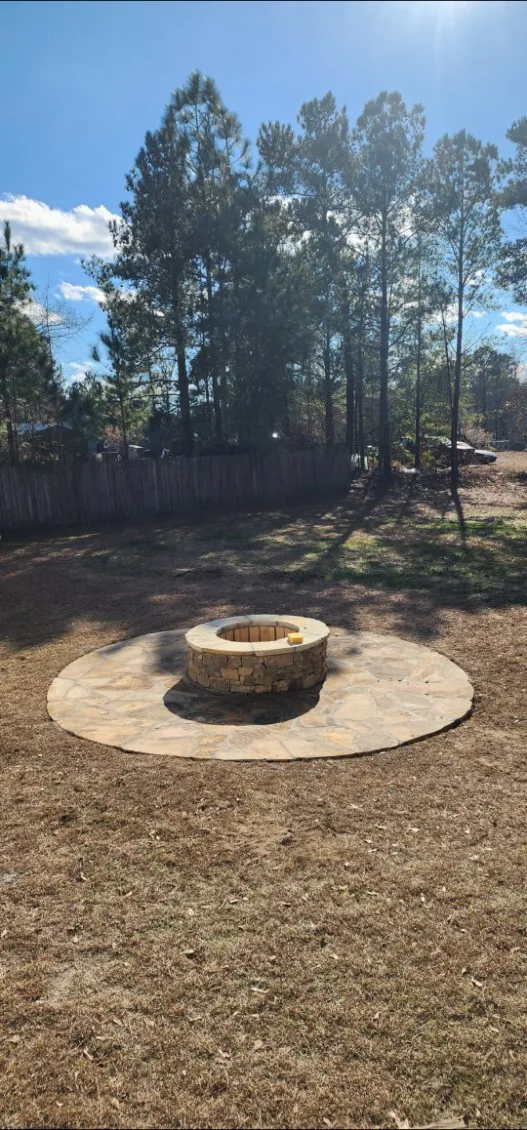
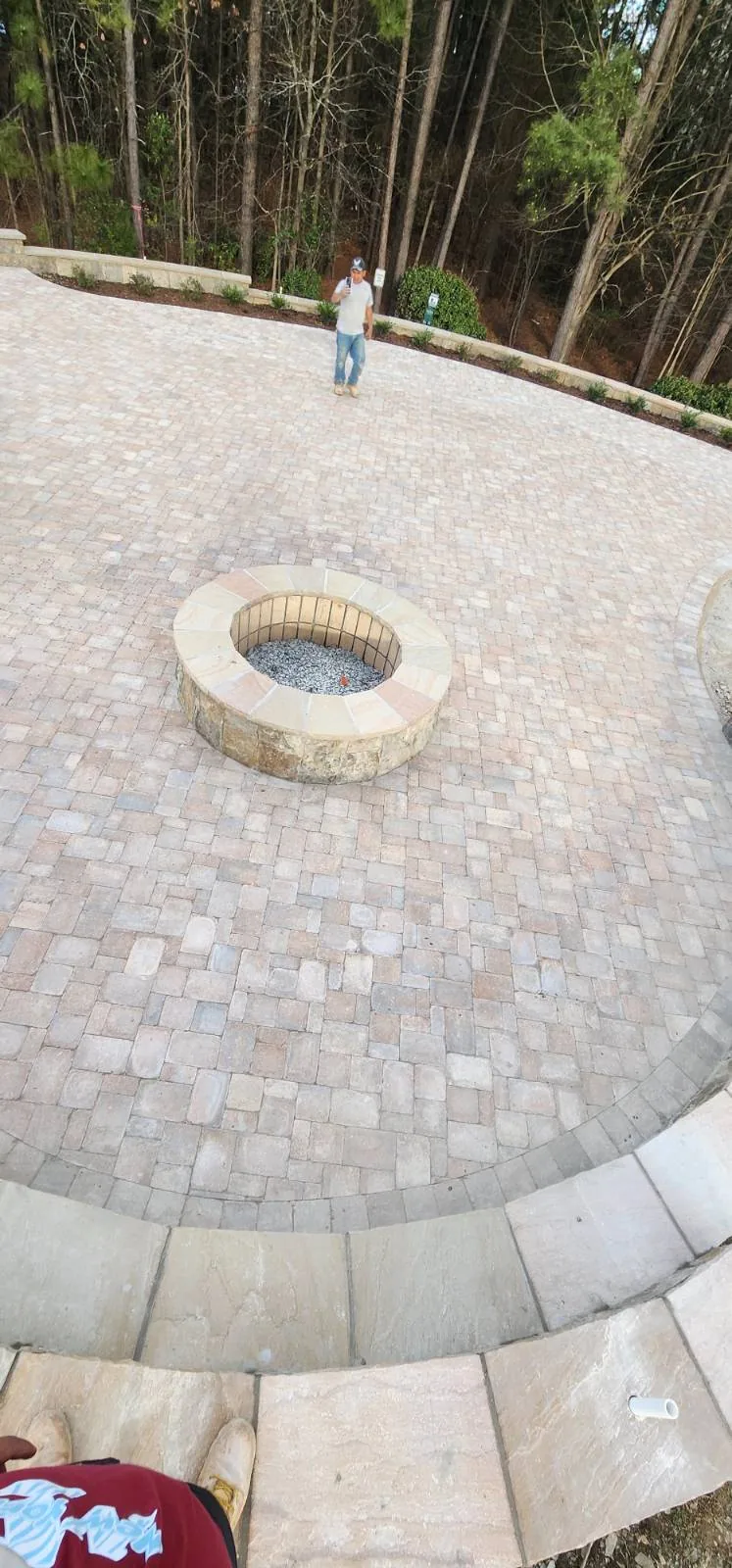
For new work, the honest four-category split in Fletcher is: dry-stacked boulder walls for low grade changes; mortared stone walls and steps for anything at a door or on a public-facing elevation; natural stone patios and paths; and full hardscape rebuilds where a wall, a patio, and drainage are corrected in one scope. The last one is where mid five figures start, and it's also where a mason who prices drainage separately from structure is worth the call.
The Henderson County price picture
Henderson County stone and hardscape pricing moves with the same three things as everywhere in the Carolinas — square feet of wall, stone type, and access. See the full Henderson County retaining wall cost breakdown for a deeper line-item read. The table below is the working range for Fletcher jobs.
| Scope | What's included | Typical range |
|---|---|---|
| Dry-stacked boulder wall, low grade change | Stacked fieldstone or boulder face, 18–36 inches, drainage gravel behind | $40–$90 per sq ft of face |
| Mortared stone wall with cap | CMU or poured base, mortared stone veneer, cap, weep holes | $65–$130 per sq ft of face |
| Natural stone patio | Compact base, drainage plane, stone set and pointed | $25–$65 per sq ft of patio |
| Stone steps and entry | Cuts, setting, handrail coordination | $350–$1,400 per step run |
| Full hardscape rebuild | Demo, engineered wall, drainage, patio, steps, restoration | $25,000–$75,000+ |
Treat any bid that lands well under these ranges as a bid missing something — extra haul, a base preparation step, or drainage detail. Treat any bid well over them as a bid with unnecessary stone or a longer carry than you realized. A good quote shows which one it is.
Drainage, code, and what the state expects
Most retaining wall failures in Fletcher do not start as wall problems. They start as water problems. When a wall is holding any grade change, surface water and subsurface water both push on the back face, and mortar walls in particular are not meant to resist that load. Grading uphill, footing drain behind the wall, and a clean outfall at the bottom of the slope are the working specification. The International Code Council's model codes treat retaining wall design and drainage as load-bearing elements for the exact reason the walls in your neighborhood keep shifting.
On the licensing side, structural retaining walls cross the threshold where a North Carolina general contractor's license is typically required, and the state rules apply to the entity signing the work. The licensing board at NCLBGCC is the reference point — if a wall is more than a few feet tall or is doing structural work, ask who holds the license and whether engineering is included. Fletcher also sits in the county's stormwater management area, and the NC Department of Environmental Quality's DEQ publishes the state guidance on grading and runoff. A stone mason who works here should know the local precipitation pattern, keep the footer below frost, and build the wall to shed water rather than store it.
If your home has a crawl space or basement below the wall, water that reaches the foundation after rain is the actual problem to solve. Correcting grade and adding drainage before the wall is rebuilt is usually cheaper than rebuilding twice. For a wall that has already moved, the practical next step is a real site visit and photos, not a phone estimate — the same principle covered in the retaining wall overview.
How to hire a mason who works Fletcher well
Ask four things. First, which quarry or supplier the stone comes from and whether it's been ordered for your job or pulled from a yard stockpile. Second, how the stone reaches the work — driveway, wheelbarrow, or lift — and whether the bid assumes a full load can reach the work. Third, name a reference on your side of the valley, ideally on a similarly steep lot, and go look at the wall after a rain. Fourth, what happens to extra stone and spoil dirt. In Fletcher, dumpster placement and haul-off can be several hundred dollars on their own, and a bid with no line for that has hidden it somewhere else.
Most masons will give you a rough range on the phone for a simple wall and a real number after a site visit. If you're still comparing options and want more detail on how walls get priced quickly, the Fletcher retaining wall contractor guide walks through what each visit should cover. The best signal in the trade is a mason who volunteers the access issue before you ask about it. That person has built here before.