The four-foot line that decides your budget
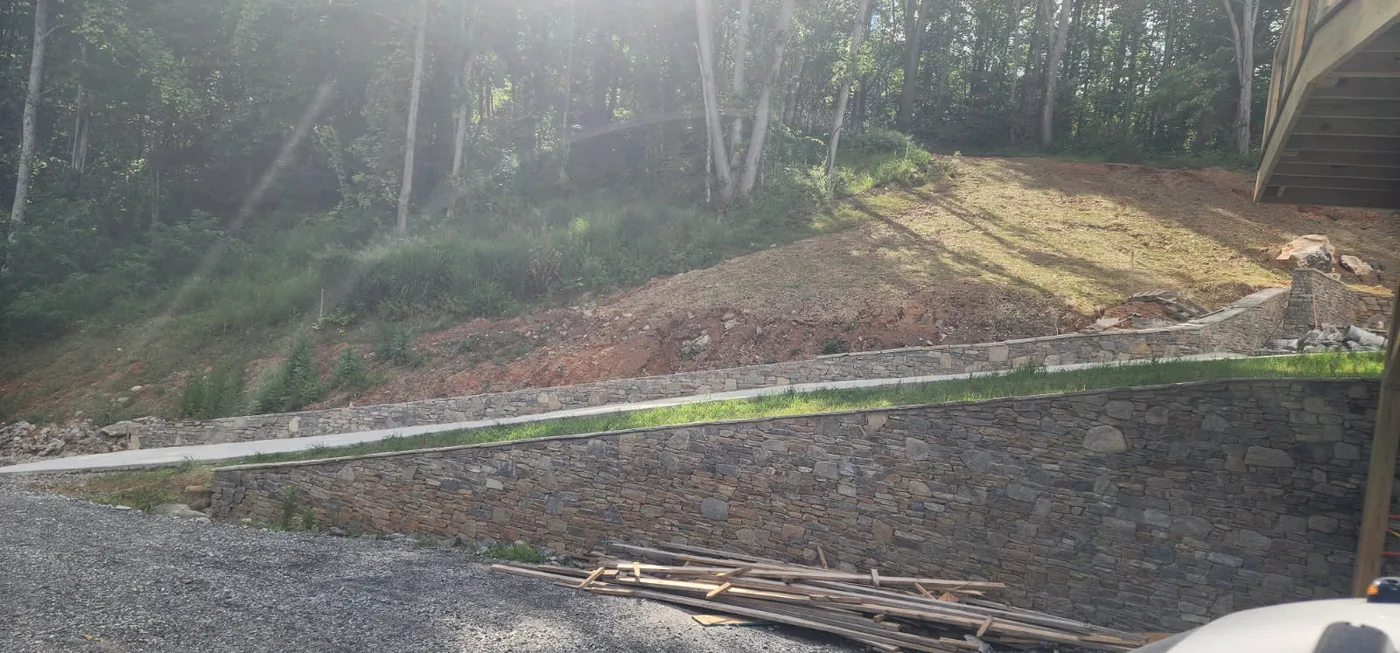
Drive any road out of downtown Hendersonville toward Flat Rock or up toward Kanuga and you will see the same pattern: low stone walls doing decorative work, and taller ones doing structural work. In Henderson County those are two different projects with two different price tags. Under about four feet of exposed veneer on a sound, code-compliant backing wall, you are buying a finish. Over four feet, or any wall retaining soil, you are buying a structure that has to shed water, resist overturning, and very often carry a stamped engineer's letter. The North Carolina residential code treats veneer anchorage and foundation drainage as real requirements, not suggestions. The International Code Council publishes the model provisions local inspectors work from, and the practical effect is that a tall hillside wall in Hendersonville is reviewed like a small building, because it is one.
That single line explains why two homeowners with similar-looking projects get quotes thousands of dollars apart. The short wall is materials, lath, mortar, and labor. The tall wall adds engineering, footing depth, drainage stone, weep detailing, and an inspection sequence.
What Hendersonville stone work actually costs
These are honest regional bands, not quotes. Stone selection moves the number as much as size does, and access on a steep lot moves it again. For the retaining side of the work, our Henderson County retaining wall cost breakdown has the soil-holding numbers in more detail.
| Scope | Typical installed range | What drives the price |
|---|---|---|
| Small accent wall or wainscot, under 4 ft | $2,500-$6,000 | Square footage, stone type, backing condition |
| Full facade veneer on a ranch or bungalow | $18,000-$45,000 | Wall area, window and door trimming, scaffold access |
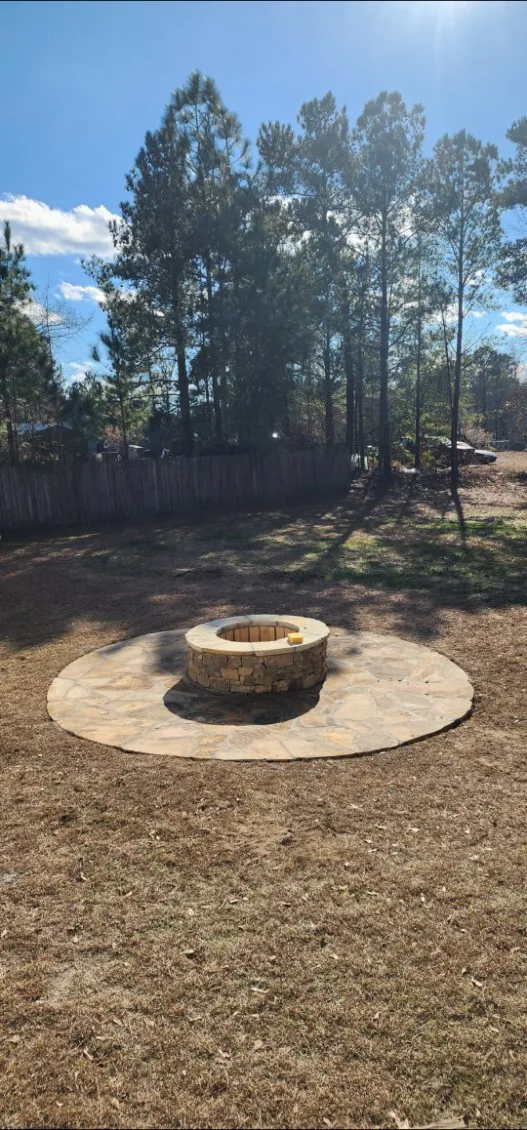
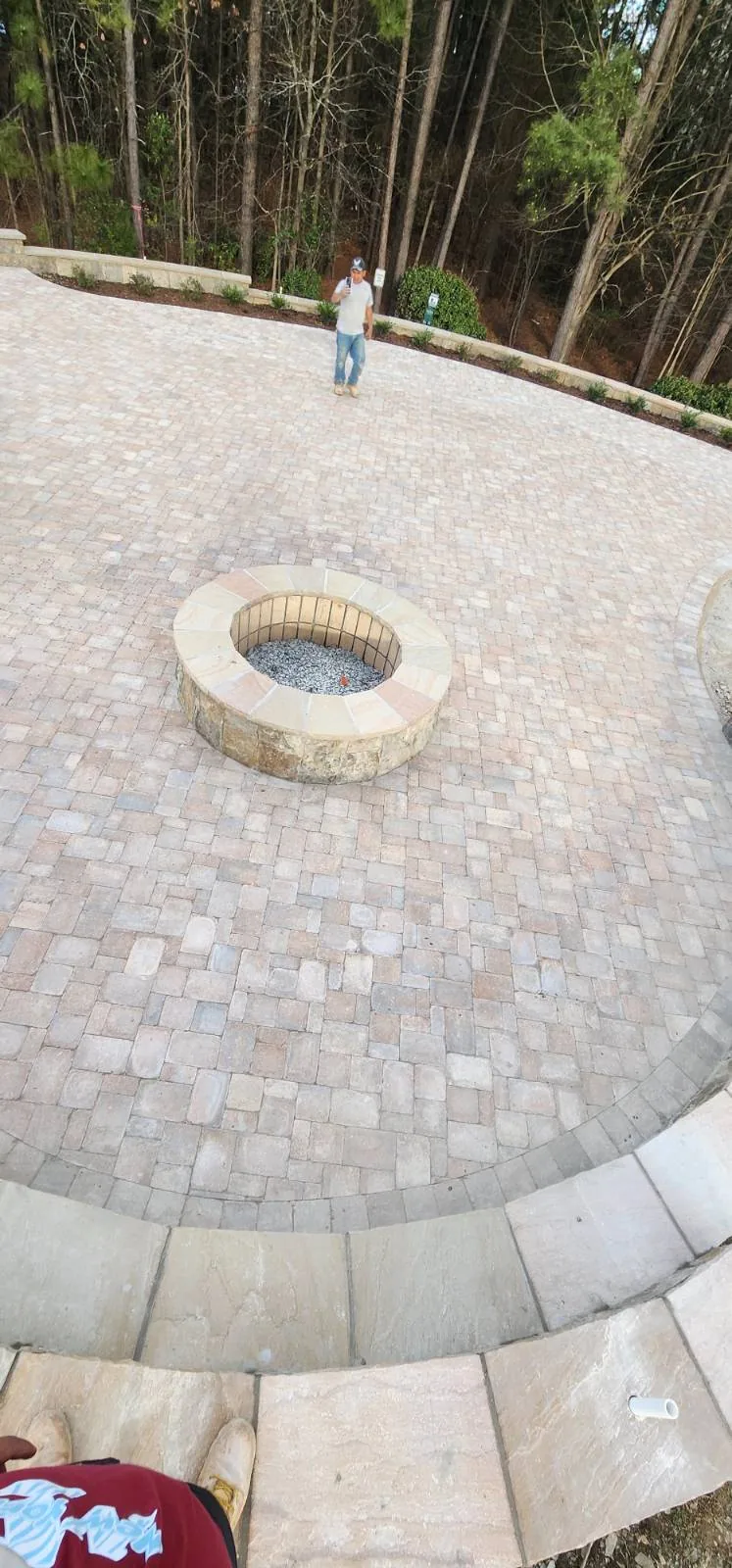
| Chimney or outdoor fireplace surround | $4,500-$15,000 | Height, footprint, firebox detailing |
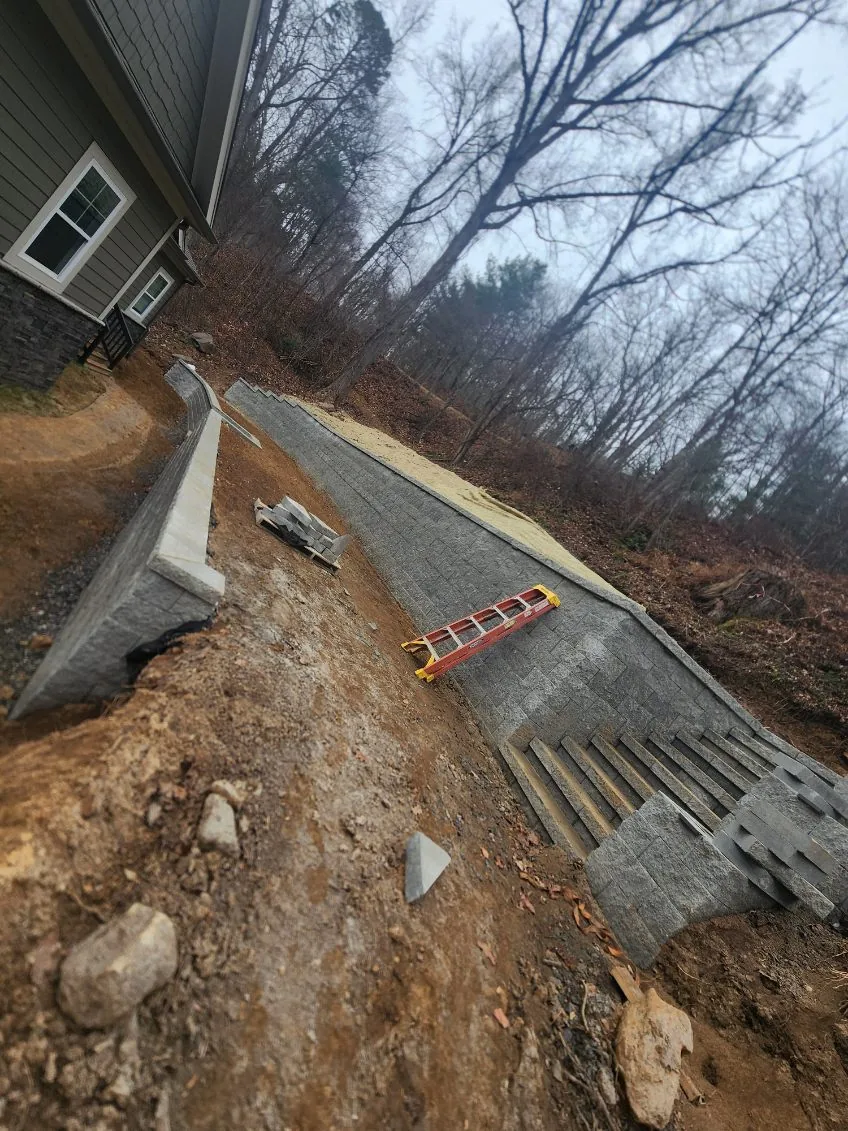
| Engineered wall over 4 ft or retaining soil | $65-$140 per face sq ft | Engineering, footing, drainage, permit, inspection |
| Per-square-foot veneer average, straightforward work | $45-$95 | Stone choice, complexity, site access |
Anything involving gas lines to an outdoor fireplace or a plumbed water feature crosses into licensed trades. The NC State Board of Examiners of Plumbing, Heating and Fire Sprinkler Contractors governs that side, and a crew that skips it is not saving you money, just risk.
Why the backing wall matters more than the stone
Veneer is a facing. It does not hold anything up, and in Henderson County it fails for one reason far more than any other: water getting behind it. The region's federal disaster record tells the story, with 16 declared events touching this county across 1978-2026, overwhelmingly storm and flood family. Every one of those events drove water against walls built on a drier assumption. A proper installation handles that with a drained and vented cavity, correct flashing at every transition, and weep points at the base. Skip those and you get the classic local failure: efflorescence, then spalling, then stone popping off a wall that looks fine from the road.
Mountainside lots add the uphill problem. When the neighbor's grade drains toward your wall, no amount of good masonry survives it, and drainage has to be solved before a single stone goes on. That is why our Hendersonville retaining wall contractors guide pushes the water question first, the same way we do for veneer. The EPA's guidance on stormwater and site drainage at epa.gov is written for larger projects but the principle scales down to a single residential wall.
Materials that suit this county
Henderson County sits in a stone belt, and homeowners here have opinions. Three families dominate local work. Natural fieldstone and Tennessee stack stone give the tight, dry-stacked look that fits the older houses around downtown and Flat Rock, and it is the most labor-intensive to set. Full-bed and thin natural stone read similar but differ sharply in weight and backing requirements. Manufactured stone veneer has improved to the point that many homeowners cannot tell it from natural at ten feet, and it is lighter, faster, and less expensive, which matters most on upper facades where scaffolding is billed by the day.
Two honest cautions. First, very hard local stone can be difficult to cut and finish, and not every crew is set up for it. Second, matching an existing wall years later is easier with a manufactured line than with a natural quarry run, so buy a little extra at the start. For the full material comparison, see our stone veneer service overview.
Permits, thresholds, and who signs off
Hendersonville and Henderson County both review residential masonry through their respective permitting offices, and the trigger points are usually height, soil retention, and attachment to a structure. A low freestanding decorative wall often needs nothing. A retaining wall over roughly four feet, anything tied to a foundation or load path, and any structure in a floodplain will generally need a permit, and often a sealed design. For projects that cross the general contracting threshold, licensing rules apply through the NC Licensing Board for General Contractors, which is worth checking before you sign anything.
| Condition | Usually needs |
|---|---|
| Decorative veneer under 4 ft, freestanding | No permit in most cases; verify locally |
| Veneer attached to a house or chimney | Permit typical; inspection of flashing and anchorage |
| Retaining wall over ~4 ft | Permit and often a stamped engineer's letter |
| Any wall in a mapped floodplain | Permit plus floodplain review |
| Fireplace with gas or water run to it | Licensed trade permit on that portion |
Budget for the engineering. On a tall hillside wall it commonly adds a few hundred to a couple thousand dollars to the job, and it is the cheapest insurance you will buy on a five-figure structure.
Choosing a crew without getting surprised
Three questions separate the crews worth hiring in this market. Ask what happens at the base of the wall, because that answer tells you whether they understand drainage or just stacking. Ask who carries the engineer's letter on a tall wall, because a crew that shrugs at that question is not set up for the job. And ask for at least one address in Henderson County you can drive past, because mountain terrain and freeze-thaw cycles look different two years in than they do on the day of the pour. When you are ready to price a specific wall, measure the square footage and the height first; those two numbers get you a far more useful first conversation than a photo alone.