What actually drives the price on a Black Mountain slope lot
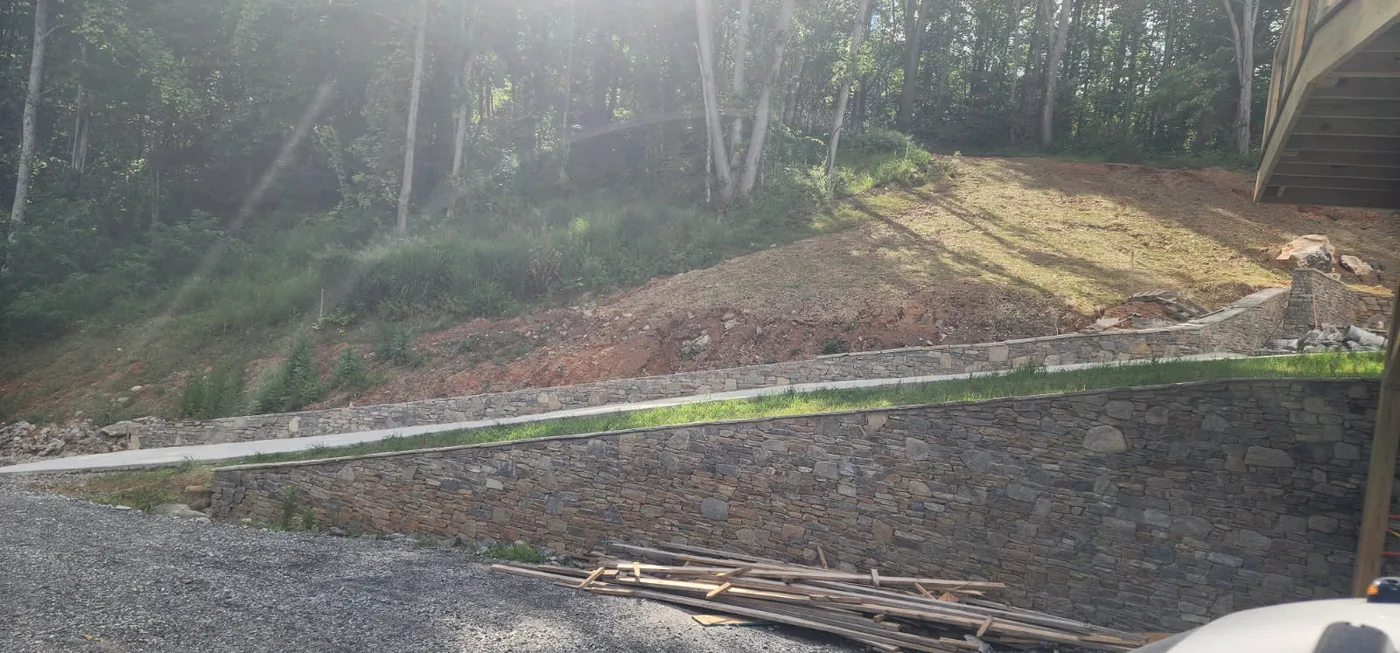
Black Mountain is a town built on grades. From the older lots near Lake Tomahawk to the hillside parcels climbing toward Montreat and Ridgecrest, most retaining walls here exist because the buildable pad had to be carved out of a slope. That single fact shapes every repair quote: the wall is rarely the only thing wrong. Water behind it, soil pushing on it, and a failing drainage plane usually got there first.
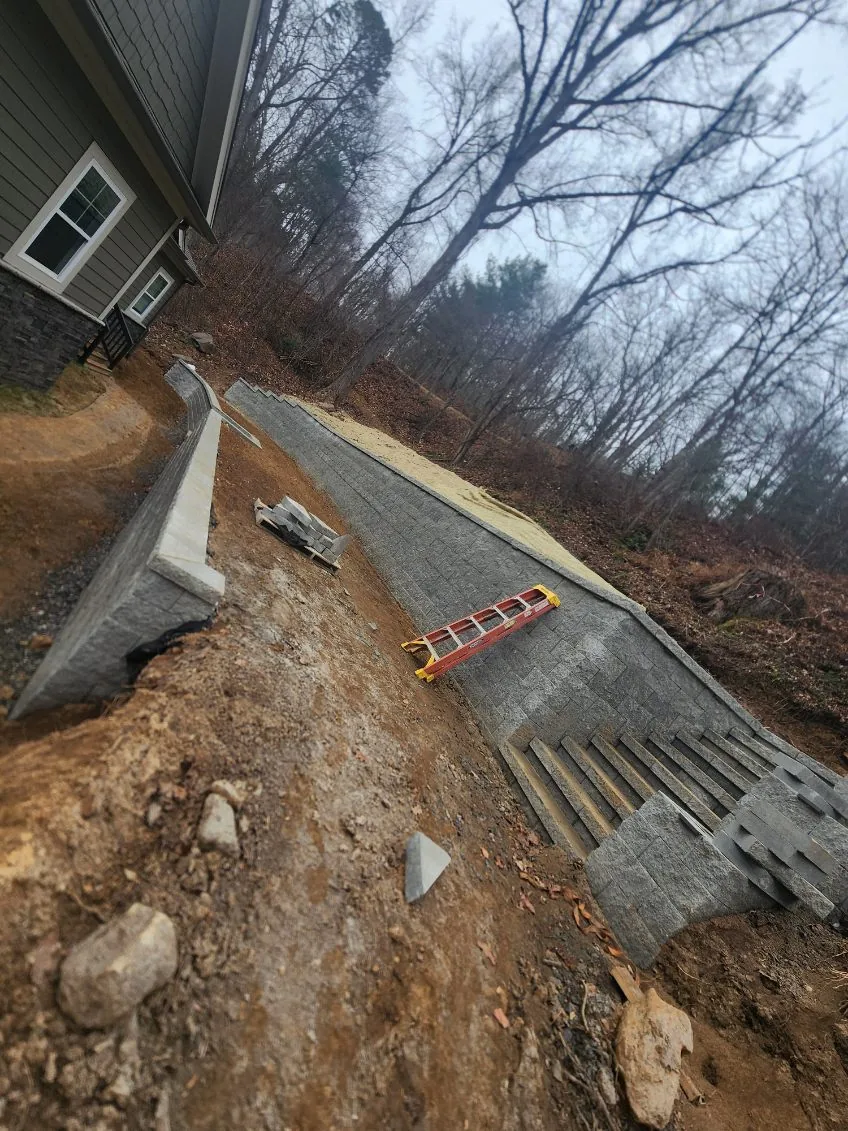
The line items that move a Black Mountain repair number, roughly in order of impact: wall height above grade, whether the wall is engineered (tiebacks, geogrid, or soldier piles), what the wall was built from originally, how much soil has to be excavated to reach the failure, and how accessible the back side of the wall is for equipment. A 3-foot timber wall at the driveway edge is a very different job from a 7-foot block wall terracing a backyard above a neighbor's property line. Same call, different trade, different number.
Ranges by scope — the working table
These are realistic regional bands for Buncombe County, not quotes. Any repair estimate should be built from an on-site look at the wall face, the drainage behind it, and the soil it holds. For line-item detail on the full cost picture, see the Buncombe County cost breakdown.
| Scope | Typical range | What's usually included |
|---|---|---|
| Drainage retrofit / weep holes / crack sealing | $450-$1,800 | Clearing blocked drains, adding weep points, patching face cracks, minor regrading above the wall |
| Section rebuild, timber or segmental block under 4 ft | $2,500-$7,500 | Remove failed section, new base, backfill, drainage stone, replacement facing |
| Full rebuild, block or stone under 4 ft | $6,000-$14,000 | Excavation, new footing, drainage plane, wall rebuild, surface restoration |
| Engineered wall 4-8 ft with tiebacks or geogrid | $8,000-$22,000+ | Engineering letter, excavation, reinforced soil, structural facing, drainage, permitting |
| Emergency stabilization / shoring | $1,500-$6,000 | Temporary shoring, load relief, water diversion while permanent repair is scoped |
The jump from the $7,500 band to the $8,000+ band is not arbitrary. It's the engineering threshold plus the equipment access that steep lots demand. See the retaining wall repair guide for how those scopes map to specific failure modes.
Water behind the wall is the repair nobody quotes first
Most wall failures in Black Mountain trace back to drainage. Hydrostatic pressure from saturated soil behind a wall can exceed the design load of the wall itself, and on this town's grades, the uphill neighbor's runoff often arrives at the wall before yours does. The county's federal disaster record backs this up: 19 declared events touch Buncombe County across 1973-2026, and the overwhelming majority are storm and flood family. Each of those events pushed water at walls that were built for drier assumptions.
Before anything else, the drainage question has to be answered — where the water enters, where it currently goes, and where it needs to go. The NC Office of State Fire Marshal administers the state code, and its residential provisions treat retaining wall drainage as a structural requirement, not a nice-to-have. A crew that proposes wall repair without a drainage plan is selling you a shorter repair. A crew that proposes drainage first and structure second is the one to keep.
When repair crosses into engineering and permits
In North Carolina, retaining walls above a threshold height — commonly 4 feet from the bottom of the footing to the top of the wall, with local variation on measurement — trigger building permit and sometimes engineering requirements. The NC Licensing Board for General Contractors also sets the point at which the work itself requires a licensed general contractor, and it's lower than most homeowners expect. Below those thresholds, a specialty masonry or landscape contractor can handle the work; above them, you need the license and the engineering letter to match.
Two more considerations for Black Mountain specifically: walls that retain a slope above a neighbor's property or a public right-of-way often carry additional review, and walls near streams or regulated floodplain get pulled into a different permitting track entirely. Ask any contractor you're considering how they handle those cases. For help finding the right crew for the scope, the Black Mountain retaining wall contractor list filters for the specialty.
The failure signs that change the scope of a repair
A retaining wall does not fail all at once. The tells that matter: bulging or leaning that's visible from the side, a crack running horizontally through the wall face, soil puddling on the low side, water emerging from the wall face after rain instead of from drain points, and any change in wall height from one end to the other that wasn't there before. A leaning wall that's stable season to season is a water problem. A wall that has visibly moved since last spring is a structural problem.
Structural problems are where estimates climb fastest, because the repair often involves unloading the wall — excavating the soil behind it and temporarily shoring the slope — before any rebuilding begins. On Black Mountain's steeper lots, that excavation step alone can double the price of a job that looked straightforward from the street. This is also where the International Code Council standards for soil retention and the National Weather Service local precipitation records become practical tools: they help estimate what a wall should be designed to shed during a heavy storm cycle, which is the water volume a Black Mountain wall will actually face.