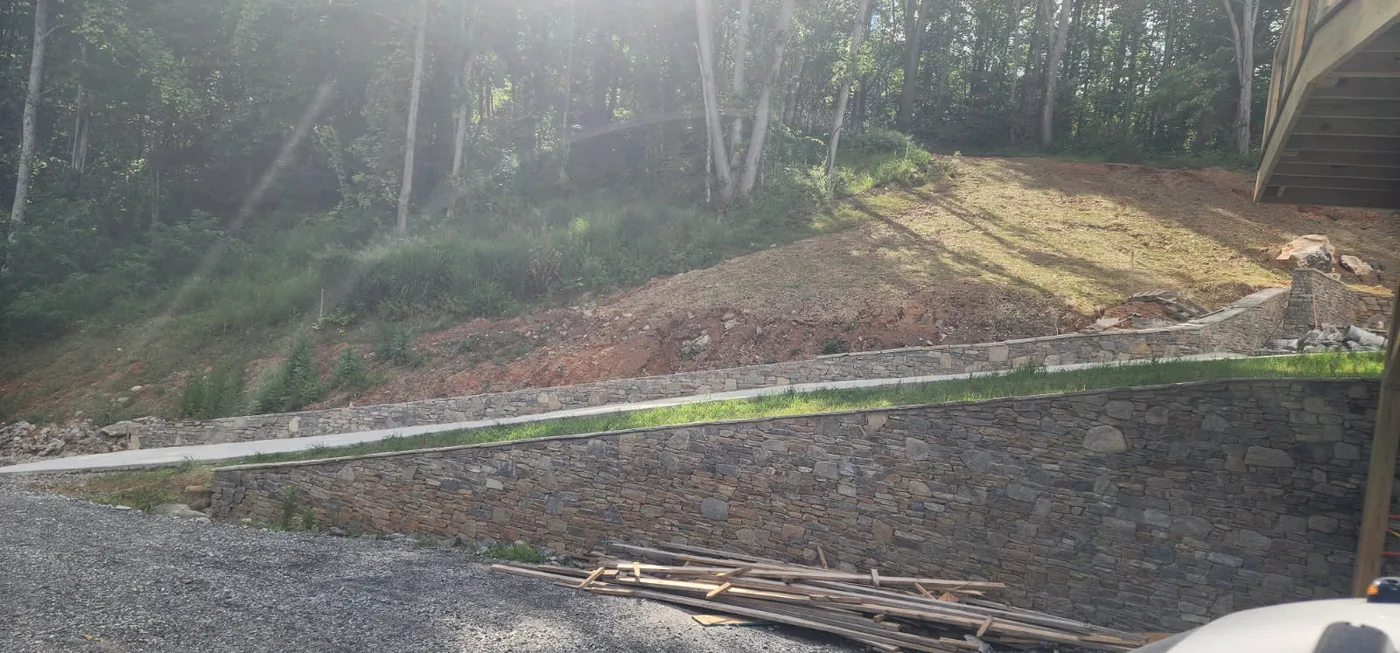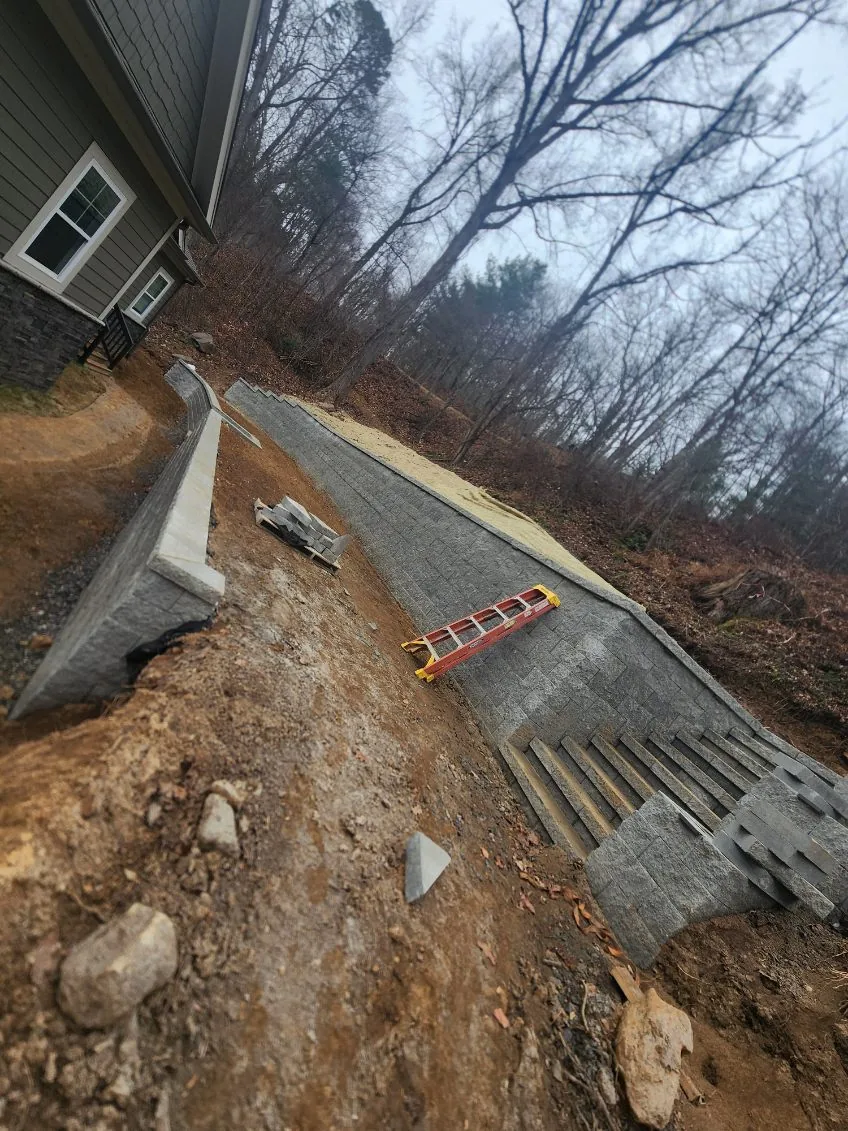
Woodfin walls hold hillsides that shed toward the river
Woodfin's residential streets climb away from the French Broad on ground that was cut into slope, not graded flat. Most retaining walls here are holding back an uphill yard, a driveway cut, or a terrace the original builder created with timber and hope. That geometry decides everything: water arrives from above the wall, not from the wall itself. When a Woodfin wall bulges or leans, the story is almost never the block. It is the uphill lot draining into soil that was never given a path out.
The Wall Street and Elk Mountain corridor pattern is consistent: a homeowner sees the top course shift outward after a wet spring, assumes the wall is failing, and gets quoted a full rebuild. Sometimes that is right. Often the honest fix is intercepting uphill runoff, restoring the wall's drainage profile, and rebuilding only the courses that actually moved. Where the drainage gets sent matters too, and it cannot go to a neighbor's property, a storm line without permission, or the riverbank.
How slope, soil, and setback set the price
Three variables drive every Woodfin number: wall height above grade, the soil it retains, and the drainage remedy. Buncombe's weathered saprolite and clay-heavy cut banks hold water far longer than a contractor from flat ground expects. A four-foot timber wall on a gentle terrace and a four-foot segmental block wall on a steep cut with a driveway above it are not the same job, even when the tape measure agrees. The Buncombe County retaining wall cost breakdown has the working line items; the table below is the honest short version.
| Scope | Typical range |
|---|---|
| Drainage retrofit only (weeps, gravel, outlet line) | $1,200-$3,500 |
| Timber wall partial rebuild, under 4 ft | $2,500-$6,000 |
| Segmental block repair, reset moved courses | $3,500-$8,500 |
| Engineered wall rebuild with footing and drainage | $9,000-$28,000+ |
Anything crossing into engineered territory changes the paperwork, not just the price. North Carolina licensing thresholds for general contractors are set by the NC Licensing Board for General Contractors, and wall work on a slope above a structure or a property line often triggers engineering and permitting questions that a handshake bid will not answer.
Where the water has to go on a Woodfin lot
On a typical Woodfin slope lot, the uphill neighbor's yard is higher than yours, your wall is the first thing that water meets, and the river is downhill but usually not a legal outlet. The correct chain runs: surface water collected above the wall, a gravel and perforated-pipe zone behind the wall face, and a daylight outlet that discharges onto your own ground at a stable, vegetated point below the wall. That outlet is the part most failing walls never had.
The federal record explains why this matters here more than in flatter parts of the state. 19 declared events touch Buncombe County across 1973-2026, overwhelmingly storm and flood family, and each one pushed concentrated runoff at walls built for a drier assumption. Soil saturation is the mechanism; the National Weather Service tracks the rainfall that drives it, and no wall in this county is stronger than the drainage behind it.
When repair is honest and when it is not
The repair question has a clear answer once you look at the right things. Hairline cracks in a block face, a top course leaning an inch, a wall weeping through the face after storms: these are repair candidates. A wall that has rotated far enough to open joints through the full height, a footing that has slid downhill, or a wall sitting above a structure has crossed into rebuild and engineering territory. Trying to jack and pin a wall that has already rotated only buys a year or two.
For the repair path itself, the retaining wall repair guide walks through what a proper scope includes and what a bid that skips drainage is really selling you. If you have not chosen a contractor yet, the Woodfin retaining wall contractor page covers the local checks worth making before you sign anything.
What a Woodfin repair should include before anyone starts
A complete scope has four parts: removal and inspection of the failed section, a look at the footing and the soil behind it, a drainage design with a real outlet, and reconstruction that matches the existing wall or improves it deliberately. If a bid lists only the block work and the labor, the water has nowhere to go and you will be back in the same conversation next spring. Ask every contractor where the water goes and watch whether the answer is specific to your lot or a generic sentence about French drains.
Also ask about the wall's relationship to the property line and any easement. Woodfin lots are tight on the slope, and a wall that crosses a line or blocks a neighbor's drainage creates a problem no amount of good masonry solves. Erosion control and discharge rules on sloped ground are worth checking against NC Office of State Fire Marshal code services, and any work near a stream or drainageway brings additional environmental review under EPA stormwater rules. Knowing that before the first block moves keeps a repair from turning into a dispute.