Why Flat Rock patios cost what they cost
Flat Rock sits in Henderson County on terrain that slopes first and asks questions later. A yard behind a 1920s cottage off Greenville Highway and a new build on a graded ridge lot above Kanuga Road are two completely different patio projects even if the homeowner wants the same 300 square feet of pavers. The cottage yard likely needs hand excavation around mature roots and a retaining edge to hold grade. The ridge lot may need engineered fill, a deeper compacted base, and a drainage plan before the first paver goes down. That difference is where the price lives.
Henderson County's freeze-thaw cycle compounds the base question. Water that sits under a patio in November becomes ice in January and heaves the surface by March. The fix is not thicker pavers — it's a properly compacted aggregate base, correct slope away from the house, and edge restraint that holds the whole assembly together. The NC Building Code Council treats exterior drainage and frost-depth footings as first-class requirements for a reason.
Stone choices that fit this town's housing stock and budgets
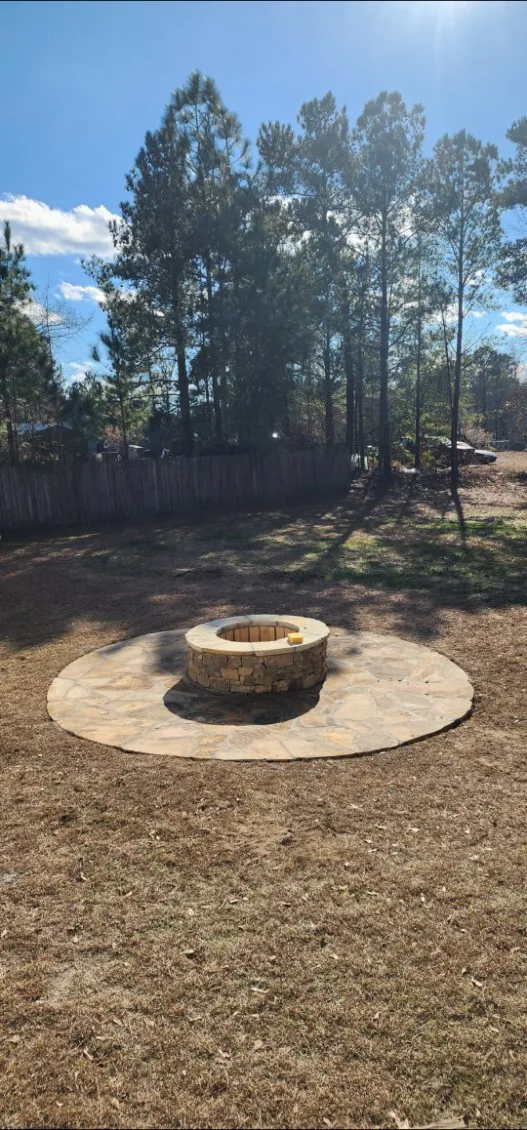
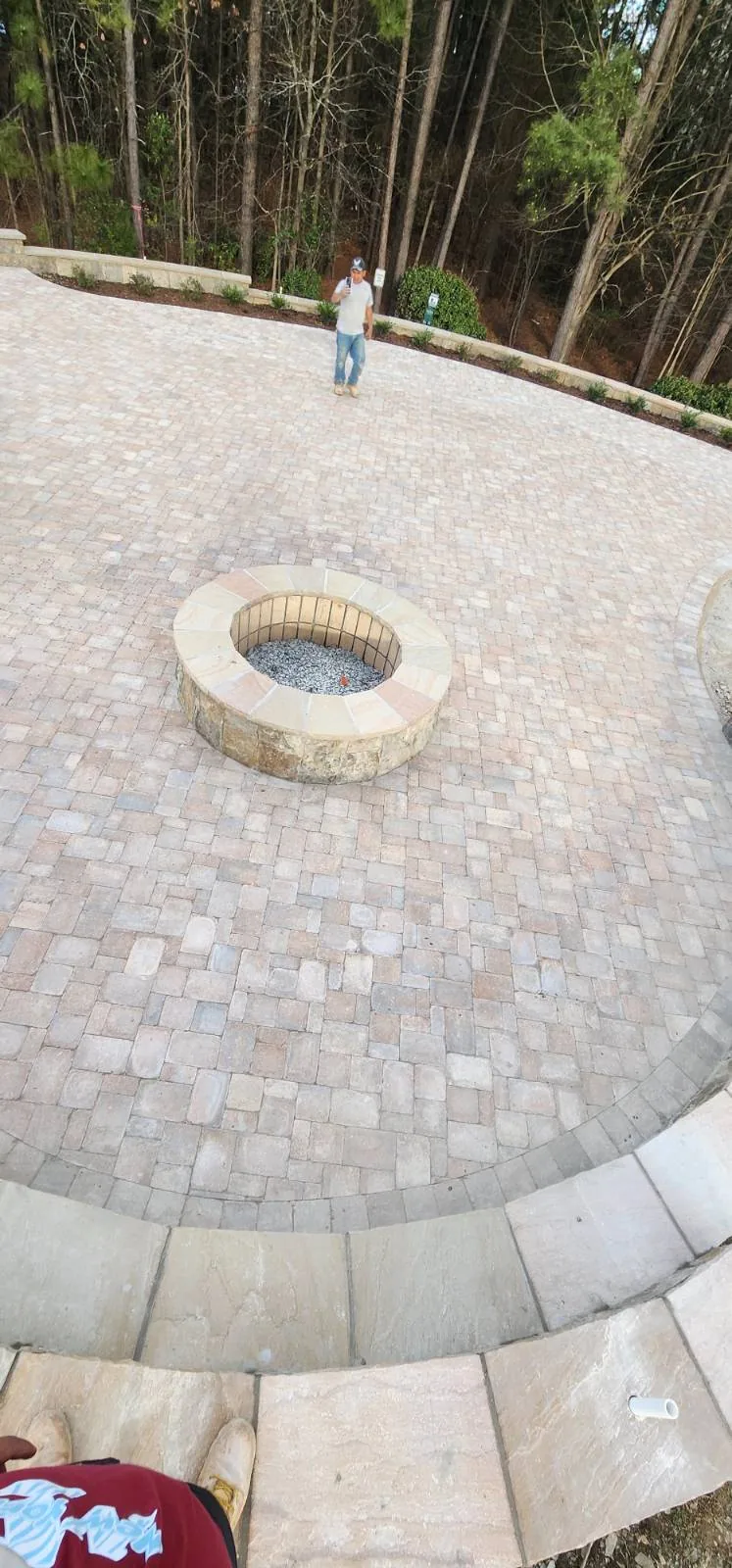
Flat Rock's housing character spans historic cottages, mid-century ranches, and newer mountain-modern builds. That range means one paver style does not fit every yard. Concrete pavers (the interlocking block type) deliver the most predictable cost per square foot and the tightest joints, which matters on slopes where shifting is the enemy. Clay brick pavers suit the older cottages near the Carl Sandburg home area and age gracefully, but they cost more per square foot and need a stiffer base. Natural fieldstone and boulder work — sourced regionally — pairs well with the rustic, wooded lots that define much of the town, though irregular thickness means more labor per square foot.
Timber-edged gravel patios are the budget option and can look right against a wooded backdrop, but they demand annual refresh and are not the call for a high-traffic entertaining space. For a full breakdown of what each material means for your project, the paver patios overview walks through assembly types and finish options. The honest rule: pick the material that matches your soil, your slope, and your maintenance appetite — not the photo you saved.
The Flat Rock price picture
Patio pricing in Henderson County tracks square footage, access difficulty, and how much site work happens before the base. A flat, open backyard with drive-up access prices very differently from a tiered slope where every wheelbarrow of base stone gets carried. See the Henderson County retaining wall cost breakdown for how grade-holding structures price separately when a patio needs one. The short version: base prep and drainage are 40-60% of a real patio quote, and any bid that treats them as an afterthought is incomplete rather than cheap.
| Scope | Typical range |
|---|---|
| Small gravel or timber-edge patio (under 200 sq ft) | $3,500-$7,000 |
| Concrete paver patio, simple grade, 250-400 sq ft | $6,500-$14,000 |
| Clay brick or natural stone, 300-500 sq ft | $12,000-$24,000 |
| Sloped or tiered lot with retaining edge | $18,000-$28,000+ |
| Drainage correction or French drain add-on | $1,200-$4,500 |
Drainage and slope come before any paver decision
The federal disaster record explains a lot of Henderson County exterior work: 16 declared events touch this county (1978-2026), overwhelmingly storm and flood family. Every one pushed water at yards and foundations that were graded for a drier assumption. Before a single paver is laid, the drainage question has to be answered — where roof runoff goes, whether the uphill neighbor's water crosses your yard, and how the patio slope sheds toward a safe discharge point. A patio that traps water against the house is a foundation problem waiting to happen.
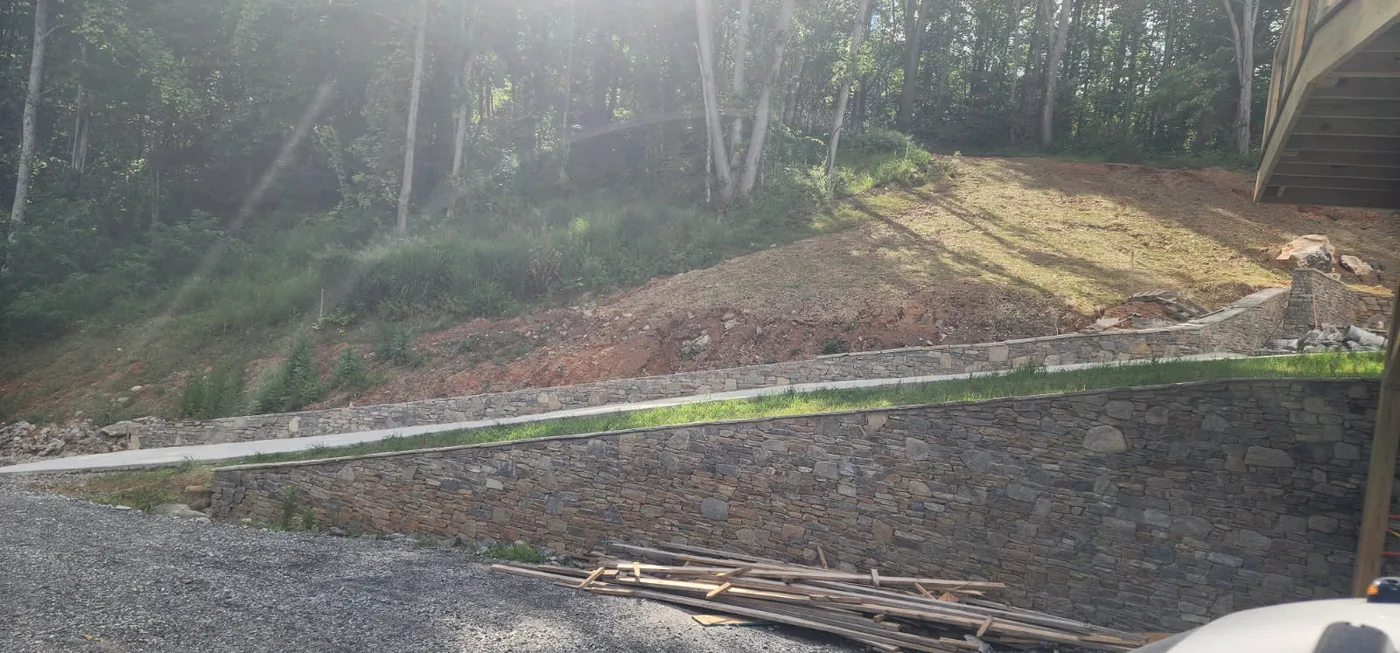
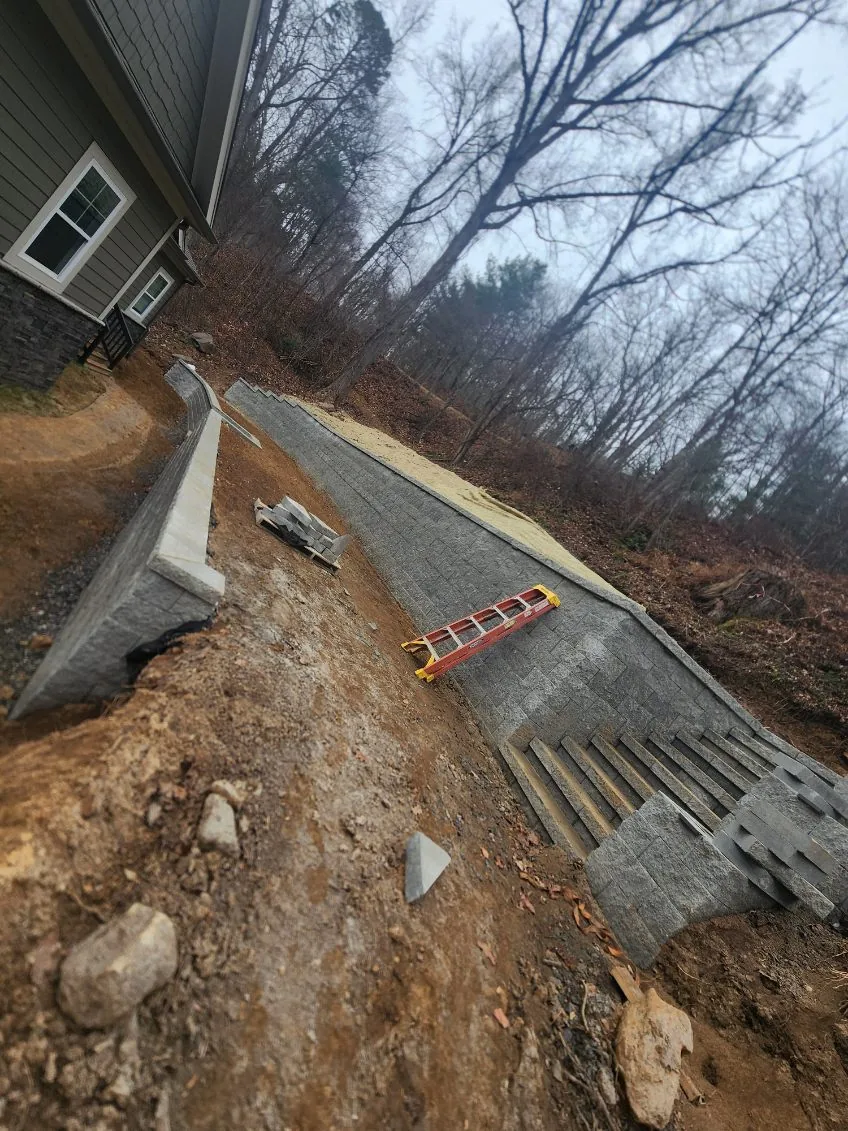
On sloped Flat Rock lots, a retaining wall is often part of the patio scope rather than a separate project. That changes the permitting and engineering picture. The NC Licensing Board for General Contractors sets the threshold where a project needs a licensed general contractor, and retaining structures above a certain height typically trigger engineering review. If your patio plan includes a wall taller than a couple of feet, ask about the engineer's letter before signing anything. Our retaining wall contractors in Flat Rock page covers how wall work integrates with patio builds.
Hiring well for a Flat Rock patio
Three local checks before you commit. First, ask how the crew handles base compaction and what equipment they bring — a plate compactor and a jumping jack are not the same tool, and the wrong one leaves you with settlement in two winters. Second, ask for references on sloped lots specifically, because flat-yard experience does not transfer. Third, ask how they sequence drainage versus hardscape; the answer separates crews that build patios from crews that sell pavers.
Also worth knowing: any electrical work for patio lighting or a hot tub circuit pulls in a separate licensing lane, and the NC State Board of Examiners of Plumbing, Heating and Fire Sprinkler Contractors governs the trades side of that. If your patio scope includes a gas fire pit or outdoor kitchen, those connections have their own code requirements under the International Code Council family of codes adopted in North Carolina. Ask who pulls what permit before work starts. When you are ready to compare scope and price, start with the paver patio service page and flag your timeline.