What a Flat Rock stone bid is really made of
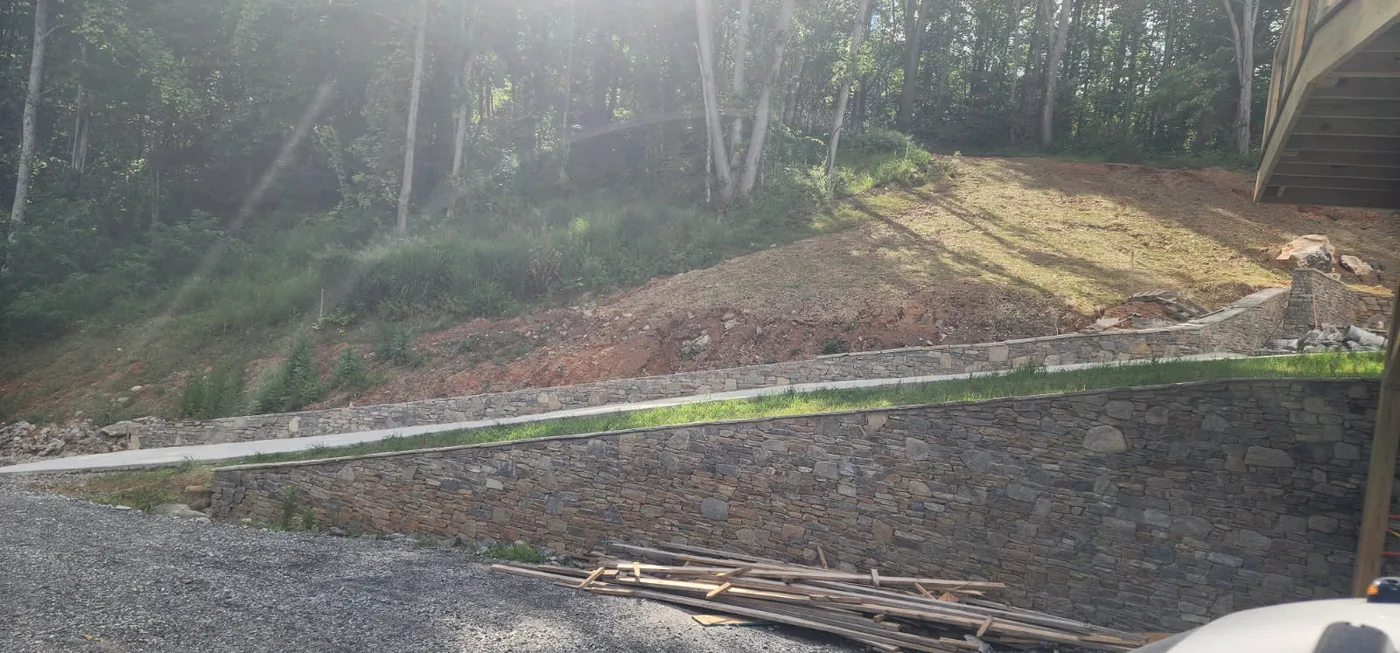
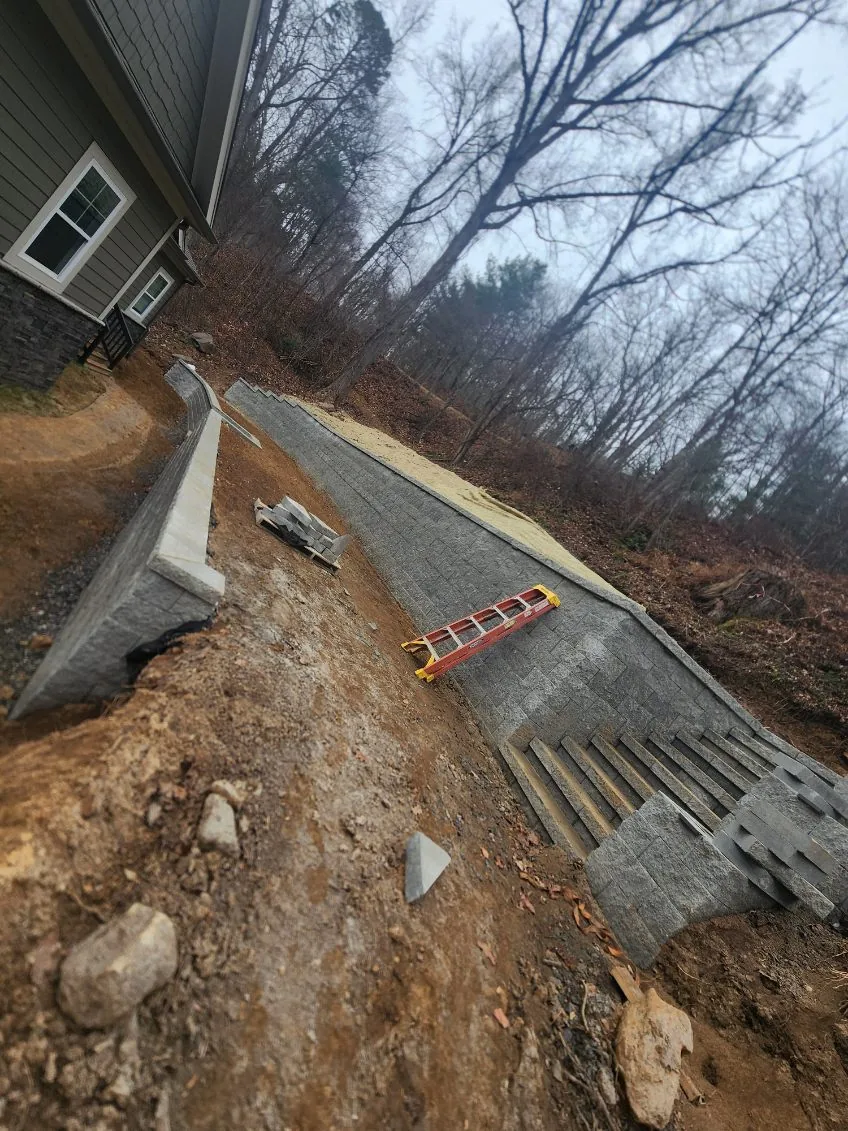
A stone mason Flat Rock NC quote is rarely one number — it is five or six line items stacked, and the ones homeowners never see coming are access, footing, and haul. On a flat lot off Greenville Highway, a dry-stack retaining wall might price at the stone plus a day of labor. On a slope-shouldered lot toward Kanuga, the same wall needs excavation, a compacted base, geogrid, and a machine that can reach the hill. That is the difference between a $4,200 wall and a $9,000 wall.
The anatomy, in order of how much it moves the price: access (can a truck and mini-ex reach the work zone, or does stone move by wheelbarrow?), footing (is there existing masonry to build on, or does a new footer get poured?), stone source (local fieldstone from Henderson County versus trucked-in Tennessee or Georgia stone), height and batter (walls over four feet typically need engineering and a permit), and haul-off (who removes the old material). Ask any mason to break the bid into those five lines and the honest ones will.
The access line is the quiet killer in Flat Rock. Many lots in the historic village core have narrow driveway aprons, mature hemlocks or boxwoods tight to the wall line, and a garage under the house that was never designed for a dump truck. A crew that has to park on Greenville Highway and run stone up a slope by hand can add days to a job that would be a straight truck-and-trowel operation on a graded lot near Highland Lake. That labor is real, it shows up in the bid, and a mason who does not mention it before signing is either guessing or planning to surprise you.
The footing line is the next mover. If a wall is being rebuilt over an existing dry-laid footer, the crew can sometimes re-level and go. If the old footer was fieldstone stacked without compaction, or if it has been undermined by years of runoff from a nearby downspout, the footer gets replaced before a single face stone is set. Replacing a footer on a slope means digging out the toe, forming, pouring, and curing — usually a full day or more before masonry starts. That is why two bids for what looks like the same wall can differ by thousands.
Reading the ground in Flat Rock
Flat Rock sits in Henderson County on ground that slopes more than its name suggests — the historic village core is flat, but the residential roads climbing toward the Carl Sandburg home and Kanuga Lake carry real grade. That matters for masonry because water always tells you where the wall wants to fail. A retaining wall at the toe of a hill is holding saturated clay nine months of the year, and in Henderson County that clay swells when wet and shrinks when dry. A wall built without drainage stone and weep points behind it will lean within a few seasons, no matter how good the stonework looks.
The other local tell is age. Flat Rock has some of the oldest estate masonry in Western North Carolina — dry-laid fieldstone walls, mortared foundations, and chimney stacks that predate modern mortar mixes. Repointing those with the wrong mortar (too hard, too Portland-heavy) traps moisture and spalls the stone. The right repair matches the original lime-rich mortar and respects how the wall was built to move. That is slower work and it costs more, but it is the only repair that lasts on a hundred-year-old wall.
There is also a stone-source reality that shapes the look of a finished job. Henderson County fieldstone has a weathered grey-to-tan face and a busy grain that reads as native in this landscape. Stone quarried in East Tennessee or North Georgia often runs warmer and more uniform, which can look tidy on a new build but can also read as out of place next to a 1920s estate wall. When a homeowner asks for a match, the honest answer is that a good mason can get close but not identical, because the original wall has had a century of lichen and weathering that no fresh stone will duplicate on day one.
Storm water is the recurring bill
Almost every masonry failure call in this county traces back to water — either a storm that overwhelmed a wall's drainage or a slow season of it. The federal record backs that up: 16 declared disaster events touch Henderson County across a 1978-2026 span, and they are overwhelmingly flood and storm family. Every one of those events pushed runoff at walls that were designed for a drier assumption. Before a mason rebuilds anything, the grading, the gutter discharge, and the uphill neighbor's runoff path need answers. The NC Department of Environmental Quality treats stormwater and erosion control as a first-class concern on sloped ground for exactly this reason.
If your wall is holding a slope, the structural question and the drainage question are the same question. See our retaining walls guide for how the two get designed together, and the Henderson County cost breakdown for the working line-item table.
In practice, the fix that saves the most walls in Flat Rock is boring and unglamorous: a properly sized drainage stone column behind the wall, a perforated pipe at the base daylighting to a lower point, and enough weep points that hydrostatic pressure never builds. A homeowner who has watched one wall fail will usually pay for that drainage on the next one without being asked twice. A homeowner who has not, often wants the drainage stripped out to save money — and that is the conversation where a mason earns or loses trust.
Scope vs. price — the working table
These are regional bands for Henderson County work, not a flat rate. Access, stone choice, and engineering push any line up or down by a third.
| Scope | Typical range | What moves it |
|---|---|---|
| Veneer repair / repoint a section | $1,800-$4,500 | Height of scaffold, matching existing stone and mortar |
| Steps, walkway, or stoop rebuild | $3,500-$8,000 | Footing condition, stone matching, tear-out and haul |
| Chimney rebuild or re-cap | $4,500-$12,000 | Extent of rebuild, flue liner, roof access and staging |
| Dry-stack retaining wall (under 4 ft) | $4,000-$9,000 | Linear feet, base prep, drainage stone behind wall |
| Engineered retaining wall (over 4 ft) | $9,000-$25,000+ | Engineering letter, geogrid, footing depth, machine access |
| Full estate wall restoration | $15,000-$50,000+ | Age of masonry, lime mortar matching, extent of rebuild |
For crews who do this work locally, see our retaining wall contractors in Flat Rock page.
Permits, engineering, and who can legally take the job
North Carolina draws a line at structural work: retaining walls and load-bearing masonry above certain heights typically require an engineered design and a permit, and jobs above the state threshold fall under the NC Licensing Board for General Contractors. A mason who balks at that is telling you something. The International Code Council publishes the model codes that North Carolina adopts and amends, which is where height, footing, and drainage rules for retaining walls originate.
Before signing, three checks: ask whether the crew has worked your wall type (dry-stack, mortared, or veneer are different trades); ask who stamps the engineering on anything over four feet; and ask how they sequence drainage versus structure. The third answer separates crews who build walls from crews who sell stone.
One more local reality worth knowing: chimneys in older Flat Rock homes often sit on foundations that were never meant to carry modern flue liners, and repointing the stack without addressing the flue is a cosmetic fix on a structural problem. If a mason quotes a chimney rebuild without looking inside the flue, get a second opinion. A rebuild that ignores the flue can be a $4,500 job that fails its first hard rain test.