Where the water comes from, and where it has to go
Almost every retaining wall problem in Buncombe County starts uphill of the wall. Asheville sits in a bowl of steep ridges, and most homes here were built on cut-and-fill lots: a slice of hillside was removed for the driveway and house pad, and the remaining slope looms above. Rain that lands on that upper slope moves downhill until something stops it. If the wall stops it without a plan, the wall loses.
So a boulder retaining wall Asheville NC homeowners actually need is really two structures: the wall you see, and the drainage behind it that collects water at the base of the backfill and pipes it to a daylight outlet, a curb, or a storm system. When that outlet doesn't exist, hydrostatic pressure builds behind the wall through every wet season — and western North Carolina has had 19 federal disaster declarations spanning 1973-2026 years, a record heavy on flood and landslide events. Water is the first mover here. The wall is the second.
This is also why the cheapest bid usually skips a step you can't see after backfill. Ask where the water exits the property before you ask about stone.
Why boulders, and where they honestly don't belong
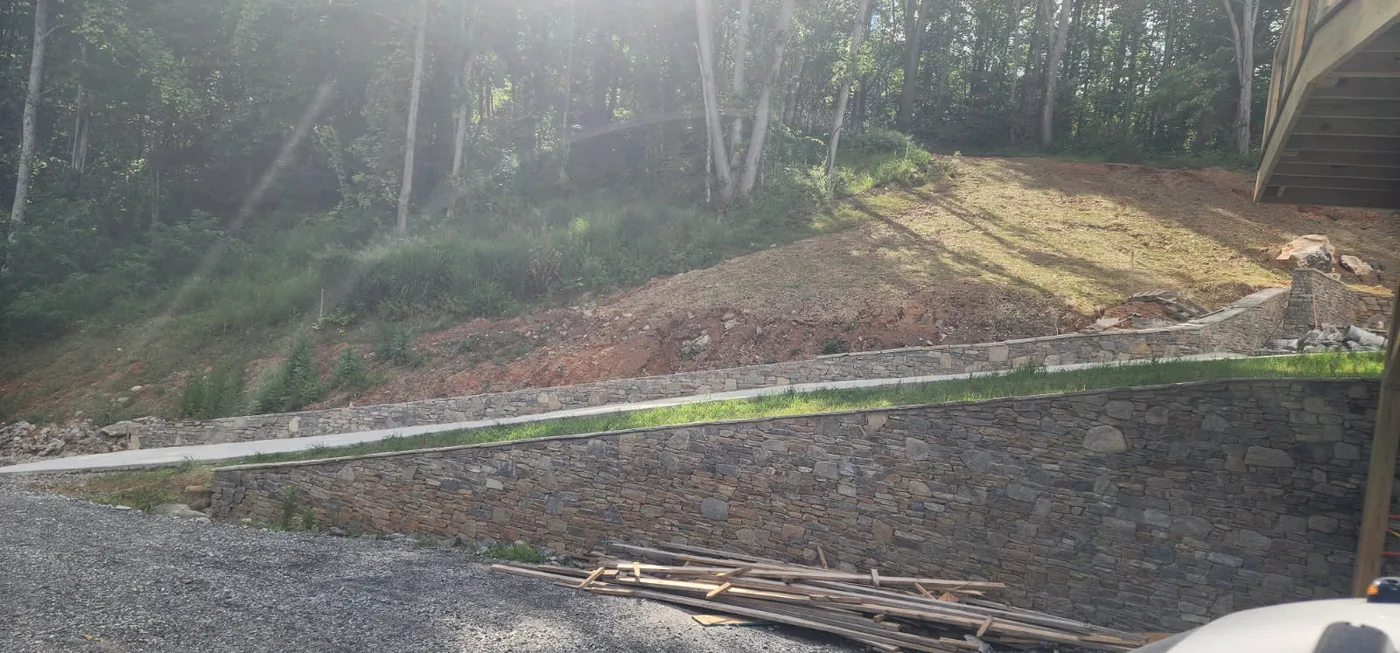
Boulders work well on the slopes around Asheville for structural and visual reasons. They're heavy enough to resist the push of saturated fill, they're laid with a batter (leaning back into the hill) that lets gravity help, and they read as native rock in a landscape that is mostly native rock. Local granite and fieldstone are common; some walls use quarried stone that matches the outcrops you see along the Blue Ridge.
What boulders do not do is fix a bad grade. A wall is a retaining structure, not a drainage solution, and stacking rock against a hillside that sheets water at it just relocates the failure downhill. Small garden walls — under about two feet — are the exception; they're mostly decorative and rarely need engineering. Once a wall holds back a driveway, a house pad, or more than a couple feet of soil, the load math matters and so does the plan for water.
If you're weighing boulders against block, timber, or poured concrete, the trade-offs in materials and lifespan are covered on the retaining walls hub; this page stays on boulders.
What a boulder wall build actually involves
A residential wall usually takes two days to two weeks depending on access and size:
- Layout and slope read. Determine wall height, the tier pattern if the slope is tall, and where water currently goes.
- Excavation and base. A trench is cut and compacted base material placed; boulders are set into it, not dropped on topsoil.
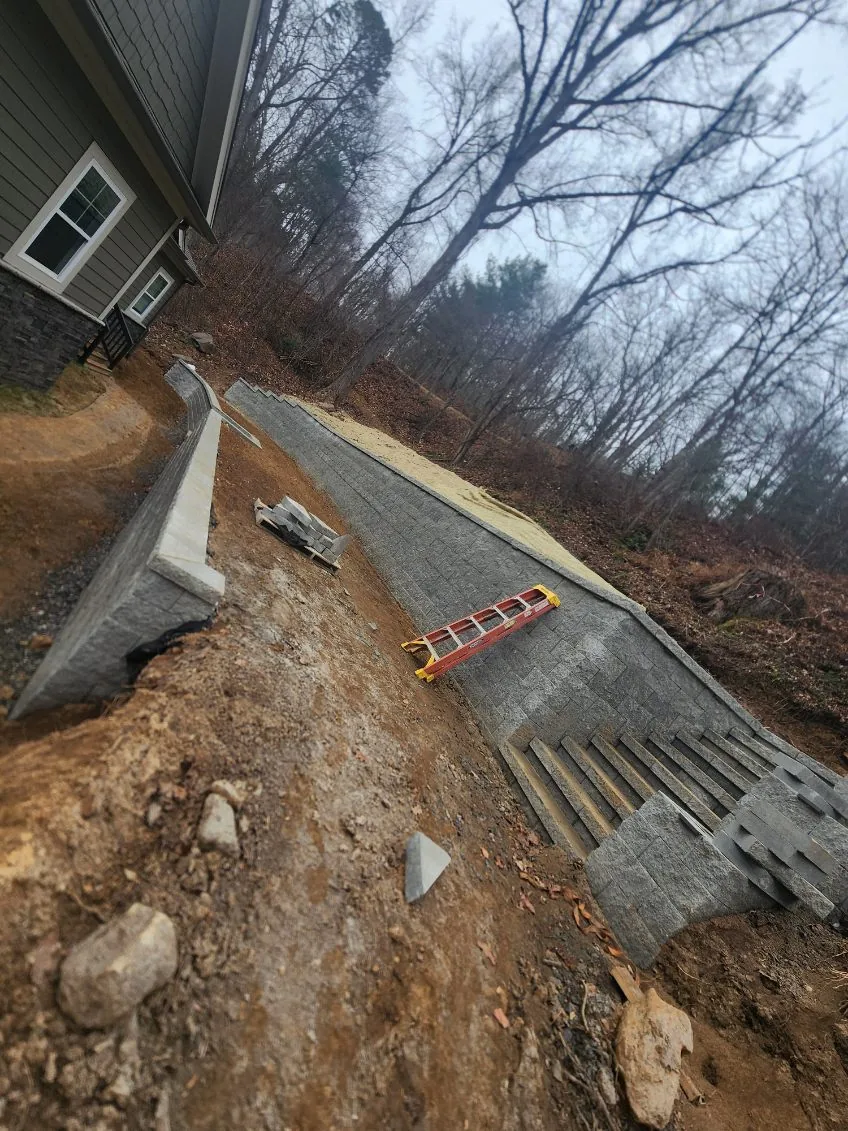
- Drainage behind the wall. Drain rock and a perforated pipe at the heel of the wall, wrapped in filter fabric so fines don't clog it, running to a daylight outlet.
- Setting and battering stone. Each boulder is placed, checked for bearing, and leaned back; smaller stones chink the gaps.
- Backfill and surface water control. Gravel backfill, then grading that carries surface water away from the top of the wall rather than into it.
Access is the silent cost driver. A wall that a machine can reach prices dramatically differently than one where every boulder has to be placed by hand or by crane from the street.
What it costs and what moves the number
Regional pricing runs $35–$65 per square foot of wall face. A 3-foot wall along 40 feet — roughly 120 square feet — typically lands between $6,000 and $12,000. Taller walls, tighter access, and serious drainage work push higher. The boulder retaining wall cost page breaks out material versus labor versus drainage; the broader cost guide compares boulders to other wall systems.
| Scope | Typical range |
|---|---|
| Garden wall, under 2 ft, short run | $2,500–$6,000 |
| 3–4 ft wall, 30–50 ft run, machine access | $6,000–$18,000 |
| 4–6 ft wall with engineered drainage and outlet | $18,000–$40,000+ |
| Tiered or terraced wall on a steep lot | Priced by total face; often $45–$70+ per sq ft |
Add-ons that commonly surprise people: removing an old failed wall, repairing the driveway or lawn a machine tears up, and the outlet work to get drainage to a legal discharge point. Rock removal during excavation can add cost if the base trench hits bedrock, which it does on plenty of Buncombe lots.
Permits, code, and contractor licensing
In Buncombe County, retaining walls above a certain height (commonly around 4 feet, measured from the bottom of the footing) generally require a building permit and often an engineered design; smaller walls frequently don't. Rules vary by jurisdiction and change, so confirm with the local permitting office before you sign a contract. When engineering is required, the design standard is set by the International Code Council's residential and building codes as adopted in North Carolina, and the state's code services are administered through the NC Office of State Fire Marshal.
On licensing: North Carolina's Licensing Board for General Contractors sets a dollar threshold above which a project must be built by a licensed general contractor. Walls that involve excavation, drainage, and other site improvements can cross it; a wall-and-grading package often does. Ask any contractor you consider for their license status and for proof of general liability and workers' compensation coverage before work begins.
What separates a wall that lasts from one that doesn't
Three things, and none of them are the stone. Base preparation: boulders bedded into compacted, angular base material will not migrate; boulders set on soil will. Batter and tier: a wall leaning slightly into the hill and stepped back as it rises handles load far better than a vertical face. Water management: drain rock, filter fabric, perforated pipe, and a real outlet. If a builder can't walk you to where the water exits the property, they haven't finished the plan.
A wall built on these fundamentals should outlive the person who built it. A wall that skips the drainage is on a clock.