Why access and haul drive Candler stone prices
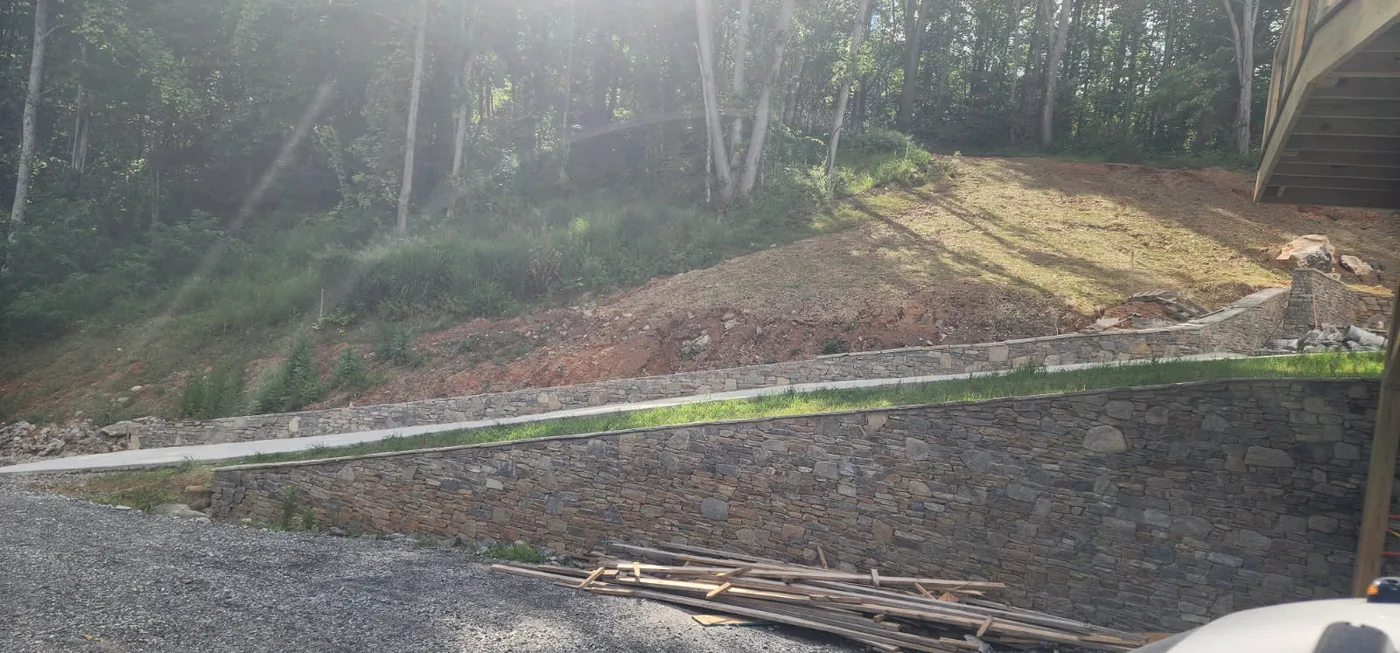
Candler sits in the western part of Buncombe County, where the terrain rolls up toward the Blue Ridge and many residential roads were cut into grades long before modern driveway standards existed. That single fact shapes what stone masonry costs here more than anything else. A wall in a flat quarter-acre lot in a Candler subdivision is a straightforward job: materials drop at the driveway, a mini machine moves them 60 feet, and the crew stacks. A wall on a narrow, steep, gravel drive off a county road is a different trade entirely.
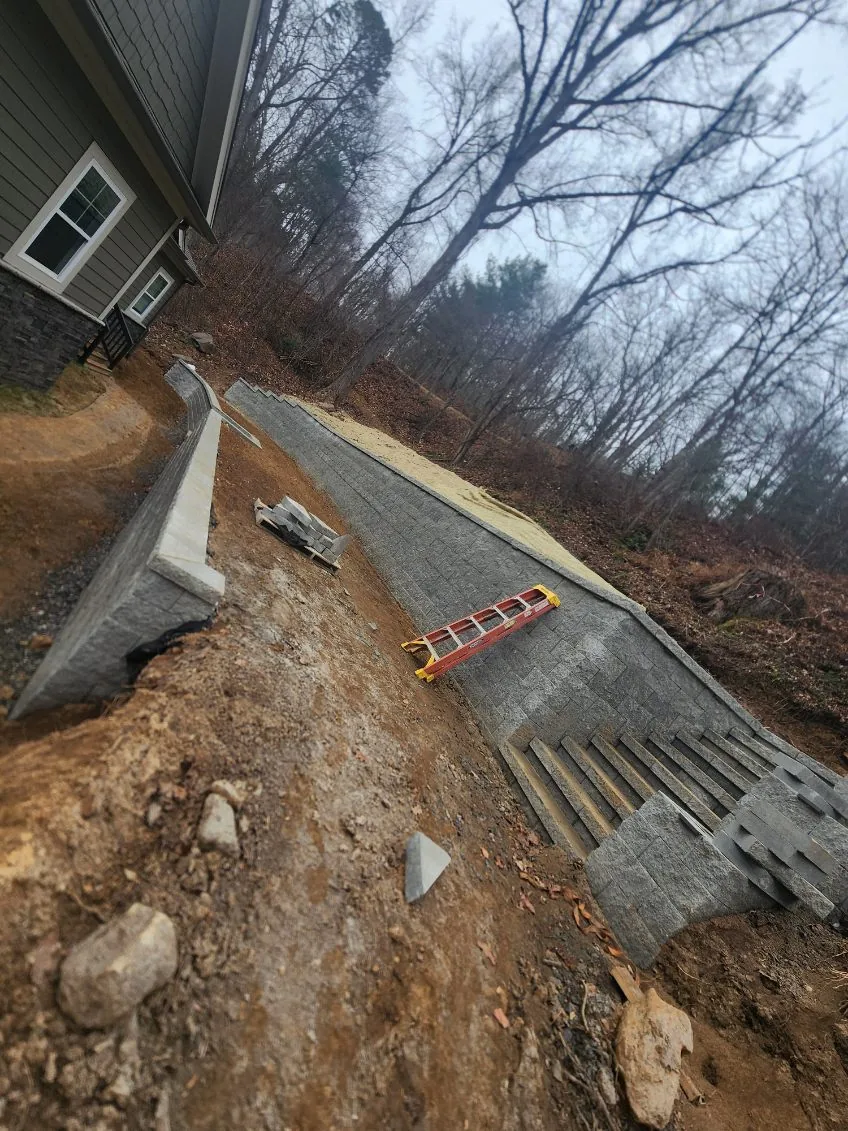
Three variables move the number on every quote. First, whether a truck can back within reach of the work zone. Second, how much material has to be moved by hand, wheelbarrow, or conveyor because the grade is too tight for equipment. Third, the distance from your site to the quarry or stone yard supplying the material. Candler is not far from the region's stone suppliers, but a load of dimensional Tennessee or local fieldstone still adds fuel and time on a tandem-axle truck that a flat, easy driveway absorbs and a steep mountain drive does not. When you see two quotes on the same written scope differ by 40 percent, the gap is almost always access, not stone.
The scope-versus-price picture for Candler projects
Buncombe County pricing runs higher than the state average on most exterior trades because of terrain, permitting, and the logistics of working on grade. This table reflects typical regional bands, not a quote. Real numbers depend on your specific slope, foundation, and drainage condition.
| Scope of work | Typical range | Cost drivers |
|---|---|---|
| Dry-stack garden wall, under 3 ft | $55–$95 per sq ft of face | Stone type, footing prep, access |
| Mortared retaining wall, 3–6 ft, engineered | $6,000–$28,000 total | Footing depth, drainage, soil load, permits |
| Stone steps (per flight, 4–8 risers) | $1,200–$4,500 | Tread material, grade change, haul distance |
| Stone veneer on a home entry or foundation | $14–$32 per sq ft installed | Veneer type, lath and weep detail, accessibility |
| Patio, walk, or driveway in natural stone | $18–$45 per sq ft installed | Base depth, drainage, stone format |
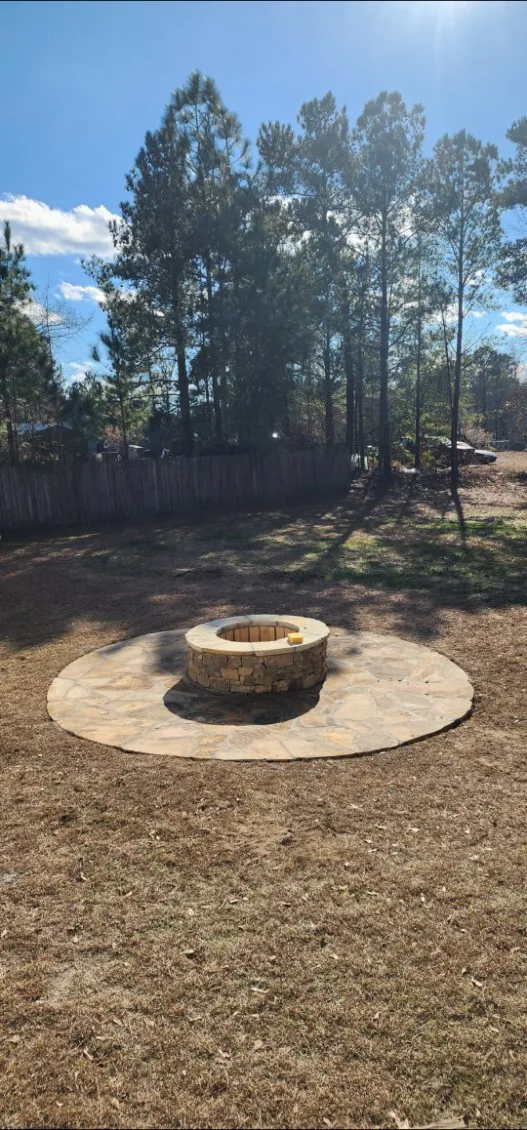
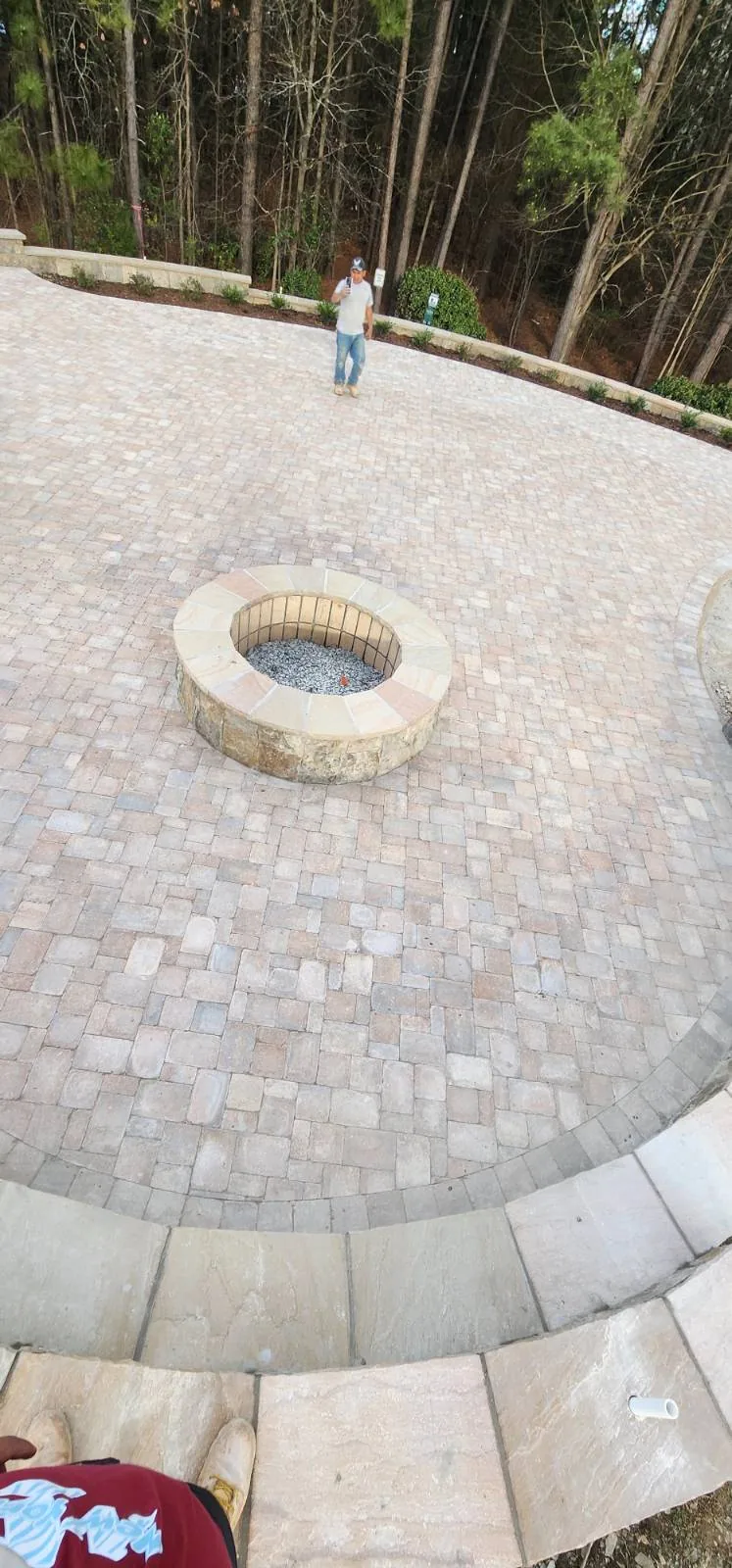
| Outdoor fireplace or full outdoor living build | $9,000–$35,000+ | Design, footing, gas or wood, hardscape scope |
The Buncombe County retaining wall cost breakdown goes deeper on which line items land where and why a wall over four feet on a graded lot is a different bid than the same wall on flat ground.
Water, walls, and the county's real record
Anyone who has lived in western North Carolina long enough knows that the mountains and the water have a complicated relationship. The federal disaster record for this county includes 19 declared events spanning 1973-2026, and almost all of them were storm and flood-driven. That history matters for stone work in a very practical way. A retaining wall that holds back saturated soil is doing a structural job, and how it handles water behind it determines whether it lasts twenty years or five.
Every wall we build gets a drainage discussion first: gravel backfill, perforated pipe, weep points, and how runoff from above the wall is managed. The retaining walls overview walks through the design principles we use, and the NC Building Code Council sets the structural and drainage requirements that any permitted wall has to meet. For walls over a certain height or those supporting a surcharge like a driveway, an engineered design is typically required. Catching that early keeps a project from stalling at inspection.
Candler's housing mix and what it means for stone work
Candler is not one kind of place. Drive through it and you pass 1970s brick ranches on flat lots, newer custom homes on hillside parcels with long gravel drives, and older farmhouses surrounded by acreage that has been in the same family for generations. Each calls for a different masonry approach.
On the older properties, stone work is usually repair and restoration: repointing a chimney, rebuilding a porch pier, replacing a failed step. On the newer hillside homes, it is new construction: retaining walls to hold a parking pad, stone veneer to finish an entry, hardscape to make a steep yard usable. And on rural tracts, it is often the practical stuff: a stone retaining wall along a driveway, a set of steps down to a lower field, a stone culvert headwall. Matching the right crew to the right job starts with being honest about which category yours falls into.
Choosing a Candler stone mason without getting surprised
Three things to insist on. First, a written scope that names the stone, the footing depth, and the drainage plan. Any bid that only says "retaining wall" on the back of a business card is not a bid. Second, proof of how the crew handles access on your specific property. Walk the site with them and ask how material gets from truck to work zone, because the answer tells you whether your steep driveway has been priced or ignored.
Third, licensing thresholds. North Carolina draws a clear line between handyman work and general contracting, and retaining walls and structural stone work can cross that line depending on scope and value. The NC Licensing Board for General Contractors publishes those thresholds, and for jobs involving electrical or gas, the NC State Board of Examiners covers the relevant trades. If a fireplace or outdoor kitchen has a gas line, that detail matters. For a side-by-side look at local options, see the Candler retaining wall contractors page.