Fieldstone, boulder, block, timber: matching material to Clyde's ground
Drive through Clyde and you can read the housing stock by its walls. The older mill-village blocks and in-town streets carry small gardens edged in whatever stone came out of the yard, often stacked fieldstone or rough-cut native rock that has been holding a slope for decades. Head out toward the Pigeon River and the ridges above town and the lots change character fast — steeper grades, heavier runoff, and walls that have to hold real earth rather than just tidy a flower bed. That difference drives material choice more than any style preference.
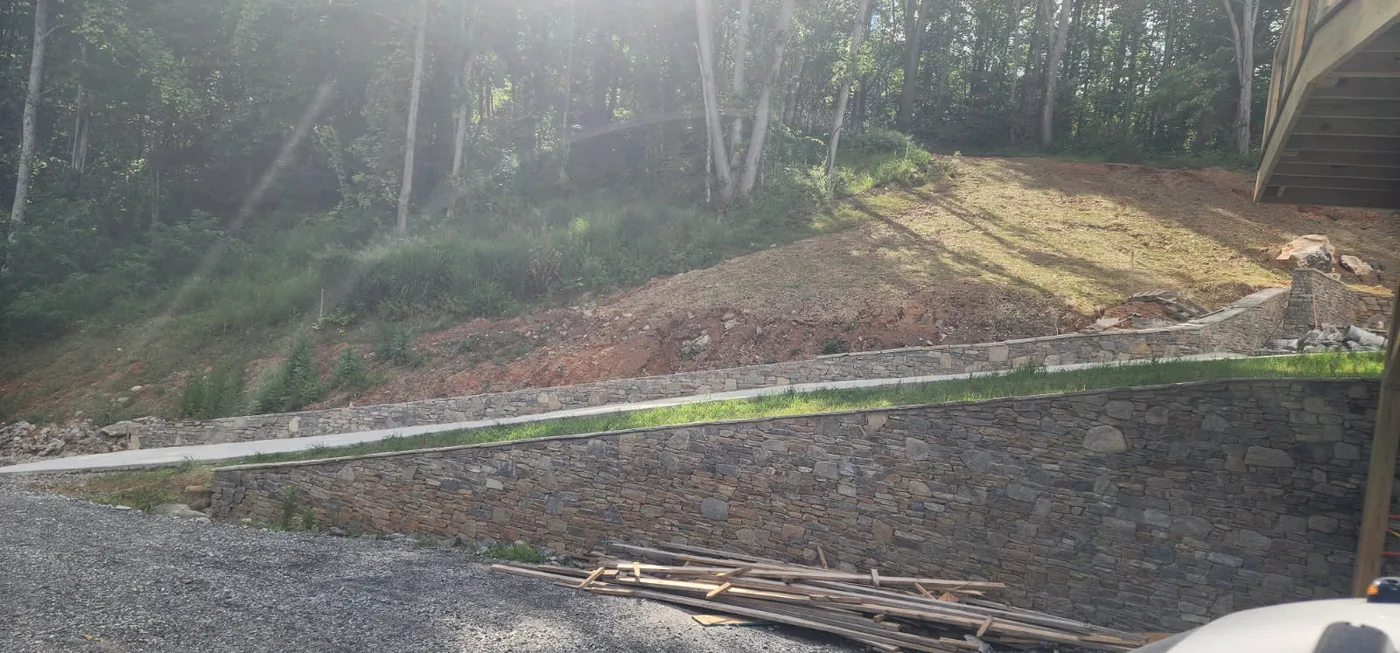
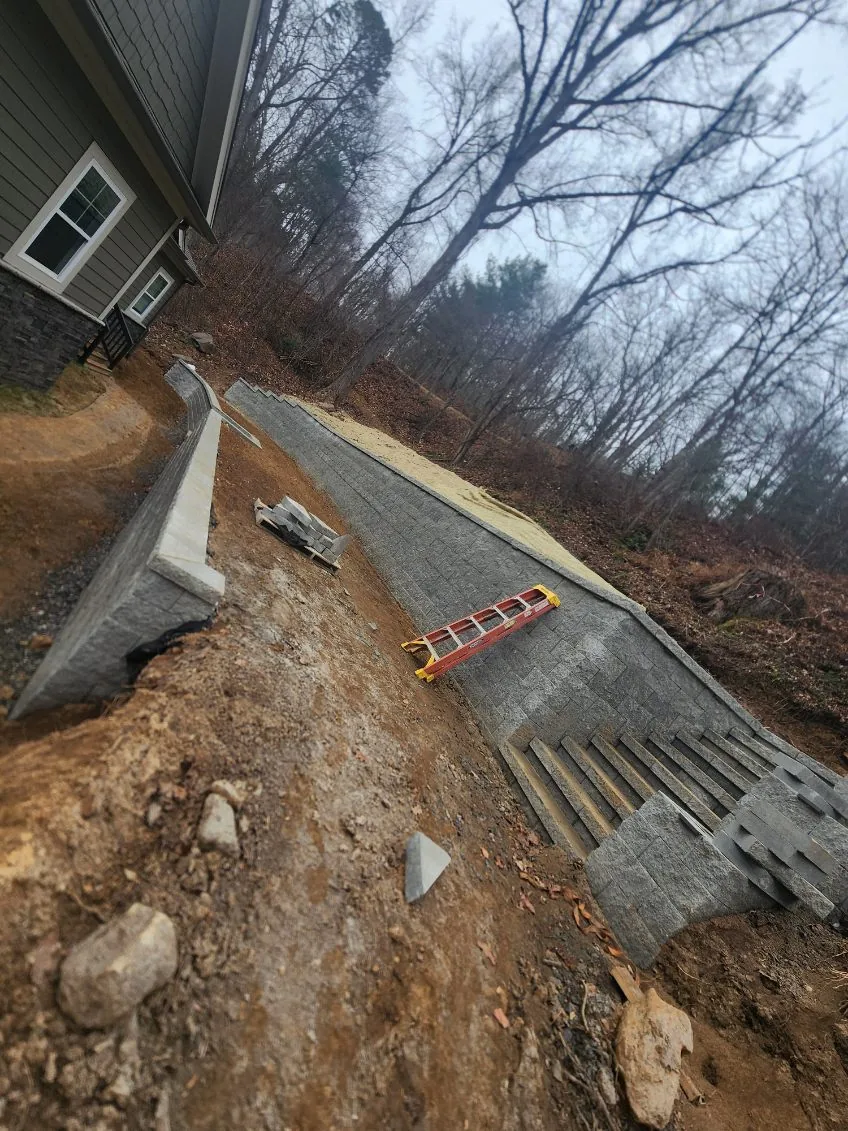
Fieldstone is the honest local choice for low walls and garden terracing where the stone is already on site or can be sourced nearby. In Clyde's older neighborhoods, you'll still find fieldstone that was pulled from the ground when the first foundations were dug, stacked into garden borders by homeowners who understood that the cheapest stone is the stone already in your yard. Boulder walls earn their keep on steep cut banks where a single course of large rock does the work of three courses of small stuff. On the wooded parcels climbing away from the river, a boulder wall set into a bank looks like it grew there, and it sheds water instead of trapping it. Segmental block is the budget and speed play — engineered, predictable, and the right answer when a wall has to be permitted and inspected. Timber is the cheapest option and the shortest-lived; in Haywood County's humidity, ground-contact timber rots faster than most homeowners expect. We'll tell you which one actually fits your slope and your budget instead of selling the one we like building.
Material also affects how the wall ages. Fieldstone and boulder develop moss and lichen here within a few seasons, blending into the hillside. Block stays looking new for years if that's what you want, but it never quite disappears into the landscape the way native stone does. Timber, in this climate, starts cupping and splitting long before it rots through, so it announces its decline early.
The Clyde price picture, by scope
Masonry quotes swing wide because the same square footage can mean a weekend of stacking or a week of excavation, drainage, and base prep. The table below is a working range for this county, not a promise — slope, access, and whether a machine can reach the wall move the number more than the stone does. For a deeper line-item view, see the Haywood County retaining wall cost breakdown.
| Scope | Typical range | Notes |
|---|---|---|
| Garden edging / low dry-stack wall (under 18 in) | $1,800–$4,500 | Fieldstone or block, hand-set, no engineering |
| Retaining wall, 2–4 ft, segmental block | $28–$48 / sq ft of face | Includes base gravel and drainage stone |
| Retaining wall, 2–4 ft, natural stone | $40–$65 / sq ft of face | Fieldstone or boulder, labor-heavy |
| Stone veneer, foundation or chimney | $22–$45 / sq ft | Depends on stone type and substrate prep |
| Stone steps and walkway | $2,200–$9,000 | Per-flight pricing; grade and count drive it |
| Walls over 4 ft or near a structure | Engineering + permit added | See licensing note below |
Treat any bid that skips drainage stone, base compaction, or a weep path as incomplete rather than cheap. Water behind a wall is what kills walls in this climate. Access matters too: a wall you can walk up to with a wheelbarrow costs less than one perched on a slope where every stone has to be carried by hand or winched. On Clyde's tighter in-town lots, staging space alone can add days to a job.
Stone selection also moves the price. If you have usable stone on site from an old wall or a foundation dig, that's a real savings. If everything has to be trucked in, expect the material line to climb. Boulder walls often look expensive on paper but can be competitive per square foot because a single boulder replaces a stack of smaller stones.
Permits, licensing, and when a wall stops being landscaping
In North Carolina, a retaining wall that holds up a slope or sits near a structure crosses from landscaping into construction, and that has consequences. Work above certain height or load thresholds can pull in general contractor licensing under the NC Licensing Board for General Contractors, and walls tied to a building's foundation or a drainage system can touch the residential code administered through the NC Building Code Council. Haywood County administers its own permitting at the county level, and the town of Clyde has its own expectations inside town limits. The practical version: if your wall is tall, holds a driveway, or sits within a few feet of a house or septic field, ask about engineering and permits before the first stone is set. A mason who shrugs at that question is telling you something.
There's also a safety dimension that isn't just about code. A wall that fails on a slope above a house can do real damage, and in Clyde's terrain, walls often sit on grades where the consequence of failure is higher than on flat ground. That's why we ask about load, drainage, and proximity to structures before we talk about stone type. If a project needs an engineer's stamp, we'll say so. If it needs a permit, we'll walk you through the county or town process. The goal isn't paperwork for its own sake; it's making sure the wall you pay for is still standing when you sell the house.
Water history shapes what we build here
Federal disaster records show 19 declared events touching this county across 1973-2026 — the overwhelming share storm and flood related. When the Pigeon River and its tributaries rise, they test every wall, culvert, and grade change in the valley. That history is why we treat drainage as the first design decision on any Clyde wall, not an add-on. French drains, gravel backfill, and a wall that lets water through instead of trapping it behind a solid face are what separate a wall that survives the next tropical remnant from one that bulges and leans within five years.
Soil here tells the same story. Much of Haywood County sits on clay-heavy ground that sheds water slowly, so a wall on a slope above town may be dealing with groundwater long after the rain stops. We've seen walls that looked fine for years fail after one wet spring because the backfill couldn't drain. The fix isn't complicated or exotic; it's just work that has to be done right the first time, with gravel where it belongs and an outlet that actually goes somewhere.
What good work looks like before you hire
Three questions worth asking any stone mason in Clyde. First, how deep will the base course go below grade? A wall is only as good as what it sits on. Second, what happens to water that reaches the back of the wall? You want a specific answer, not a gesture. Third, can we see a wall you built five or more years ago, still standing straight? That last one cuts through everything. If you need help comparing bids, our Clyde retaining wall contractor guide walks through what a fair quote includes, and the retaining walls overview covers wall types and how they perform on mountain lots. Good stonework is slow work. Be skeptical of anyone who promises it fast and cheap.
Also ask how the mason handles the transition where the wall meets a slope, a driveway, or a foundation. That's where failures often start, and it's a detail that separates someone who builds walls from someone who stacks stone. A good mason will talk about base depth, drainage, and what the wall is actually holding back before they ever talk about how it will look.