Why Hendersonville yards water-feature differently
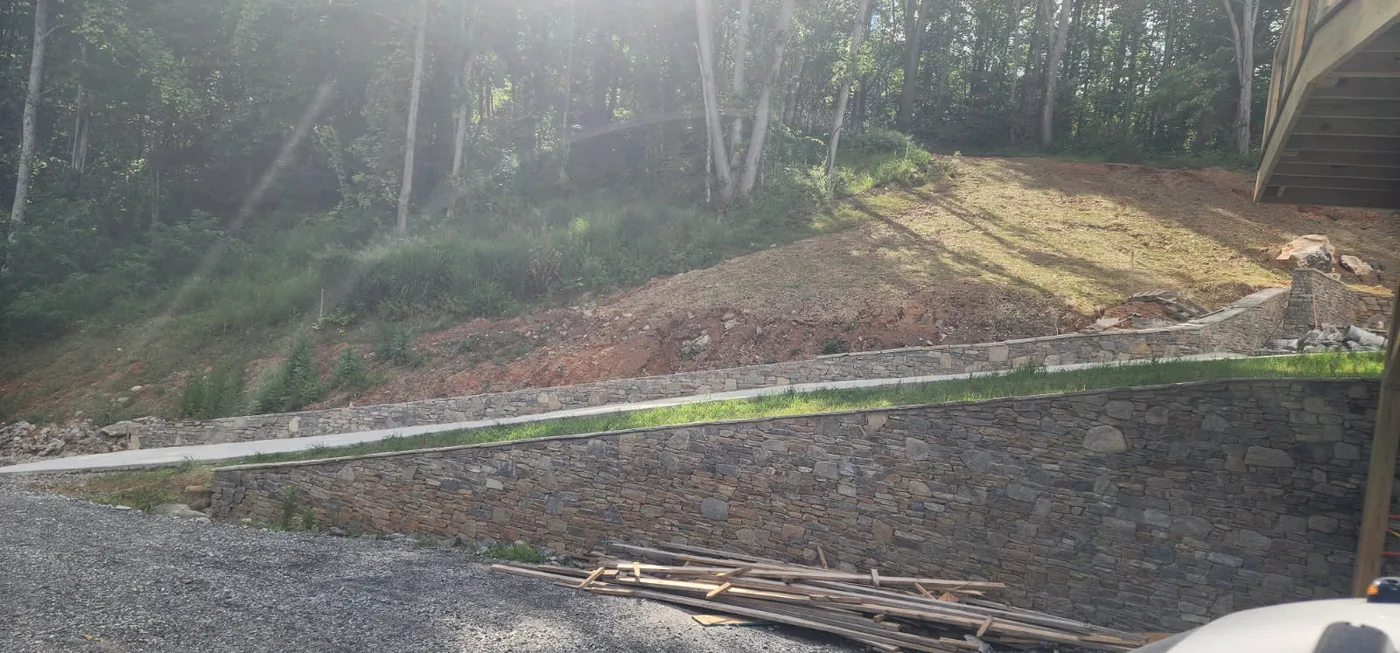
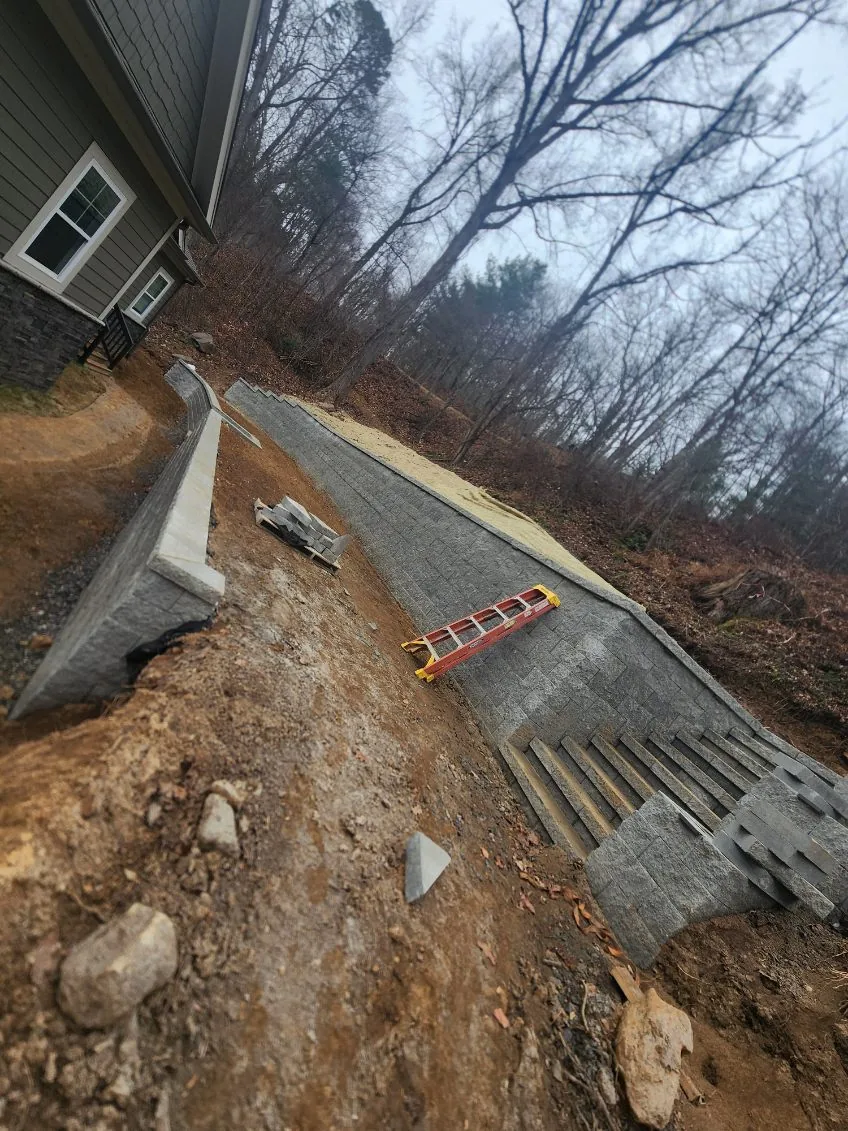
Hendersonville was laid out on a plateau above the French Broad valley, and its residential lots reflect that. Many in-town parcels along Kanuga and Fifth Avenue West are older, narrow, and terraced to manage the slope that creeps down toward Mud Creek. Just outside the city toward Flat Rock and Laurel Park, lots get steeper still, hemmed with mature rhododendron and hemlock root systems that force different excavation than a bare new-construction yard. A stone waterfall or pond in Hendersonville is less a fountain kit and more a small grading and retaining project with water at the end of it.
That matters because the price movers here are almost never pump or liner — they are how much rock has to come in, how much soil has to go out, and whether the feature sits into a hillside the way the lot already wants to.
The neighborhood angle is the thing that separates a Hendersonville bid from an Asheville-proper bid. Asheville's in-town lots tend to be tighter and more graded down toward the river bottoms of the French Broad and Swannanoa, but the west-side and south-side Hendersonville lots that feed the Kanuga and Fifth Avenue West corridors are wider and shallower — more frontage, less depth — which changes how a stream and pond can be laid out. Here you often have room to land a feature along the property edge and step it downslope; in town in Asheville, the same feature may have to spiral into a courtyard. That difference alone can swing the scope by thousands in rock and machine time, because a long, shallow channel is far cheaper to build than a deep, tight basin that requires a vault and doubled liner.
Reading your lot before picking a waterfall design
The county's soils lean heavy clay with pockets of weathered saprolite, which holds water poorly on the surface and shifts when over-saturated. A waterfall that recycles through a lined basin sidesteps that; a pond that depends on natural groundwater does not. Before design, ask three questions about the site: where does the yard already drain during a hard rain, does the feature footprint sit above or below the house's footing line, and how much of the slope is naturally rock versus fill.
On lots above the floodplain, the federal disaster history still shapes design — 16 declared events touch Henderson County (1978-2026), and in this terrain most of the damage came through saturated slopes and runoff, not river crest. Any water feature that adds gallons to a failing grade amplifies that. See what the National Weather Service reports for rainfall totals in this corridor before you commit to a basin size.
The housing stock matters too. Hendersonville's older bungalows and mid-century ranches were often sited on cut-and-fill pads that leave a perched fill layer on the downhill side. That fill is not always visible from the surface, but it compacts unevenly under a basin and can undermine a liner over a few seasons. A crew that has worked this county will probe the grade before pricing, or will at least scope the basin shallow enough that fill settlement does not become a callback. On steeper Flat Rock and Laurel Park lots, the same soils sit on bedrock shelves that show up as sudden refusal during excavation — a machine hour that turns into a hand-dig and a redesign on the spot. Honest bids here reflect that risk rather than pretending it does not exist.
Scope and cost bands for Henderson County water features
Pricing below is the working regional band — individual jobs land inside or outside depending on rock haul, access, and how much uphill grading is involved. A steep Lot behind a Laurel Park cottage can add 30-40% over the same feature on a flat Etowah yard, mostly in retaining and machine time.
| Scope | Typical range | Drivers |
|---|---|---|
| Small boulder bubbler with buried basin | $2,800-$6,500 | Rock size, basin depth, pump vault |
| Single-drop stone waterfall, 2-3′ fall | $4,500-$11,000 | Liner sq. ft., rock tonnage, slope tie-in |
| Multi-drop stream and small pond | $9,000-$24,000 | Pond volume, biofilter, edge stone, access |
| Pondless waterfall with hidden reservoir | $6,000-$16,000 | Reservoir size, safety covers, uphill grading |
| Water feature with retaining wall and patio tie-in | $14,000-$38,000+ | Wall height, engineering, hardscape sq. ft. |
Wall work that supports the feature usually bids separately — see the Henderson County retaining wall cost breakdown for the line-item structure. If the project crosses into a structural retaining scope or an attached structure, licensure thresholds under the NC Licensing Board for General Contractors apply, and the right crew will already know that.
Two local cost patterns are worth calling out because they surprise homeowners. First, rock haul: the county sits close to several stone yards that quarry the gray and tan granite and fieldstone common to Western North Carolina, and local sourcing keeps tonnage pricing lower than importing palletized stone from outside the region. Second, patio tie-in: if the waterfall lands beside an existing patio, matching the edge stone and re-cutting the layout to accept a stream channel can add a few thousand in hardscape alone, but it is often the difference between a feature that looks added and one that looks like it was always there. For clients weighing that trade-off, the Hendersonville retaining wall contractor page covers the parallel hardscape scopes and how to sequence them with the water work.
Water, code, and the honest drainage conversation
Recirculating water features are largely a closed loop, but overflow, backwash, and liner discharge are still regulated — anything that flows to a storm drain or stream falls under state water-quality rules. NCDEQ's Department of Environmental Quality publishes the discharge and stormwater guidance that governs how overflow should be routed, and any designer working near a creek or drainage easement should be able to say how theirs meets it. The ICC's International Code Council codes govern the adjacent structures — retaining walls, decks, and any lighting or electrical feeding the pump — and those are the parts that create permit obligations.
Practical pattern on Hendersonville jobs: pondless waterfalls and self-contained bubblers rarely trigger permits; anything that alters drainage across a property line, or that adds a retaining wall over roughly waist height, almost always does. Get that answered before the first load of rock arrives.
Electrical deserves its own line. Pumps need a GFCI-protected circuit, and in older Hendersonville homes the exterior receptacle may be on a circuit that was never sized for continuous pump draw. That is not a water-feature problem — it is an electrician visit, and it should be priced before the trench is dug, because running conduit under a finished basin is far more expensive than running it beforehand. Similarly, any low-voltage lighting inside or around the feature falls under code for wet locations, and a designer who treats lighting as an afterthought tends to leave a code issue behind. Overflow routing is the other quiet failure point: on a sloped lot, overflow that exits toward a neighbor's foundation is a civil problem, not a plumbing one, and it is exactly the kind of thing that should be resolved in design rather than after the first hard rain.
Choosing the crew and thinking past the first summer
Hendersonville has a deep pool of landscape and hardscape contractors, and only some of them build water features as a specialty rather than an add-on. The three questions that separate them: who sets the liner and biofilter (the same crew or a sub), what happens to overflow during a four-inch rain, and how the pump vault is sized for the leaf load from surrounding hardwood and hemlock. Answers that are vague now are service calls later.
Also ask about winter. A recirculating feature in Henderson County usually runs year-round with the pump moving, or shut down and drained — either is fine, but the plumbing and basin need to be built for one or the other. The broader materials and build vocabulary is covered in the stone waterfalls and ponds guide; for crews who do the surrounding hardscape in the same scope, the Hendersonville retaining wall contractor page is the parallel read.
The last thing to weigh is what the feature looks like in year five, not year one. Hendersonville's canopy drops a heavy leaf load, and a basin without a properly sized skimmer or vault will silt in and lose its clarity by the second fall. A well-built feature with a biofilter and a cleanout rhythm ages into the landscape; a cheap one becomes a green puddle and a homeowner who stops running it. Ask any bidder to describe the maintenance calendar they expect the owner to keep, and whether they offer a seasonal service. In this county the honest answer is usually a short spring startup, a fall leaf-management pass, and a winter decision — run it or drain it — and a crew that can explain that in plain terms is a crew that has done it more than once.