Where the water actually comes from on a Black Mountain lot
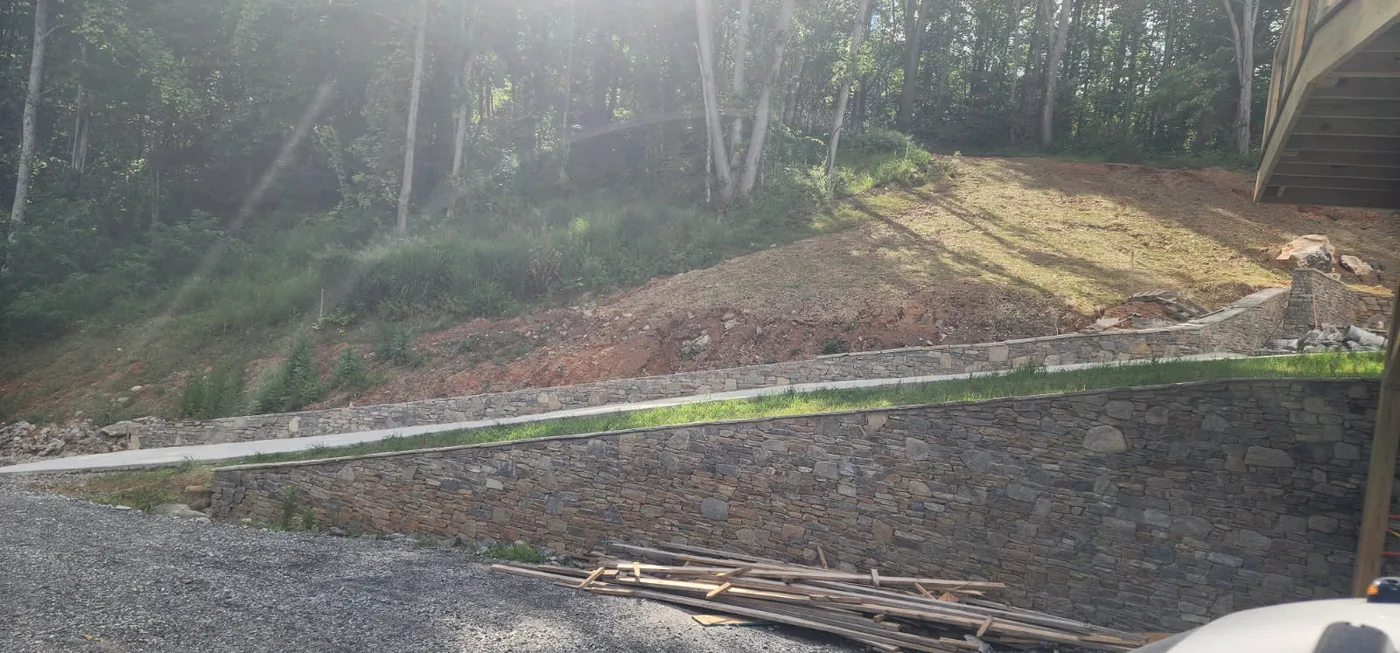
The rain that hits a Black Mountain property rarely falls where the client thinks it does. On the south-facing lots under the ridge, runoff sheets down from the wooded slope above the house, crosses the yard, and finds the first low spot — usually the front walk. On the flatter parcels closer to the valley floor along the Swannanoa, the problem is the opposite: water arrives, sits, and has nowhere to go. Both situations wreck a stone stair the same way. The treads heave, the risers separate, and the joints open. Before anyone quotes stone, somebody has to trace where the water enters the lot and where it will exit. A walkway that moves water away from the house and off the property is a different bid than one that simply decorates the slope. The federal record backs the concern: 19 declared events have touched this county (1973-2026), almost all storm and flood family, and each one pushed water against hardscape that was laid for a drier assumption.
The honest starting point is a plan for the water: catch it uphill, run it under or beside the stair in a gravel bed or buried drain, and release it below the last riser. Stone is the second decision.
What a Black Mountain stair-and-path bid actually contains
A real scope on this terrain lists the excavation, the base, the steps, and the drainage as separate line items. Anyone quoting one number with the word "stone" in it is hiding the expensive part. The working table below shows what these line items typically run for residential work in Buncombe County. Local conditions push these toward the top of each range: tight access on the ridge roads, wet clay that needs over-excavation, and the grade change on lots cut into the hill.
| Scope item | Typical price range |
|---|---|
| Flagstone or bluestone walkway, base prep included, 40-80 sq ft | $2,600-$4,800 |
| Stone steps, 3-5 risers, dry-laid or mortared | $1,800-$5,200 |
| Full hillside stair with landings and buried drainage | $7,500-$11,500 |
| Retaining wall alongside a stair (per square face foot) | $35-$75 |
| Gravel or French drain under the path | $900-$2,600 |
If the project includes structural retaining, the Buncombe County retaining wall cost breakdown has the line-item detail behind that last row.
Building stone steps that stay put in freeze-thaw country
Black Mountain sees real winter, and that matters more to stone work than most homeowners expect. Water soaked into a base, frozen, and thawed will lift a poorly-laid stair within two seasons. Good crews here over-excavate the base, compact in lifts, and set the stones on a bed that drains rather than traps. Mortared joints are fine for flatwork against the house; dry-laid is often the better call on a slope where movement is possible and repair is likely. The International Code Council publishes the standards that inform how stairs, guards, and their footings should be detailed on grade changes, and a contractor who knows why those rules exist will build you a stair that outlasts the house's siding.
Two more checks: whether the crew straps or pins the tread stones where the run is steep, and whether they undercut the base so the uphill side drains instead of pooling. Neither is visible when the job is done. Both decide whether you call them again in five years.
When a walkway project is really a retaining wall project
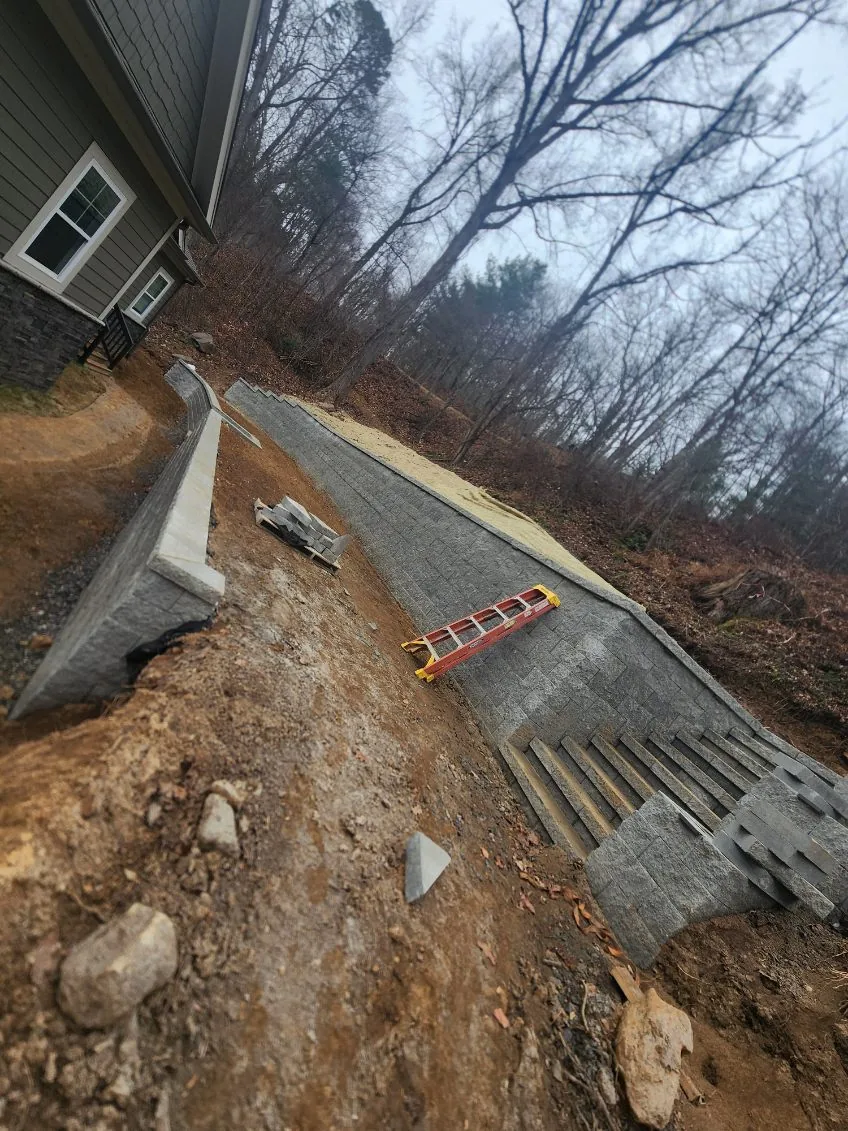
On the steeper lots in and around town, the client asks for steps and the crew finds a slope that will not hold without a wall. This is common where a walkway has to cross directly up the grade toward a porch. The right sequence is wall first, steps second — building them the other way is how a stair ends up leaning against unsupported soil. If that is what your site needs, the retaining wall contractors serving Black Mountain page covers what to look for in the crews who handle those jobs.
For the plain walkway and step question, the broader stone steps and walkways guide covers design choices, material comparisons, and how a typical build is staged. Read it before you take bids, because the material choice changes the number more than the labor does.
Hiring this trade in Black Mountain
Three checks that save money on this kind of work. Ask whether the crew has built on your grade before, because a lot off the upper roads is not the same job as a flat parcel near the river. Ask for a written drainage plan, since that is what separates a stair that lasts from one that gets rebuilt. And ask how they sequence water work against stone work, because a crew that stones first and drains later is selling you a repair, not a walkway. North Carolina's general contractor licensing rules, administered by the NC Licensing Board for General Contractors, set the threshold at which a job requires a licensed contractor; if your combined project crosses it, verify the license before signing anything. Storm and freeze trends are here to stay — the National Weather Service keeps the local records that tell you what your base course is up against each winter.