The access problem comes before the design
Woodfin sits on the north bank of the French Broad, a narrow river town stitched between the water and ground that climbs fast toward Elk Mountain. Lots off Elk Mountain Scenic Highway and the River Ridge side do not have backyards; they have shelves cut into grade. That shape decides almost everything about a stone waterfall budget, because a cascade is really three materials: rock, water, and the labor of getting the first two to a spot where a machine or a body can reach.
A one-ton boulder has to ride a truck, cross a driveway, and land on a hillside that may run 25 degrees. Every foot of that trip costs. When a driveway is under ten feet wide, hemmed by retaining walls, or turns tighter than a truck can swing, the boulders get smaller — or the rock arrives by hand, one piece at a time, and you pay for that in hours. Quarry distance matters less than people expect on a normal metro run, but it stops being a rounding error when the only practical machine is a mini excavator and the boulders are native fieldstone from a mountainside rather than palletized Tennessee ledge.
What a built cascade actually costs in Woodfin
Numbers below assume finished work: liner, pumps, plumbing, edging, rock placement, and a settlement period with the water balanced. Small features in tight yards sit at the low end because rock stays modest and staging is short. Anything calling for a boulder drop on a slope, a buried pump vault, or a walk-behind route to the build site moves up the table fast.
| Scope | Typical Woodfin range | What moves it |
|---|---|---|
| Small recirculating waterfall, prefab basin | $2,500–$5,000 | Rock size, distance from driveway |
| Pondless waterfall, liner and native stone | $5,000–$11,000 | Grade change, hand-carry rock |
| Koi or goldfish pond with waterfall return | $9,000–$20,000 | Depth, filtration, electrical run |
| Boulder cascade on a steep grade | $15,000–$28,000+ | Machine access, spoils removal |
| Stream-and-pond combination with planting | $20,000–$40,000+ | Length of run, lighting, patio tie-in |
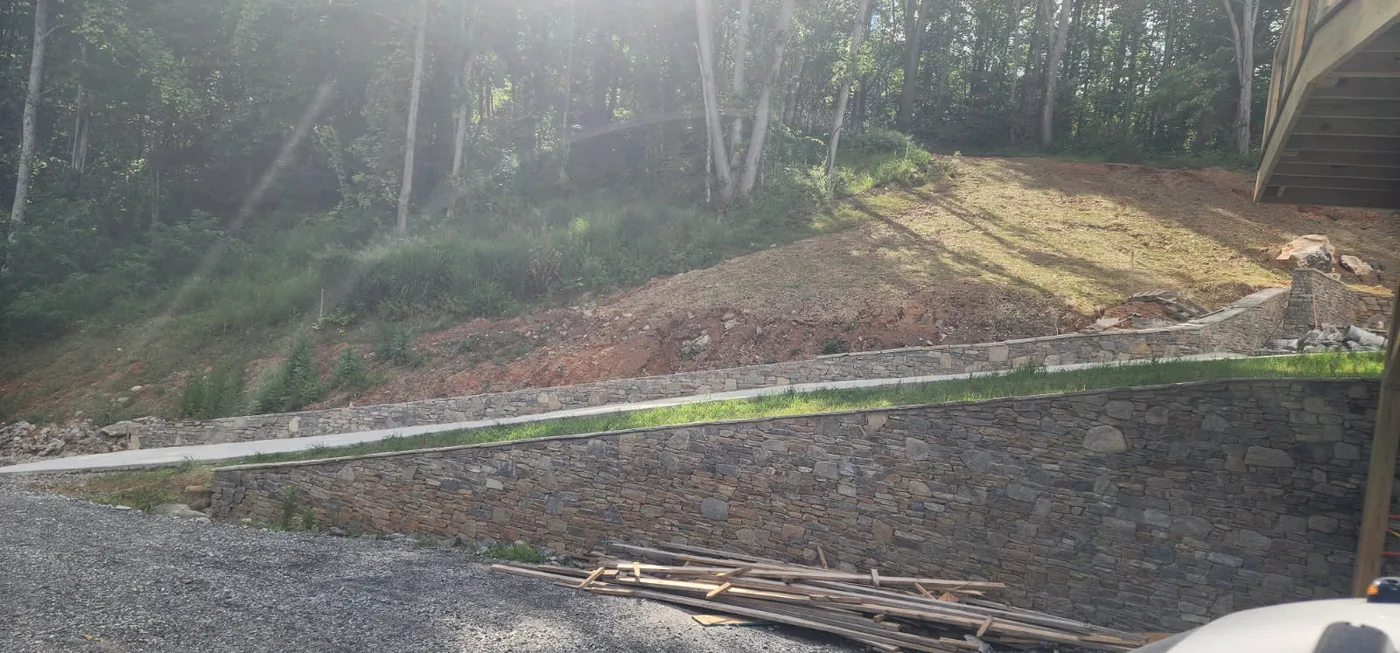
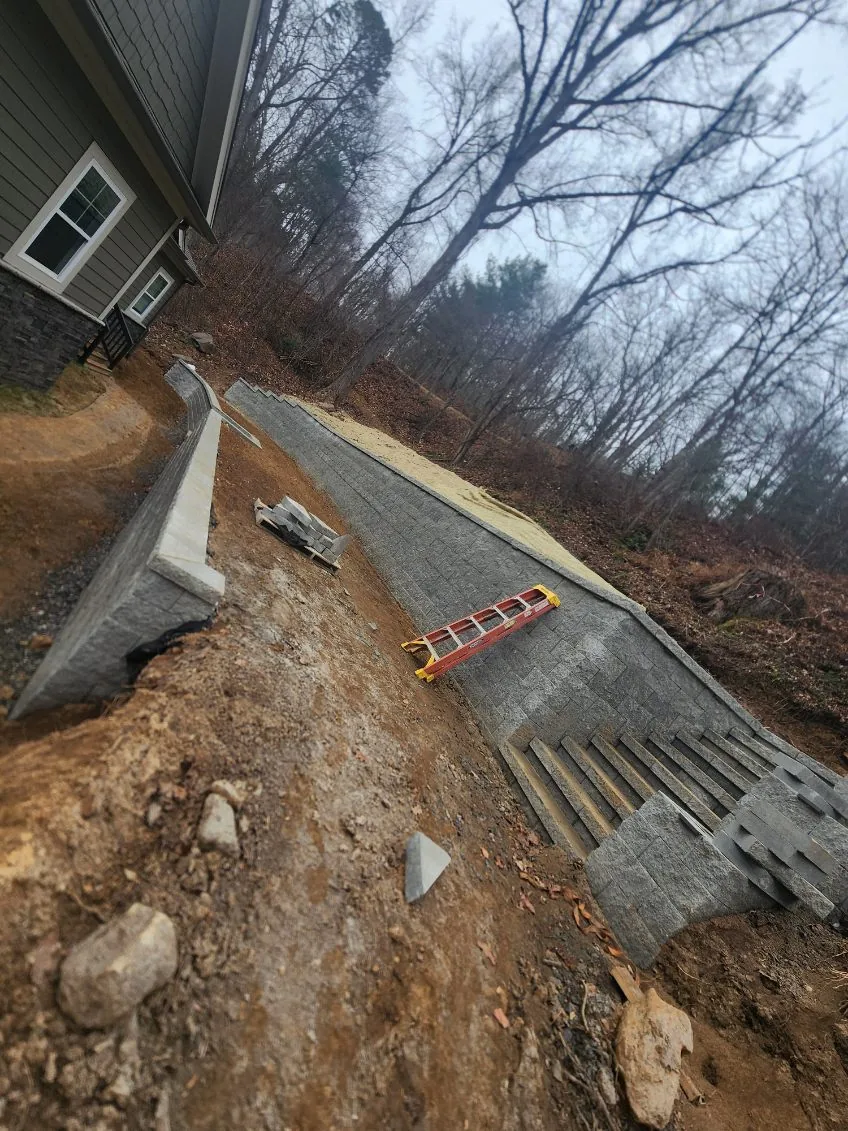
These are Asheville-metro bands, not a quote. A driveway that can take a loaded dump truck can shave real money off a job; a driveway that cannot can add a third to the rock line alone. If your feature runs into a slope that needs holding back, see the Buncombe County retaining wall cost breakdown — every stone feature on a hillside here sits in that conversation.
Water, electricity, and the county's rules
A pond is a small plumbing system and a small electrical system, and both deserve to be treated that way. Pumps, low-voltage lighting, and any outdoor receptacle near water come under the electrical code, and the state's adopted building rules flow from the North Carolina Building Code Council — the same source that governs deck framing and footing depths on these slopes. Where a feature crosses into permitted structure, general contracting thresholds are set by the NC Licensing Board for General Contractors; a contractor who stumbles on that question is telling you something.
The environmental layer is real here too. Buncombe County is a French Broad watershed county, and stormwater that leaves your pond overflow has to go somewhere sensible. Standing water, mosquito breeding, and fish survival all start with circulation and a place for excess to exit. The EPA publishes straightforward guidance on backyard water features and runoff that is worth ten minutes before anyone breaks ground near a slope that drains to a neighbor.
Rock sourcing on a mountain, honestly priced
Woodfin and the surrounding north Buncombe hills supply two very different product lines: native stone pulled from the site or a nearby cut, and palletized stone trucked in from yards outside the county. Native rock is cheaper per ton and better looking in a mountain yard, but it runs irregular, which means more mortar, more fitting, and a mason with an eye. Palletized stone is predictable and stackable but travels, and travel is weight, and weight is fuel. A feature that mixes both — native boulders for the falls, cut stone for the seating wall — usually lands closer to the truth than either extreme.
The other half of that ledger is what leaves. Excavating a pond or a stream run produces spoil, and on a hillside lot there is rarely a place to hide it. Hauling dirt off-site is a line item, and it can be a big one when the only exit is a steep driveway and the truck can't back up to the dig. Crews that carry those costs honestly in the scope are easier to compare than crews that bury them in "miscellaneous." When the rock placement work overlaps with structural earth-holding, the Woodfin retaining wall contractors conversation is the same conversation.
Sequence, maintenance, and what a good install looks like
The best Woodfin installs get the invisible parts right first: liner underlayment that actually fits the basin, a pump vault you can reach without pulling every boulder out of the stream, and a fill line that runs clean and doesn't freeze through a cold snap. Rock placement comes last because it's the only part you see, and it's the part most easily redone if the water is wrong. Ask to see the water flow before anything gets planted around the edges.
Then ask what maintenance looks like in month three. Liner features here collect leaf litter in fall, and a pond on a slope collects more than one on flat ground because everything uphill ends up in it. A feature designed with a skimmer, a cleanout, and a bypass valve is easier to keep alive than one without. On any hillside build in this county, water is the thing that decides whether a landscape feature survives its first decade, and it's also the thing that makes the difference between a finished stone waterfall that reads as bedrock and one that reads as a pile of rocks. County disaster records (19 declared events since 1973-2026) lean heavily on storm and water damage, and the features that fare best in those events are the ones with deliberate overflow paths.