Stone that comes off the ground it sits on
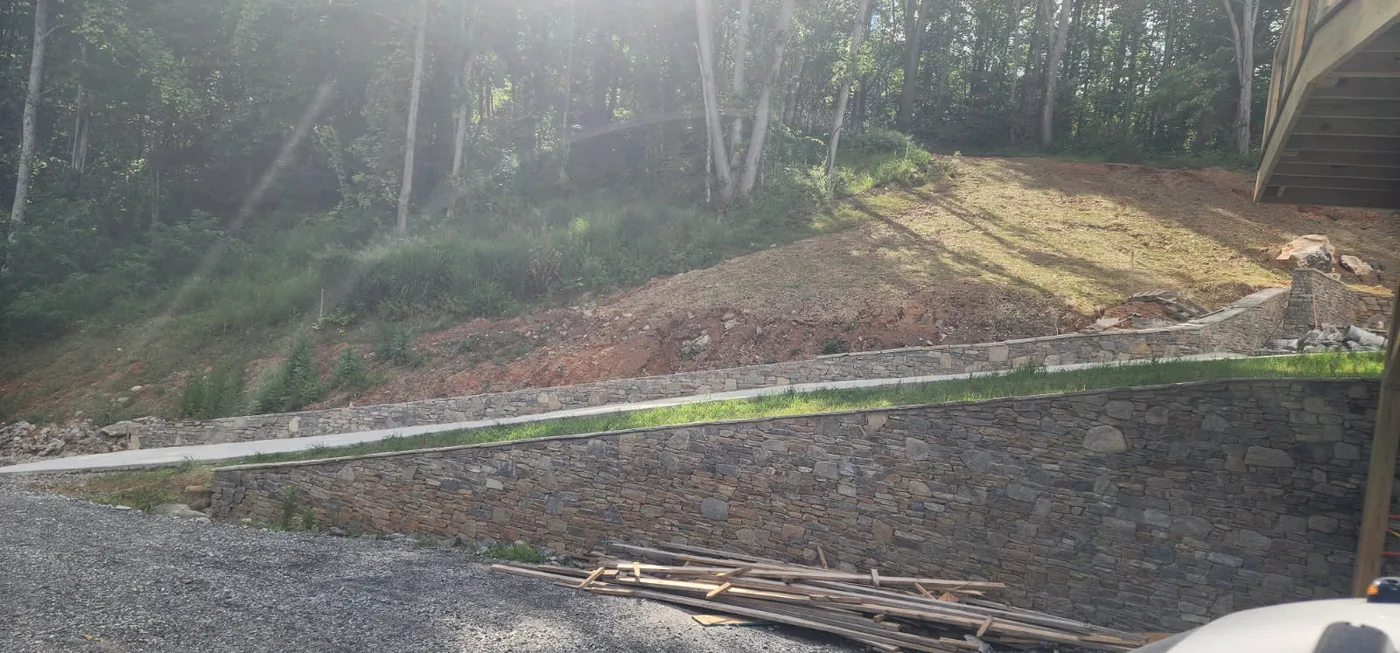
The stone in Barnardsville comes off the ground it sits on. Fieldstone pulled from a pasture edge, boulder from a creek bank along Dillingham or Stoney Fork, and the occasional load of block and timber where a budget or a slope won't carry full stone. That material reality shapes every quote here: a wall built from stone already on site costs far less than one built from hauled-in veneer, and a boulder retaining wall on a 30-degree cut behaves nothing like a stacked fieldstone garden wall.
Walk a Barnardsville property and you can usually read its history in the stone. Old field piles at the tree line mark where a family cleared pasture generations ago. Creek cobble shows up in foundation corners. The stone is rarely uniform, and that is part of the character buyers here ask for, but it also means a mason has to sort by size and shape before a single one is set. A wall of mixed fieldstone and creek cobble needs more hands-on fitting than a pallet of dimensional block, and that labor shows up in the price even when the material is free.
Housing stock follows the terrain. Older farmhouses with stone foundations and chimneys, mid-century homes on graded pads, and newer construction on cut-and-fill ridge lots. Each one produces a different stone problem, from repointing a century-old foundation to holding back a fresh slope behind a new build. A 1920s farmhouse foundation wants a soft, breathable mortar matched to what is there; a 2018 ridge build wants a structural wall engineered for the fill it sits on. Same trade, opposite instincts.
Barnardsville stone and wall price bands
The table below reflects working regional ranges, not flat rates. Material source, access, and grade are the movers. A wall on flat ground with a truck-and-trailer approach prices at the low end; a wall up a single-lane hollow road with no equipment access prices at the top. See the full Buncombe County wall cost breakdown for line-item detail.
| Scope | Typical range | What moves the price |
|---|---|---|
| Fieldstone garden or low retaining wall (under 3 ft) | $30-$55 / sq ft of face | On-site stone vs. hauled; dry-stack vs. mortared |
| Engineered retaining wall (over 3 ft, boulder or block) | $45-$70 / sq ft of face | Engineering, drainage, geogrid, equipment access |
| Stone veneer on a home or chimney | $20-$45 / sq ft | Stone type, substrate prep, height, detail work |
| Foundation or chimney repointing | $1,200-$6,000 per job | Access, mortar matching, extent of failure |
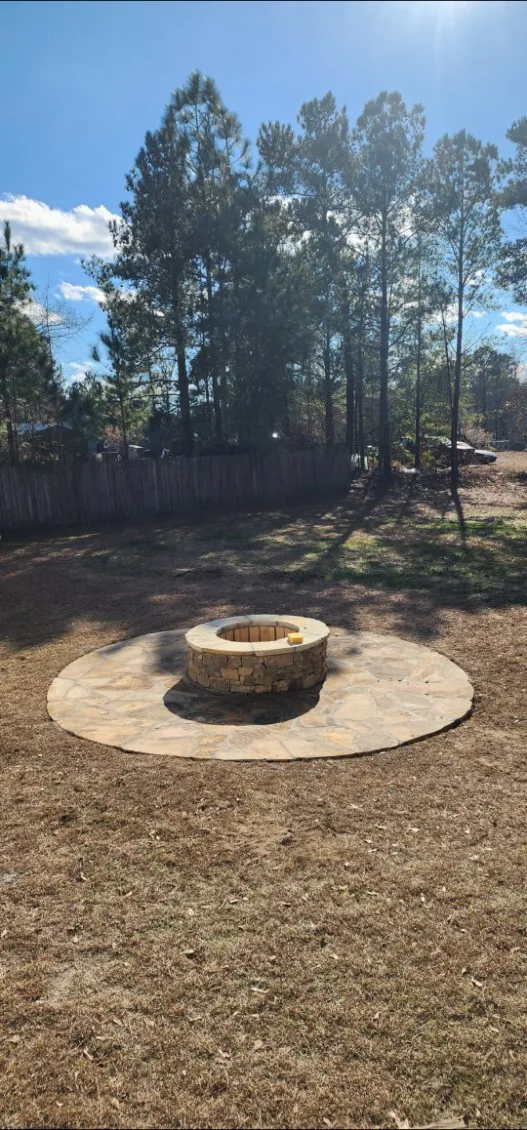
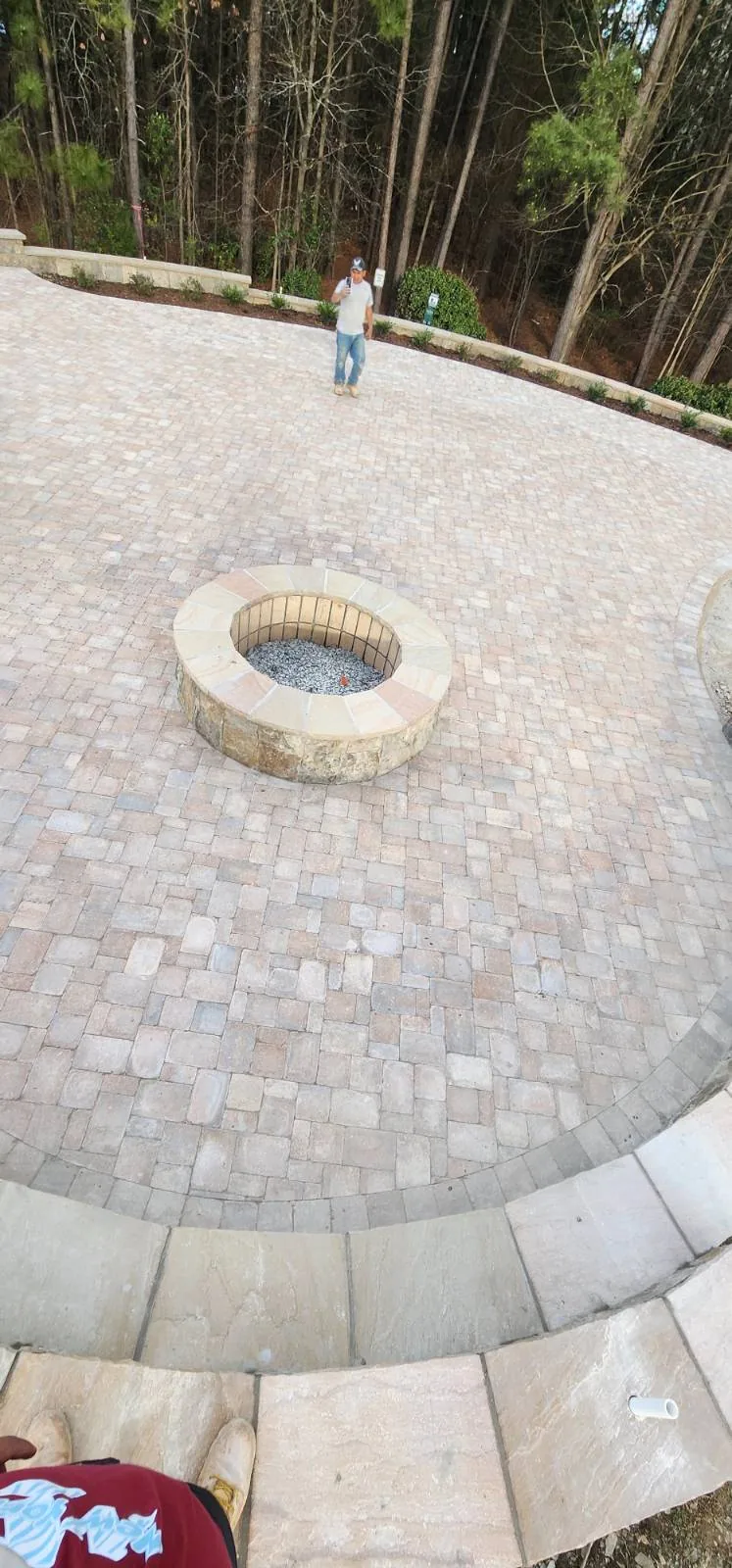
| Stone steps, walkways, patios | $2,500-$15,000 | Square footage, stone thickness, base prep |
Any bid that skips drainage on a wall over three feet is incomplete, not cheap. Water is what fails mountain walls.
Two jobs that look identical on paper can price a thousand dollars apart because of the driveway. A paved approach off a state-maintained road lets a truck and mini-excavator back right to the work. A steep gravel drive that turns to soup in a wet spring means stone gets carried, spoils get hauled by hand, and the schedule stretches. Ask any mason how they plan to get equipment in before you compare numbers, because that single detail drives the spread more than the stone itself.
Water is the whole game on a mountain slope
Barnardsville gets the rainfall and the storm history that come with the Blue Ridge. 19 federal disaster declarations touch this county across 1973-2026, overwhelmingly storm and flood family, and every one of those events sent water at walls, foundations, and slopes built for a drier assumption. A retaining wall that ignores where the uphill water goes will lean and fail within a few seasons, no matter how well the stone is set.
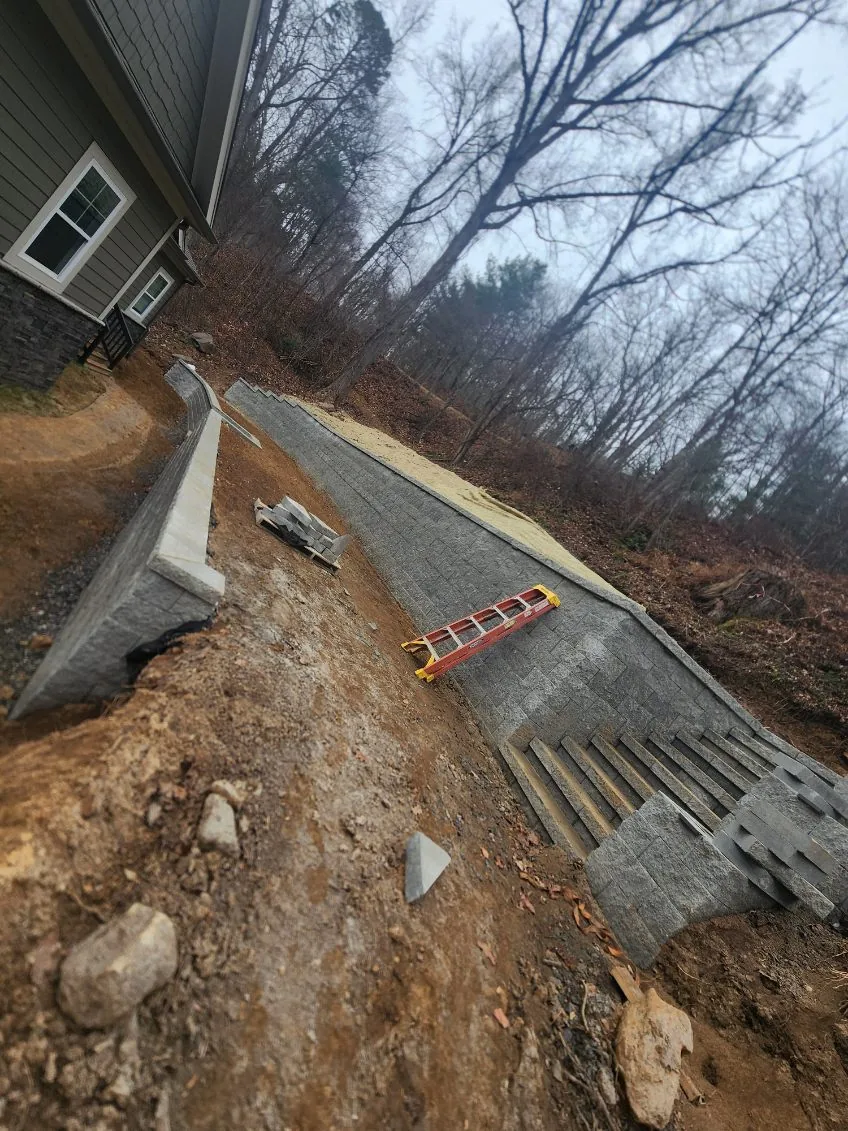
That means footing, drainage stone, and a path for water matter as much as the face you see. On steep hollow lots, the uphill neighbor's runoff is part of your wall's design. Our retaining walls guide covers how a proper drainage system is built behind the stone.
The mountain pattern is familiar: a dry September, then a tropical system stalls against the ridge and drops several inches in a day. Water that would soak away on flatter ground instead sheets down a hollow, hits the back of a wall, and looks for the weakest point. If the wall has no drain, that water saturates the backfill until the soil pushes the wall forward. The fix is not a stronger face; it is gravel, a perforated pipe, and a daylight outlet so the water leaves before it builds pressure. In a place where a single storm can drop more rain than a wall was ever designed for, that path is the difference between a wall that lasts decades and one that is re-done in five years.
Slope position matters just as much as rainfall. A wall at the toe of a long hollow takes concentrated flow from everything above it, while a wall on a mid-slope bench sees far less. A mason who walks the ground uphill of your project, not just the wall line, is reading the real load. That walk is also the time to notice whether a spring seeps out of the bank, since a wet spot behind a wall needs its own handling, separate from surface runoff. The National Weather Service outlooks are a reminder that this corner of the state sits in a repeated heavy-rain corridor, which is why drainage is designed in from the start.
Matching stone to budget and building
Not every wall wants full stone. On a tight budget or a slope that needs real engineering, block and timber sited behind a stone face gives the look at a fraction of the structural cost, and a boulder wall does the heavy holding where fieldstone would be decorative only. The honest answer is that the material should follow the load, the grade, and how the stone will be sourced.
Where the work touches a dwelling, code and licensing come in. Structural and site work crosses North Carolina Licensing Board for General Contractors thresholds once a job reaches a certain dollar figure and scope, so confirm who is actually licensed for the structural side. On any wet or flood-prone site, the NC Department of Environmental Quality rules on stormwater and stream buffers can apply, especially for walls near a creek or drainage way. Building and grading work also has to satisfy the adopted codes, which the International Code Council publishes and Buncombe County enforces, so a wall on a permitted lot should be designed to pass inspection, not just to look right. If your project involves walls and you're weighing options, the Barnardsville retaining wall contractors page breaks down how to compare proposals.
Budget conversations here tend to split three ways. A homeowner with a decorative garden wall up front is really buying craftsmanship and finish, and the stone choice sets the character. A homeowner holding back a driveway cut or a house pad is buying structure, where engineering and drainage dominate and the face is almost secondary. And a homeowner repointing an old foundation is buying preservation, where the priority is matching mortar and not trapping moisture. Knowing which of the three you are paying for keeps a bid comparison honest instead of apples-to-oranges.
Choosing a mason in this valley
Ask three things. First, where the stone comes from, because on-site fieldstone versus hauled material is the single biggest cost swing. Second, how they handle water, since drainage behind the wall is what determines whether it survives a wet spring. Third, whether they've worked your foundation or wall type, because repointing a stone farmhouse foundation is a different trade from laying a new boulder wall.
On the ground, that means asking to see a wall the crew built two or three winters ago, not the one they finished last month. A new wall looks good on day one. The question is how it looks after a couple of freeze-thaw cycles and a wet season pushed water at it, and a wall built for a client up a hollow will tell you more than any photo. Ask, too, whether the mason handled the drainage themselves or left it to someone else, because a wall and its water path are one system and should be one scope.
The crews that last out here are the ones that talk about footing and drainage before they talk about finish. When you're ready, send your slope, your wall idea, and your timeline and we'll point you toward a realistic scope.