Reading a Biltmore Forest wall before you spend on it
Most of Biltmore Forest sits on wooded slopes that were graded long before anyone thought about drainage engineering. A wall behind a house off Vanderbilt Road may only show two feet of face, but it is holding back six feet of saturated clay and root-laced fill. Before a single block is reset, someone needs to walk the uphill side of that wall and answer three questions: how much soil is actually being retained, where does stormwater go when it leaves the driveway, and is the wall still plumb or is it rotating on its base? A wall that leans but holds is a repair candidate. A wall that bulges low and leans high is usually a rebuild.
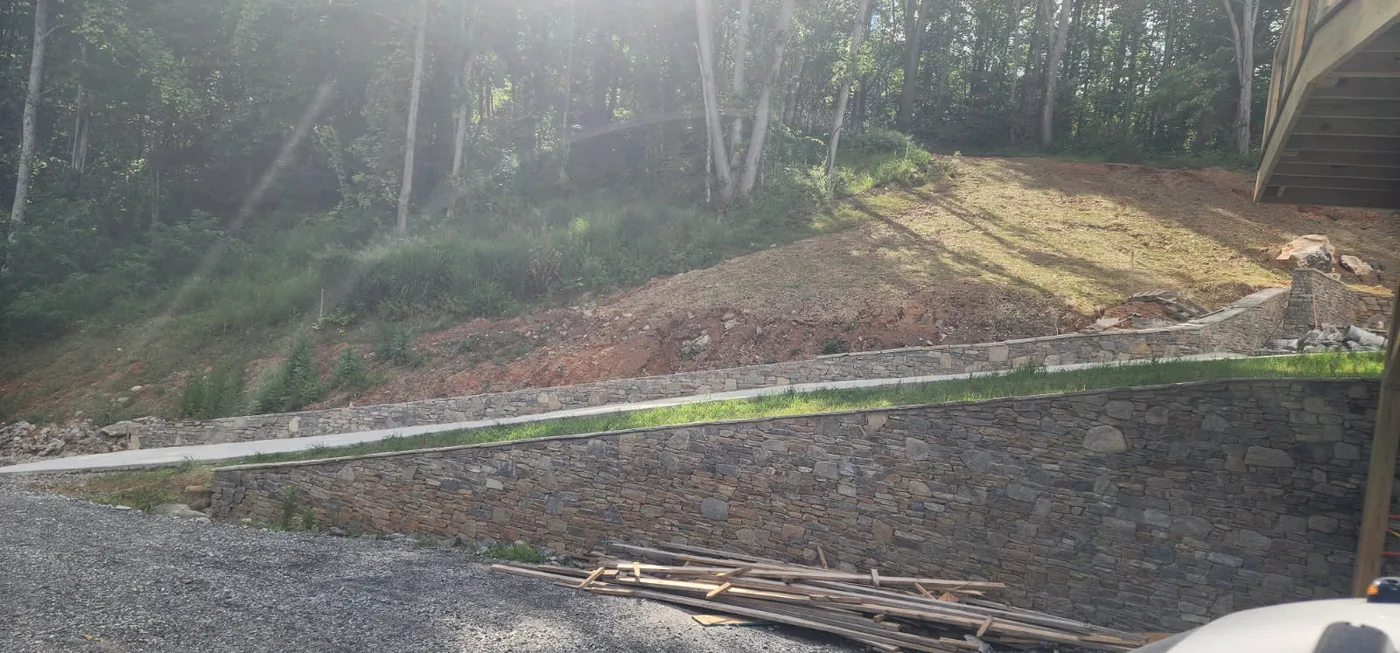
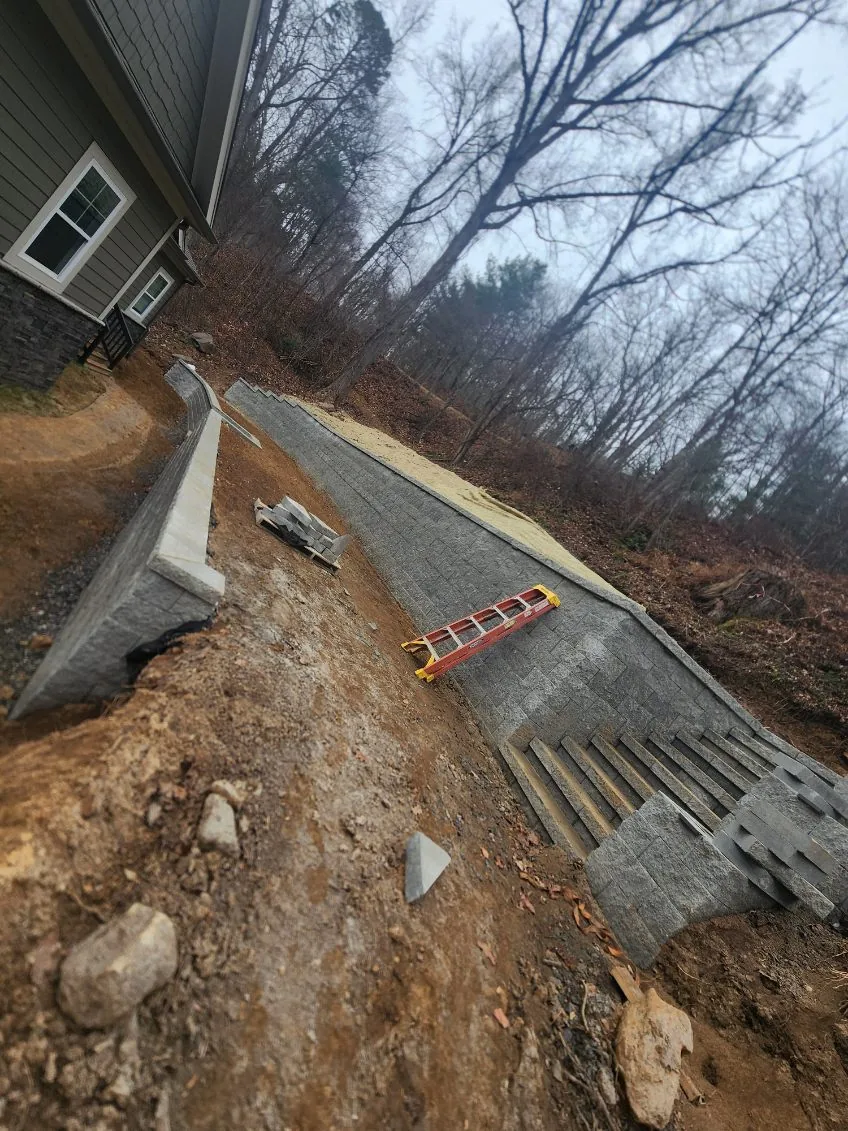
Age matters too. Biltmore Forest has a large share of estate-era walls built from native stone and mortar, plus a newer generation of segmental-block walls installed during renovations. Those assemblies fail in different ways: old mortared stone sheds mortar joints and shifts; newer block walls separate at the geogrid and slide. Reading which one you are looking at is what decides whether a targeted repair makes sense or whether you are throwing money at a structure that is already past saving.
The wall repair price picture in this ZIP code
Biltmore Forest wall work prices above the Buncombe County average, not because the labor is different but because the access and the terrain are. A wall behind a house on a narrow wooded lot means hand-carrying material and staging equipment on a slope, and that shows up in the quote. Use the Buncombe County retaining wall cost table for the full working numbers, but the practical version looks like this:
| Scope | Typical price range |
|---|---|
| Drainage-only fix (weep holes, footing drain, regrade) | $1,200-$4,000 |
| Drainage plus partial block or stone reset, under 4 ft | $3,000-$8,500 |
| Structural repair with tiebacks or geogrid, 4-8 ft | $8,000-$18,000 |
| Full rebuild, segmental block, 4-8 ft, wooded slope | $12,000-$30,000+ |
| Mortared stone rebuild, estate-era wall, engineered | $18,000-$45,000+ |
Treat any bid that does not separate drainage from structure as incomplete rather than cheap. Drainage is not an add-on in this climate; it is the reason the wall moved in the first place.
Why water, not age, is what usually breaks these walls
The federal disaster record tells the story for Buncombe County: 19 declared events across 1973-2026, overwhelmingly storm and flood family. Every one of those pushed water against walls that were originally built for a drier assumption. Biltmore Forest sits above the floodplain, so residents here rarely think of themselves as flood-exposed, but the mechanism is the same. Water enters the retained soil from uphill runoff, saturates the backfill, and adds hundreds of pounds of lateral pressure per linear foot. Hydrostatic pressure, not time, is what tips walls.
That is why the fix order matters. Weep holes, a properly sloped footing drain, and clean surface grading have to come before any structural repair or they will undermine it within a season. The International Code Council treats retaining wall drainage as a first-class requirement in the residential provisions for a reason — it is the difference between a wall that lasts thirty years and one that fails in five.
When repair is honest and when rebuild is the only honest answer
Repair makes sense when the wall is still plumb, the base has not moved, and the failure is local — a few shifted blocks, a washed-out joint line, a section that lost its drainage. Rebuild makes sense when the wall has rotated, when the base course has slid outward, when the retained height exceeds four feet without engineering, or when the existing assembly cannot accept modern drainage and reinforcement without being opened up anyway.
The middle case is the one that costs people money: a wall that is failing but not yet collapsed, where a patch will buy two or three years and a rebuild will buy thirty. That is a conversation about the homeowner's timeline, not about a sales pitch. Anyone who skips that conversation is selling a product, not a solution.
Hiring well for wall work in this market
Three checks specific to retaining wall work here. First, ask whether the crew has worked on wooded-slope walls in Biltmore Forest or the surrounding estate lots, because the terrain is its own trade and flat-lot experience transfers poorly. Second, ask about licensing: North Carolina's Licensing Board for General Contractors threshold applies to wall projects above a certain dollar value, and any honest contractor will know where their job sits relative to it. Third, ask how they sequence drainage versus structure. The crews that answer that question clearly are the ones who fix walls; the ones who answer around it are the ones who install them.
If the wall is found or stone, ask specifically who does the mortar work. Stone repair is a different skill from block installation and should be priced and scheduled accordingly. When you are ready to talk to someone, the Biltmore Forest retaining wall contractors page covers what to expect in a first visit, and the retaining wall repair guide walks through the full scope of what a proper repair involves.