Where the water comes from, and where it has to go
Maggie Valley sits in a cove that drains like a funnel. The valley floor along Soco Road is flat enough to look forgiving, but the ground behind almost every lot rises — sometimes gently toward a ridge, sometimes sharply into the Plott Balsams — and all of that uphill acreage sends its rain down through your property on the way to Jonathan Creek or the valley floor. That is the fact that shapes every wall, step, and paver job here, and it is why a wall that fails in Maggie Valley almost never failed because the stone was wrong. It failed because nobody asked where the water was going.
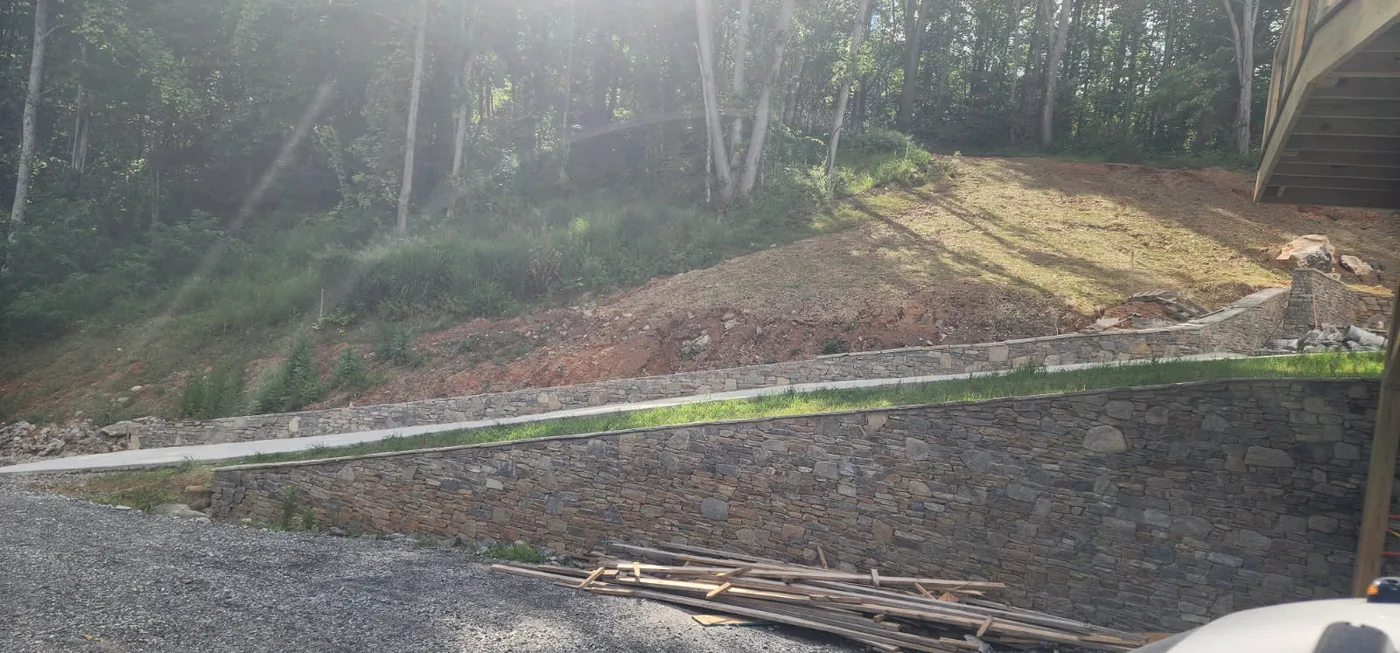
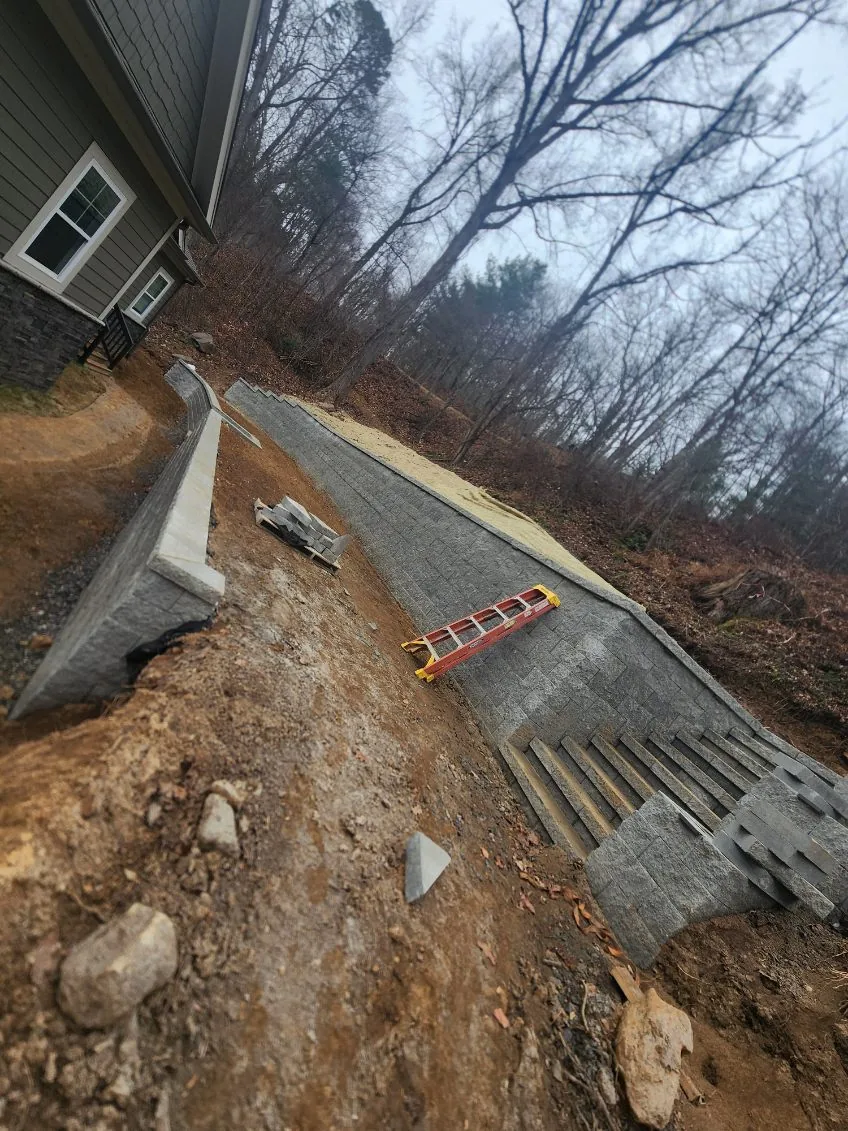
A retaining wall on a graded lot is a dam, whether the contractor thinks of it that way or not. Behind every wall face there has to be a drainage plane — clean gravel, filter fabric, and a path for the water to exit at the bottom rather than push against the back of the wall. On these slopes, that path usually means daylighting the drain to a swale or a lower grade, not just dumping it at the wall's base. The U.S. Environmental Protection Agency publishes stormwater guidance that treats this as a first principle (epa.gov), and it is the first thing a good stone mason here looks at — before they quote a single square foot.
How stone work is priced in this valley
Stone masonry is priced two ways, and mixing them up is how estimates get confusing. Walls, veneer, and patios are priced by the square foot of face or surface. Steps, columns, and repairs are priced by the piece or by the day. Access and slope add a third variable: a truck that can back up to the work is a cheaper job than one that has to carry stone down a hillside by hand or by machine. The working ranges below are typical for Haywood County residential work, and the Haywood County retaining wall cost table breaks the wall line items down further.
| Scope | Typical range |
|---|---|
| Dry-stack retaining wall (under 3 ft, per sq ft of face) | $35-$65 |
| Mortared or engineered wall (3 ft+, per sq ft of face) | $55-$110 |
| Stone steps, per step | $450-$1,400 |
| Stone veneer on entry or chimney (per sq ft) | $30-$70 |
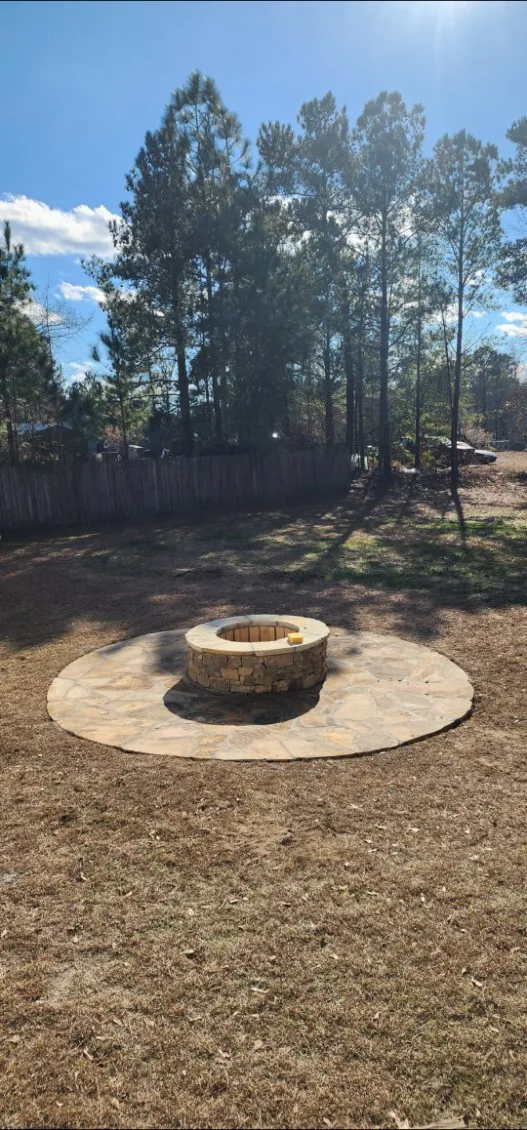
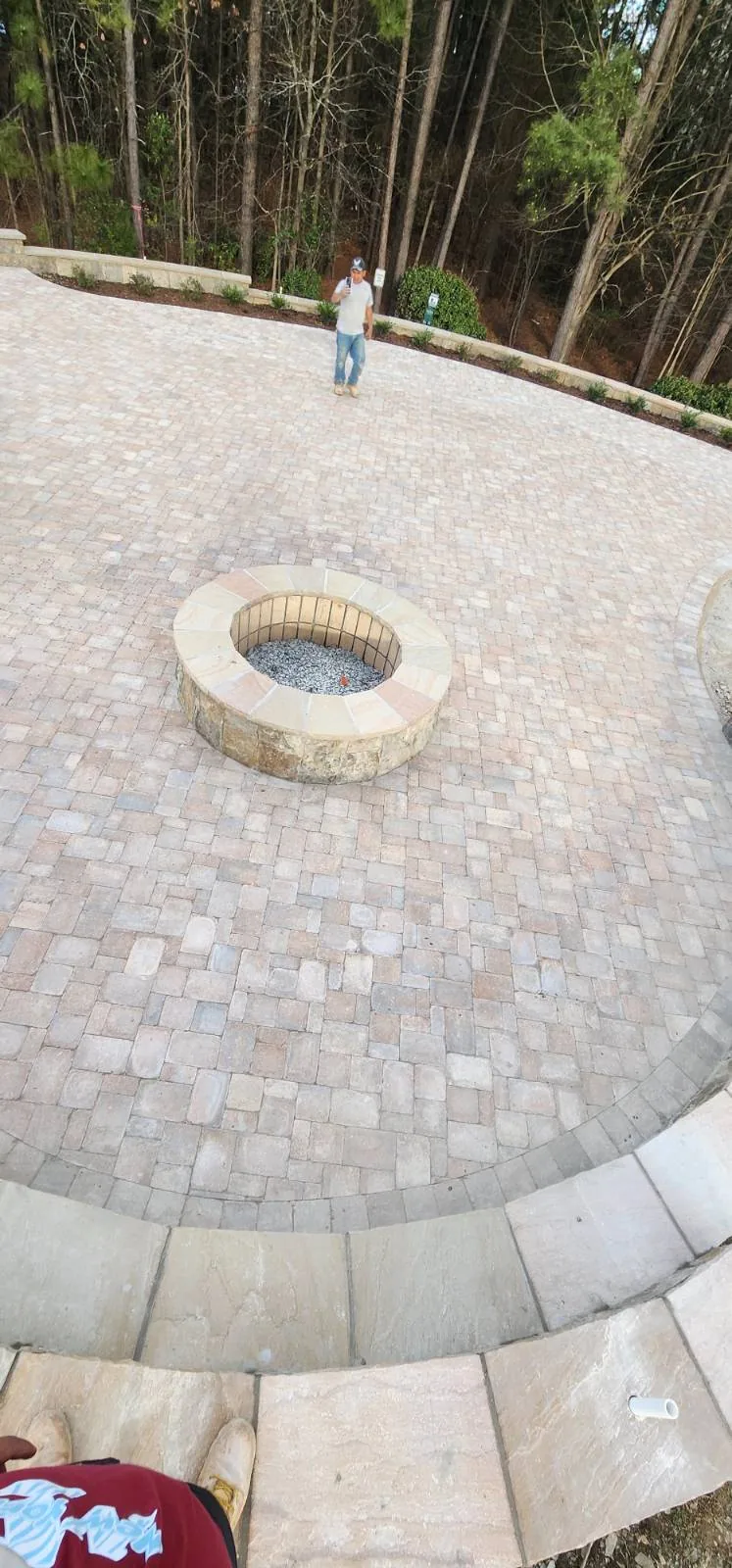
| Paver or flagstone patio (per sq ft, installed) | $22-$55 |
| Repointing or repair of failing mortar (per day) | $650-$1,000 |
Treat any bid that shows a flat per-square-foot number with no line items for drainage, base preparation, or access as incomplete rather than cheap. On a valley slope, those three things are most of the job.
Walls that hold a mountainside, and walls that only look like it
There is a real difference between a garden wall two feet tall and a wall holding back a hillside so the house above it stays put. Anything over about three or four feet of retained height is a structural wall. It needs an engineered design, a proper footing below frost depth, and a drainage system built into it — not added later. In North Carolina, projects over a certain value or complexity cross into general contractor territory, and the North Carolina Licensing Board for General Contractors sets the thresholds. A mason who can stack beautiful stone may not be the person to engineer a tall wall on a 25 percent grade, and a good one will tell you so.
The related risk here is what the wall is draining to. On a steep lot, water that exits a wall drain at the base of the slope can undercut the next wall downhill, or wash out a driveway, or push toward a neighbor's foundation. Foundation drainage is treated as a first-class building requirement for exactly this reason, and the International Code Council's model codes (iccsafe.org) reflect it. The fix is planning the whole slope's water path, not just one wall's.
What local stone work actually looks like
Maggie Valley and the surrounding Haywood County communities have two fairly distinct stone traditions. Along the older parts of the valley you find native fieldstone and mountain stone used dry, laid into low garden walls and old chimney bases — beautiful, honest work that ages well as long as the drainage behind it still works. Newer construction, including the rental and second-home market that grew along the ridge roads, tends toward veneer over block: entry pillars, chimneys, and accent walls where the look of stone matters more than the structural capacity of stone.
Both are real work, and both fail in their own ways. Old dry-stack walls fail at the base when water washes out the footing course. New veneer fails at the flashing and cap, where water gets behind the stone and freezes. A mason with experience in this valley knows to check both, and knows that Waynesville — the county seat twelve miles east — has the supply yards and stoneyards that most Maggie Valley jobs pull from.
Storm history is a real design input here
This corner of the mountains sees heavy rain, and the federal record reflects it: 19 declared events touch this county over a span of 1973-2026, overwhelmingly storm and flood family. That matters for stone work because the design storm is the design load. A wall built for a gentle 25-year rain will not survive the kind of event that shows up on that list. When a mason asks what the drainage uphill of your property looks like, and where the overflow goes when the ground is already saturated, that is not small talk — it is the question that separates a wall that lasts from a wall you rebuild. The National Weather Service's local climate data (weather.gov) is where a careful contractor will actually check.
Getting a real scope before a real price
The first visit should answer three questions: what is being built or repaired, where the water goes, and how stone and machine access the site. If a quote arrives without those three, it is a guess. For repair work, the honest scope describes what caused the failure and what changes to prevent a repeat — repointing a wall that is still being undermined by bad drainage just moves the failure a foot downhill. When you are ready to compare local options, the Maggie Valley retaining wall contractor guide covers how to screen crews, and the retaining wall overview walks through the design choices that drive cost. Neither replaces a site visit — on a slope like this, nothing does.