Why an Arden backyard pit is a different job than one in town
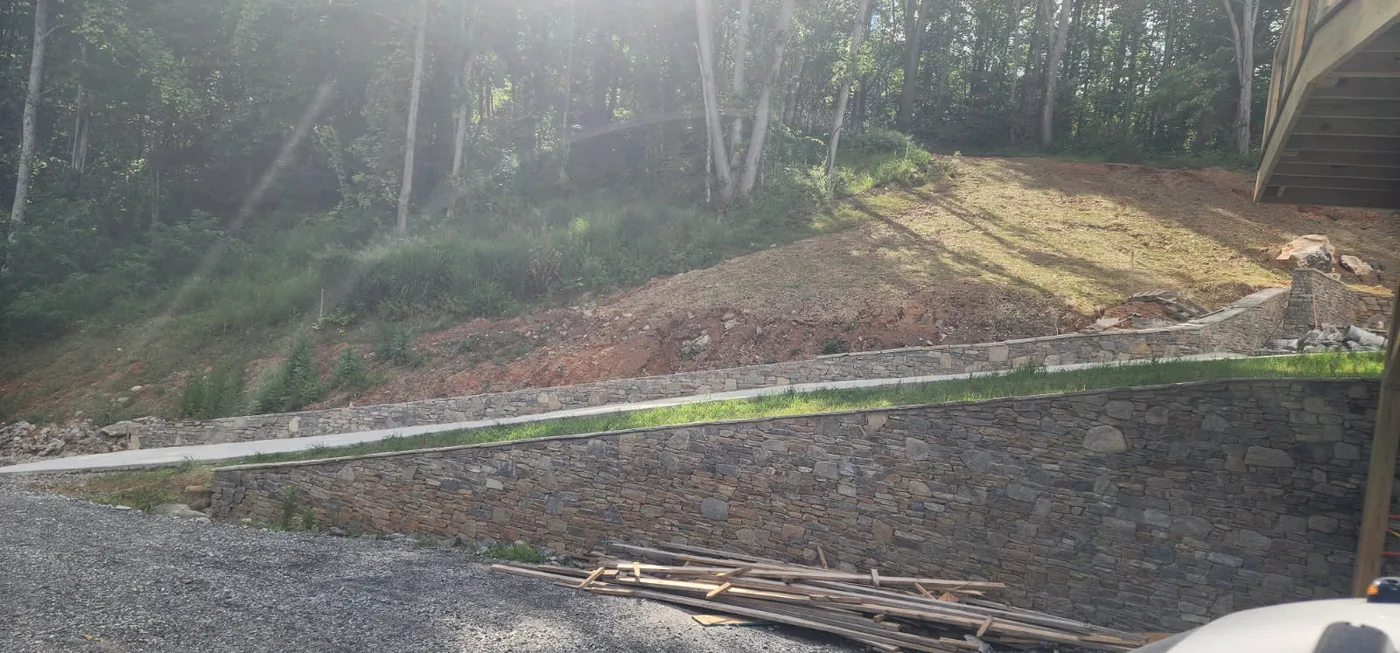
Arden's residential lots sit in a pocket where the French Broad valley meets the first real slope of the Blue Ridge. Lots off Sweeten Creek Road and Avery Creek are typically a third smaller than mid-century parcels closer to Asheville proper, and a lot of them back onto a wooded grade that drops eight, ten, fifteen feet behind the house. That leaves one usable flat zone, usually directly off the deck, and a thin strip of lawn that pitches away the moment you leave it.
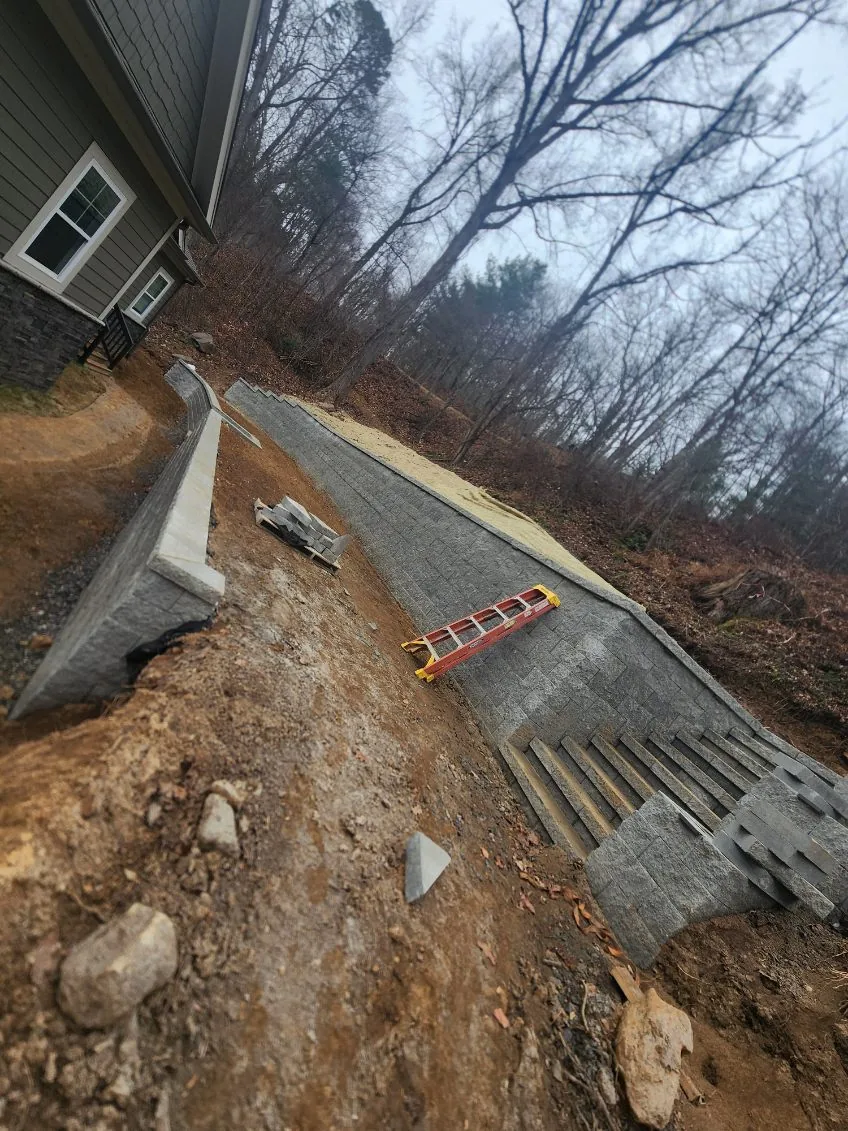
So the ground prep carries the job. A pit that would sit on a flat graded pad in a subdivision has to be pinned into the hillside here, which means a compacted base, sometimes a low retaining wall on the downhill face, and a seating arrangement that steps with the grade instead of fighting it. The stone is the easy part. Where it sits is the work.
Soil matters too. The red clay common through this part of Buncombe County swells and shrinks with the seasons, and a pit set on a thin gravel layer over clay will rock within two years. Any builder worth quoting should be talking about base depth before they show you a photo gallery.
What a built-in fire pit costs in Arden
Prices below are installed ranges for Arden and the surrounding Buncombe County area, assuming reasonable access and a fire pit that is not going on a cliff. Slope work, gas plumbing, and upgraded caps move the number fast, so treat any single flat figure as a warning sign rather than a bargain.
| Scope | Typical installed range |
|---|---|
| Single-ring kit pit, block or modular, self-assembled base | $600-$1,600 |
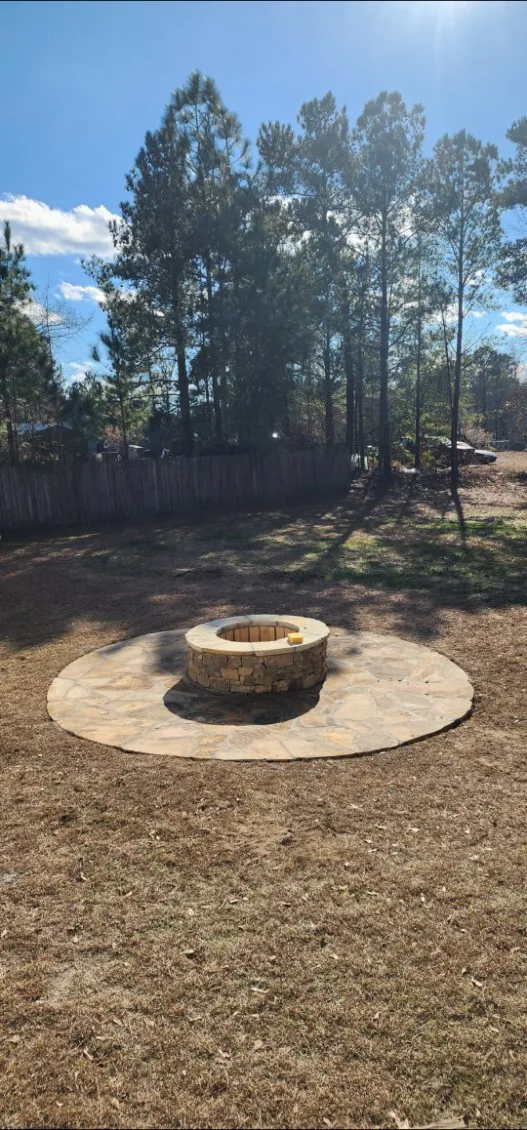
| Built-in block or paver pit, mortared cap, standard wood-burning | $2,400-$4,800 |
| Natural stone veneer pit on hillside with base prep and drainage | $4,200-$7,500 |
| Gas pit with buried line, key valve, burner, and media | $5,800-$9,800 |
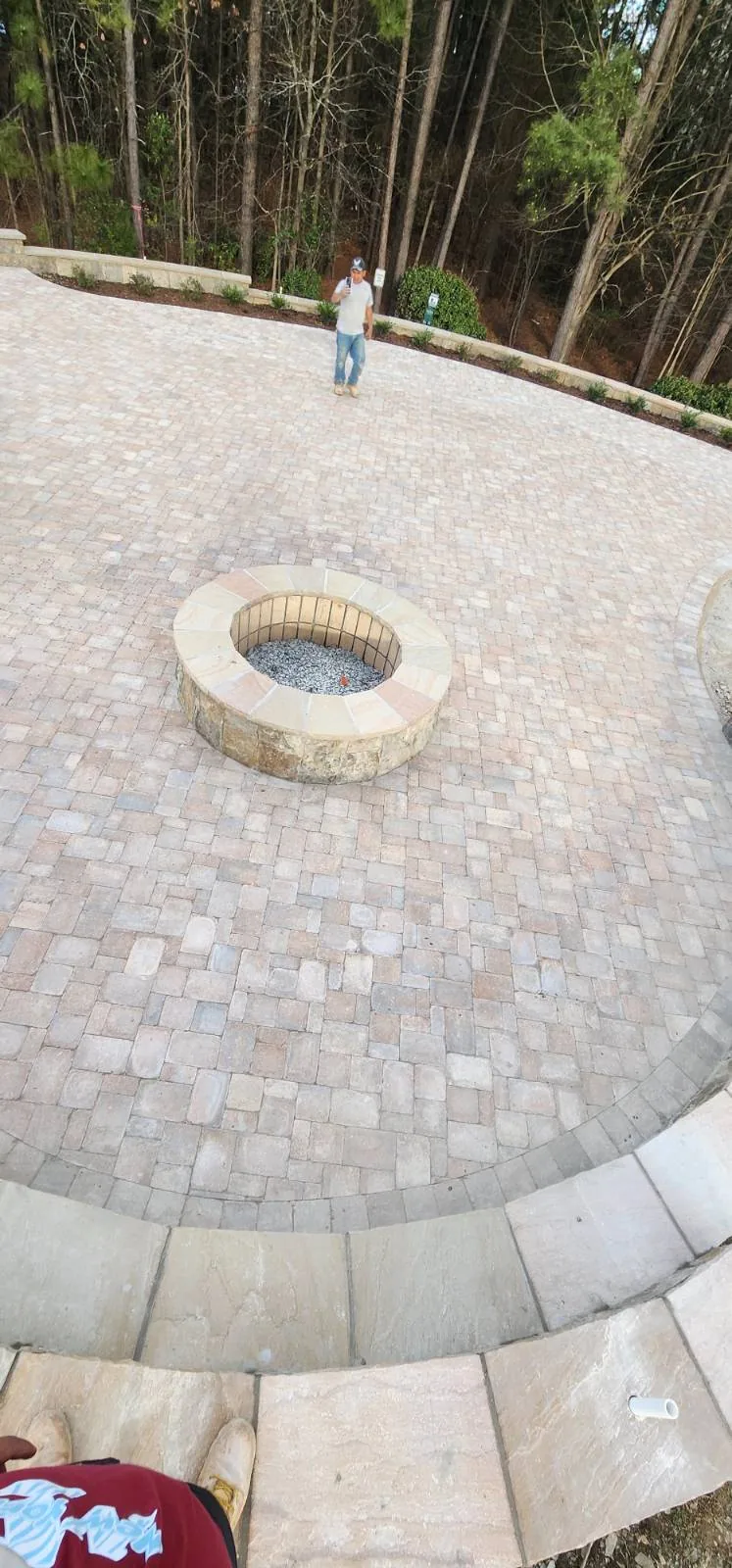
| Pit with curved seat wall and step lighting | $9,000-$18,000 |
Behind those figures: excavation and haul-off, base aggregate, drainage away from the pit, blocks or stone, cap, and any gas or electrical rough-in. A quote that omits base and drainage on an Arden hillside is not a cheaper quote. It is a shorter one. The same scope logic applies to the hardscape around a pit, and the ranges in our Buncombe County retaining wall cost breakdown come from the same local pricing.
Code, clearances, and when a permit is on you
Arden is unincorporated Buncombe County, so pit rules come from the county and, where a homeowners association exists, from the HOA first. The essentials are standard: keep the pit away from the house, fences, and overhanging branches; screen for embers on a wood-burning pit; and keep anything combustible clear of the bowl. If you burn when the county or state has a burn ban up, that is on you, not the builder. Checking current conditions through the National Weather Service before a burn day is the habit worth building.
Anyone running a permanent gas line to a fire pit crosses into licensed territory. Under rules from the NC Licensing Board for General Contractors, most residential construction work above the statutory threshold requires a licensed general contractor, and gas piping in Buncombe County is permitted and inspected. That is not a reason to avoid a gas pit. It is a reason to make sure the person quoting the line knows what inspection actually looks like. The county building department, not the builder, has the last word on what needs a permit.
Picking a pit that fits the way you actually use it
Wood-burning pits are the cheaper build and the better fit for a woodsy Arden lot where a burn looks natural. They also mean ash cleanup, ember management, and no quick weeknight fire. Gas pits cost more up front and give you an instant fire and a clean shutdown. If you plan to use the pit several nights a week, gas wins on effort even though it loses on that first cost. If your lot has heavy leaf cover or sits near a ridge where wind funnels, gas is safer through the shoulder months.
Then there is the water problem. A pit on a slope needs the ground around it to shed water instead of pooling against the bowl, and a dry-stacked stone pit that never sees drainage will heave with the freeze-thaw cycles this elevation gets. The Arden retaining wall contractors who work these grades are usually the same crews building the walls that make a hillside pit possible. Plenty of Arden projects are really two jobs: a wall to make a flat pad, and a pit to sit on it. Our fire pit services page walks through how we scope both together.
How to compare fire pit quotes in Arden
Ask three questions of every builder. What is the base depth, and how is it compacted? How does water leave the pit area, especially on the uphill side? And is the gas or electrical work subbed to a licensed trade, or is the builder doing it in-house? A crew that cannot answer the second question has never set a pit on an Arden slope.
Walk the proposed location at the time of day you plan to use the pit. Shade, wind, and where smoke drifts on a hillside are things you notice standing there and not on a drawing. If the quote includes a seat wall, ask whether it is structural or just decorative, because that changes the footing and the price. And ask what the builder does about the mud that will show up first spring after the base is in. If the answer is 'nothing,' expect to call someone back next year.