The four-foot line that decides your stone project
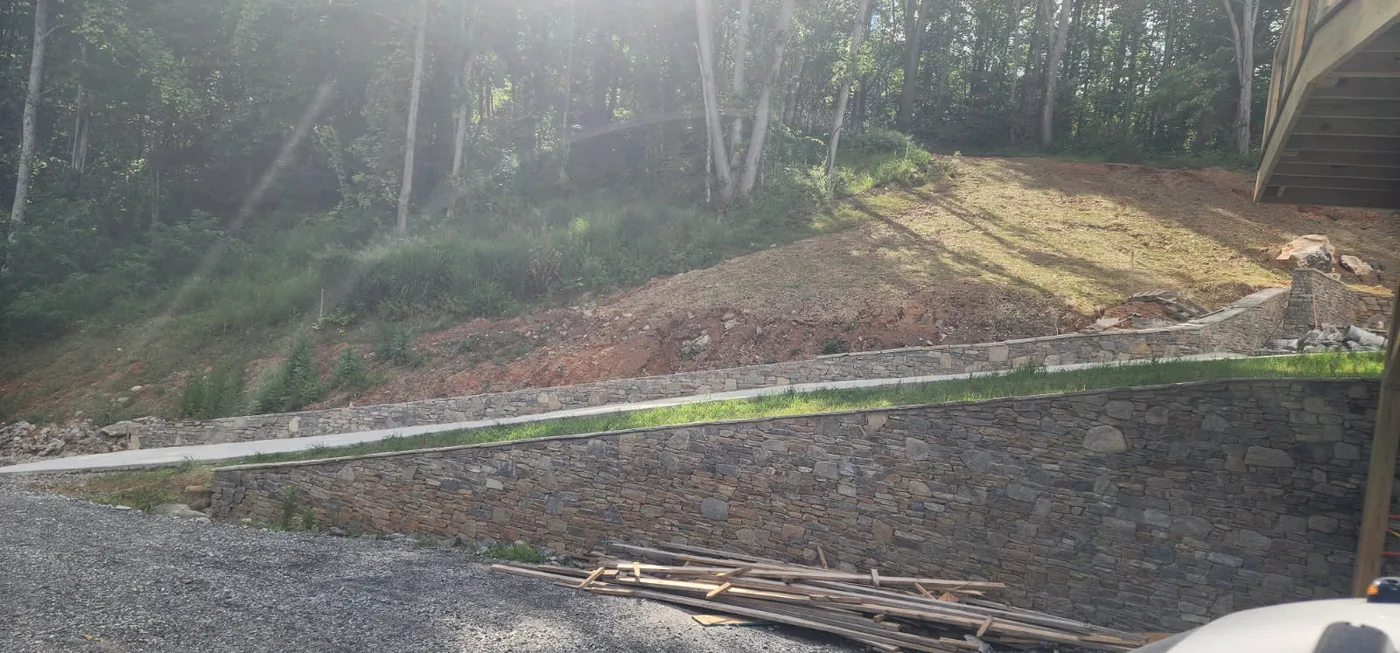
In Hendersonville, almost every stone-step project is really two projects wearing one price tag. The step-and-walk part is landscaping. The wall holding the hillside behind it is regulated construction. North Carolina draws that line at four feet of unbalanced fill: below it, most retaining walls are a landscaping scope; above it, you're into engineered design, permitting, and a general contractor licensed through the NC Licensing Board for General Contractors. On the south-side slopes and the terraced yards stepping up toward Jump Off Rock, that line shows up in the first ten minutes of a site visit — and it usually decides whether your budget is $4,000 or $11,000.
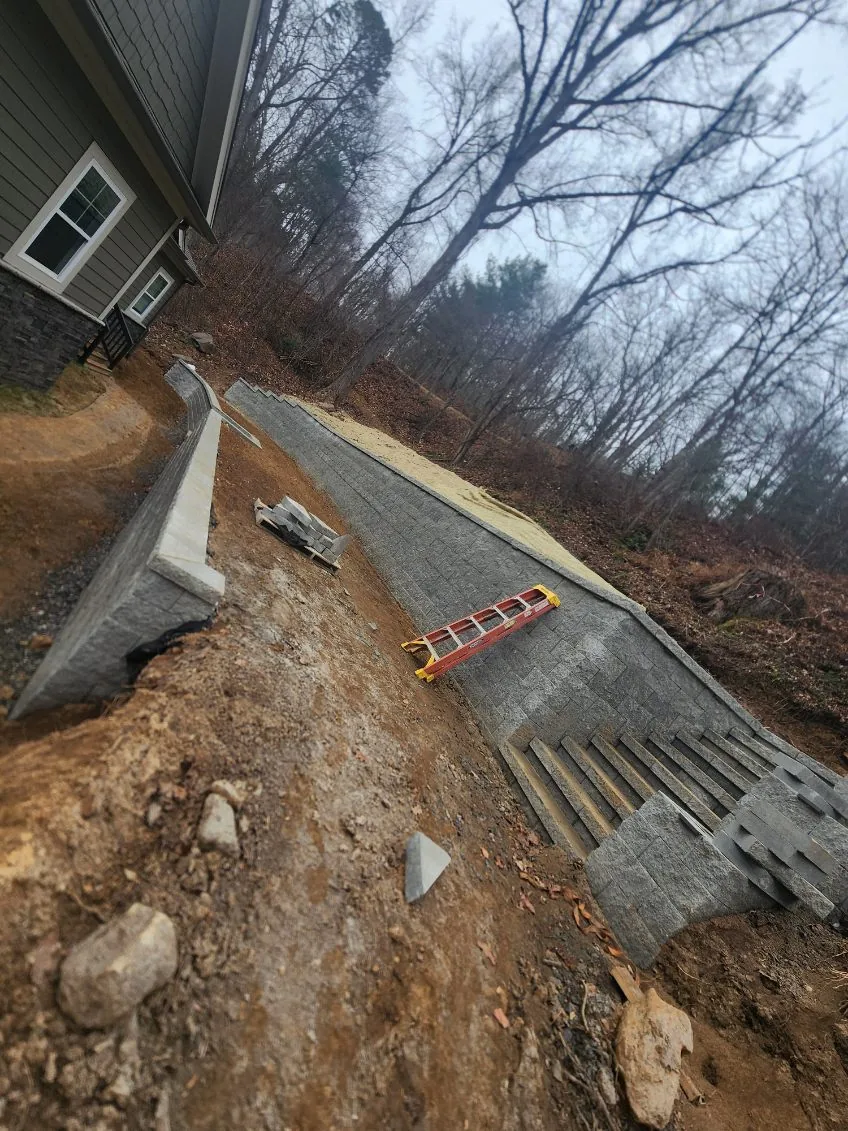
Step-and-walk work in this town splits the same way. A run of garden steps from a driveway pad to a front door is one trade. A flight that has to hold back a cut bank while it climbs is another, because the steps and the wall share the same footing and the same failure mode.
Why stone in Hendersonville fails differently than in flat country
Henderson County's residential ground is clay-heavy and it moves. The same swelling clay that has builders setting deeper footings in Flat Rock and Mills River also works against walkways, because a flagstone path laid on three inches of sand over clay will not stay level through a wet winter and a dry August. The stones that survive here are set on a compacted crushed-stone base with a drainage plane, not floated on the surface.
Water is the other mover. The federal disaster record tells the story: 16 declared events have touched this county across 1978-2026, overwhelmingly storm and flood family. Every one of those events sent runoff at step and wall assemblies that were built for a gentler assumption. Before a mason sells you stone, the drainage question has to be answered — where does the uphill yard's water go, where does the gutter discharge, and does the wall have a way to relieve water behind it. The International Code Council treats foundation and retaining drainage as a first-class structural concern, not a finishing detail, and the crews who get that distinction are the ones whose walls are still plumb in a decade.
What a Hendersonville stone project actually costs
Local pricing tracks terracing and access, not square footage. A walkable path is cheaper per foot than a set of stairs climbing a grade, and both get more expensive the farther the material has to be moved by hand. These bands are typical for the county; steep-lot jobs above a certain grade carry engineering and drainage line items that flatland quotes never show.
| Scope | Typical range | What moves the number |
|---|---|---|
| Dry-laid flagstone walk, simple grade | $1,800-$4,500 | Square footage, stone type, base depth |
| Stone garden steps, 3-6 rise | $2,500-$7,000 | Grade change, tread material, hand-carry distance |
| Mortared stair and landing, drain plane | $5,000-$12,000 | Footing depth, drainage, freeze-thaw detailing |
| Retaining wall under 4 ft | $45-$85 per face foot | Wall height, stone type, backfill |
| Engineered wall over 4 ft | $65-$140 per face foot | Engineering letter, permit, drainage, reinforcement |
The right-hand column is where budgets get honest. A bid without a drainage line item on a sloped Hendersonville lot is incomplete, not cheap. When the wall component dominates, the county retaining wall cost breakdown walks through the per-foot math in more detail.
Engineering and permits: what the four-foot line adds
Once a wall retains more than four feet, expect three line items that don't exist below the threshold: an engineer's letter or stamped design, a county building permit, and a licensed general contractor carrying the job. Together these typically add $1,500-$4,000 to a residential scope, and they add time — design and review don't happen in a weekend. The engineering isn't bureaucratic overhead, either. It answers the questions the site raises: footing depth into that clay, drainage behind the wall, and whether the stone facing is structural or a veneer over a reinforced core.
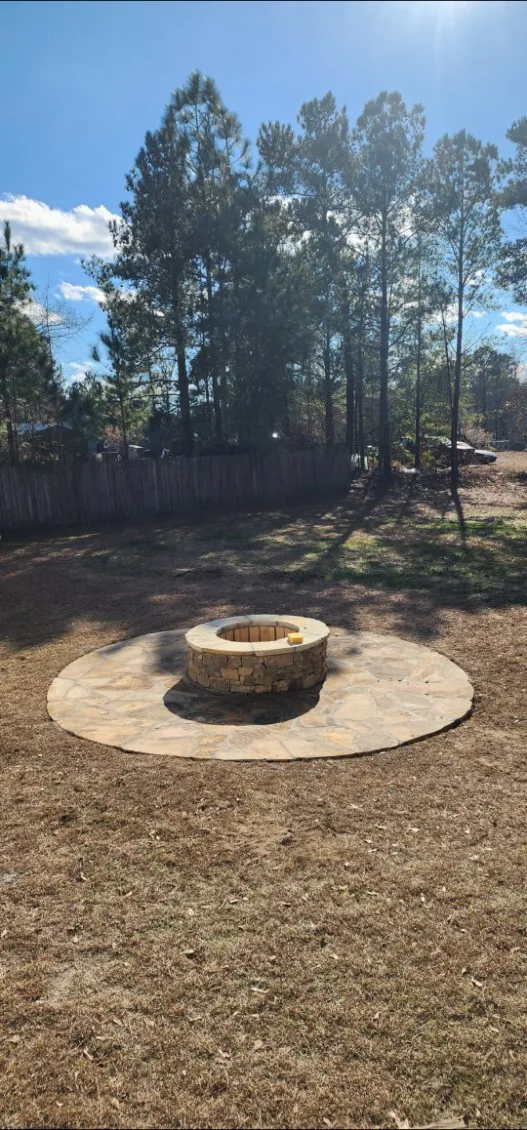
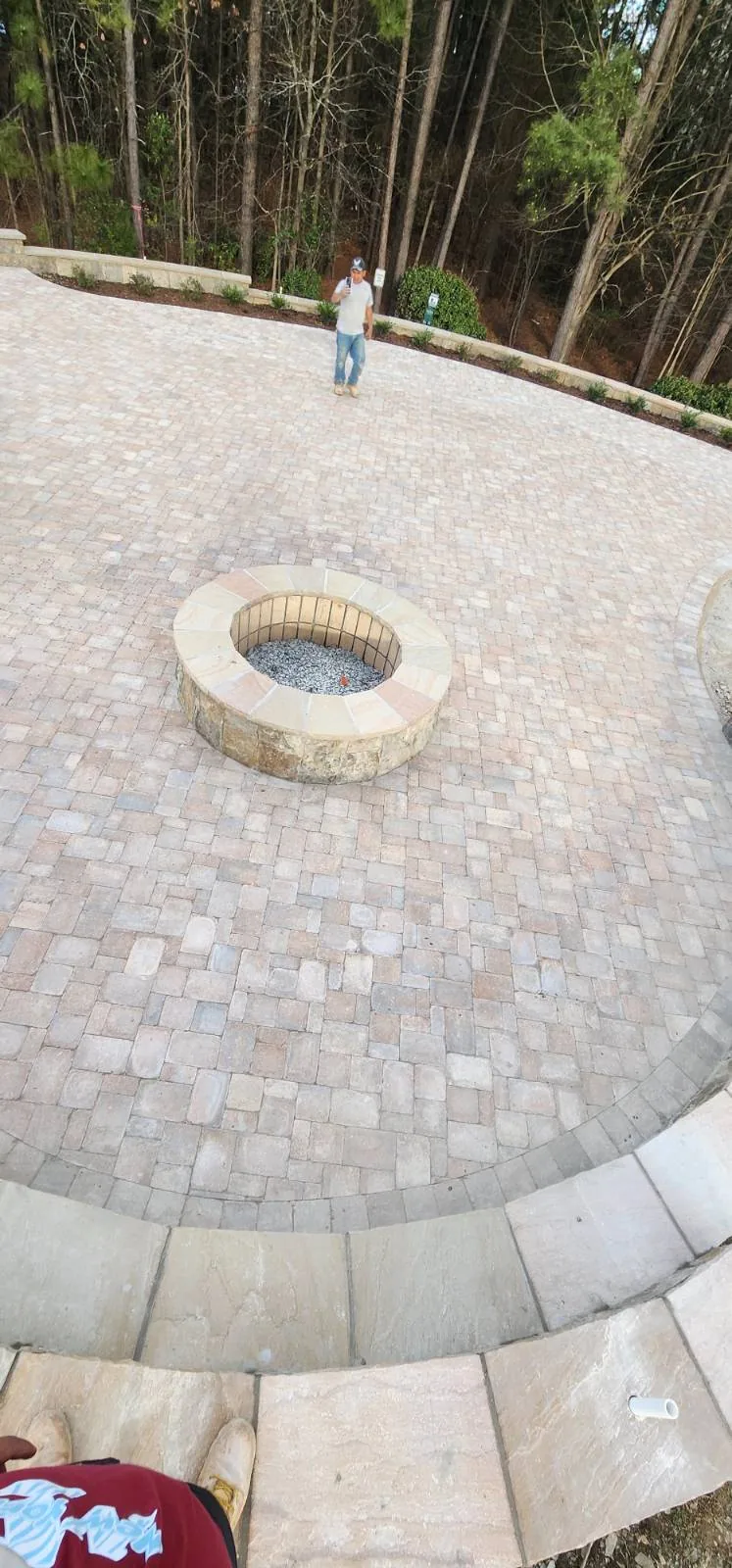
If your project also touches outdoor water, irrigation, or a gas line to a fire feature, note that plumbing and heating work in North Carolina runs through a separate board — the State Board of Examiners of Plumbing, Heating and Fire Sprinkler Contractors — and that scope should be permitted separately. When you're comparing masons, the Hendersonville retaining contractor guide covers the questions that separate slope-experienced crews from the rest.
Matching stone and detail to a Hendersonville yard
This county has a real palette: native stone from local quarries, Tennessee fieldstone, and the blue-grey flagstone that shows up on older properties around downtown and the Historic Seventh Avenue district. The material choice drives both looks and cost, and it should answer to the house — a 1920s bungalow and a new build off Kanuga Road rarely want the same tread. Detail matters as much as stone: tread depth and rise on outdoor stairs need to account for freeze-thaw and wet leaf litter, and the joints between stones need a base that will not pump when the clay below is saturated. The stone steps and walkways service page covers the assemblies we build for this climate and grade.