Why access and haul drive Canton stone prices
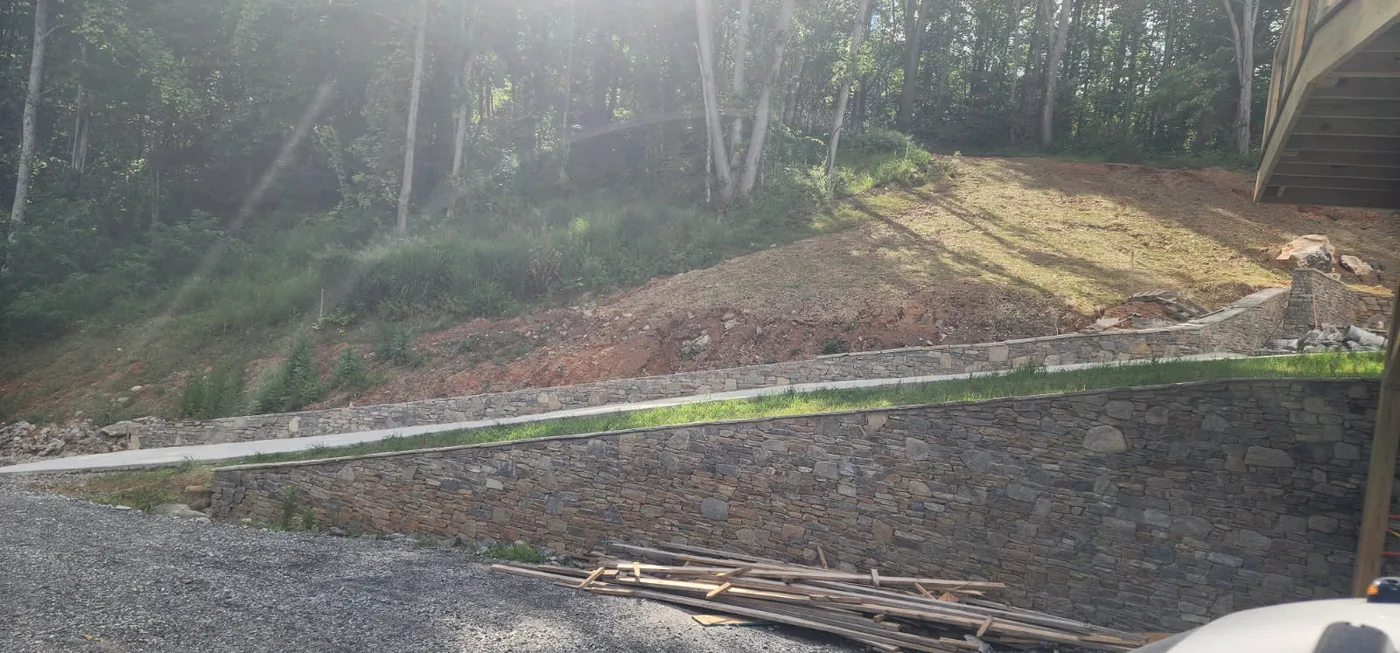
A stone mason in Canton, NC learns quickly that the quarry is close and the driveway is the problem. We sit in the Pigeon River valley with Champion and Cruso up the road, the Plott Balsams standing over town, and a shocking share of residential lots stepped into hillside rather than graded flat. That geography is genuinely good news for material cost, because several quarries run within a short drive of Haywood County. It is bad news for the labor half of every bid, because getting stone to the wall is often harder than building the wall.
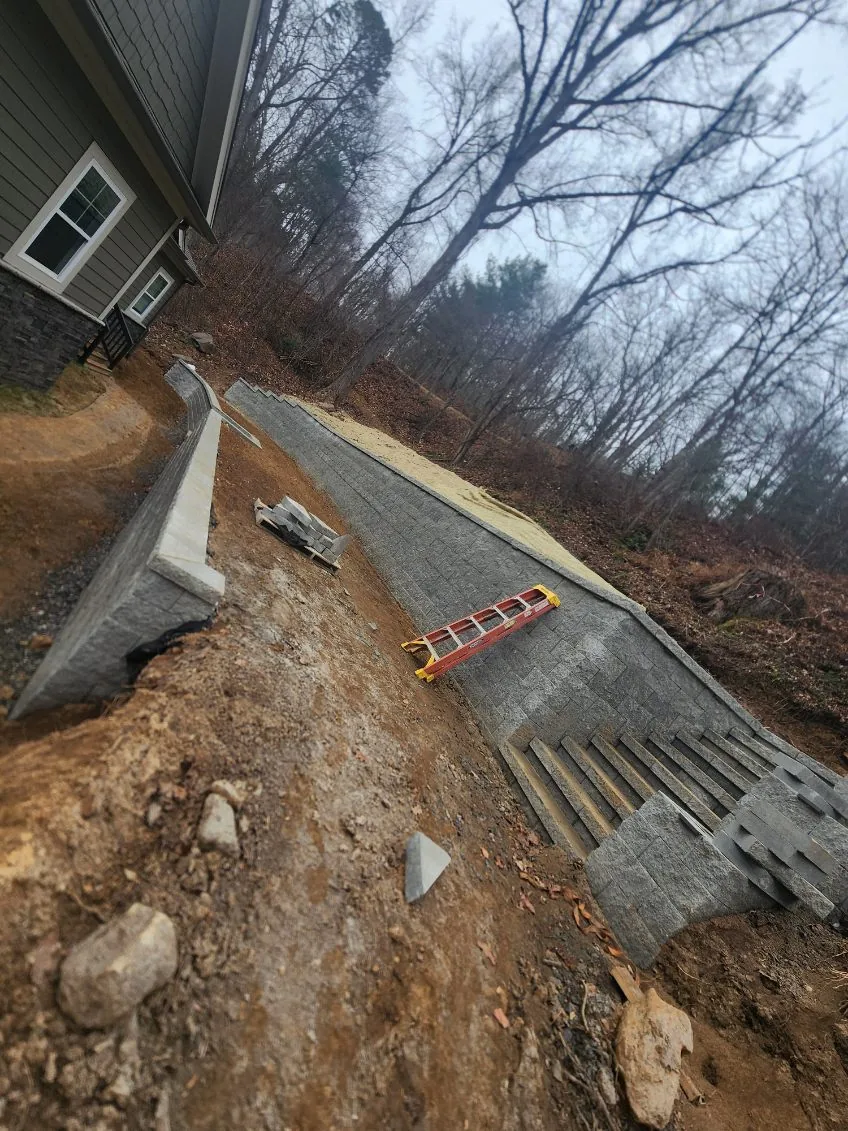
Three things change a Canton price before a single rock is set: whether a loaded dump truck or flatbed can turn around on your property, how far and how steep the carry is from the truck to the work, and whether the grade requires terracing, steps, or a switchback path just to reach the site. A half-acre lot off a state-maintained road with a level side yard is a straightforward job. A cabin pad reached by 300 feet of 15-percent gravel that turns to grease after a mountain rain is the same wall with triple the handling cost. If your only access is a shared right-of-way with a low tree canopy, tell the mason on the first call. That one detail moves a number more than the stone selection does.
The Canton cost picture, scope by scope
Bands below reflect regional pricing for real Haywood County jobs and assume reasonable access. Every dollar of the spread comes from haul distance, carry distance, and grade. For the countywide working table, see the Haywood County retaining wall cost breakdown, and for the structural end of the trade, the retaining walls guide covers when a wall stops being landscaping and becomes a structure.
| Scope | Typical range | What moves the number |
|---|---|---|
| Stone veneer, chimney or entry | $45–$85 / sq ft of face | Stone type, height, ladder and staging needs, access to that face |
| Dry-laid garden and terrace walls (under 3 ft) | $38–$65 / sq ft of face | Batter, cap stone, whether footing stone can be delivered vs. carried |
| Mortared or engineered walls (3 ft+) | $55–$95 / sq ft of face | Footing depth, drainage gravel, engineer's design, backfill slope |
| Stone steps, stoops and grade transitions | $1,400–$6,500 per run | Rise, tread material, how the load gets to the base |
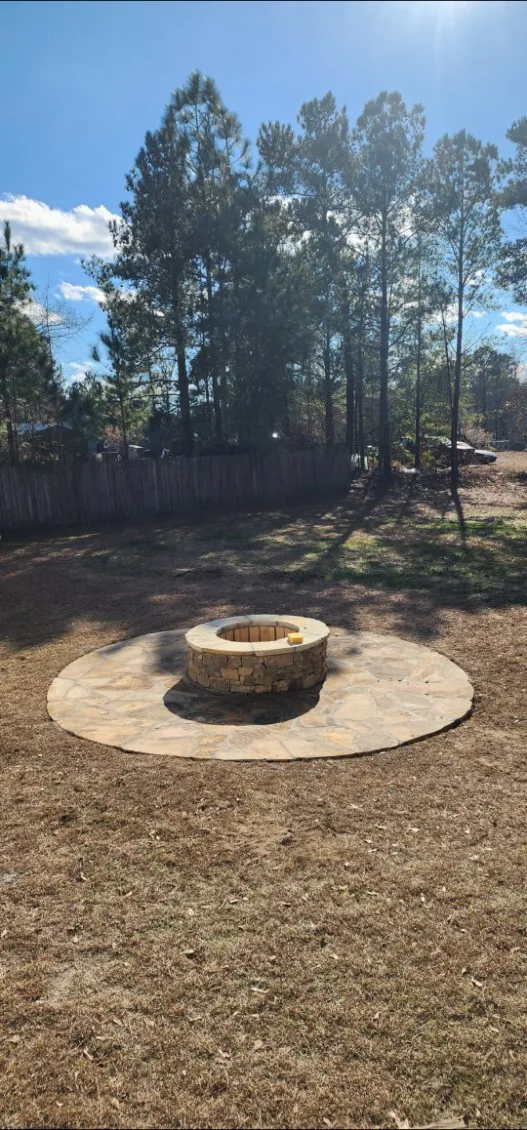
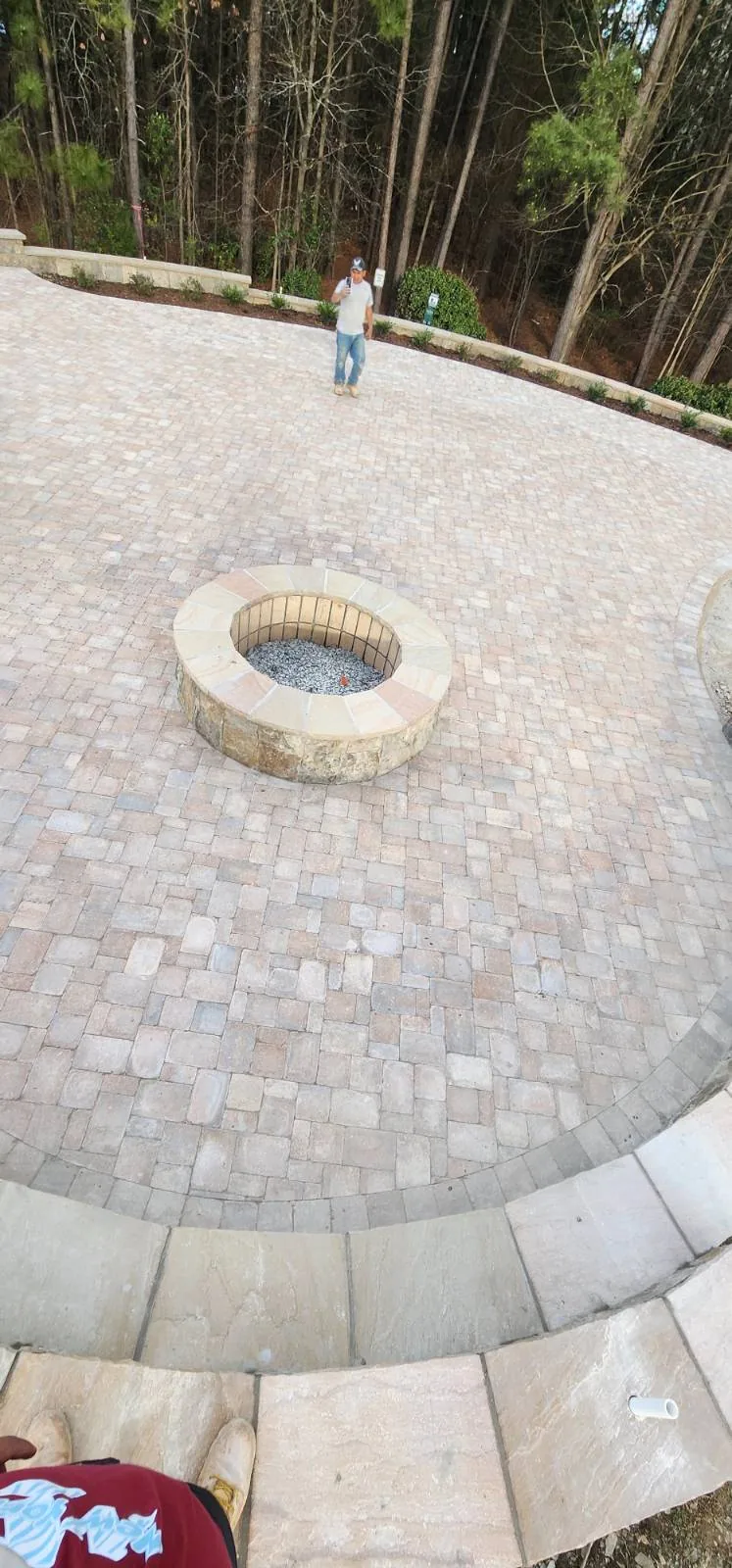
| Walkways, patios and stone hardscape | $18–$45 / sq ft installed | Base depth, drainage away from the house, edging detail |
| Repointing, repair and rebuild of failed walls | $3,500–$15,000 | Removal, disposal, whether the original footing is reusable |
Two cautions worth internalizing. First, a wall over about four feet, or one holding up a slope above a house or driveway, is not a landscaping project — it is an engineered retaining structure, and the backup and drainage behind the stone matter more to its survival than the face you see. Second, the cheapest-per-face bid is very often the one that skipped the gravel drain and the compacted base. In this climate, that wall leans within a decade.
Rock that came off your own ground
A meaningful share of Canton stone work uses material pulled from the property. Haywood County ground yields fieldstone, and cleared hillside lots routinely produce more usable rock than the owner expects. Reusing it is legitimate and worth the effort: the stone is already quarried, already on site, already paid for, which removes both the material line and the haul line from the estimate. What it does not remove is the labor of sorting, cleaning, shaping, and figuring out a grade of courses from irregular stone. Plan on the masonry hours running higher than a job with dimensional material, even though the invoice looks smaller. The honest test is how much of the pile is actually flat, sound, and sized for wall work — a mason should walk the pile with you before quoting it rather than pricing a photo.
Codes, licensing and what the mountain does to walls
Anyone can stack stone for a garden. The moment the work is structural, or part of a permitted building or grading project, different rules engage. Residential general contracting in North Carolina is regulated by the NC Licensing Board for General Contractors, and retaining structures are addressed in the state building code maintained by the NC Building Code Council — worth reading before you assume that a wall tucking into a slope is exempt from anything. Stone veneer on a chimney or exterior wall has its own code story about how the stone attaches and how water gets out from behind it, and that detail is exactly what separates veneer that lasts forty years from veneer that sheds stone after one freeze cycle.
Frost is the local enforcer. Canton gets plenty of freeze-thaw cycling, and water is the single most common reason stone walls fail here. Trapped water expands, pushes the face, and destroys footings. The federal record explains why so many local failures trace back to water events — 19 declared disasters touch this county across 1973-2026, overwhelmingly storm and flood family, and every one of them drove runoff into walls that were built without a drainage path. If your downspouts, grade, or the uphill neighbor's runoff all aim at a wall, fix the water first. Stone is patient, but it is not waterproof.
Getting a quote that survives the driveway
Walk the mason to the wall location, not to the road, and let them see the route a loaded wheelbarrow will take. Ask three questions. Can the truck reach the work or does everything stage at the street? Is the stone coming from a quarry run or from your own pile? And does the bid include drainage gravel, filter fabric, and a compacted base — the parts you will never see again. Anyone pricing a wall for a hillside lot who has not asked about access is quoting a different property. When you have an access answer, the Canton retaining wall contractors page is the next step for matching a crew to the job.