Choosing stone that fits Laurel Park's hillsides and its houses
Laurel Park's residential character is a mix of stone-clad bungalows on graded terraces, mid-century ranches tucked into oak shade, and newer builds cut into the slopes above Carolina Village and along the roads feeding toward Hendersonville. That housing stock does not take the same water feature twice. A 1920s stone house wants a fieldstone cascade that reads as part of the original wall; a ranch on a flat lot wants a boulder-and-basin pond that creates its own grade; a newer build with a clean veneer and a tight budget wants ledgestone over block with timber edge — hybrid construction that looks like dry-stack and prices like masonry.
Materials decide three things at once: how the fall looks, how long it lasts, and what it costs. Fieldstone is regional, irregular, and forgiving of a hand-built look. Quarried boulder is heavier, sets a bigger visual anchor, and needs equipment that a small Laurel Park back yard may not admit. Concrete block and cast veneer brings the price down but needs the right footing or it moves with the frost. Timber edge is the cheapest way to frame a pond and the first thing to rot if the liner is not laid properly behind it. The honest conversation starts with which of those the yard can actually receive before anyone talks about waterfall height.
How Laurel Park slope changes the scope
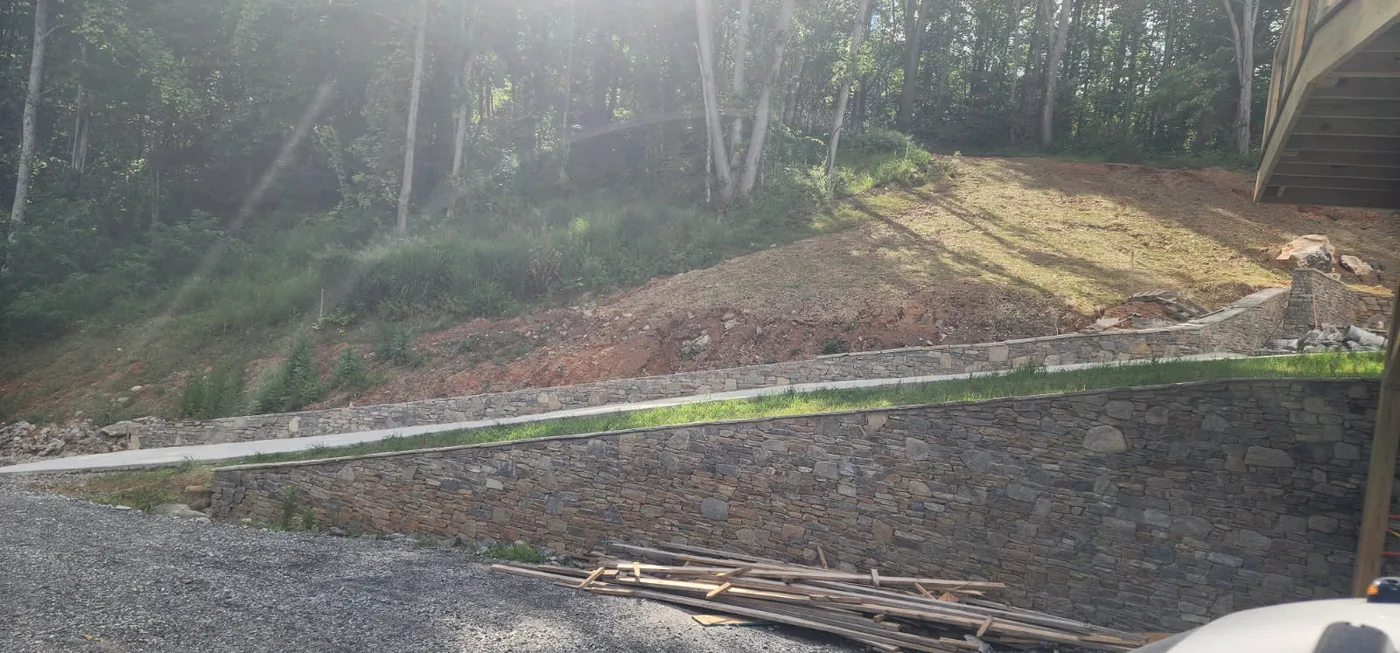
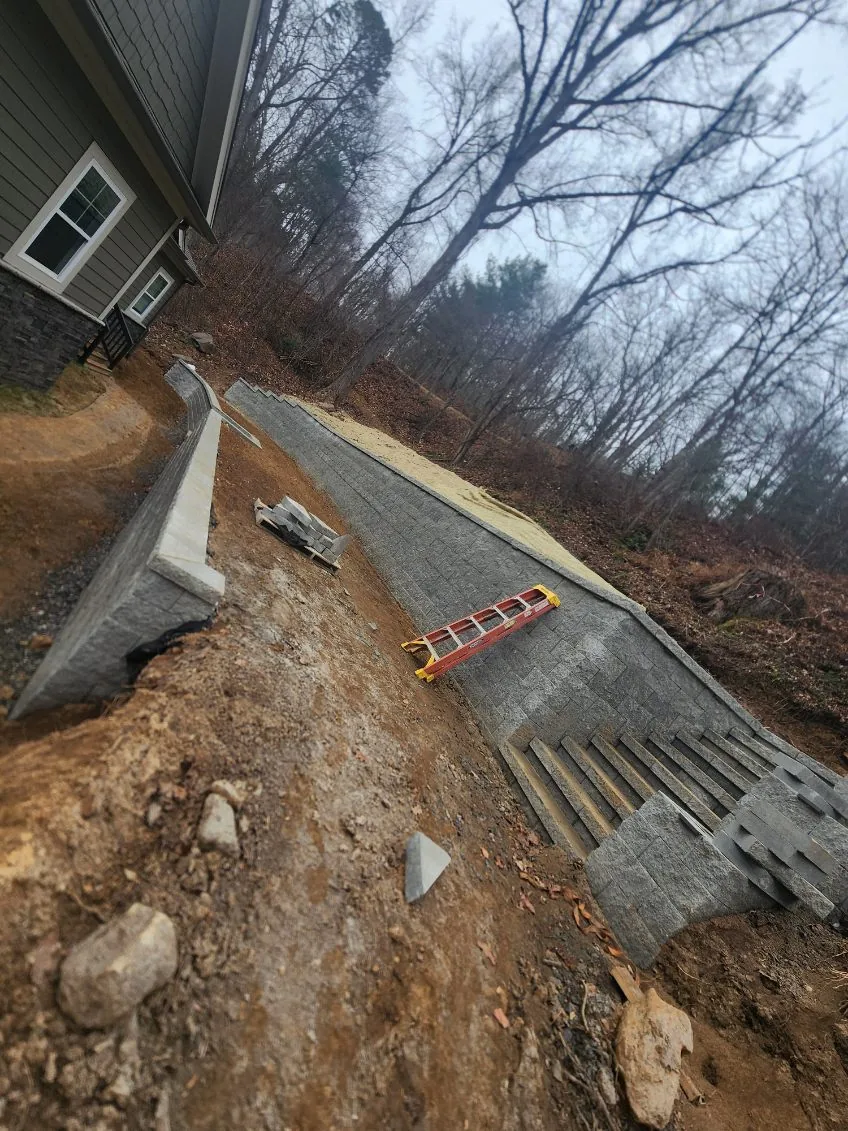
Henderson County yards fall into two working categories: lots that already have natural fall, where the waterfall is mostly a matter of stacking and hiding liner, and lots graded flat, where the waterfall is a built structure and the pond has to be excavated. The first tends to be cheaper per vertical foot. The second tends to surprise homeowners, because a ten-foot fall on a flat lot means a mound of engineered fill, a retaining structure, and a place for the water to disappear. Where the build touches grade control or sits near a property line, it crosses into the same permitting conversation as a Laurel Park retaining wall scope — and if the wall is doing structural work, it is being built to the same standard whether it is holding soil or holding a waterfall.
That overlap matters here. Many of the prettiest water features in this town are, structurally, a retaining wall with water piped over them. The International Code Council treats retained earth and surcharge loads as engineering questions, not landscaping ones, and the crews worth hiring price the wall and the water as one assembly. If your waterfall is going to sit on or against a wall, start with the Henderson County retaining wall cost breakdown and then layer the water feature on top.
The price picture for water features here
Two things drive cost more than any other: liner versus concrete shell, and how much rock has to be moved by hand versus machine. Small prefab basin falls can be a weekend project; a naturalistic boulder cascade with a filtration pit is a two-week build. Treat these as working ranges, not quotes — every yard prices its own access, haul distance, and drainage.
| Scope | Typical range |
|---|---|
| Prefab basin + small spillway, homeowner-assisted | $1,200–$3,500 |
| Lined pondless waterfall, fieldstone, 4–6 ft fall | $4,500–$9,500 |
| Lined koi or goldfish pond with filtration | $8,000–$18,000 |
| Concrete-shell pond with cast veneer and skimmer | $15,000–$28,000+ |
| Boulder cascade on engineered retaining structure | $18,000–$45,000+ |
| Pump, liner, and filtration retrofit to an existing feature | $1,800–$6,500 |
Access is the silent line item. A yard you can reach with a mini-excavator prices one way; a terraced back garden reachable only through a gate changes the labor number materially. Ask any bidder how they plan to move rock to the site before they quote.
Water, pumps, and the county's storm history
Western North Carolina's federal disaster record explains most of the calls we get about water features: 16 declared events touch this county across 1978-2026, overwhelmingly flood and storm family. Every one of those events reshaped how local builders think about overflow. A water feature that has no plan for a heavy rain becomes a mud pit, and a pond that backs up against a house or a neighbor's grade becomes a liability. Sizing the overflow, the auto-fill, and the pump cut-off before the rock goes in is not optional here; it is the difference between a feature that survives the next wet spring and one that does not.
The National Weather Service issues the flood and flash-flood products that should sit behind any drainage decision on a graded lot. Runoff from uphill neighbors is the most common hidden cause of feature failure, and it is worth a walk of the property line before any excavation begins. If the water has somewhere to go, the build is straightforward. If it does not, that problem gets solved first.
Hiring a waterfall builder without getting sold a pump
The trade has two populations: crews who build water features as a specialty, and crews who sell pumps and liner and sub the stone. Both can produce a good result, but only one of them wants to talk about the wall underneath. Three checks matter before signing anything in Henderson County.
First, ask who is engineering any retained earth the feature sits on. North Carolina's Licensing Board for General Contractors sets the threshold where a job needs a licensed general contractor; a waterfall on a structural wall is usually over it. Second, ask what happens on the third heavy rain — a specific answer about overflow and pump protection separates a builder from a seller. Third, ask for a reference on a feature that has been in the ground at least two winters. One winter proves nothing in this climate. When you are ready to compare approaches, the stone waterfalls and ponds overview covers the material and construction choices in more depth.