Before the quote, read the wall you already have
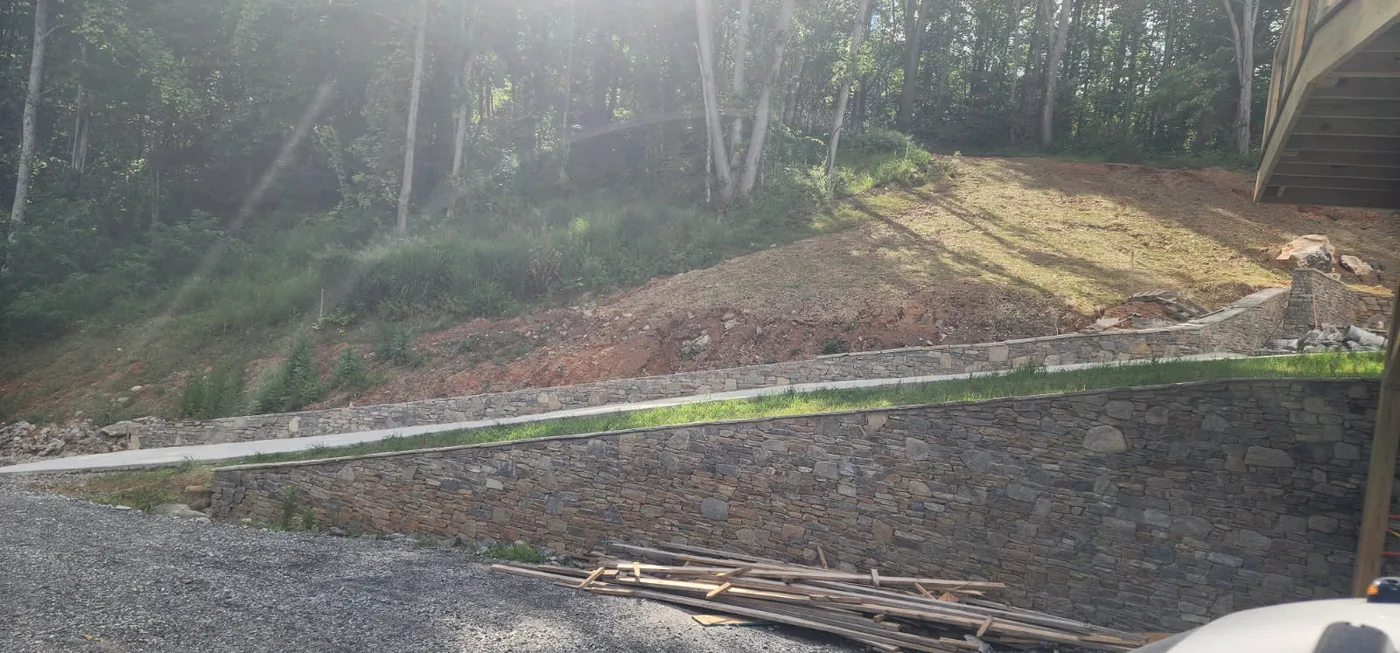
Most Etowah veneer calls start the same way: a homeowner on a ridge lot off Rugby Road or down near the French Broad bottoms looks at a chimney, a front stoop, or a retaining wall along a driveway cut into a slope and decides the stone has to go. Half the time the stone is fine. What failed is what's underneath it — a scratch coat that gave up, a footing that has been creeping downhill since the wall was built, or mortar joints that took on water every winter since the last repaint.
Reading the existing feature first is the entire game. Poke the mortar with a screwdriver. Look for vertical cracks wider at the top than the bottom, which says footing movement, not veneer failure. Walk the uphill side and find where the water actually goes. In this county, lots almost always drain toward the house because the builder wanted a view, not a diversion. If you replace stone over a bad drainage path, the new work fails on the same schedule the old work did.
What a veneer job actually costs here
Etowah sits in Henderson County, where clay soil, summer storms, and repeated freeze-thaw cycles do the same work on stone that they do on every foundation in the county. Pricing reflects that: installers who skip the drainage question entirely come in low, and the wall usually has to be redone inside a decade. Working ranges from local crews:
| Scope | Typical range | What drives it |
|---|---|---|
| Porch knee wall, entry surround, or front stoop face | $1,500-$4,000 | Square footage, access, whether old stone has to come off first |
| Chimney re-veneer (existing chase structurally sound) | $3,200-$7,500 | Height, scaffold setup, flue condition, cap and flashing |
| Full chimney rebuild with new stone | $8,000-$14,000 | Footing condition, tile liner work, crown, whether it's genuine stone or manufactured |
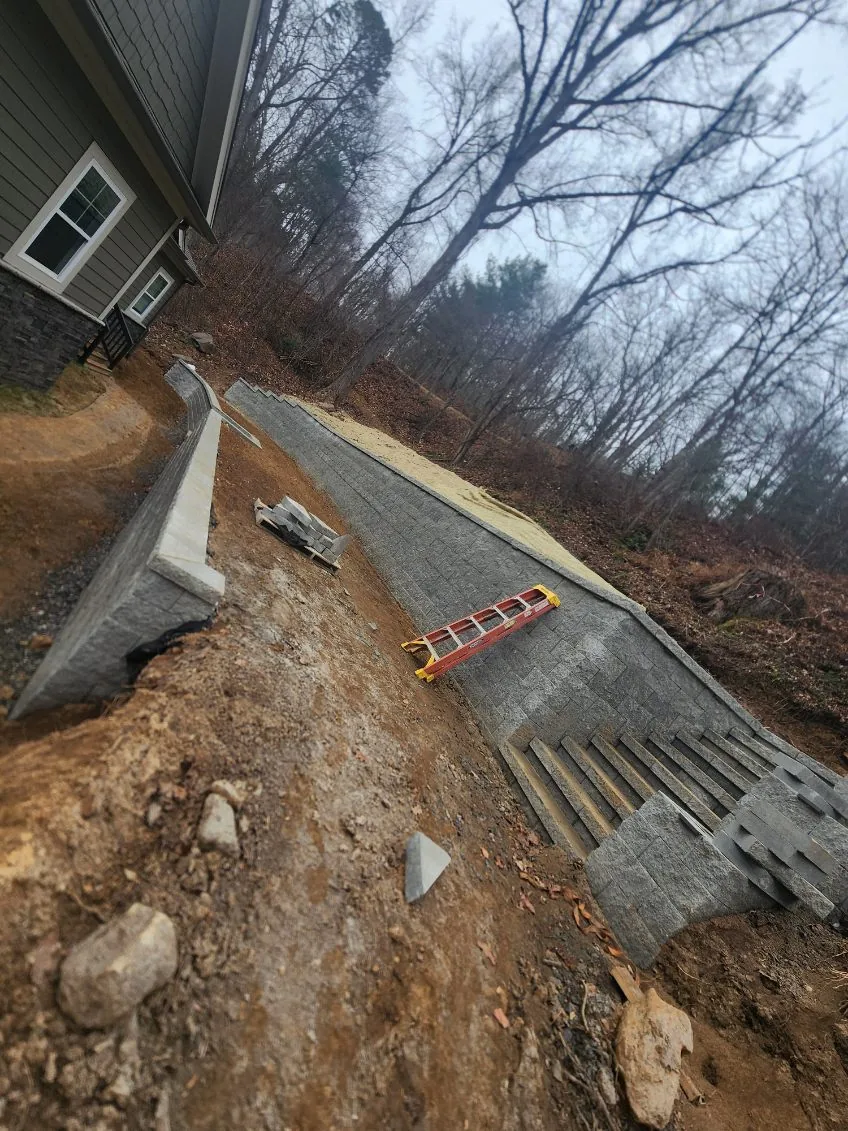
| Retaining-wall face refresh (drainage work separate) | $1,500-$2,800 per face section | Wall height, how much stone is reusable, whether footing has moved |
| Full-house veneer accent (single elevation) | $9,000-$18,000 | Wall prep, weather barrier, staging, product choice |
Those bands assume a functioning substrate. If the old wall has to come down, or a footing has to be replaced, that's a separate line item and the right move is to price it separately rather than hide it inside the veneer number. The stone veneer service page walks through what a clean scope looks like.
Water on a mountain ridge, and what the code expects
Henderson County has been hit by 16 federal disaster declarations covering roughly 1978-2026, and the vast majority of them are storm, flood, or wind events. That record matters for veneer because nearly every failure we see traces back to water reaching the wall from above or uphill, not from the stone itself. Man-made stone veneer has a specific installation requirement: a drainage plane behind the stone and weep screed at the base so moisture can leave. This is codified in the International Code Council family of codes that North Carolina adopts statewide. A veneer job stacked tight against a wall with no drainage detail is a job that looks right and fails quietly.
The other water issue is the slope above your wall. If a retaining wall is failing, that's true engineering, and the county price picture for it lives at retaining wall cost Henderson County. If you also need the wall rebuilt, not just re-faced, start with the local retaining wall contractors Etowah page — different trade, different scope, same first question about where the water goes.
Manufactured stone, real stone, and honest trade-offs
Etowah sits between the flat farmland toward Hendersonville and the steep green slopes of the upper county, and homeowners here tend to have strong opinions about whether the front of a house should carry manufactured stone or genuine stone. Both are legitimate. Manufactured stone is lighter, cheaper, and consistent in color, but it absorbs water at a different rate than real stone and typically requires a specific scratch-coat and lath system — meaning the correct install is fussier, not easier. Real stone is heavier and more variable, which means the footing and wall ties have to be sized for the load.
For anyone weighing the two on an existing structure, the honest answer is that what's already there usually decides it. Matching an existing veneer field across a repair is nearly impossible on a converted house, and the aesthetic cost of a mismatched patch can be higher than the cost of siding the whole elevation. That's a conversation to have with the installer before anything is ordered, not after.
Checking credentials before anyone touches the wall
Veneer work in North Carolina is generally done under the general contractor licensing framework, and structural work — footing replacement, chimney rebuilds, wall reconstruction — can cross thresholds that require a licensed general contractor under North Carolina Licensing Board for General Contractors rules. Ask the crew doing your stone veneer in Etowah NC which way their scope falls, and if the answer is vague, that's your sign. Masonry repair crews that only do non-structural resurfacing can be unlicensed and still legitimate; scopes that include tearing out a footing, rebuilding a chimney from the ground, or replacing bearing elements need someone licensed.
For projects touching stormwater runoff, drainage grading that alters flow to a neighbor's property, or any work near a stream buffer, the North Carolina Department of Environmental Quality rules are the reference point. Most Etowah veneer jobs never trigger that, but the ones on the county's steeper lots near tributaries sometimes do.