Where the water comes from on a Mars Hill lot
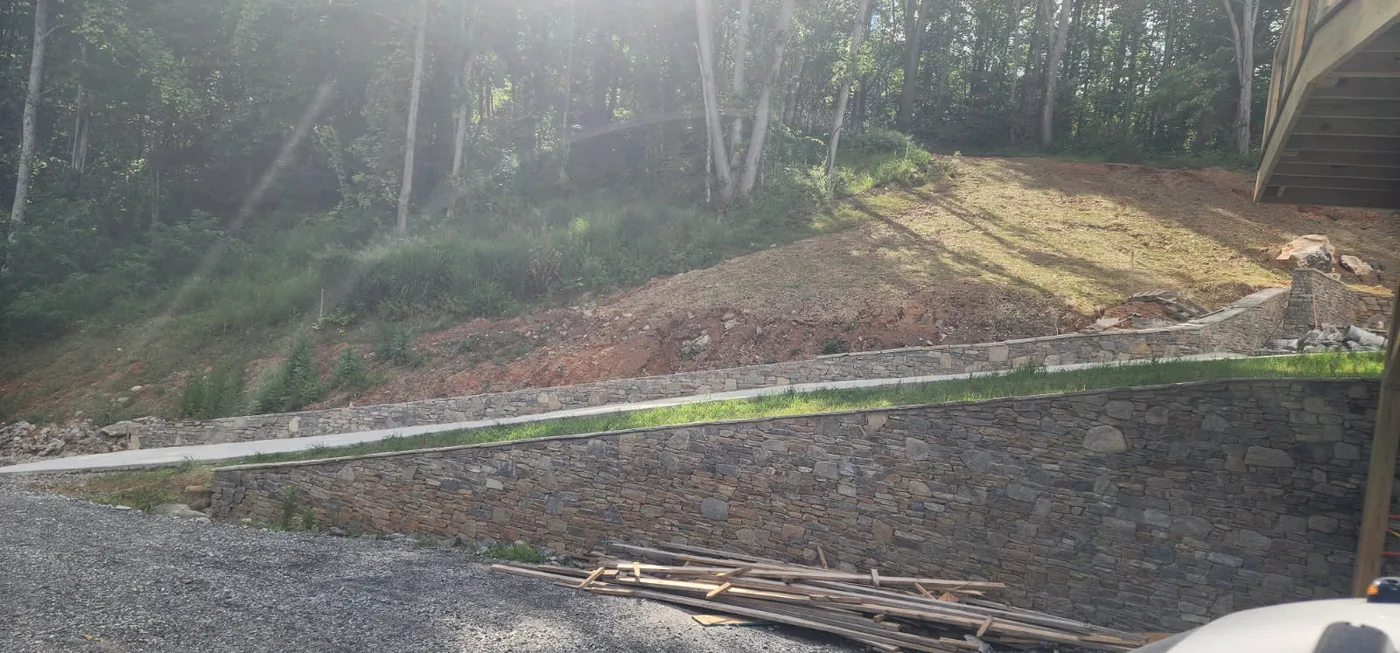
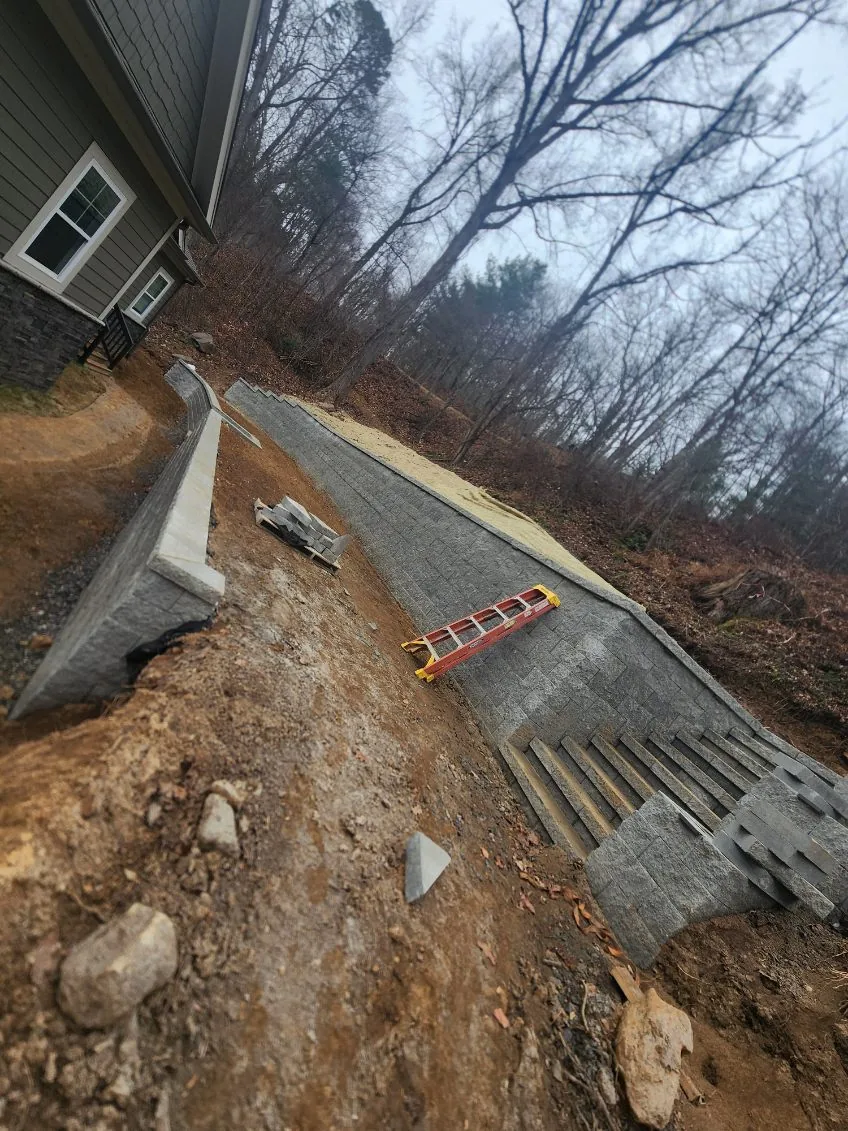
Most Mars Hill yards drain toward the house, not away from it. The town sits in Madison County on ground that tilts hard toward the French Broad, and the typical lot is a cut bench behind the home with the original slope still falling at you from above. A fire pit set into that bench looks fine in July. By February the uphill water has found the pit excavation, the base has heaved, and the ring is racked out of level. That is the failure to design against.
The fix is upstream grading, not a bigger pit. Before anyone sets a stone, the plan has to answer where the surface flow off the hill gets picked up and where it gets discharged — a swale above the patio, a curtain drain behind the seat wall, and a positive outfall that is not your neighbor's line. Seating and stone work second, water first.
What makes this county different from the valley floor is that the water does not arrive from one direction. On a bench cut into a ridge, you get sheet flow off the uphill woods, you get it concentrated where the driveway cut crosses the slope, and you get it seeping out of the bank itself in a wet winter. Three sources, one excavation. A pit dug in August into dry ground can sit in groundwater by March and nobody planned for it. That is why the honest first question on a Mars Hill fire pit job is not what stone you want; it is where the lot sheds and where that water is going to sit when it stops moving.
Federal records are a fair proxy for how wet this corner of the state gets: Madison County has seen 21 federal disaster declarations over a 1978-2026 record span, and most of that history is flood and storm-driven. You do not design a backyard to FEMA standards, but the pattern tells you the ground here moves water in a hurry when it decides to.
Why this county burns differently than the valley
Two local facts shape every build here. First, terrain: Mars Hill sits at elevation, and wind across an exposed ridge pulls embers and smoke in ways a flat Weaverville or Woodfin yard never sees, which is why open rings get sited and shielded rather than dropped in the middle of a lawn. Second, fuel: a lot with a wooded uphill slope is a lot with leaf litter and deadfall, and a wood-burning pit near dry duff behaves differently than one on a mown lawn.
That is a siting question, not a product question. A local builder reads the slope, the prevailing wind, and the overhead canopy before proposing a location. See the fire pit options page for the shapes and materials that hold up on grade.
There is also the matter of what the lot is made of. Much of the ground around Mars Hill is clay over rock with a thin organic top, and that clay holds water and swells. A pit base set on native clay without a compacted, free-draining lift under it will rock and settle within a couple of seasons, no matter how well the ring is mortared. Builders who work here regularly treat the base like a small foundation: excavate past the soft material, bring in and compact clean stone, and decouple the masonry from the soil. On the steeper lots, that outer lift often turns into a low retaining curb that also checks any runoff sliding down the grade toward the pit.
Smoke is the other thing locals learn the hard way. A bench that looks perfectly flat is rarely flat; it carries a slight pitch, and a pit placed a few feet downhill of where you think it should be will pull smoke across the seating every time the wind drops. Sit the pit on the high side of the bench where you can, and orient the opening away from the direction the evening breeze usually comes from. That is free, and it is the difference between a pit you use weekly and one you stop lighting.
The Mars Hill price picture
Costs below are regional bands for Madison County work, not a quote. The pit is the smaller half of most of these jobs; base prep, retaining, and drainage carry the rest, and they are the line items a steep-lot bid has to show. Any number that arrives without them is incomplete rather than cheap.
| Scope | Typical range | What drives it |
|---|---|---|
| Simple block or paver kit ring, flat yard | $1,800-$3,200 | Diameter, cap style, whether you dig the base yourself |
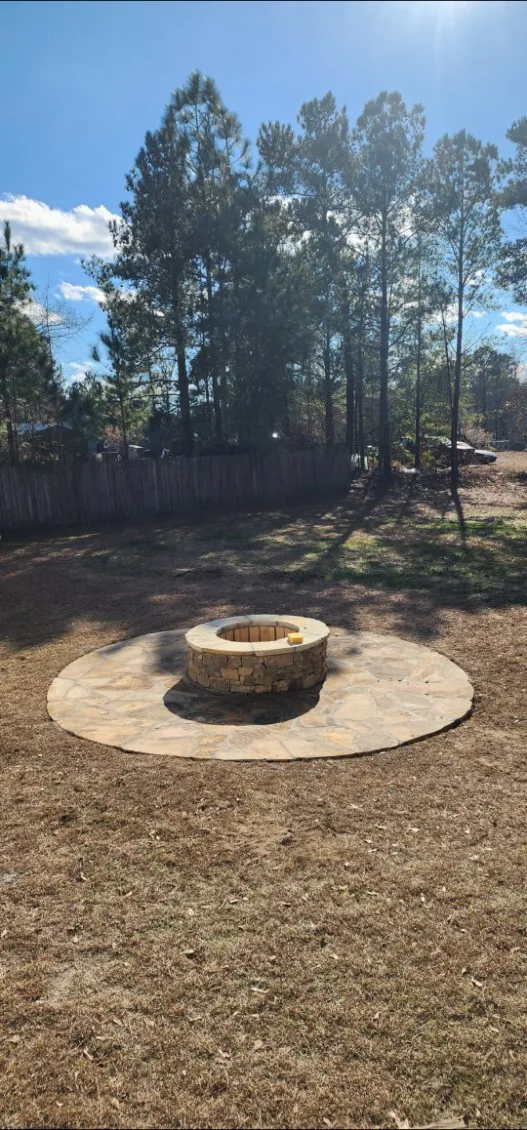
| Dry-stacked natural stone pit, wood burning | $2,600-$4,800 | Stone type and haul distance, wall height, bench ledge |
| Gas-fired pit with burner and key valve | $3,500-$6,500 | Fuel line run, burner size, veneer, ignition type |
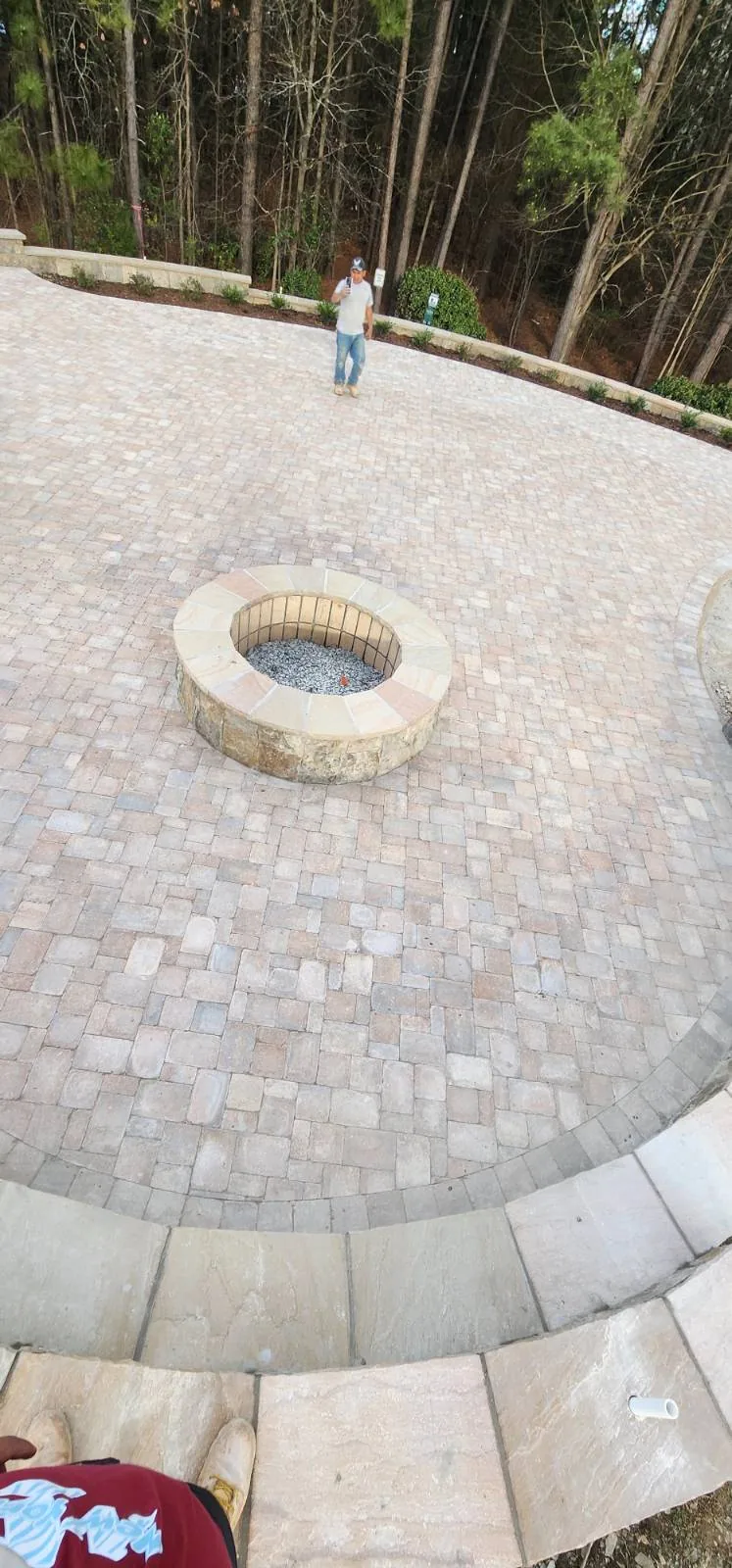
| Pit plus seat wall on a sloped bench | $5,500-$12,000 | Retaining height, drainage, paver or stone paving |
| Drainage and grading correction alone | $1,200-$4,500 | Swale length, curtain drain, outfall distance |
Paving around the pit is a separate scope and it moves the number fast on a graded lot; the Madison County retaining cost breakdown covers the wall and grade work that usually has to happen under the patio.
Two other variables are worth pricing out loud rather than assuming. Stone selection is one: a locally quarried fieldstone or a regional granite reads very differently against a Madison County hillside than a big-box paver kit, and it costs more to lay because the units are irregular and the wall takes longer to fit. Haul distance to a remote ridge lot is the other. A build on a tight gravel drive off a switchback takes more equipment time to reach than a lot on a paved road in town, and that shows up in the labor line, not the material line. Ask for those two numbers separated out before you compare any two bids.
Fuel, code, and who is allowed to touch the line
A wood-burning stone pit is masonry work. A gas pit is masonry plus a fuel appliance, and in North Carolina the gas side is not a handyman task: work on fuel piping and appliance connections falls under the state's separately licensed trades, administered through the NC State Board of Examiners of Plumbing, Heating and Fire Sprinkler Contractors. Ask who is pulling and holding that license before anyone runs a line to your burner, and get the leak test in writing.
General construction scope and contract thresholds sit with the NC Licensing Board for General Contractors — worth a look if your project bundles a pit, a retaining wall, and a patio into one contract. On the appliance side, manufacturers publish clearance-to-combustible and installation requirements for their burners, and those are the numbers an inspector will check. The International Code Council maintains the model codes that North Carolina adopts and amends. None of this should be exotic to a builder; if it is, that is your answer.
The practical split is simple even if the paperwork is not. Anything that carries gas is a licensed trade, and the pit shell around it is masonry. If your build has both, you may end up with two people on the same excavation, and the schedule has to sequence them so the burner and valve are set before the veneer closes in. That is a coordination problem, and it is worth asking up front who owns it. A crew that does both scopes in-house still has to hold the right license to touch the fuel line; a crew that only builds masonry should be telling you who is running the gas, not leaving it to you to find out.
For outdoor burning generally, the rules about what can be burned outdoors and when are state and local matters, but the U.S. Environmental Protection Agency publishes guidance on outdoor wood and waste burning that is worth knowing before you assume a burn barrel or an open pit is always fine: https://www.epa.gov. It is not a substitute for checking with your own county, but it is a reasonable starting point.
Siting a pit on a wooded, sloped yard
Three things to look at before the first stone. Slope direction and how much of the hill drains through the pit footprint. Canopy and leaf litter, because a pit under low limbs or against dry duff is a maintenance problem every fall. And wind, because a ridge bench funnels it and a pit sited in the wrong spot smokes out the people sitting around it.
The honest answer for a lot with no level ground is often that the pit sits on the downhill edge of a small retaining bench, with the seat wall doing double duty as the grade change. That is a more expensive build, and a better one. The Mars Hill retaining wall contractors page covers the crews who build that bench correctly.
There is also a use question that shapes the build. A lot that is used year-round, through a mountain winter, wants a pit that handles wind and a supply of dry wood within easy reach; a lot used mostly in fall and spring can get away with a simpler ring and less shielding. And if the yard is where you watch the game or cook, the pit often becomes the anchor for a small patio, which means the paving scope comes back into the picture. Plan for the space you will actually use, not the smallest version of it, because retrofitting a patio around an existing pit later costs more than doing the base and drainage once.