Read the wall you already have before you price a new one
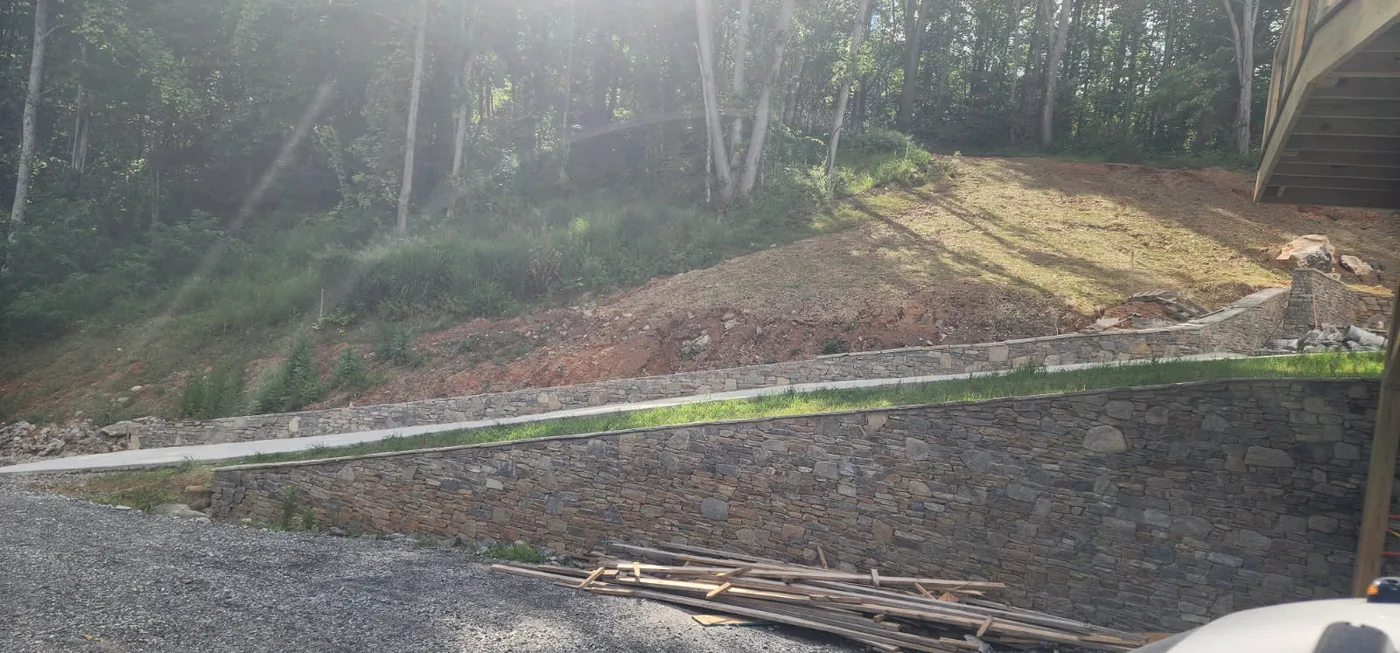
Most walls around Canton don't need to come out. They need to be understood. A stacked rock wall off a side street above the mill district may be eighty years old, leaning, and still doing its job — while a fifteen-year-old segmental block wall on a newer slope lot has already started bowing out at the base. The difference is almost never the stone. It's whether the wall was built with a way for water to leave.
Before you get a single quote to rebuild, walk the wall and read it: where is it bulging (push from behind), where is it dropping (soil washing out below the base), and where is it just cracked and aging (weathered mortar and freeze-thaw, no movement). Those are three different repairs at three different prices. A crew that starts measuring for replacement before answering those questions is selling you a new wall, not repairing the one you own.
What Canton's terrain does to walls
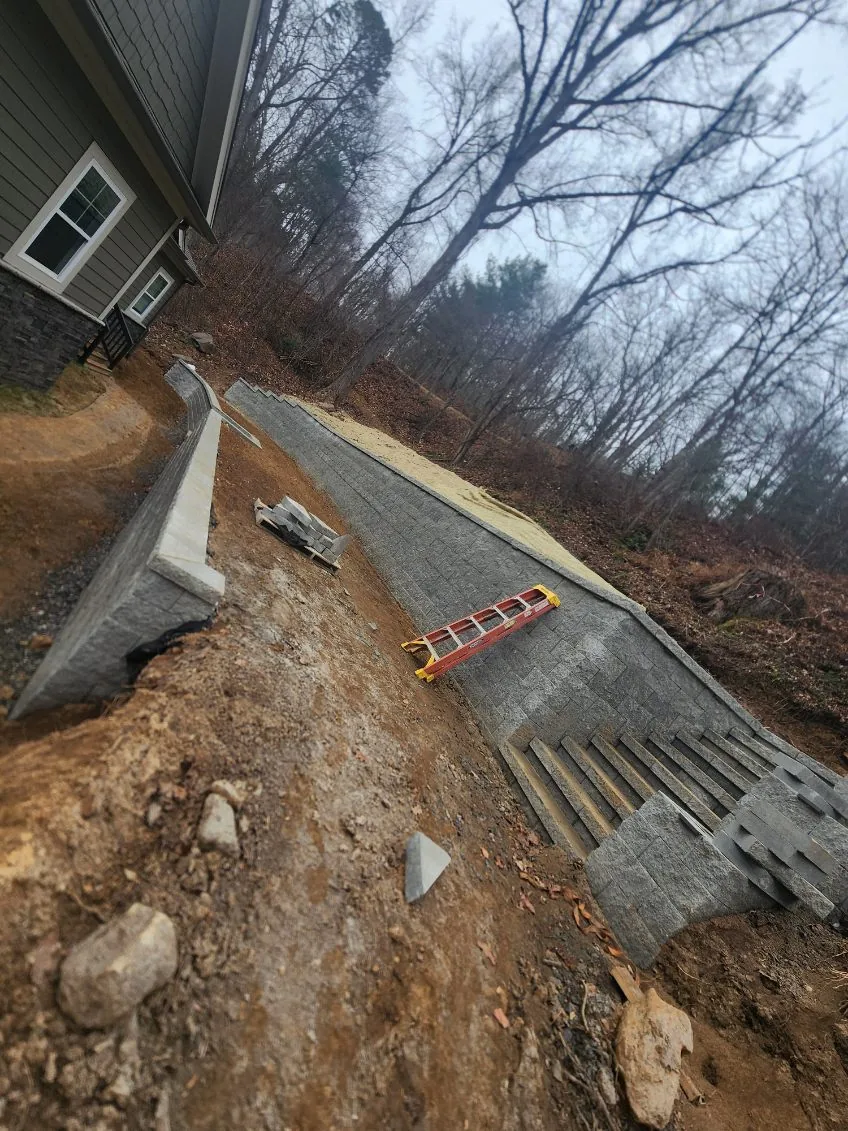
Canton sits in a valley where the Pigeon River and its tributaries have been re-sorting ground for a long time, and the surrounding ridges rise fast. That means two very common wall situations here that flatland towns don't have: walls holding back steep cut banks above the floodplain, and short walls at the toe of a slope that are really keeping a hillside from walking downhill. Both are drainage-driven. Water that can't get out of the backfill pushes on the wall year-round, and in this climate it swells and freezes too, which is why so many repairs get scheduled in late winter and spring.
The federal record backs that up: 19 declared events touch this county across 1973-2026, and they skew heavily toward storms and flooding. Every one of those events put pressure on walls that were designed for a drier assumption. If your wall moved after a wet stretch rather than gradually over years, treat it as a water problem first — the National Weather Service pattern for western NC is the background noise the wall has been fighting.
Repair scopes and what they realistically cost here
Prices below are regional ranges for Haywood County work, not flat quotes — height, access, and whether a machine can reach the wall move them a lot. A wall the size of a pickup bed costs very differently from one you can only reach with a wheelbarrow. For the line-item picture, the Haywood County cost breakdown lays out how heights and drainage change the number.
| Scope of work | Typical range | Best suited to |
|---|---|---|
| Crack and mortar repair, spot repointing | $800-$2,500 | Weathered masonry, no movement, wall under 3 ft |
| Drainage retrofit (weep, backfill, surface grading) | $1,500-$5,000 | Efflorescence, wet base, seasonal bulging |
| Section rebuild, same footprint and material | $4,500-$12,000 | Localized failure, good wall either side |
| Full rebuild with drainage and geogrid | $12,000-$40,000+ | Wall 4 ft and over, or failed base |
Anything holding back more than a few feet of soil carries real consequences if it fails, and the NC Licensing Board for General Contractors threshold is the line where a job legally stops being a handyman project. Ask.
When a repair is honest and when it's a patch
A repair is honest when the wall still has a sound base and the movement has a fixable cause. Repoint the mortar, restore the drainage, and a 1950s stone wall can outlast you. A repair is a patch when the base is undermined, the wall has rotated as a unit, or the soil above it is sliding — in those cases, rebuilding the same wall the same way just re-creates the problem. That distinction is the whole game, and it's also the reason an inspection is worth more than three competing quotes. When you're choosing who does the work, the Canton contractor guide covers what to ask before anyone touches the wall.
One more code reality: walls over four feet, or ones supporting a driveway or structure, generally get pulled into permitting and sometimes engineered design under the state's adopted code. The NC Office of State Fire Marshal publishes the code services materials the local office works from. If a builder waves that off, that's your signal.
Water, slopes, and doing the job once
Every wall in this county is a water story. Before spending on the wall itself, look uphill: where does runoff from the neighbor's property go, does the wall sit at the low point, and does the ground above it pitch toward the wall? Fixing surface water and restoring the wall's internal drainage is the difference between a repair that holds and a rebuild every few years. The retaining wall repair guide walks through that sequence — diagnose, drain, then rebuild only what's actually failing.
Repair options are worth knowing because they're often cheaper than people expect: repointing, drainage retrofits, and section-by-section rebuilding. If your wall has already moved as a mass, or the slope above it is failing, get an engineer in before a builder. A real diagnosis is the cheapest line item on any wall.