Where the money actually goes on a Laurel Park patio
Almost every patio quote in this town breaks into the same five lines: excavation and haul-off, base stone and compaction, drainage, retaining or grading work, and the pavers with their edge restraint. On flat ground the last line dominates. In Laurel Park it usually doesn't. Lots here climb and drop off the Henderson County ridgelines, and a patio that needs a cut on one side and a built-up edge on the other can double the base and labor lines before a single paver is laid. That's why two neighbors with similar-sized yards can get quotes 40% apart. Before comparing totals, compare scope: base depth in inches, compaction method, drainage plan, and whether wall work is included. If a bid doesn't show those, it isn't cheaper, it's incomplete.
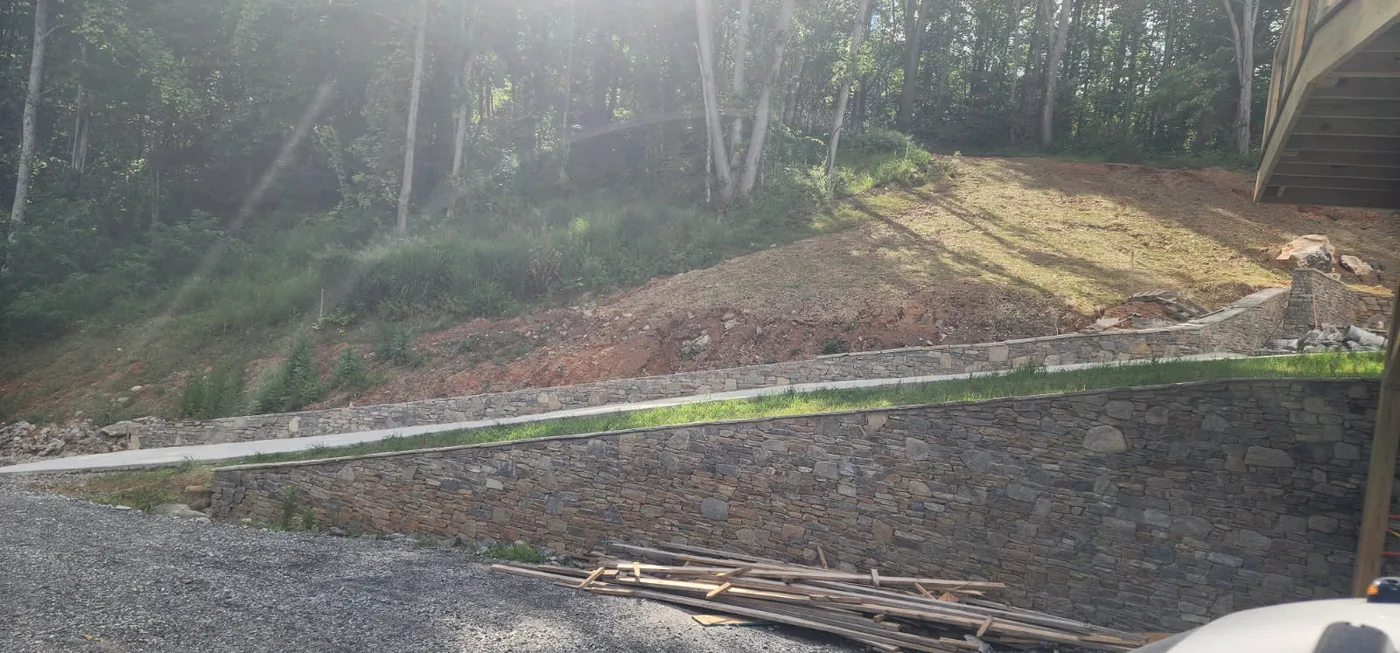
Pull up any lot off Laurel Park Highway and you'll see what I mean: driveways that drop steeply from the road, backyards that fall away into oak and rhododendron, and a house pad that was carved rather than graded flat. The patio isn't a decoration dropped on the yard; it's a small piece of civil engineering. On these sites, a contractor's first visit is less about paver color and more about where the water goes when it rains. That conversation determines the price far more than the catalog.
What a typical scope-to-price table looks like
These are regional bands for Henderson County work, not quotes. Slope, access, and site prep decide where in the band you land.
| Scope | Typical price range |
|---|---|
| Small basic patio (approx. 200–300 sq ft), flat ground | $6,500–$11,000 |
| Mid-size patio (approx. 350–500 sq ft) with standard base | $11,000–$19,000 |
| Larger patio (approx. 600–800 sq ft) with drainage and edge work | $18,000–$30,000 |
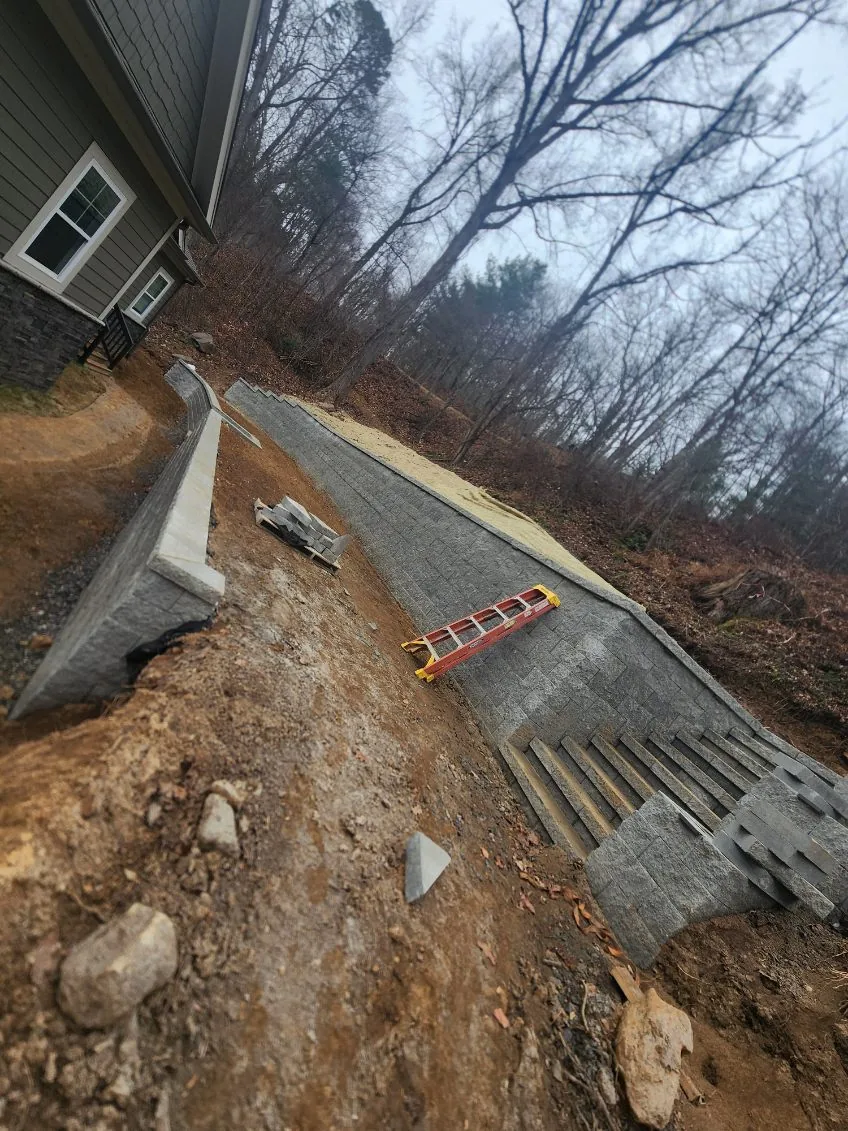
| Sloped lot with a built-up retaining edge or low wall | Add $3,000–$9,000 |
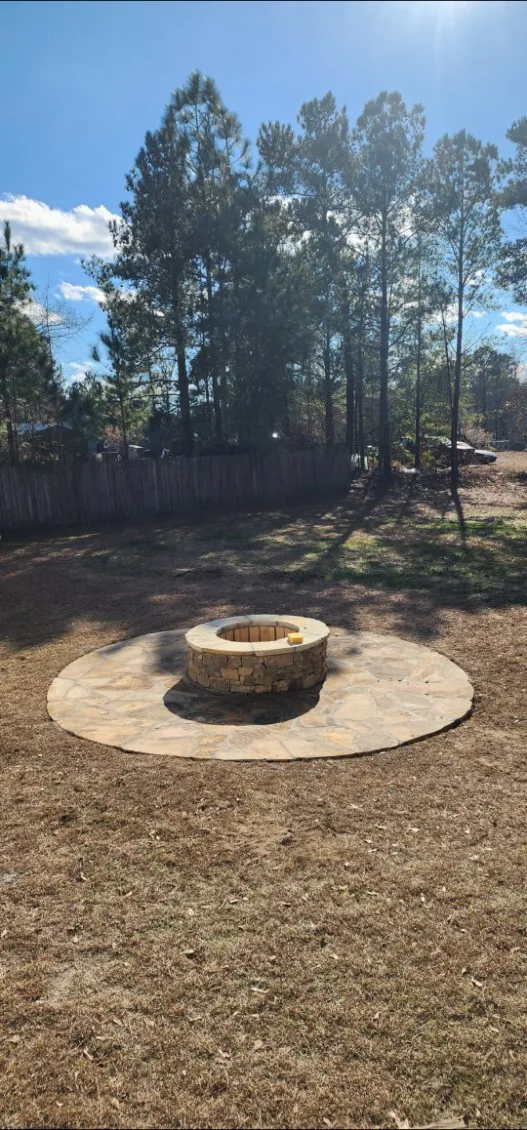
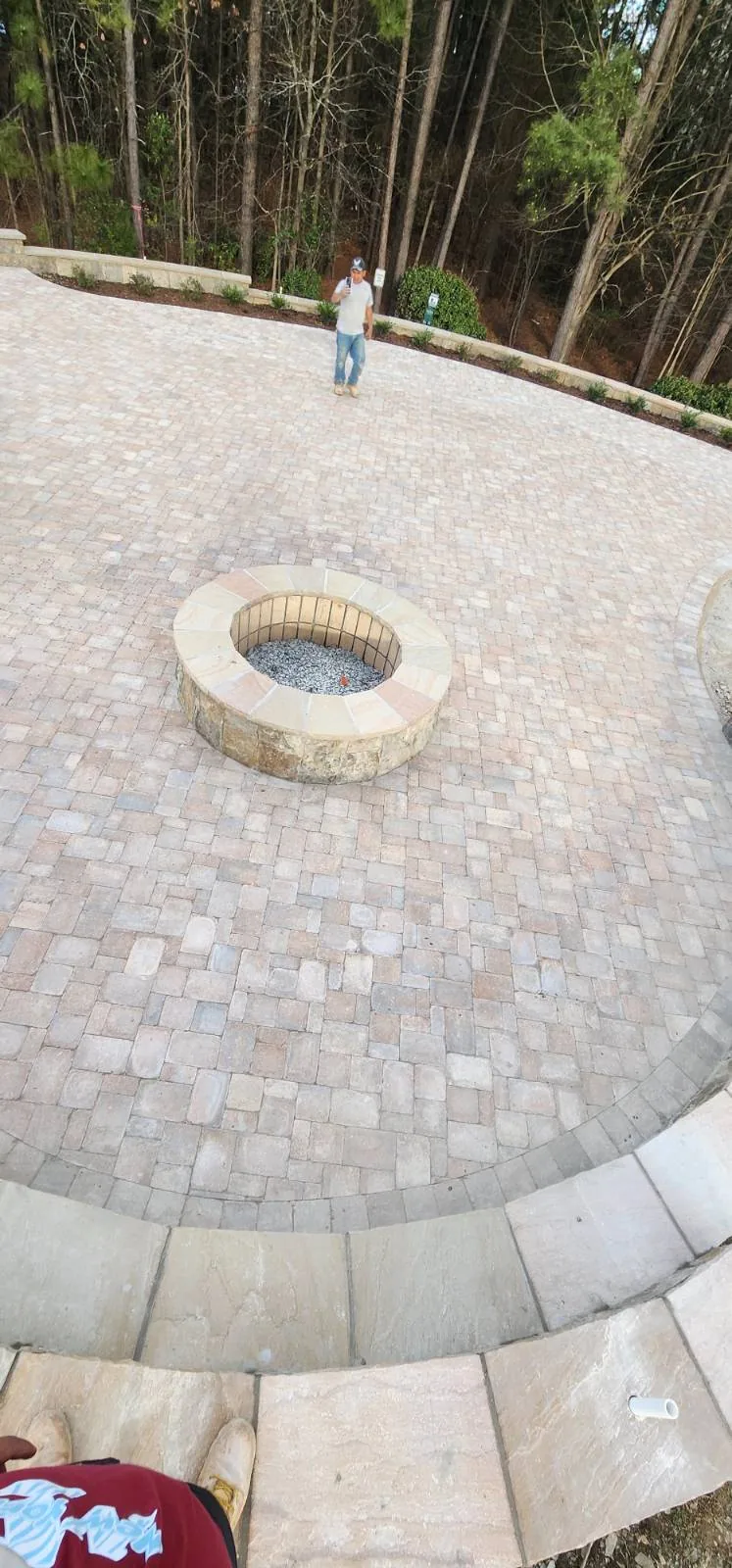
| Fire pit, seat wall, or steps | Add $2,000–$8,000 per feature |
| Paver driveway or walkway as part of the job | Priced per sq ft; ask for the split |
If your project includes a freestanding wall, run the numbers through the Henderson County retaining wall cost guide before you sign, so the wall line isn't buried inside the patio total.
Two line items deserve a closer look because they're where budgets quietly stretch. First, steps: on a sloped yard, connecting a patio to a lower lawn or a side gate often means two or three masonry steps, and each one is hand-built. Second, edge restraint: concrete curb or steel edging holds the field in place, and on a built-up edge it's structural, not cosmetic. Ask what product is specified and whether the price covers it. A bid that omits either will find the money later, usually from you.
Why hillside lots in this town change the entire quote
Laurel Park sits in the mountains around Hendersonville, and much of its housing stock was built into slopes rather than carved flat for it. That reality affects three things a flatland quote never accounts for. First, excavation: cutting a level pad out of a grade means hauling spoil off-site, and on tight mountain driveways that haul is slow and expensive. Second, base: pavers need a compacted, well-drained base below them, and clay soils common in this county hold water and heave when they freeze. Deeper stone and proper filter fabric cost more up front and save the patio later. Third, water: uphill runoff is the enemy of any hardscape, and the NC Building Code Council treats site drainage as part of a sound build, not an add-on. A patio that ignores it will move, settle, and separate within a few seasons.
The town's mix of mid-century homes and newer construction makes this uneven. An older house may have a yard that was never properly graded, with downspouts emptying near the foundation and a driveway that sheds toward the house. A newer build on a graded pad may look flat until a heavy storm reveals a low corner. Either way, the fix is the same: intercept water uphill, move it around the patio, and discharge it where it won't undercut a slope. That work is invisible when it's done and unforgettable when it's skipped.
What actually shows up in a serious bid
A competent proposal for this area will list excavation depth, base material and compacted depth, edge restraint type, drainage (surface and subsurface), and whether the work triggers any permitting. On steep sites, the crew should also tell you how they're handling the uphill side so water doesn't pool under the pavers. When a job crosses into structural retaining walls or engineered grading, the licensing question comes up, and the NC Licensing Board for General Contractors is the place to verify who's allowed to perform what. If a quote includes electrical for lighting or a fire feature, ask whether the contractor holds the proper state credential for the trade involved. Good crews answer those questions without flinching; weak ones change the subject.
It also helps to know what the contractor assumes about your site before you sign. Does the price include removing existing concrete, an old deck footing, or a stump? Is haul-off of excess dirt included, or is it "on site" because there's nowhere to put it? On these lots, disposal is real money, and it's the most common surprise line once work starts. A thorough bid states those assumptions in writing, which protects both sides when the first shovel turns up a surprise.
Choosing between the crews bidding your job
Look for portfolios of slopes, not just flat patios, since the skills aren't interchangeable. Ask how they compact and test base, and what happens if the pavers settle after a winter. Ask how they protect the lawn and driveway during a mountain-lot build, and whether the price includes cleanup and haul-off. Then talk to the installer who actually did the work, not only the sales person. Our general paver patio guide covers the material and design choices, and local retaining wall work is covered further at retaining wall contractors in Laurel Park. Start there, then request an on-site look before accepting any number.
The best signal is a contractor who asks to walk the uphill side of your property, not just the patio footprint. That's someone who understands how water behaves on a Henderson County slope. If every bidder stands in the same spot and quotes the same square footage, none of them has really looked at your yard. A good on-site visit takes an hour or more; it ends with a written scope, not a napkin number. Take the time to get at least three of those before you commit.
Weather, water, and the long life of a patio here
This county has been touched by 16 federal disaster declarations across a record span of 1978-2026, and the pattern is familiar: heavy rain, flooding, and slope movement. For a patio, that history has a direct cost meaning. A base that drains well survives freeze-thaw and storm cycles; one that traps water doesn't. If your yard sheets water toward the house or a low corner, fixing grading and drainage is part of the project, not a separate problem. Buyers comparing quotes on price alone often pay twice: once for the cheap install, again to rebuild what it never supported.
Freeze-thaw is the quiet killer. Water gets into a base, expands when it freezes, and pushes pavers up. Over a few winters the field goes wavy, joints open, and edges walk out of line. Deeper compacted stone, a properly crowned surface, and edge restraint that's actually anchored are what stop that cycle. It isn't glamorous, and it won't show in a photo, but it's the difference between a patio that's still flat in a decade and one that's a rebuild by year five.