Why access, not stone, sets the Candler price
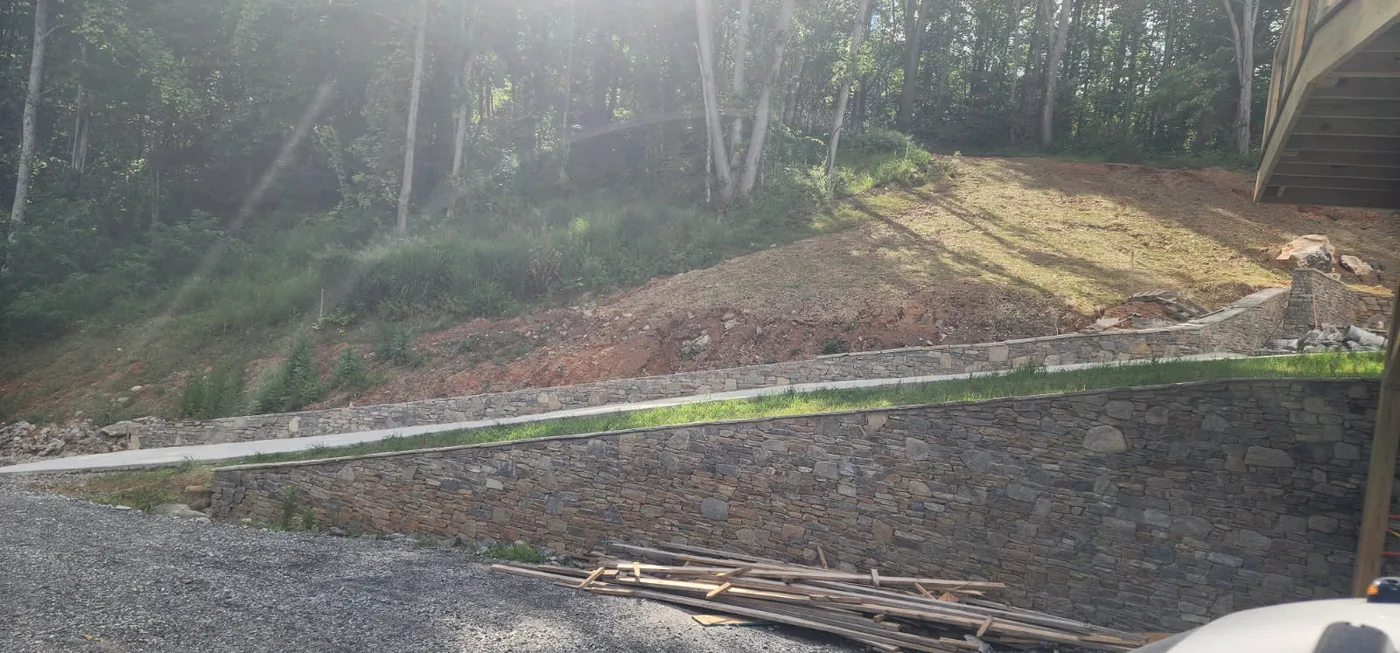
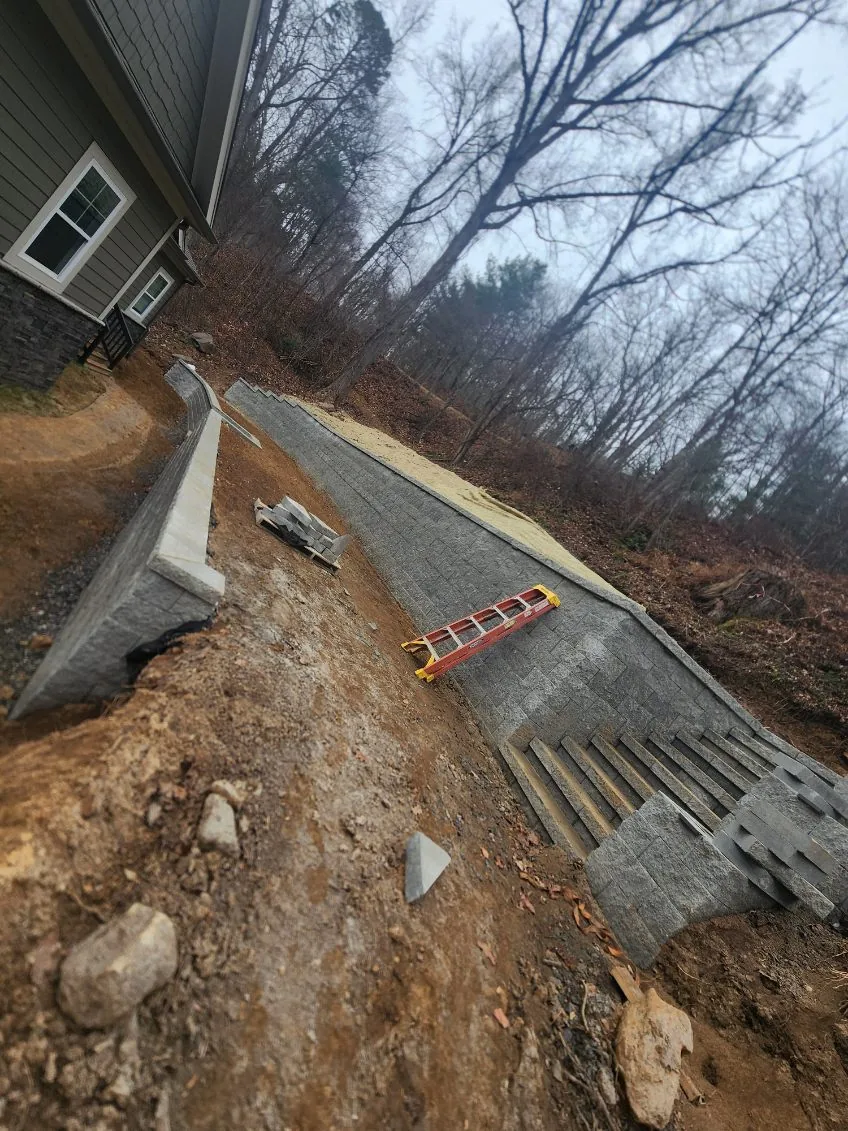
Candler is not a flat suburb. Much of the community sits on graded slopes running off the Hominy Valley and the ridges west of Asheville, and the driveways that reach those lots are frequently the hardest part of the job. A patio's actual cost is decided before a single paver lands: can a dump truck reach the build site, or does material get staged at the top of the drive and carried by hand? Is there room to swing a mini-excavator, or does excavation happen with a shovel and wheelbarrow? Distance from the flagstone source and the quarry's palletized loads add line items that a flat, wide-open lot never sees.
This is why two Candler patios of identical square footage can differ by thousands. One has a paved turnaround a truck can back into; the other has a one-lane gravel grade with a hairpin at the top. The stone is the same. The labor to get it there is not.
Driveways off Sand Hill Road, for example, often climb at grades that make a loaded tandem-axle dump truck a non-starter. Crews stage pallets at the road and run a walk-behind or compact track loader up in trips — every trip adds machine hours that a flat lot never sees. Off Pisgah Highway, by contrast, some lots sit on gentler benches where a truck can pull within twenty feet of the excavation. Same stone, same square footage, different day rate.
Quarry distance matters too. Flagstone is dense and heavy, and a round trip from a western NC quarry to a Candler job eats fuel and drive time. When the truck cannot reach the pad, that stone gets transferred to a smaller machine or to hand-carry, and the clock runs the whole time. A patio that would be a two-day set on flat ground can stretch to three or four here.
What a Candler flagstone scope should include
Under the stone, a patio is a drainage and base assembly. In western NC, freeze-thaw cycles punish shallow or poorly compacted base, so the honest scope starts with excavation to the right depth (commonly 6-9 inches before stone, more on slopes), geotextile separation fabric, and a compacted crushed-stone base in lifts. The flagstone goes on a mortar or sand-set bed depending on use, with joints and slope graded away from the house. On any slope, expect a drainage or retaining component — see the Buncombe County retaining wall cost breakdown for how those line items price out, and if grades are the issue, the Candler retaining wall contractors page covers local crews.
A job worth paying for will name the base depth, the compaction method, and where water goes. If a quote skips those, it is a quote for stone on dirt.
On Candler's clay-heavy soils, separation fabric is not optional. Without it, the crushed base migrates down into the subgrade and the patio settles unevenly within a couple of seasons. The freeze-thaw cycle here — repeated freeze at night and thaw by afternoon across much of the winter — works that migration faster than it would in a milder climate. A scope that lists fabric, lift thickness, and a plate compactor or vibratory roller pass is telling you the crew has built on this ground before.
Edge restraint deserves a line item too. Flagstone on a sand bed will spread at the borders without a mechanically pinned edge, and on a slope the downhill edge takes the most load. Ask how the edge is held. The answer should involve concrete or steel, not wishful thinking.
Candler patio scope and price ranges
Bands below reflect typical western NC pricing for real patios — base, drainage, and labor included. Access and haul adjust these up, sometimes sharply.
| Scope | Typical size | Price range |
|---|---|---|
| Small sand-set path or landing | 60-120 sq ft | $3,500-$7,000 |
| Standard sand-set patio, easy access | 200-350 sq ft | $8,000-$16,000 |
| Mortar-set or irregular flagstone patio | 300-500 sq ft | $14,000-$26,000 |
| Patio with cut slope and retaining edge | 300-500 sq ft | $18,000-$34,000 |
| Steep grade, hand-carry or long driveway | any | add 20-40% in labor |
Two costs move these numbers more than anything else: how much base excavation the slope forces, and how far every ton of stone and gravel travels by machine versus hand. Get a written, itemized scope before comparing totals.
A common Candler scenario: a homeowner wants a 300-square-foot entertaining patio off the back of a house on a slope that drops four feet across the width. The cut alone can move several cubic yards of clay, and that material has to go somewhere — spoils pile on site, hauled away, or used to build up a lower terrace. Each option prices differently. A flat-lot quote would not contain that line, which is why comparing a Candler bid to an out-of-county bid often misleads.
Permits, drainage, and the rules that apply
Most patios on a residential lot do not need a building permit, but anything involving a retaining wall above a certain height, grading that changes drainage, or work near a slope can trip local and state requirements. The NC Licensing Board for General Contractors sets the threshold where a job must be run by a licensed general contractor; a patio that becomes a structural or retaining project can cross it. Foundation and grading provisions in the state code — administered through the NC Department of Insurance, Office of State Fire Marshal code services — govern how drainage must be handled so your patio does not push water into a foundation. Ask any Candler crew how they handle uphill runoff and where it discharges.
Buncombe County reviews grading and stormwater in certain circumstances, especially where work changes how water crosses a property line or enters a drainageway. On the steep lots common off the Hominy Valley floor, a patio cut can redirect runoff toward a neighbor's foundation or a shared driveway, and that becomes a civil matter quickly. The cheap route is to design the discharge before breaking ground. A dry well, a French drain to daylight, or a graded swale are all ordinary solutions when planned up front and expensive retrofits when discovered after a storm.
Weather, water, and slopes in Buncombe County
Western North Carolina's wet seasons and mountain storms repeatedly stress patios that were built without real drainage. The federal record bears that out: 19 declared events touch Buncombe County across 1973-2026, mostly storm and flood events. Every one pushed water at outdoor surfaces built on a drier assumption. The fix is not fancier stone — it is correct slope, proper base, and a plan for where water leaves the patio. Check National Weather Service local outlooks when scheduling, since a wet base should never be covered before it drains.
The terrain around Candler amplifies this. Slopes that shed water fast in a light rain can channel it hard in a mountain downpour, and a patio sitting mid-slope becomes a collection point unless it is graded to pass water through or around. That is why crews who work this area routinely pitch patios at a slightly steeper fall than flatland specs suggest, and why the fabric-and-base assembly matters more here than the flagstone pattern on top.
Season timing matters too. Late fall and winter installs risk a saturated subgrade that will not compact, and spring thaws can heave a patio set on frozen ground. The dry stretches between fronts are the honest window, and a crew that tells you otherwise is likely trying to keep a schedule rather than build a patio that lasts.
What to ask before you sign in Candler
Three questions separate the crews: How will equipment and material physically reach the site, and does the bid account for the grade? What is the base depth, compaction, and set method, in writing? And where does water go when it leaves the patio? The flagstone patios overview covers materials and design, and Candler retaining wall contractors is the place to start if your slope needs structural work before any stone is set.
Ask to see a recent job on comparable terrain, not a photo of a flat-lot patio from somewhere else. Ask what happens if the excavation hits rock — a common outcome in these hills — and whether that is a change order or included. Ask who hauls the spoils and where. The answers tell you whether the number you are comparing is real or just the easy part of the job.