Where the money goes on a Barnardsville patio
The first number a Barnardsville homeowner wants is a per-square-foot rate, and the first honest answer is that a flat rate here will be wrong. The Ivy Creek and Dillingham Road side of the valley sits on lots that were cut into grades, and a patio pad that reads as flat usually drops two to three feet across its footprint. The installer has four cost drivers to price, and every one of them behaves differently here than it does fifteen miles east in Weaverville: excavation and spoils hauling on sloped ground, compacted base depth, edge restraint and drainage, and finally the stone itself. A quote that lists only stone and labor is missing three of the four.
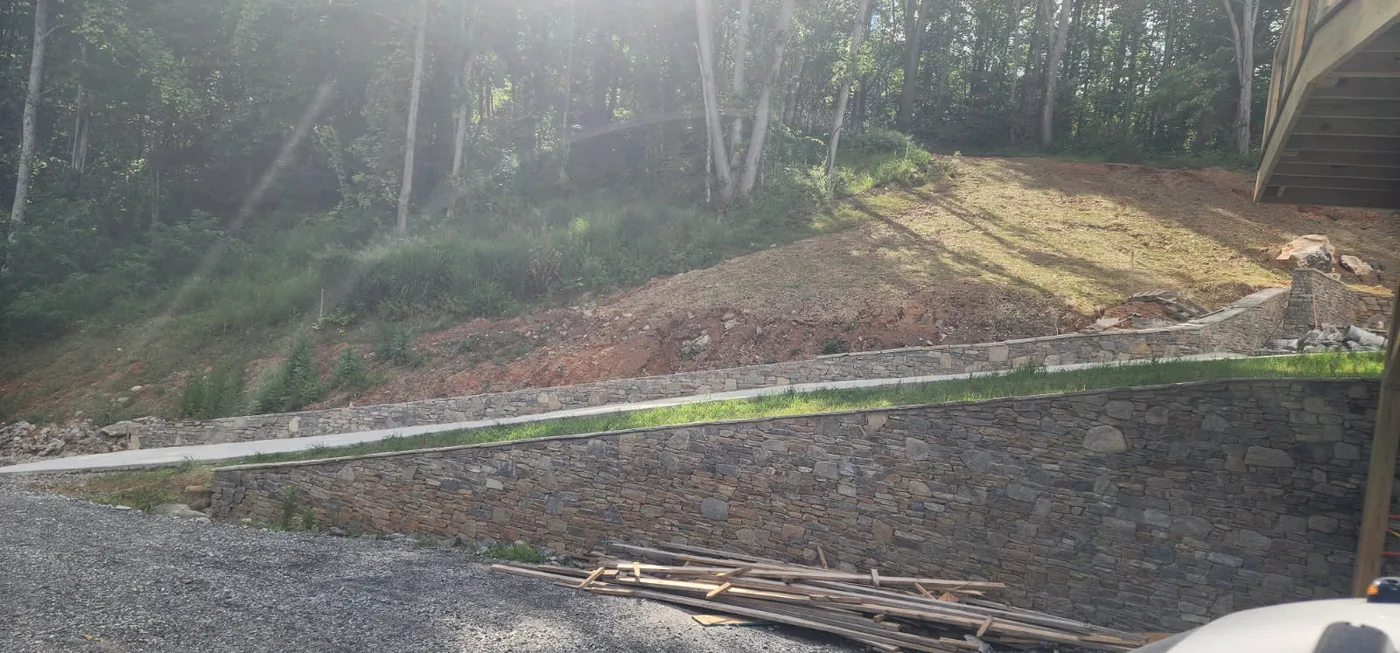
Walk a cut-and-fill lot off Dillingham Road in early spring and you can feel where the fill dirt was pushed. That fill is the quiet cost driver. Patios over old fill need deeper excavation to reach competent subgrade, and the spoils have to go somewhere — often off-site, because a mountain lot rarely has a flat back corner to lose dirt in. A crew that prices "excavation" as a single line without asking where the dirt goes on your specific lot is guessing.
Scope versus price range: what Barnardsville jobs actually run
Below are realistic regional bands for the scope categories we see most often on Buncombe County mountain lots. These are ranges, not quotes — a patio that needs 18 inches of base and a buried French drain cannot be priced like one that needs four.
| Scope | Typical range | What drives the number |
|---|---|---|
| Small sitting patio, 150–250 sq ft, near-flat grade | $6,500–$10,000 | Stone choice, simple edging, minimal excavation |
| Standard patio, 300–450 sq ft, moderate grade | $11,000–$17,000 | Base depth, spoils hauling, drainage tie-in |
| Large patio with seat wall or step, 500+ sq ft | $18,000–$30,000+ | Retaining, stairs, engineered base on slope |
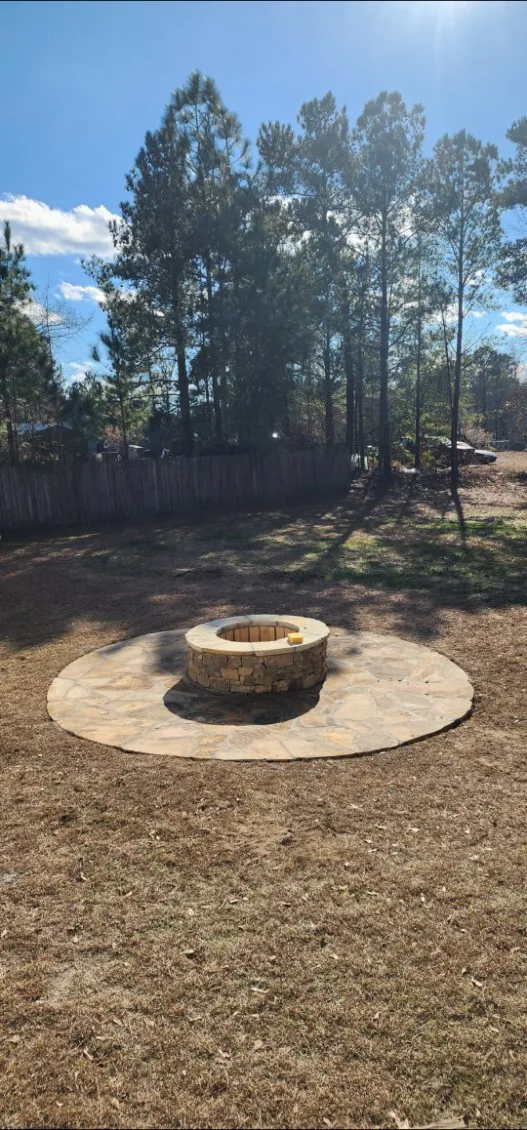
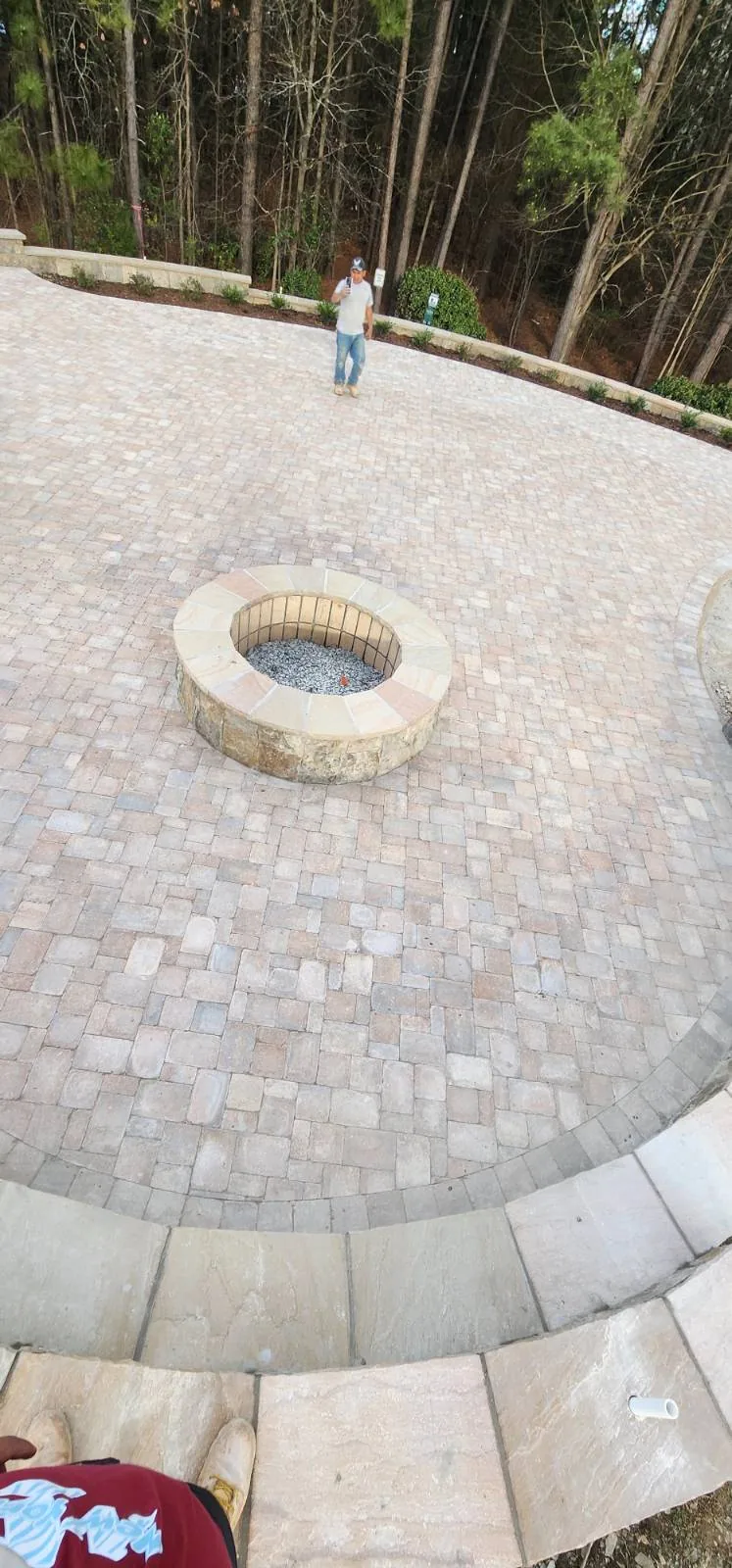
| Add-ons: fire pit, walkway tie-in, lighting | $1,200–$6,000 each | Masonry detail, electrical rough-in, stone match |
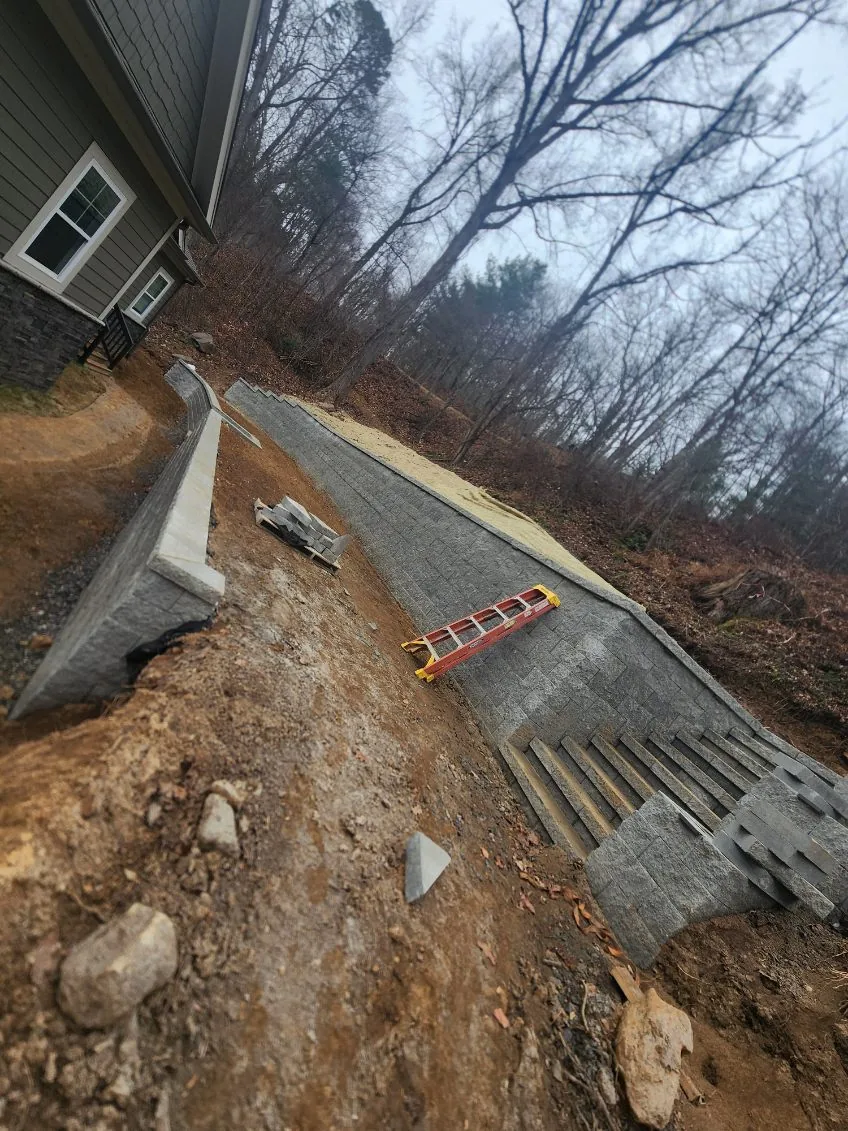
For the retaining side of any patio cut into a slope, the line-item detail lives on the Buncombe County retaining wall cost breakdown, since walls and patios on these lots are usually priced together.
Barnardsville specifics matter inside those bands. Lots along Paint Fork and upper Dillingham sit at elevations where the frost line is deeper and the winter wet is heavier than down in the French Broad valley bottom, so base depths that pass inspection in a flat Weaverville subdivision can be marginal here. Access is the other wildcard: a narrow gravel drive that a dump truck cannot back up means stone gets hand-carried or crane-placed, and that labor shows up in the bid. Homeowners comparing two quotes should ask each mason how many yards of stone they plan to move by hand, because the honest number will differ lot to lot and the cheap quote is often the one that skipped the question.
Why the stone source matters more than people expect
Flagstone is not one product. A mixed-color Tennessee fieldstone laid in a random ashlar pattern will price differently from a uniform Pennsylvania bluestone in a sawn thermal finish, and both behave differently under freeze-thaw than the native stone quarried closer to the Blue Ridge. Barnardsville sees hard winter cycles at elevation, and stone with high absorption will spall within a few seasons if it is set over a base that holds water. The right question is not "what does flagstone cost" but "which flagstone, over which base, on this grade." Getting the base wrong is the single most common reason a patio that looked fine in April fails by the second February.
Regional stone also matches the ground it sits on. The native stone and the mixed fieldstone that come out of the Tennessee and western North Carolina quarries read as belonging on a Barnardsville hillside, and they are usually cheaper to truck in than a sawn bluestone pallet from out of state. That said, the imported sawn products lay flatter and set faster, which can offset the stone price with labor. Neither choice is wrong — but the bid should name which one it is pricing, because "flagstone" alone covers a range wide enough to swing a mid-size patio budget by several thousand dollars.
Drainage decisions that set the final number
Barnardsville's federal disaster record is the context for most water-related patio callbacks: 19 declared events across a 1973-2026 span, overwhelmingly storm and flood family. That history should shape how a patio is graded and where runoff goes — away from the house, not into a neighbor's cut. The International Code Council treats site drainage and frost depth as design requirements rather than afterthoughts, and on a mountain lot that means the patio plan and the site plan have to agree. Patios that ignore this become retaining wall jobs within a few years.
The practical version on a Barnardsville slope is simple to describe and easy to skip: water has to leave faster than it arrives. That usually means a positive slope away from the structure, a compacted base that drains rather than ponds, and a defined outfall — a daylighted pipe, a riprap apron, or a graded swale that carries runoff to a natural drainage path instead of dumping it on the downhill neighbor's cut. On Ivy Creek and Paint Fork side lots, the downhill side is often the expensive side, because the outfall has to be designed before the first stone is laid. A mason who shows up with a laser level and talks about where the water ends up is worth more than one who only talks about pattern.
Hiring a mason on a slope lot
Two checks protect Barnardsville homeowners before a patio contract is signed. First, confirm the crew has worked sloped, cut-and-fill lots, because that is a different skill set from a flat-yard paver install. Second, ask what triggers a general contractor license on the project: under NC Licensing Board for General Contractors rules, project value and scope determine when a licensed GC has to be involved, and a patio with a retaining wall above a certain height can cross that line. A mason who can explain where that line sits is usually a mason who has crossed it correctly before.
If the patio plan includes a wall, the Barnardsville retaining wall contractor guide covers how to vet that specific scope. And if you are still comparing materials, the flagstone patio overview walks through pattern and finish options before you commit to a bid.
Ask for references on jobs at similar elevation. A patio that holds up at 2,000 feet on a north-facing Dillingham slope is a stronger reference than one built in the valley bottom, because the freeze-thaw load is not the same. Drive past the finished work in a wet month if you can — that is when drainage mistakes show themselves, and it costs nothing to look before you sign.
What a written scope should contain
A Barnardsville flagstone quote worth signing will name the stone type and source, state the base depth and compaction method, show how water leaves the patio, describe the edge restraint, and say whether permit or engineering review is included. If any of those five are missing, the price is not comparable to a complete bid — it is a partial number that will grow. Ask for the scope in writing before deposit, and ask who handles the spoils. On these lots, hauling dirt off-site is a real line, not a rounding error.
Also put the schedule logic in writing. Mountain weather between late fall and early spring can wipe out a week of base prep, and a crew that is honest about weather days builds more trust than one that promises a date it cannot hold. The written scope does not need to be long, but it should name the stone, the base, the drainage, the edge, the spoils, and the permits — and it should say what happens if the excavation reveals something nobody expected, like a spring seep or old fill that will not compact. Homeowners who insist on those details in writing before deposit usually end up with fewer change orders and a patio that matches the number they budgeted.