What Canton yards actually support, material by material
Canton grew up around the paper mill along the Pigeon River, and that history shows in its housing stock: modest mill-era homes on tight flat lots near the river bottoms, newer builds climbing the ridges off Highway 110, and a scattering of older farm parcels where the yard edge is just pasture. A fire pit that fits a half-acre ridge lot is a different build from one wedged into a 20-foot side yard on a river-terrace street. The material choice usually follows the lot before it follows taste.
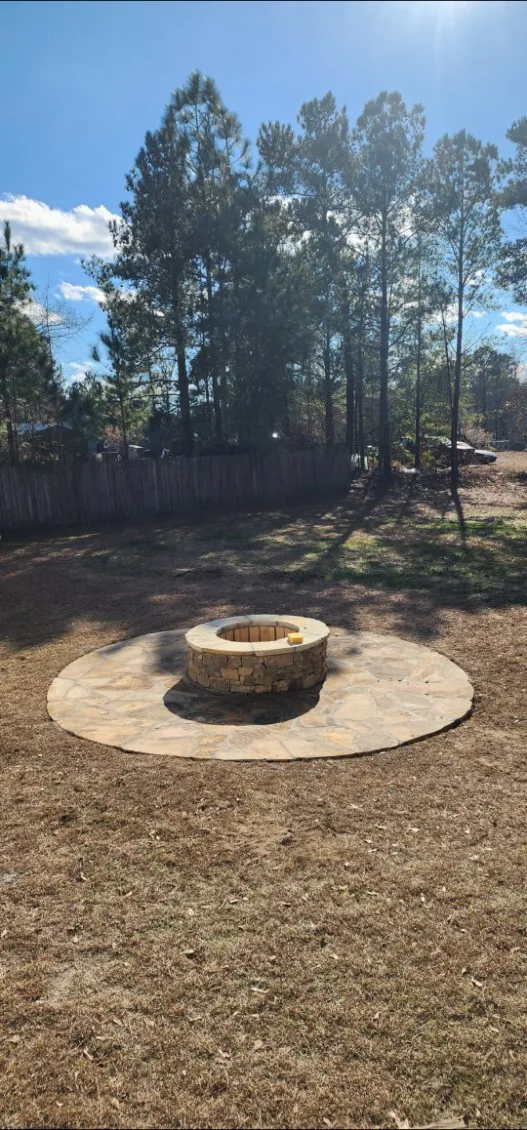
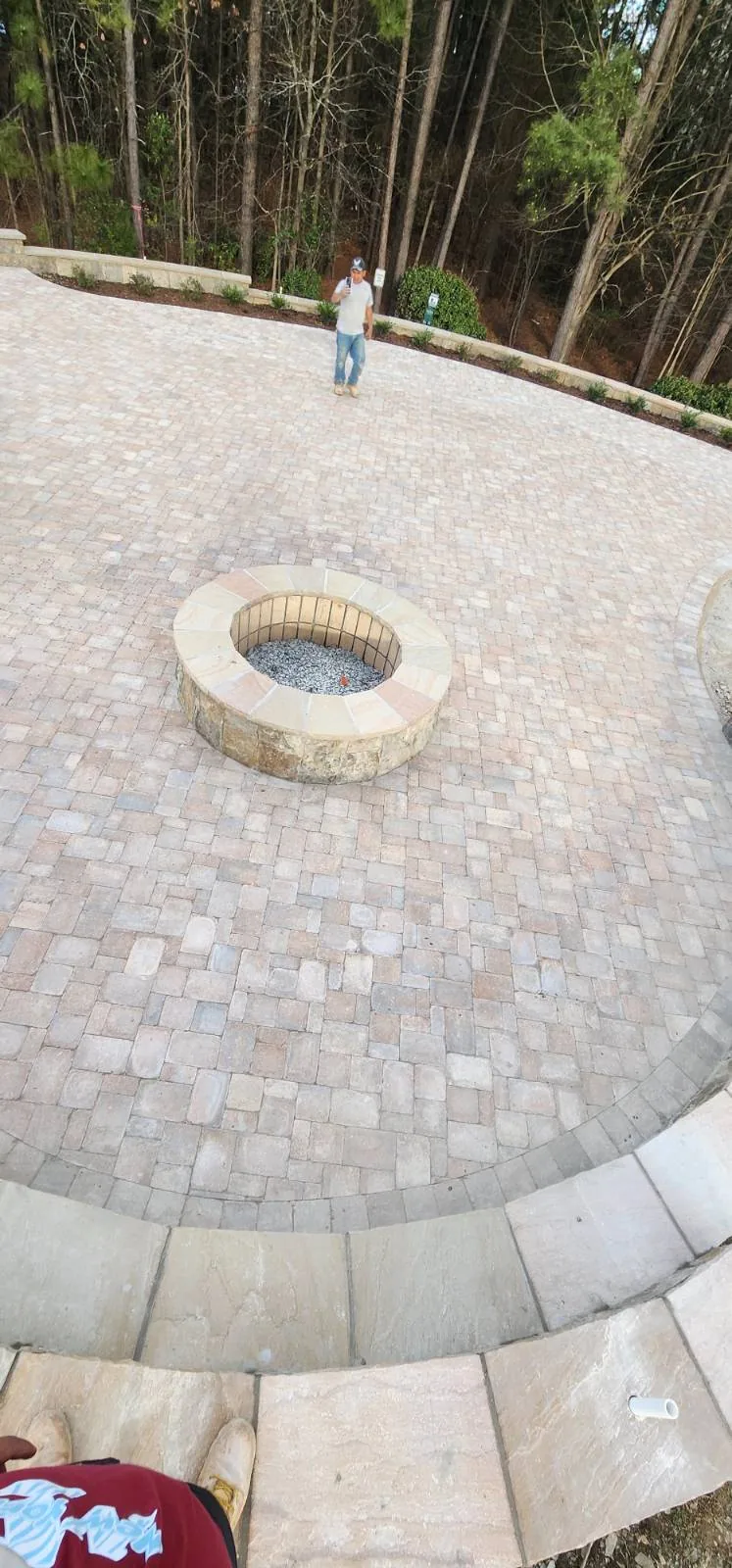
Fieldstone is the local favorite for good reason — Haywood County has it, masons here know how to lay it, and a dry-stacked fieldstone ring reads as native rather than ordered. It is also the most labor-heavy option, because every stone gets fitted by hand. Boulder pits work on the wooded ridge lots where a few large stones can be set with equipment access and left deliberately rough; they handle grade changes well. Block-and-veneer (concrete block core with a stone or brick face) gives the cleanest circle and the most predictable cost, which matters on the flatter river-terrace lots with easy truck access. Timber surrounds — landscape timbers or heavy beams — show up on budget builds and rental properties, but they burn, rot, and need replacing, so we treat them as a short-life option, not a permanent one. If your yard also needs grade work to make the pit area usable, that conversation often overlaps with a retaining wall contractor in Canton, since the same crews and equipment solve both.
The Canton and Haywood County price picture
Prices track material, access, and how much base work the yard needs. A pit on flat ground with a driveway you can back a truck up to is the cheap version of any material; a pit 80 feet up a slope with a wheelbarrow path is not. The table below reflects working regional ranges for installed pits, not kit prices.
| Scope | Typical installed range |
|---|---|
| Timber surround pit, simple base, wood-burning | $600–$1,500 |
| Block-and-veneer pit with stone face, flat access | $1,800–$3,500 |
| Fieldstone dry-stack or mortared ring, standard size | $2,500–$5,000 |
| Boulder pit set with equipment, grade-tolerant | $3,000–$6,500 |
| Gas fire pit with burner, line, and stone surround | $4,000–$7,500+ |
Two line items surprise people. First, gas: running a line, setting a burner, and adding a key valve can add well over a thousand dollars on top of the stonework, and it needs to be done to code. Second, base and drainage: if the pit sits where water pools, you are paying for gravel, grading, and sometimes a small drain before a single stone goes down. That second item is the same one that drives retaining wall costs in Haywood County, so if your yard needs both, get them scoped together and save the mobilization.
Wood or gas, and the rules that follow
Wood-burning pits are the default in Canton — cheap to run, no plumbing, and they suit the informal character of most yards here. The trade-offs are smoke, ash, and burn bans during dry stretches. Gas pits cost more up front and more to operate, but they light instantly, produce no sparks, and can be placed closer to structures and under covered areas where a wood fire cannot legally or safely go. If you are weighing a full outdoor living build rather than a single pit, our fire pit and outdoor living overview covers how pits, seating walls, and patios sequence together.
Whatever the fuel, the safety rules are the same everywhere: clear combustible material from around and above the pit, keep it away from low branches and structures, and never burn under a roof overhang. Local code adoption in North Carolina follows the International Code Council family of codes, and open-burning restrictions during dry periods are set by state forest officials, not by your contractor — check before you burn. On any gas installation, use a licensed tradesperson; the NC Licensing Board for General Contractors explains which project sizes require a licensed general contractor, and gas work carries its own licensing on top of that.
Water, slope, and the base nobody sees
Canton gets serious rain. The federal record shows 19 declared disaster events touching this county across 1973-2026, and the dominant family is storm and flood — the Pigeon River corridor has been reshaped more than once in living memory. What that means for a fire pit is simple: the pit is the last thing that should go in. Water moves through these yards, and a fire ring set on bare ground without a compacted gravel base will heave, tilt, and crack within a couple of winters, whatever it is made of.
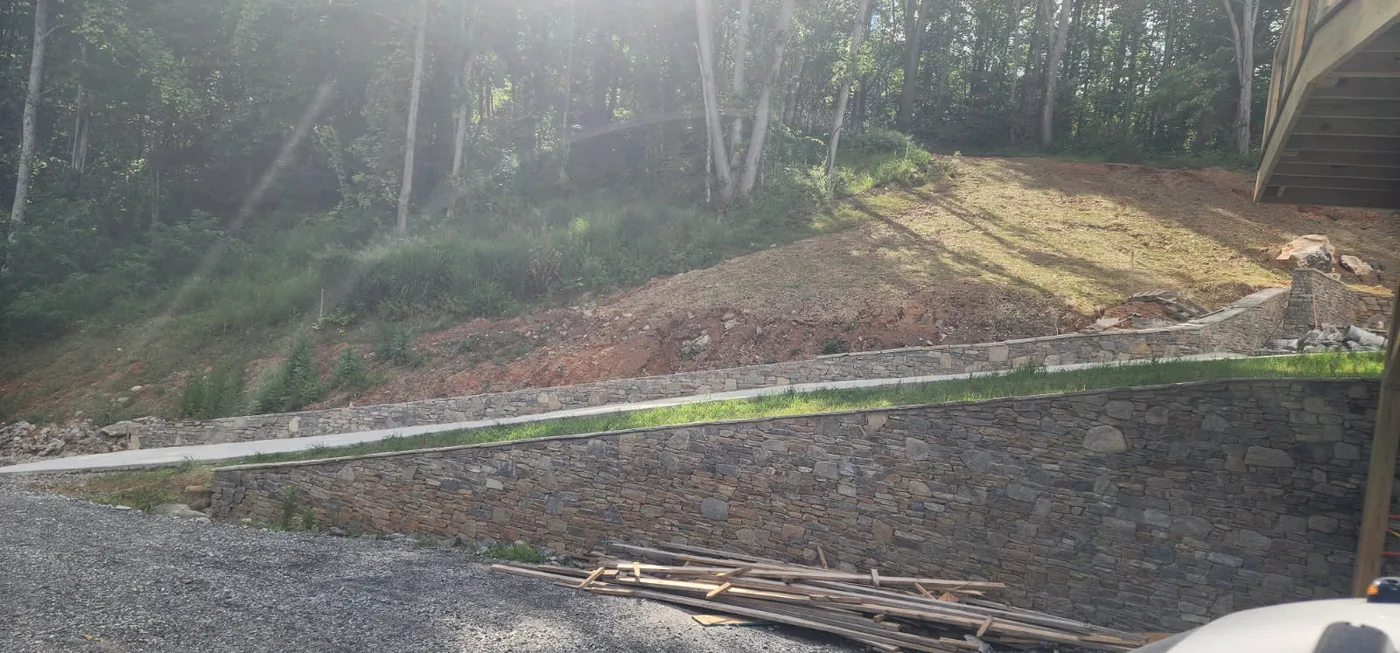
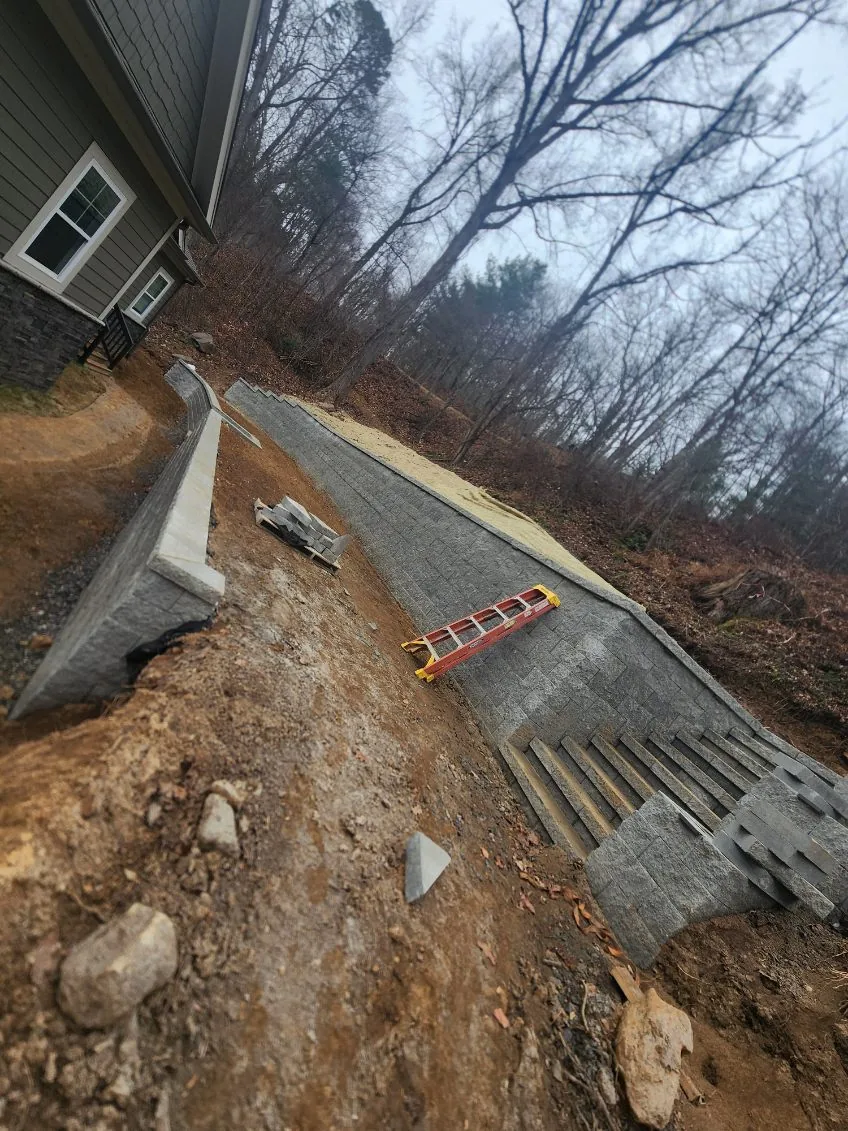
The right order is grade first, base second, stone last. On slope lots, that often means a small retaining element uphill of the pit to hold the grade back, plus a gravel base deep enough to drain. Before you build anything meant to sit outside for decades, it is worth understanding how the National Weather Service characterizes local flood and storm risk for your specific address. A pit that sits in a low spot is a pit that will be a mud ring every spring, and no material choice fixes that.
How to hire this work well in Haywood County
Ask three questions of any builder. First, where does the stone come from — local fieldstone, quarried stone, or manufactured veneer? The answer tells you how the finished pit will age in this climate and whether the quote is comparing like materials. Second, what is under the fire ring — if the answer is anything vaguer than a compacted gravel base at a stated depth, the quote is incomplete. Third, who handles the gas if there is gas, and are they licensed for it? On larger hardscape projects that include walls or extensive grading, confirm the contractor's standing through the NC Licensing Board for General Contractors; masonry-only fire pits generally fall below the licensing threshold, but combined hardscape work can cross it. Get the base specification and material names in writing, and be skeptical of any quote that is dramatically below the ranges above without explaining what it is leaving out.