The 4-foot line decides half your budget in Barnardsville
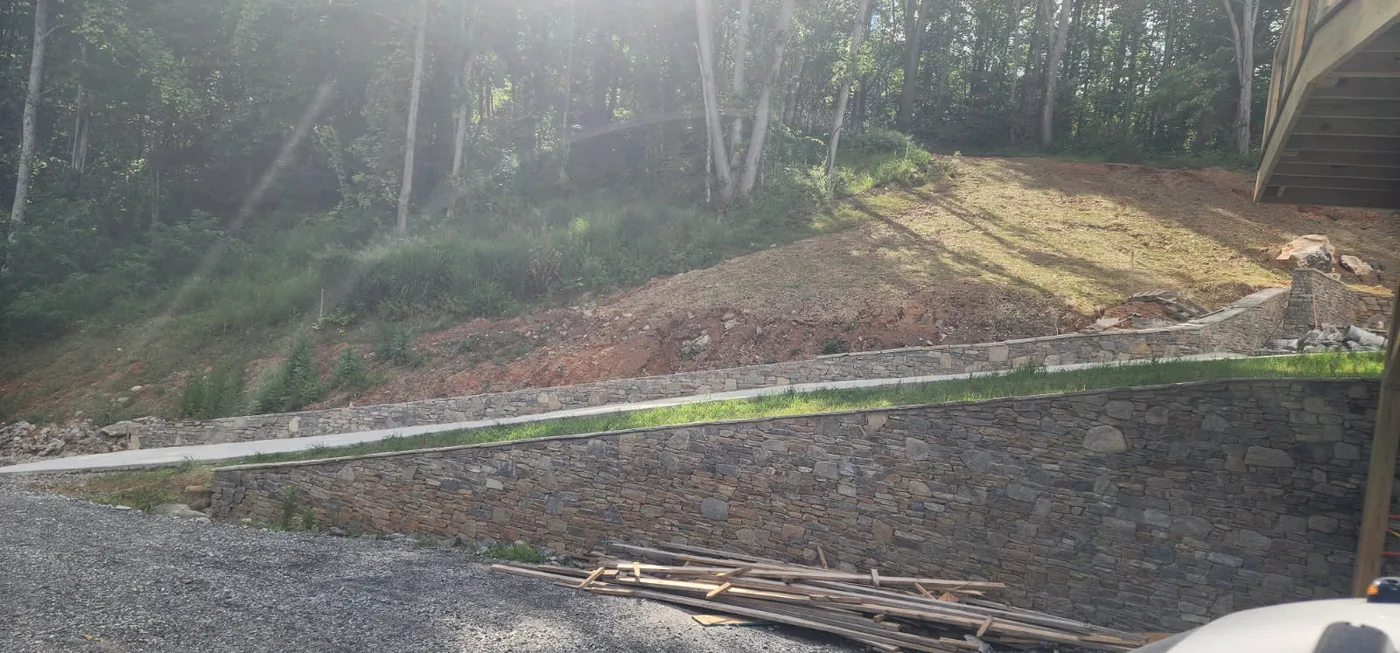
Drive up Barnardsville Highway past the fire department and you can see it in every yard: a spring-fed branch dropping off a bank, a barn cut into the hillside, a house pad benched into a slope that keeps going up. Those grades are exactly what makes waterfall work beautiful here, and exactly what pushes a small backyard feature into engineered-wall territory. In North Carolina, once a retaining wall reaches four feet in height, it typically crosses into building-code territory and needs an engineer's stamped design and a permit from the county. Below four feet, most walls are still a contractor job, but the right contractor, because a pond edge that fails at three and a half feet still takes your stonework, your pump vault, and your planting with it. The NC Licensing Board for General Contractors sets the dollar threshold where a project legally requires a licensed general contractor, so if your waterfall, pond, and wall package crosses that number, confirm the license before you sign anything.
What the four-foot line actually changes on a Barnardsville lot is not just paperwork. It changes who signs the drawing, who inspects the footing, and who carries the liability if the bank lets go after a wet spring. On the steep lots off Dillingham Road and up toward the Big Ivy community, a wall that starts at four feet at the downhill face can measure six or seven feet from the excavated side, and an engineer will look at the taller number, not the one you can see from the driveway. That is one reason two neighbors with what looks like the same slope can get bids thousands of dollars apart. If you are comparing proposals, ask each contractor to state the wall height they measured, in writing, before you compare totals. A bid that quietly assumes three feet is not a lower bid; it is a bid for different work.
Slope changes the build, not just the look
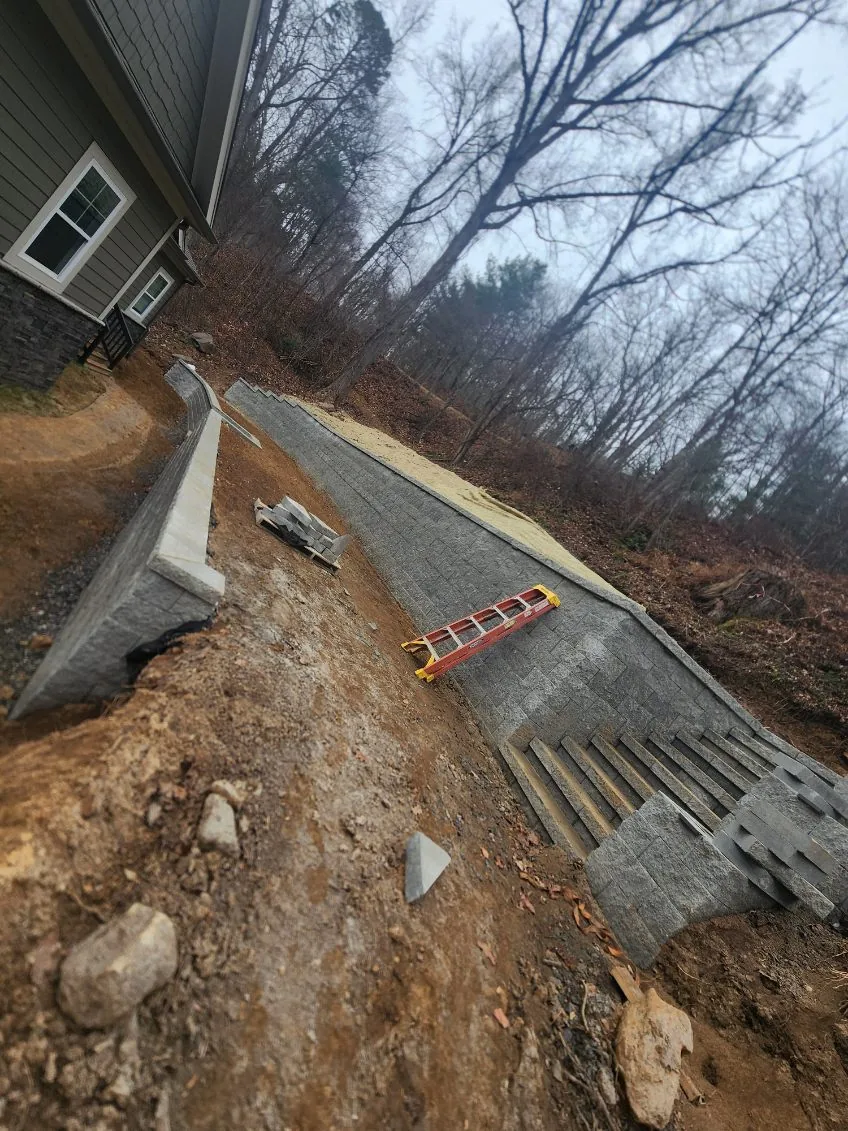
A waterfall on flat ground is mostly plumbing and liner. A waterfall on a Barnardsville hillside is a retaining structure that happens to have water in it. Weight of saturated soil, weight of the pond itself, and the uphill neighbor's runoff all push on the same wall face. County inspectors and engineers care about this because the failure mode is a slope failure, not just a leak. On rebuilds and new walls, plan for drainage behind the stone, a compacted base that accounts for frost and clay, and a spillway sized for a real storm rather than a garden hose. The NC Department of Environmental Quality also matters here: any work that touches a stream, a protected buffer, or a wetland on your property can trigger a state permit, even on private land, and Barnardsville's creek corridors are exactly where homeowners most often want a pond or a waterfall.
There is a second, quieter reason hillside features fail around here: the soil itself. Much of this valley sits on clay-heavy ground with rock close under it in places and deep, soft pockets in others. Clay does not drain; it holds. That means the drainage bed behind your stone has to be designed for the water it will actually receive, not the average. A pond cut into clay needs a liner and a bottom drain strategy that account for groundwater pushing up from below during a wet spring, not just rain falling from above. Ask any contractor bidding your job how they handle a high water table, and listen for whether the answer is specific to your site or a general sales pitch.
What a Barnardsville water feature actually costs
Ranges below reflect typical western North Carolina pricing for a complete build: excavation, liner or concrete, stone, pump, plumbing, edging, and planting. Add engineering and permit fees on any wall segment at or over four feet. Confirm current numbers with your contractor; site access, rock haul distance, and how much of the stone can come off your own property all move the total.
| Scope | Typical price range |
|---|---|
| Small pondless waterfall (under 10 ft drop, no basin) | $4,500–$9,000 |
| Lined koi or goldfish pond, 8x10 ft, with falls | $9,000–$18,000 |
| Pond plus stone retaining wall under 4 ft | $12,000–$22,000 |
| Wall at or over 4 ft, retaining wall cost per square foot plus engineering | $25–$55 per sq ft face, plus $1,500–$4,500 engineering and permit |
| Full hillside build with multiple falls and a bridge or patio | $25,000–$60,000+ |
For a narrower look at wall pricing alone, the Buncombe County retaining wall cost table breaks down footing, drainage, and cap lines separately.
One line item that surprises newcomers to this valley is stone haul. Barnardsville sits far enough out that trucking fieldstone or boulders up from the Asheville side adds real cost, and a narrow gravel drive with a low branch across it can add more. On the other hand, if you have usable rock already on the property, whether from an old foundation, a cleared pasture, or a previous excavation, that can pull the number down and give the build a local character no catalog stone can copy. Have a contractor walk the property with you before the bid, not after.
Water history and why Barnardsville features fail early
Buncombe County has seen 19 federal disaster declarations spanning 1973-2026, and the pattern is overwhelmingly storm and flood related. In a valley community built along a creek, that matters twice: once when the storm arrives, and again the following spring when the saturated ground finally decides which way it wants to move. Features built without real drainage behind the stone tend to survive the first wet season and fail in the second. Before you approve a design, ask where the overflow goes in a hundred-year rain, and whether your pond can be drained and refilled without killing every fish in it. The National Weather Service rainfall records for this part of the mountains are the honest starting point for sizing a spillway and a drainage bed. A contractor who shrugs at the question is telling you what the next storm will.
Practically, that means a few things specific to this valley. Overflow should route away from the wall, not over it. The pump vault should sit above the level where groundwater rises in a wet spring, or be built to handle it. And the planting around the feature should tolerate both saturation and dry spells, because a Barnardsville summer can hand you both in the same month. None of that is exotic engineering. It is what separates a feature that still looks built-in after a decade from a pile of stone and a dead pump.
Sequence the project so the paperwork doesn't stall the dig
The order that keeps a Barnardsville build on schedule: survey the wall height first, then decide whether the design goes to an engineer, then get the permit, then order stone, then dig. Doing it backwards, digging first and measuring the wall after, is the most common way these jobs stall, especially when the wall turns out to be five feet where the homeowner thought it was three. If your project includes a wall, hire from the start with a crew that has done permitted wall work in this county, so the Barnardsville retaining wall contractors you're already considering can carry the engineering and inspection process rather than handing it back to you. When the design is set, the stone waterfalls and ponds overview covers what a finished build should include, from liner thickness to pump sizing to stone selection, so you can compare bids on the same scope.
One more thing worth saying plainly: the engineer and the permit are not the enemy of a good-looking feature. They are what let you build the taller, more dramatic falls that make a hillside lot worth having in the first place. A stamped design is often what makes a four- or five-foot wall possible at all, and it is what a future buyer's inspector will want to see. Build it right the first time and the mountain does the rest of the work for you.