Read what's already in the yard before you price anything new
Henderson County has a particular kind of fire pit problem most flatland markets never see: a homeowner inherits a ring of stacked fieldstone from the previous owner, or a builder-grade kit set into a patio slab that has since heaved. The instinct is to call for a quote on a new one. The better first call is for an inspection, because the pit itself is rarely the failure point. The base is. On the clay and saprolite soils that run through Hendersonville, Flat Rock, and the unincorporated pockets toward Etowah, freeze-thaw movement walks a fire pit out of level within two or three seasons unless the base was dug out and compacted properly. A rebuild that reuses the existing firebox but resets it on a proper compacted base with a gravel drainage blanket can cost well under half of what a tear-out and new build runs. If the existing pit is on a patio that has shifted, though, patching around it is throwing money at a moving target. That is where the full fire pit cost guide is worth reading before you take a bid.
Here is the honest scope table for this county:
| Scope of work | Typical Henderson range | What drives it |
|---|---|---|
| Rebuild existing pit on new compacted base | $450 – $1,200 | access, existing stone salvage, drainage blanket |
| Prefab steel or cast-iron kit, no masonry | $700 – $1,800 | kit size, lid, spark screen, delivery |
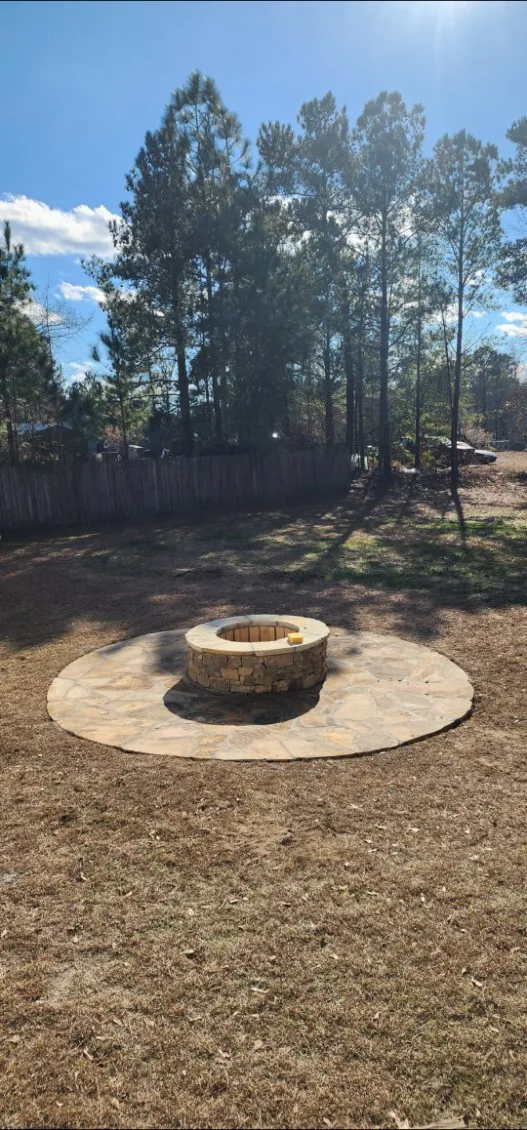
| Dry-laid block pit, 36–48 in., stone veneer | $1,800 – $4,800 | square footage, veneer type, cap stone |
| Mortared masonry pit with gas insert | $3,500 – $8,500 | gas line length, burner, ignition, hearth extension |
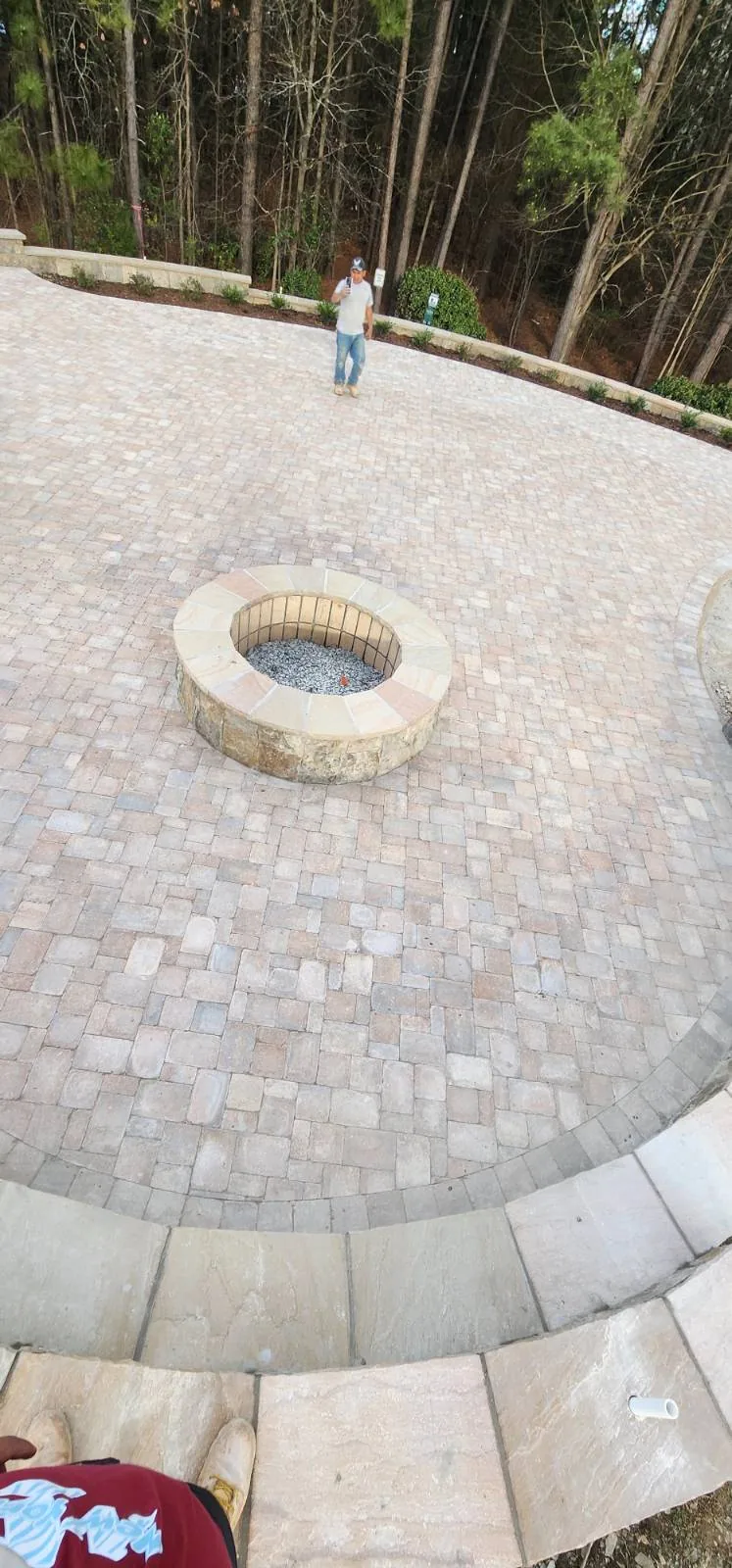
| Full build: pit, seating wall, patio surround | $8,000 – $18,000+ | patio square footage, wall height, drainage tie-in |
Those are working ranges, not quotes. Any contractor who gives you a firm number before seeing how the patio drains is guessing with your money.
Why the base and the terrain decide the bill
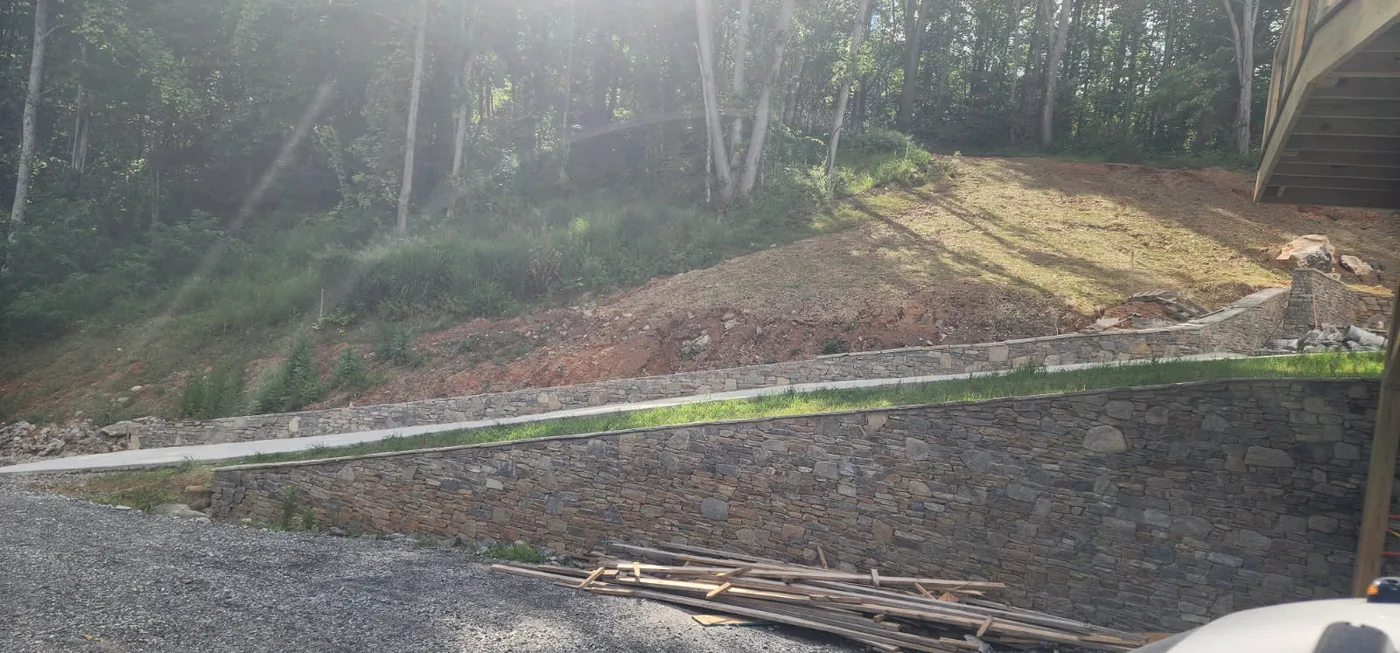
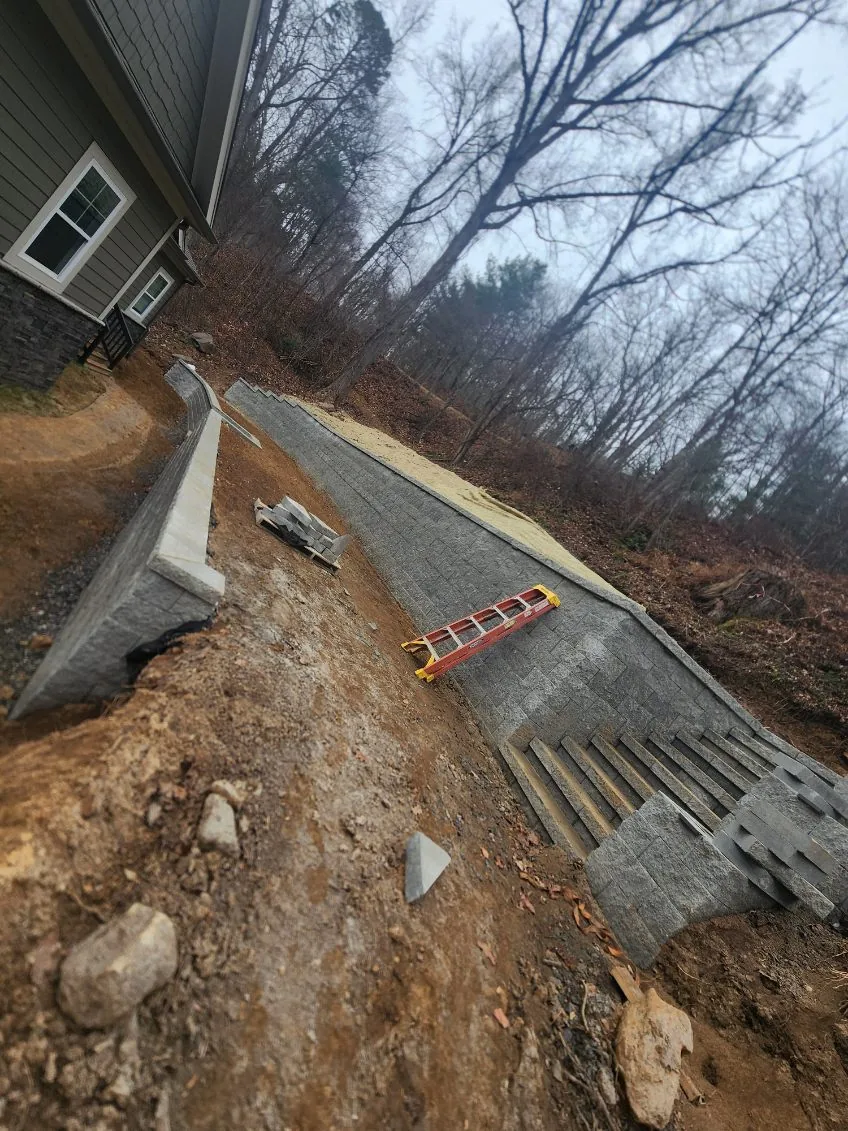
Most of this county sits on slopes. A fire pit on a side yard that falls two feet over twenty feet is not the same job as a pit on a flat pad behind a house in downtown Hendersonville. Water that runs across a slope and pools against the base of the pit will undermine it within a season, and the visual symptom — a wobbling cap stone or a cracked ring — shows up late. That is why an honest bid here should show a drainage detail: a compacted aggregate base, a gravel curtain, and a slope grade that sends water around the feature, not under it. Henderson County's storm history makes that non-optional. The federal record shows 16 declared disaster events touching this county across 1978-2026, most of them storm and flood family, and that frequency is exactly why retaining and drainage details around a fire feature pay for themselves over a decade. If the fire pit sits on a slope that has moved before, the retaining question comes first. The retaining wall cost guide for Henderson County covers the wall-versus-pit order of operations.
Permits, gas lines, and the inspector's question
A wood-burning fire pit is usually treated as an accessory use and often needs no building permit in Henderson County, but any pit with a fixed gas line crosses into plumbing and fuel-gas territory. The state licenses fuel-gas work through the North Carolina State Board of Examiners of Plumbing, Heating and Fire Sprinkler Contractors, and a contractor running a permanent gas line to a fire pit without a licensed fuel-gas installer on the job is a red flag. On the structural side, masonry fire features and seat walls generally fall under the residential building code adopted by the North Carolina Building Code Council, and the state's general contractor licensing threshold is triggered once a project crosses $40,000 — see the NC Licensing Board for General Contractors for the current threshold. For outdoor fire features, the relevant safety provisions come from the International Code Council's family of codes, and if the pit will sit near a structure, check the clearances. A contractor who waves off permits on a gas-fed build does not have a fuel-gas license, and that tells you everything about the rest of the job.
What separates a $2,000 pit from an $8,000 pit
The dollar gap is almost never the firebox. It is everything around it. A kit pit set on a concrete pad is a weekend. A mortared stone pit with a gas burner, a hearth extension, a seat wall, and a graded apron is a multi-week build with a drainage plan. The variables that move the number hardest in this county:
- Veneer material. Regional fieldstone and stacked ledgestone run higher per square foot than manufactured block, but hold up better to freeze-thaw and look less like a showroom display.
- Gas line distance. Every foot from the meter or propane tank to the burner is trenching, and trenching through established landscaping or across a driveway adds real dollars.
- Access. A pit in a fenced backyard with no equipment path means hand-carrying stone, which is slow and expensive.
- Seating and surround. A seat wall is often 40 to 60 percent of the total bill. If the budget is tight, do the pit now and the wall next spring on the same base so the second phase does not require a redo.
The fire pits gallery and service overview shows what each tier looks like installed, which is a faster way to pick a lane than reading line items.
How to keep the price honest
Three moves protect you in this market. First, ask every bidder what happens to water at the base of the pit during a hard rain — if they cannot describe a drainage detail in plain language, the bid is incomplete. Second, get the rebuild-versus-new comparison in writing. A contractor who inspects the existing pit and says it can be salvaged is usually telling you the truth, and one who insists on a full tear-out without a reason is selling. Third, price the gas line separately from the masonry. They are different trades, and bundling them hides markups. If the fire pit is part of a larger hardscape project, the order matters: drainage and retaining first, hardscape base second, features last. Anything built on top of a drainage problem gets rebuilt.