How access and haul distance move the number here
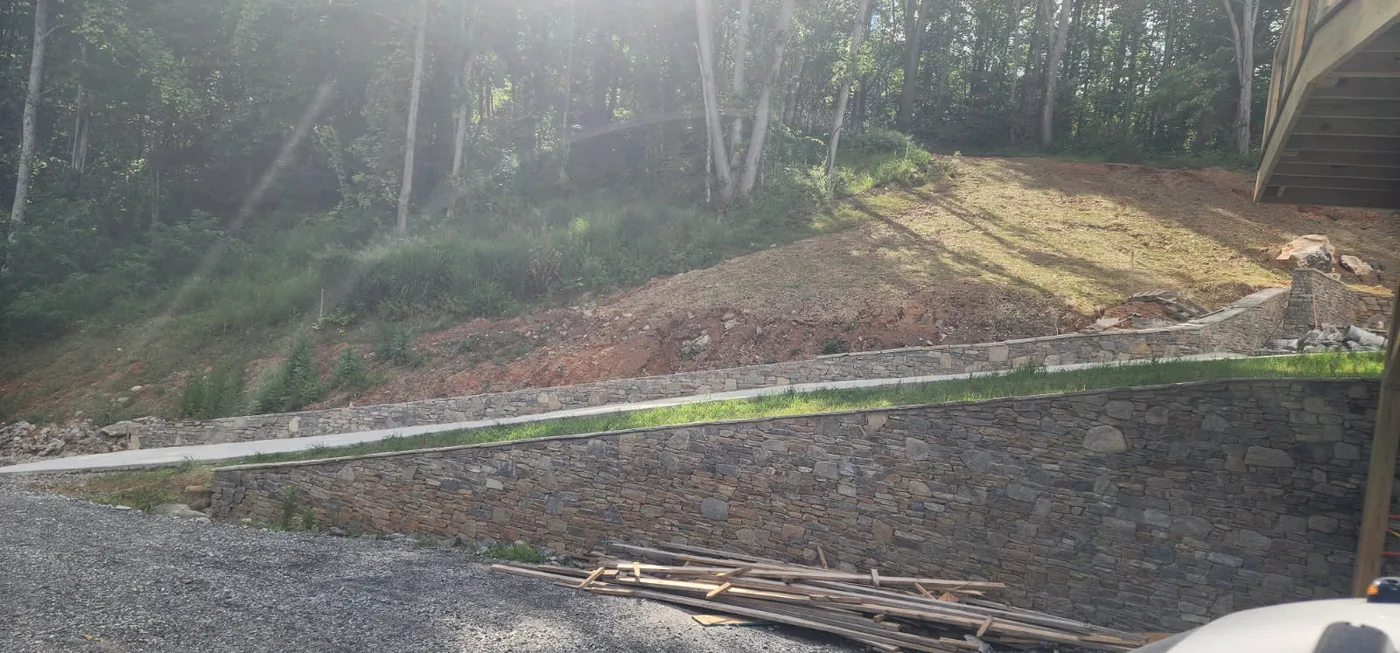
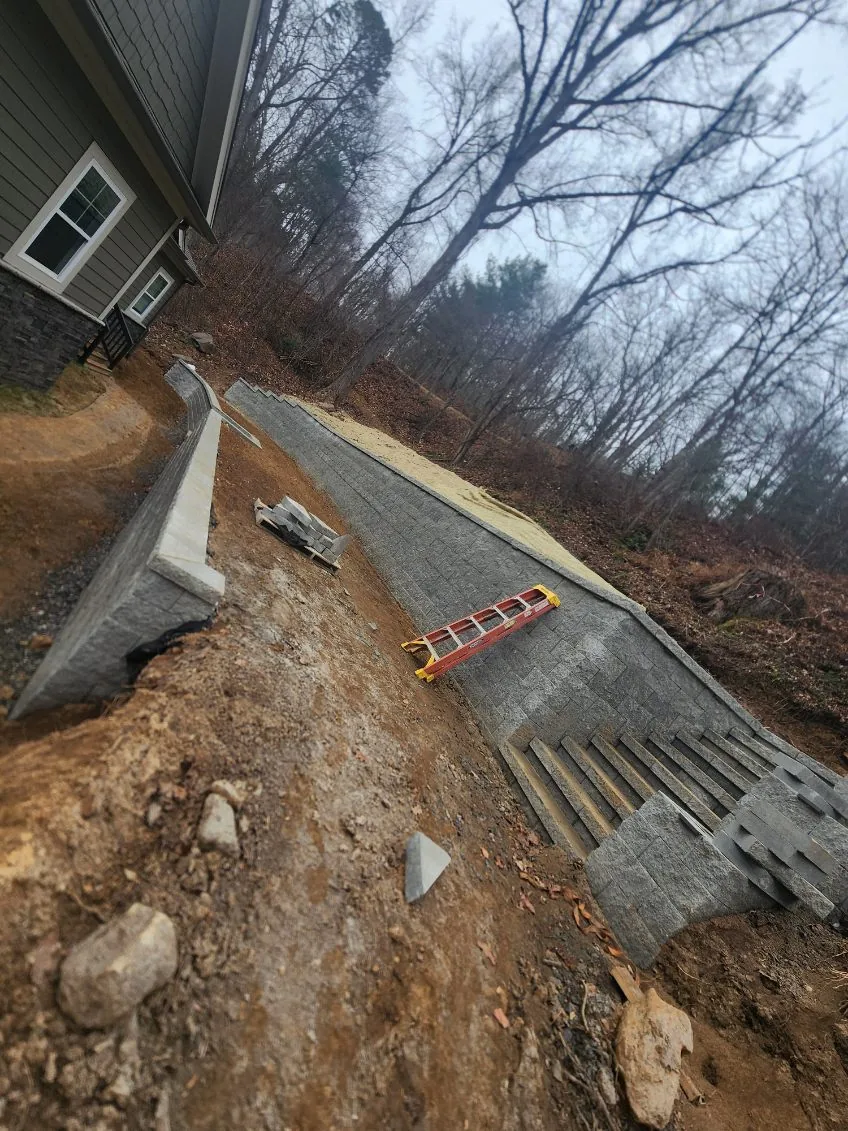
In Henderson County, the patio itself is the cheap part. Moving it in is where budgets break. This county has no working hardscape quarry of its own, so flagstone and pavers get trucked in from the Fletcher, Black Mountain, and South Carolina supply yards, and that freight lands in every line item. Then the real tax starts: lots cut into the Blue Ridge foothills around Flat Rock, Laurel Park, and the gated roads above Hendersonville often present the installer with a 20% driveway, a switchback the truck cannot clear, or a backyard the homeowner can only reach by walking down a bank. When a pallet of pavers has to come off a truck and ride a track machine two hundred feet downhill, labor hours roughly double. That is the single biggest reason two quotes for the same square footage can differ by thousands.
Add tear-out hauling and the math compounds: old concrete, spoil from grading, and leftover base rock all travel the same restricted route in reverse. On the steepest lots, a dumpster cannot be positioned at the work zone at all, and debris gets shuttled bucket by bucket. None of that shows up in a per-square-foot national average.
Asheville sits just over the Buncombe line, and a large share of Henderson County homeowners commute into it daily. That matters to scheduling as much as to pricing: crews working the Asheville core often stage out of Fletcher or Arden and treat Henderson County as a second stop, so mobilization on a small patio can carry a minimum trip charge that a bigger job absorbs. Ask any bidder how many trips the job takes and whether the number changes if you bundle the patio with a walkway or wall while the equipment is already on site.
| Scope of work | Typical Henderson County range | What drives it |
|---|---|---|
| Small stamped patio, easy access | $6,500 – $10,500 | square footage, paver tier, existing grass or gravel grade |
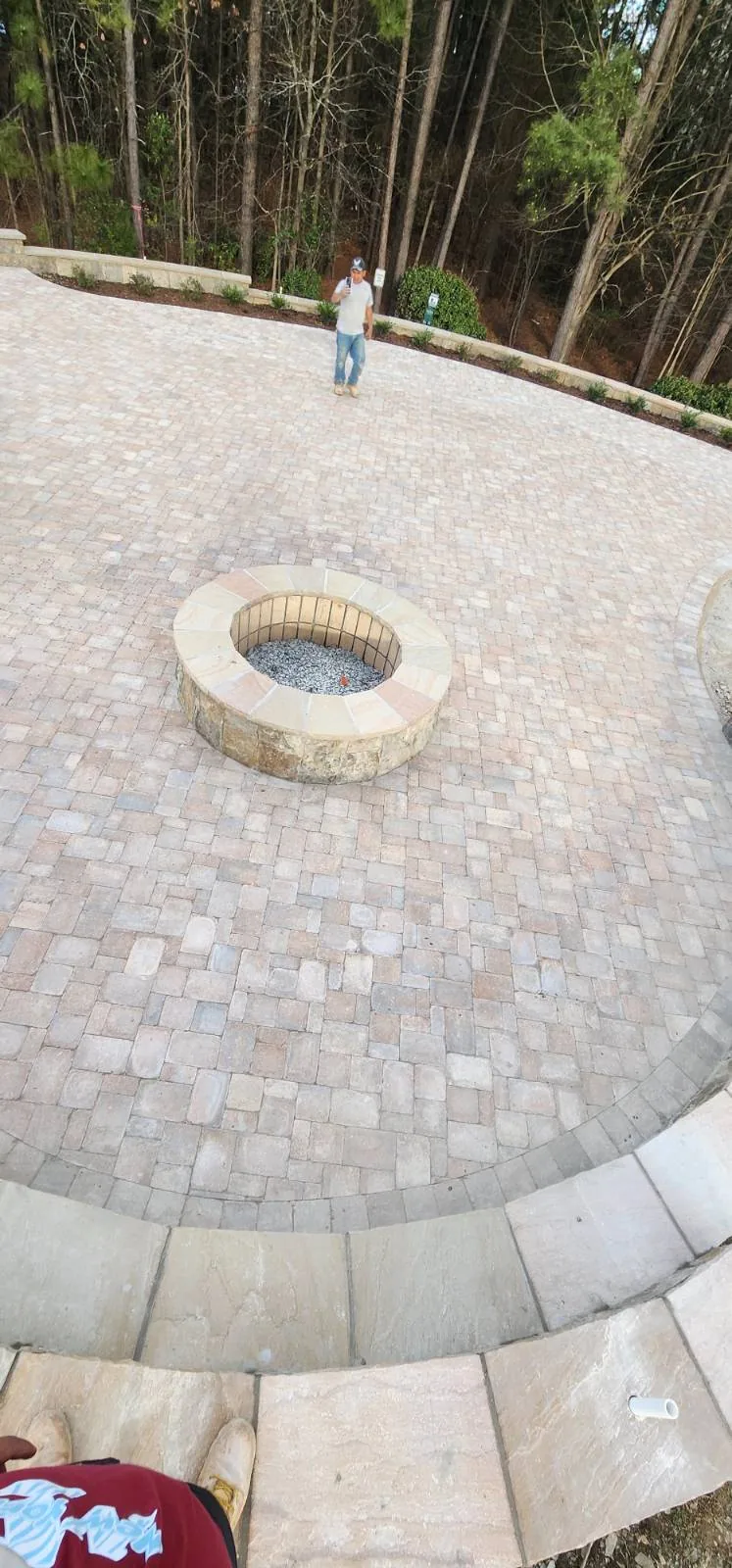
| Mid-size paver patio with border | $10,500 – $18,000 | base depth, pattern, steps or landing, cleanup |
| Patio plus retaining wall or grade change | $16,000 – $28,000 | wall height, engineering, drainage behind wall |
| Steep-access or limited-driveway install | $22,000 – $45,000+ | haul distance, equipment size, hand-carry labor, crane day |
Those are working bands, not quotes. Any installer who names a firm price before walking the driveway grade is guessing.
Why the ground under Henderson County patios fights back
Henderson County sits on a mix of weathered granite, saprolite clay, and rocky colluvium washed down from the ridges, and that geology does not forgive shallow prep. A patio base that would perform fine on flat Piedmont sand will heave, shift, and pond water here after two winters of freeze-thaw. The federal record backs up the moisture story: 16 federally declared disaster events have touched Henderson County (1978-2026), overwhelmingly storm and flood family. That history means every patio excavation encounters water, and water is what destroys a patio that was built thin.
The correct response is depth: typically 4 to 6 inches of compacted crushed stone over properly compacted subgrade for a pedestrian patio, more where the soil is expansive, with a drainage plane that moves roof and hillside runoff away from the patio instead of under it. Skipping that step is the most common shortcut in this market, and it is invisible until the pavers start rocking. If your patio project includes taming a slope, the wall that holds the grade is a separate scope with its own cost structure, laid out in our retaining wall cost guide for Henderson County.
Drainage details matter more here than in most markets because so many lots drain across a neighbor's grade. A patio near Etowah or Horse Shoe that pushes roof runoff toward a downslope property line will eventually become somebody else's complaint, and by then the fix is expensive. A conscientious installer will walk the property line, look for the natural swale, and design the patio to discharge where the site already wants to send water rather than fighting it. On older in-town Hendersonville lots with mature hardwoods, root flare and leaf fall both matter: pavers laid tight to a large trunk can lift within a few seasons, and a patio directly under a canopy collects debris that clogs channel drains.
Permits, licensing, and what the county expects
A simple at-grade patio generally does not require a building permit in North Carolina. The moment your project includes a retaining wall over the state's height threshold, a raised deck-like structure, or a grading change that redirects stormwater, the rules tighten. Retaining walls past a defined height are typically permitted under the NC State Building Code through the county inspections office, and grading or drainage work affecting stormwater may fall into state and local review as well. Erosion control during construction is also a real factor on sloped lots.
On the contractor side, North Carolina's licensing law requires a general contractor's license for work above the state's threshold, and unlicensed contractors often phrase their way around it. Check any structural or wall bidder against the NC Licensing Board for General Contractors. For wall and drainage details, the International Code Council publishes the model residential provisions the state code is built on, and the EPA maintains the stormwater guidance that shapes how runoff from a hillside patio must be handled. A contractor who cannot explain where the water leaves your property is selling pavers, not a patio.
One county-specific wrinkle: because so much of Henderson County slopes toward streams that feed the French Broad watershed, inspectors and reviewers tend to look closely at any project that changes how stormwater crosses a property. A patio that simply sits on grade rarely triggers anything, but a wall plus fill plus a regraded yard can turn a simple patio into a review conversation. Budget time for that, not just money. Ask your installer whether they pull permits themselves or expect you to, and get the answer in writing before the first shovel hits the ground.
Comparing bids without getting played on access
The fastest way to lose money in this county is to accept the lowest bid from an installer who never saw the backyard. Three habits protect you:
- Require an on-site walk of the equipment route. If the estimator quoted from an aerial photo, their number is fiction. Ask specifically what machine reaches the work zone and where spoils and old concrete leave the property.
- Separate materials from access labor. Ask for the base depth, paver type, and access method as line items. Sudden "access add-ons" mid-project usually mean the route was never priced.
- Price the water plan. Slope, roof runoff, and drainage behind any wall should appear in the scope, not as a change order. The installation standards worth referencing for the full regional picture are in our national paver patio cost breakdown.
For finish choices, natural stone changes the labor curve more than pavers on a steep lot because of weight and cutting: our flagstone patio guide covers where that trade-off pays off.
Two more habits pay off in this market specifically. First, ask for the paver manufacturer and the exact product line in writing, not just "paver patio." Supply in the Asheville corridor shifts with whatever the Fletcher and Black Mountain yards have in stock, and a bid that names a generic paver can quietly substitute a thinner or discontinued line when freight gets tight. Second, ask how the crew handles winter. Ground here can stay saturated from late fall through early spring, and a patio base installed over wet, uncompacted subgrade will fail no matter how good the pavers are. A bidder who shrugs off weather timing is telling you something about the rest of the job too.
When a patio is honestly not the first project
On the steeper Henderson County lots, the honest advice is sometimes to fix the grade before laying anything. A patio poured onto a slope without a wall behind it loses its edge within a season or two, and the wall plus drainage can run a significant fraction of the patio itself. If a bidder tells you the wall is optional on a steep lot, get a second opinion. The reverse is also true: on a flat, walkout backyard in a Mills River subdivision with a wide concrete driveway, installation is straightforward and pricing reflects it. Where your property sits on that spectrum is the number.
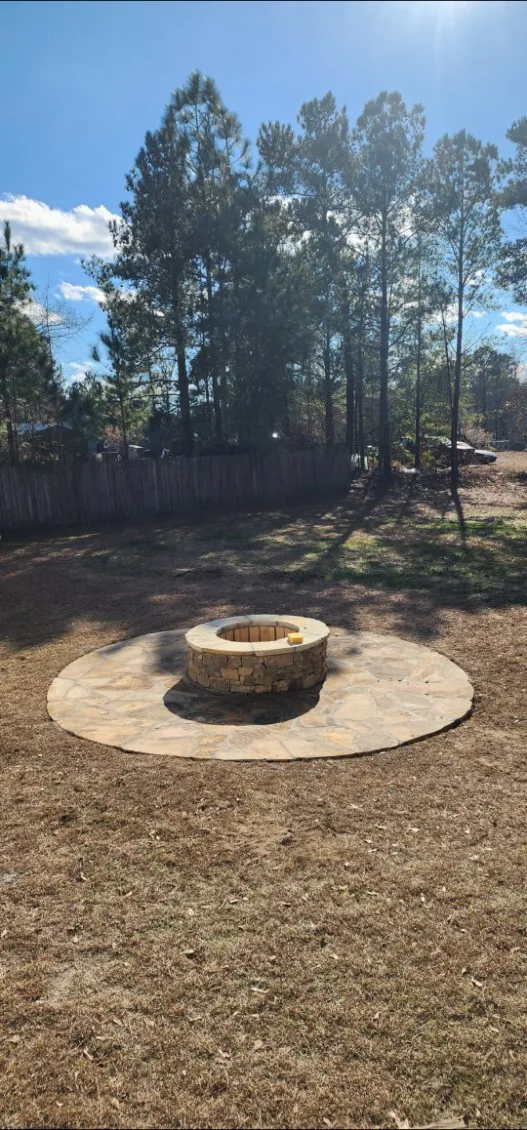
It also helps to think about the patio's job. A small landing outside a kitchen door in an older Hendersonville home, sized for a grill and two chairs, is a very different project from a full outdoor room with a fire feature and seat wall. The first is a modest, high-value improvement that most crews can turn quickly. The second is closer to light construction, with footing, drainage, and sometimes electrical scope layered on top. Neither is wrong. But the cost conversation goes better when you know which one you are actually buying, because access, base depth, and wall work all scale up with the ambition of the design.