What Haywood County homeowners actually pay
Retaining wall pricing in Haywood County doesn't match the national averages you see on home-improvement sites, because this is mountain country. The county seat, Waynesville, and the surrounding towns of Canton and Maggie Valley are carved into slopes that drain fast and shift with freeze-thaw. Here's what we're seeing for typical ranges:
| Scope of work | Typical Haywood range | What drives it |
|---|---|---|
| Timber or railroad-tie wall (under 3 ft) | $3,500 – $7,500 | Length, soil condition, and access for delivery. A straightforward back-yard border on a gentle lot in Canton stays low; a long run needing hand-carried ties up a wooded slope pushes higher. |
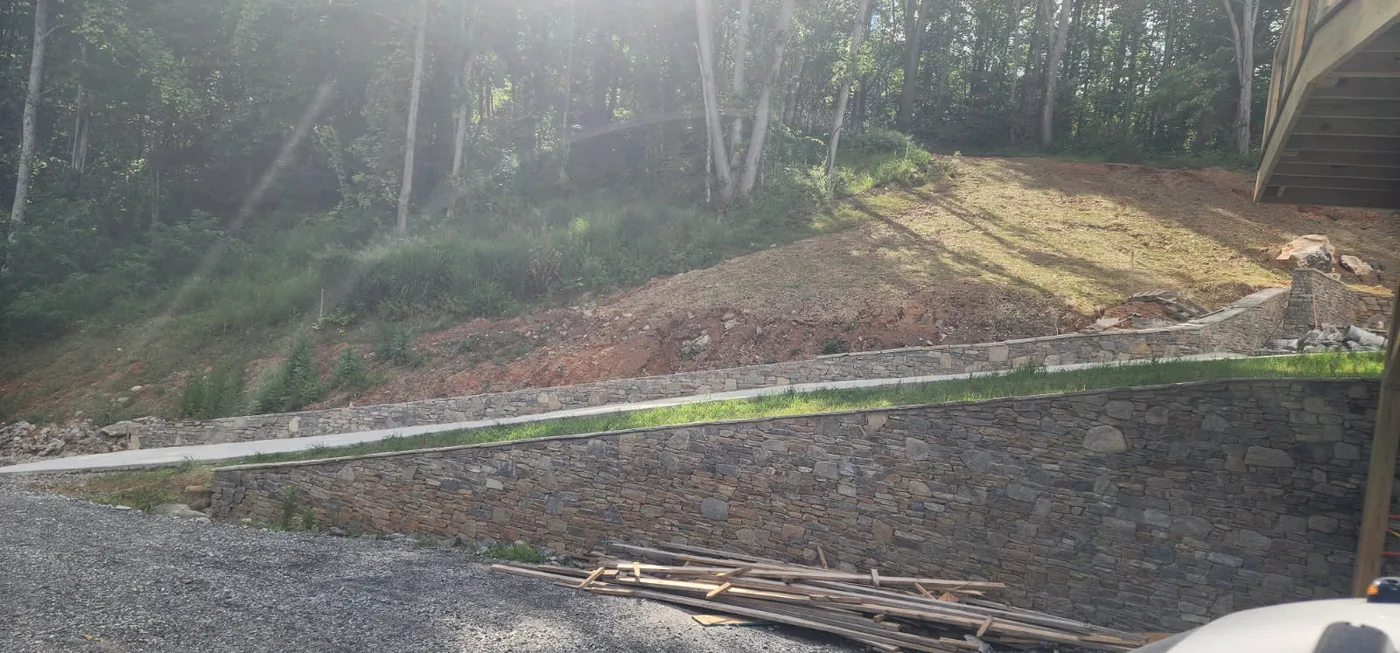
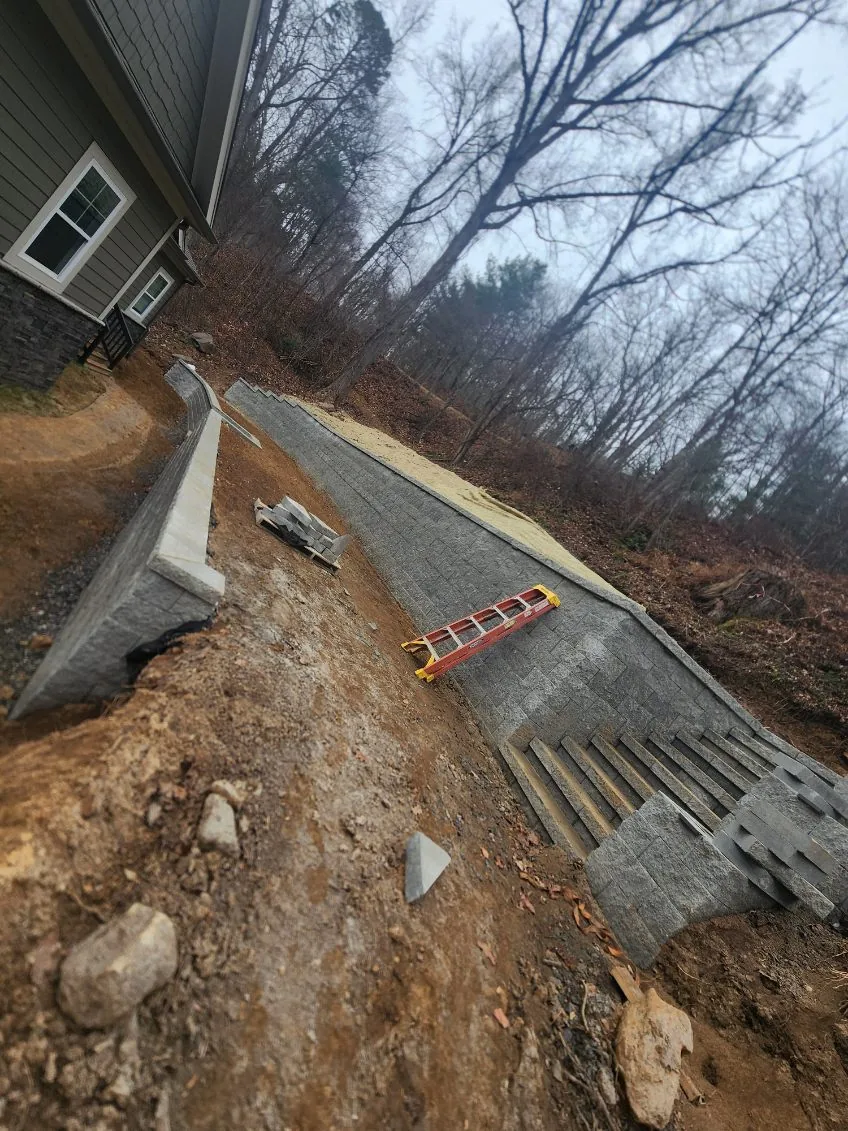
| Segmental block wall (3–5 ft) | $5,500 – $12,000 | Height, drainage stone volume, cap costs, and whether the base course needs to be notched into a hillside. Curved walls in front of a Maggie Valley cabin add labor for cutting and fitting every block. |
| Engineered retaining wall (over 5 ft) | $12,000 – $30,000+ | Engineering stamps, deep frost footings, tie-back anchors or geogrid reinforcement on steep grades. These are common along the ridge roads above Waynesville where homes sit on old farm terraces. |
| Gravity stone or boulder wall | $9,000 – $25,000+ | Stone size, hand stacking labor, and foundation prep. Sourcing native river rock or quarried Blue Ridge stone affects the per-ton cost, and moving it by hand on a slope adds real time. |
Those are honest working ranges, not quotes. A contractor who quotes a firm number over the phone without seeing your slope is guessing with your money—and in Haywood, the guess often misses by thousands. The difference between a 3-foot wall and a 5-foot wall on the same lot can double the price because of footing depth and drainage requirements outlined in local code.
Why slope and water dominate every Haywood job
Haywood County's geography is the reason retaining walls are needed in the first place. The Great Smoky Mountains and the Blue Ridge converge here, which means most home sites have a natural grade change that needs managing. But the real enemy is water. When a storm stalls over the mountains, the rain comes down hard and fast, and Haywood has seen its share of flood events—19 federally declared disasters have touched this county (1973-2026), most tied to storms and flooding. That history shows up as saturated soil pushing against every wall you build.
Practical consequence: any retaining wall in Haywood that doesn't include proper drainage—gravel backfill, a perforated pipe, and a way for water to escape—is a wall that will lean, bulge, or fail within a few years. The clay-heavy subsoil common on the slopes around Lake Junaluska holds water like a sponge, and after a week of steady rain, hydrostatic pressure builds fast behind even a short wall. The National Weather Service's river flood forecasts for the Pigeon River basin are a regular part of spring planning here for good reason; you can check local NWS alerts to see how quickly conditions change. Our retaining wall cost guide explains how drainage adds to the bottom line, but it's non-negotiable here. A wall without a gravel drain is just a dam waiting to fail.
Beyond rain, freeze-thaw cycles pull moisture through the soil and into wall joints. A wall built in October faces its first real test in February, when frost lines push against footings on uninsulated slopes. Proper base preparation—digging below the frost line, typically a minimum of 12 inches in this region, sometimes more on exposed north-facing slopes—adds cost but prevents the slow heaving that cracks block and shifts boulders over a decade.
Permits, codes, and licensing in Haywood County
Retaining walls in North Carolina generally require a permit when they exceed 4 feet in height or support a structural load. The International Code Council publishes model codes that North Carolina adopts and adapts for its state building code, which the Department of Insurance – Office of State Fire Marshal enforces. Haywood County's inspections department follows those code requirements, and walls over 4 feet typically need engineered plans stamped by a licensed engineer. This isn't just red tape—the engineering accounts for the specific soil conditions on your lot. A structural engineer who knows Haywood understands that the soil on a ridge above Crabtree can be thin and rocky while a lot down in the Pigeon River valley bottom has deep, soft sediment that requires a completely different footing design.
On the licensing side, stone masonry and hardscape contracting falls under the state's general contractor licensing rules administered by the NC Licensing Board for General Contractors, which triggers for jobs over $30,000. If a contractor tells you a permit isn't needed for a 6-foot wall, that's a red flag that their workmanship might match their paperwork. The same code that protects you also sets the standard for setbacks from property lines—a critical detail on the narrow lots common in Waynesville's older neighborhoods where houses sit close together. Getting the permit process right also protects your property value later; an unpermitted wall that fails can become a liability during a home sale inspection.
How to keep your wall price honest
Three moves protect your budget in Haywood:
- Get the drainage plan in writing. Every bid should specify filter fabric, gravel backfill, and perforated pipe—if not, walk away. Ask for the drainage stone volume in cubic yards so you can compare bids fairly; a bid that skimps on drainage stone might look cheaper up front but will fail sooner.
- Compare per square foot, not per job. Most quotes break down by square foot of wall face. A 50-foot wall at 4 feet tall is 200 square feet; at $25–$40 per square foot installed, you'll spot the outlier bids fast. But remember that on a steep lot, a per-square-foot price at the high end of that range is legitimate because the labor hours multiply with every extra trip up the slope.
- Ask about access. A steep lot in Waynesville that requires hand-carrying block or a small excavator that can't reach the back yard will add 10–20% to labor costs. Legit contractors address this upfront. Find out if the machine can drive down the slope or if it needs to be lifted in by a crane, which some narrow mountain drives require. Also ask about where the excavated spoils will go—hauling dirt off a mountain lot in a dump truck that must back down a switchback takes time and money.
If you're still planning, talk to local pros who know the terrain—see our Waynesville retaining wall contractors or Canton-area contractors for help narrowing down the right fit. A local contractor who has built on the same ridge as your house already knows where the springs surface in wet weather and which materials have held up over the past decade. That local knowledge is worth paying for because it prevents the expensive surprise of a wall that fails and needs to be rebuilt with better drainage the second time.
Material choices that fit Haywood's climate
Your material choice interacts with the local climate in ways that matter for both cost and longevity. Timber walls, while cheapest to install, are a poor long-term bet in Haywood's wet climate—the constant moisture and contact with soil accelerates rot, even with pressure-treated lumber. We typically see timber walls last only 5 to 10 years here before they start to bow or crumble. They work fine for a low garden edge that you might replace as the landscape matures, but not for a structural wall holding up a driveway.
Segmental concrete block (like Allan Block or Keystone) performs well because the units lock together and allow for flexible drainage systems behind the face. The block itself doesn't rot or rust, and with proper installation, these walls can last 50 years or more in mountain conditions. The cost is in the excavation and drainage stone—a 4-foot-tall, 40-foot-long wall might need 10 to 15 cubic yards of washed stone behind it, which adds up quickly when it's being hauled up a steep drive. The caps and geogrid reinforcement layers add further cost but give the wall its strength against the lateral pressure of a saturated slope.
Natural stone or boulder walls offer the most aesthetic appeal for a mountain home but demand the most skilled labor. Each boulder must be placed by an experienced operator who can read the rock and fit them together structurally. A well-built boulder wall can last centuries—you see old examples still holding terraces along the historic farmsteads in the county—but the hourly rate for that skill is high, and sourcing enough large, quality stone can be logistically challenging on short notice.