Access, not lumber, decides what you pay here
Most timber wall quotes in Buncombe County come apart on the same thing: how the old material leaves and the new material arrives. A failing timber wall on a flat Weaverville lot might sit twenty feet from a driveway a mini-excavator can reach. The same wall on a Weaverville ridge, or behind a West Asheville bungalow where the only route is a garden path, becomes a hand-carry job — dozens of wheelbarrow trips up a grade, rotted ties and gravel out, new ties and drainage stone back in. That labor is the quote.
The quarry leg matters too. Most regional timber treating yards and stone suppliers sit off the I-40/I-26 corridors, and delivery is quoted by truck and load. A tight switchback drive in the Riceville or Beaverdam bottoms can force a smaller truck or a second trip. Two identical walls, ten minutes apart, can price hundreds of dollars apart on access alone.
Before a number gets written, a crew needs to know: can a machine reach the wall face, how much soil is above it, and where the spoils pile goes. Get those answers and the scope tightens fast.
What replacement involves on a mountainside wall
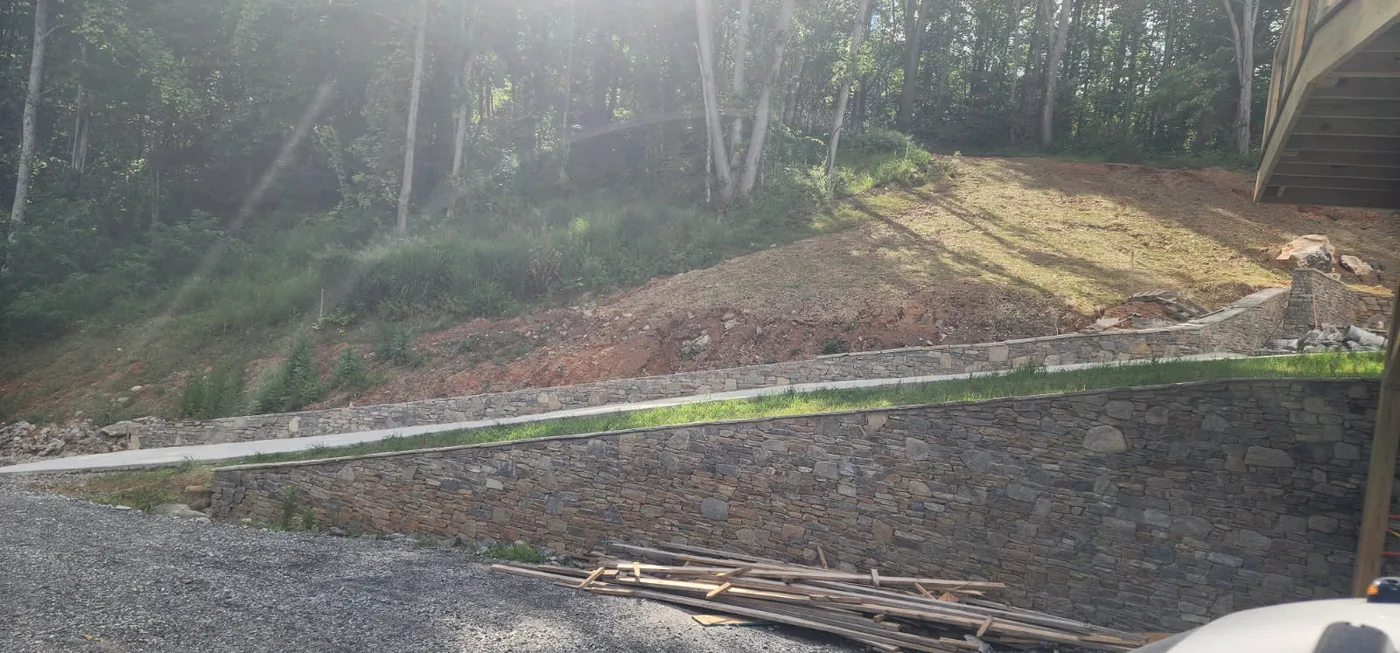
Wood tie walls rot from the inside out. Once the face bows, the soil above the wall has already stopped being held where it was, and replacing timbers is really rebuilding the whole assembly — deadmen, drainage, backfill — rather than swapping lumber. The old wall comes out first, and on these grades that removal is the hardest part of the job.
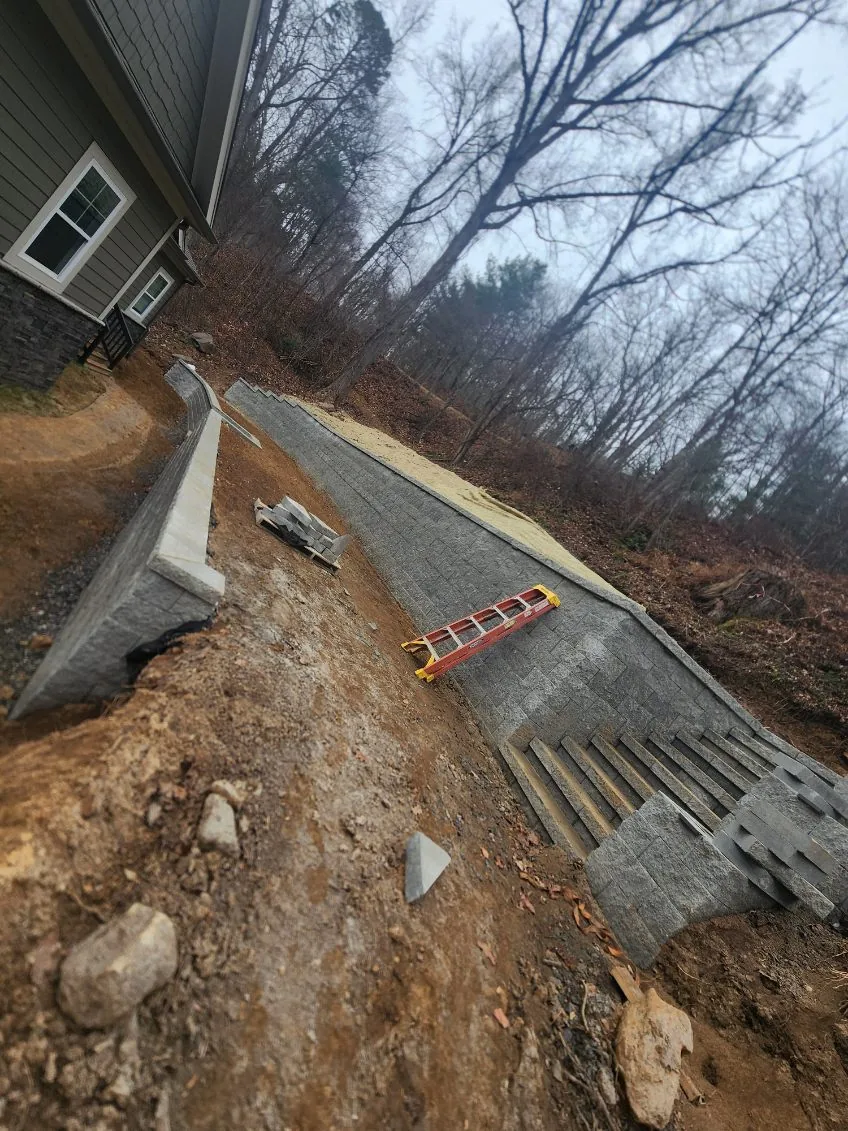
A proper rebuild carries the wall's load back into the hillside with buried anchors, keeps water off it with gravel and a drain line, and steps the wall back as it rises rather than stacking one tall face. Structural timbers also need to be rated for ground contact, and treated wood carries handling and disposal rules worth knowing — the EPA publishes guidance on treated wood use, and old ties pulled from a wall have to go somewhere legitimate.
Walls above a certain height and surcharge start triggering code and engineering review. The NC Office of State Fire Marshal code services and the International Code Council both treat tall retaining walls as structures, not landscaping, and the NC Licensing Board for General Contractors threshold applies once a job passes its dollar figure. On a terraced slope with a wall over four feet, assume some review is coming.
Timber versus the alternatives on a Buncombe slope
Timber is still the cheapest way to hold a low slope, and in a wet mountain climate it's also the shortest-lived. Ties that spend their lives against damp soil and uphill runoff have a working life measured in years, not decades. Where the wall face is visible from the house or the road, many owners here look hard at replacing railroad tie walls with a longer-lived system instead of re-timbering, because the second rebuild is the expensive one.
Small failures don't always need a full rebuild. A bulging section, a rotting face course, or drainage that quit can sometimes be corrected with retaining wall repair at a fraction of replacement cost — but only if the wall's anchors and base are still sound. A wall that has moved as a whole usually can't be patched.
Realistic price bands for this county
The ranges below assume a typical residential wall and standard day access. Steep, tight, or terraced sites run higher, and any scope that needs an engineer's stamp carries its own line item. For a full cost primer before you call anyone, see what a retaining wall costs.
| Scope | Typical range |
|---|---|
| Low wall, under 2 ft, machine access | $3,000–$6,500 |
| Mid-height wall, 3–4 ft, with drainage | $6,500–$11,000 |
| Terraced or stepped wall on a grade | $11,000–$18,000+ |
| Hand-carry or tight-access site | add 20%–40% |
| Engineered or permitted wall | quoted separately |
Treat any bid that doesn't name access, disposal, and drainage as incomplete rather than cheap. Those three items are where mountain-county wall jobs actually go over.
Why water keeps coming back to this county
Asheville's wall failures cluster around rain, not season. The federal record is blunt: 19 declared events touch Buncombe County across 1973-2026, overwhelmingly storm and flood family. Saturated ground pushes on a timber wall from behind, and once the drainage behind the ties is compromised, no amount of new lumber holds. The National Weather Service tracks the rainfall that drives those cycles, and every rebuild here should be designed for the next wet year, not the dry one we're standing in.
Choosing a crew that understands the grade
Ask three questions. Can you walk me through how the wall's load gets carried back into the slope here? Where does the water behind the wall go once you're done? And who signs off if the wall needs engineering? A crew that can answer all three is a retaining crew; one that talks only about lumber is not. Get a written scope that names access method, disposal, drainage, and the depth of the anchors — those four lines separate a wall that lasts from one you'll be replacing again in ten years.