Why Buncombe County yards slope wrong
Asheville and the surrounding county are a patchwork of ridge lines, hollows, and cut-and-fill lots. In neighborhoods like Kenilworth or Oakley, many homes sit on ground that was leveled by pushing soil downhill—which means the backfill against the foundation settles over time and creates a reverse slope. Newer developments off Riceville Road or across the county line in Fairview often have steep, narrow lots where grading was done with a bulldozer, not a transit. The result: water that should flow toward the street runs at the house instead. When that happens, it's not just a puddle problem—it saturates the soil under the footing, which can lead to settling and cracked foundation walls.
The price of fixing a sloped yard
Costs here vary more than flatland towns because of rock, clay, and access. A simple regrade with a French drain—a 3–4 foot deep trench, perforated pipe, clean stone, and a pop-up emitter—typically runs $4,000–$8,000 for a typical house side. If the grade is very steep or calls for a retaining wall—sturdy block or anchored stone—the project climbs to $8,000–$15,000. For a full perimeter drainage system tied to a sump, budget $10,000–$20,000 depending on footing depth and square footage. Here's what you'll see in a ballpark bid from a local masonry and drainage crew:
| Scope of work | Typical price range | What's included |
|---|---|---|
| Regrade only (positive slope to 10 ft) | $1,500–$3,500 | Excavation, topsoil re-spread, compaction, seed or sod |
| French drain (one side of house) | $4,000–$6,500 | Trench, fabric, pipe, stone, new outfall |
| French drain (full perimeter) | $7,000–$12,000 | Continuous drain, sump pump if needed |
| Retaining wall (3–4 ft tall, 20 ft long) | $5,000–$12,000 | Block or stone, drainage aggregate, cap |
For a working estimate that matches your soil and slope, see the backyard hill guide—it breaks down the site-specific factors that move these numbers.
Water and soil: the actual Buncombe problem
This county has seen 19 federal disaster declarations (1973-2026), mostly tied to heavy rain and floods—an honest reminder of how much water falls here. The National Weather Service tracks these rainfall events, and a yard that slopes toward the house turns any of them into a foundation test. The clay subsoil in much of Asheville drains slowly, so a shallow slope that looks fine in June becomes a bog every time the sky opens. That's why code and simple physics demand grading for drainage: the International Code Council specifies a positive slope of 6 inches in the first 10 feet (or an approved alternative).
How to fix it the right way, in order
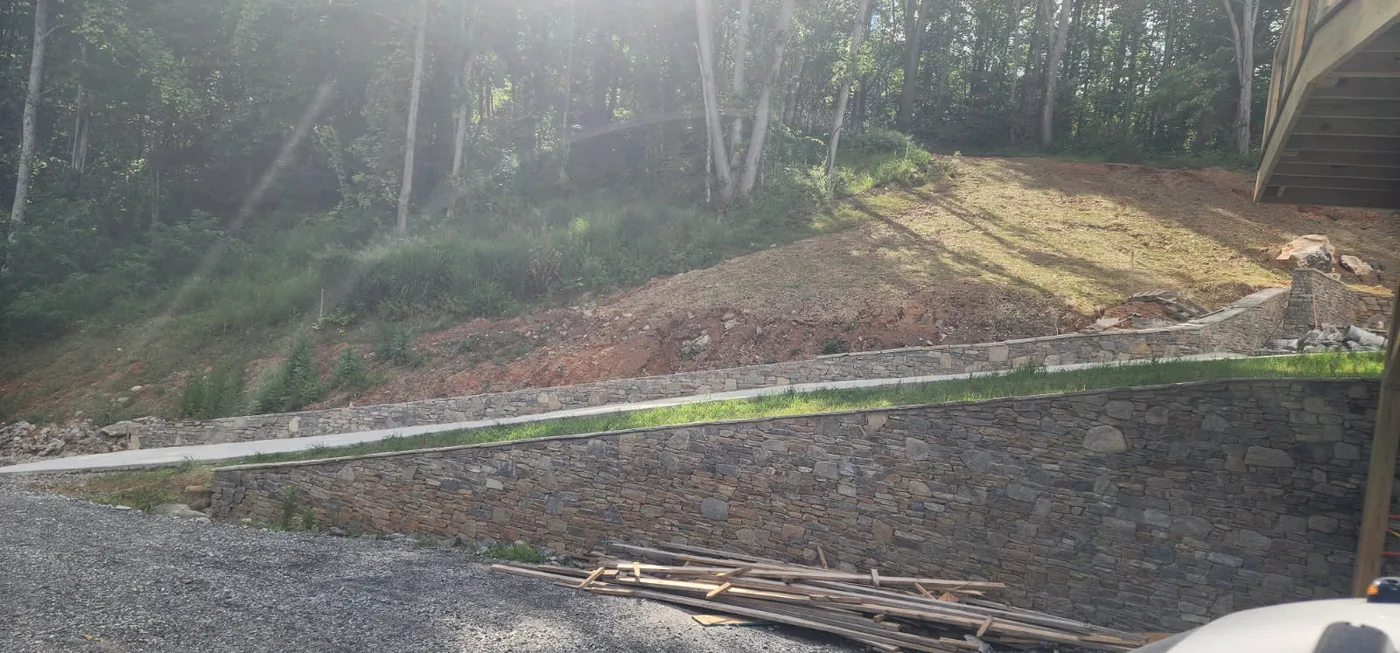
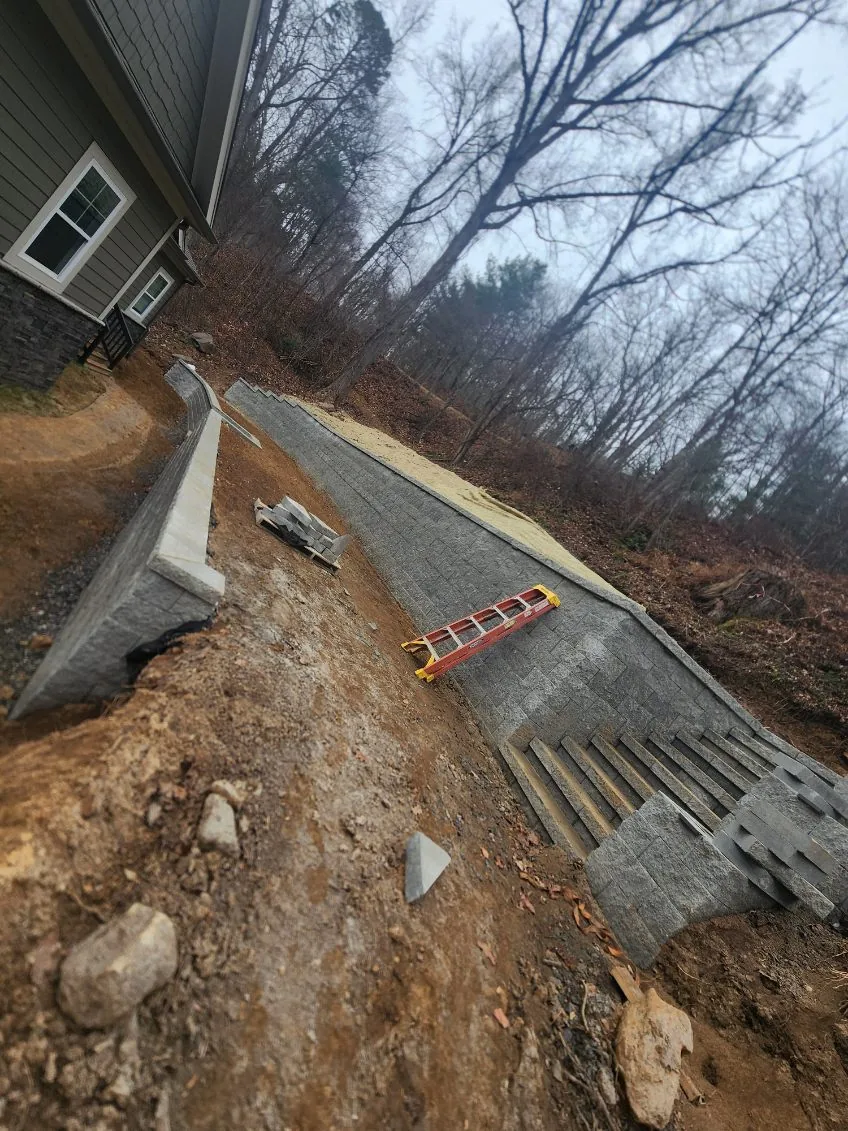
Work through these steps, in this sequence, and you won't waste money on decorative fixes that don't hold water. First, verify the slope. Put a 10-foot level board or a string line at the foundation and measure the drop—if less than 6 inches, you're in regrade territory. Second, move the water before you move the dirt. Reroute downspout discharge at least 5 feet from the house, extend gutter leaders, and consider catch basins where the driveway concentrates flow. Third, install drainage if needed. A French drain along the uphill side of an interior slope—perforated pipe in a stone trench wrapped in filter fabric—can intercept groundwater before it reaches the footing. Fourth, rebuild positive grade with true soil and compaction. Use fill that doesn't settle, slope it away, and transition to your lawn without a birdbath at the corner. Finally, if the grade is too steep to hold without a vertical structure, that's when a retaining wall repair or a new wall from the retaining wall department goes on the list.
For walls over 4 feet (measured from the bottom of footing to top of wall), North Carolina code requires an engineer's design; contractors must hold a license from the NC Licensing Board for General Contractors for work over a certain threshold. The U.S. Department of Housing and Urban Development also sets minimum property standards for drainage that apply to federally insured homes. Any masonry work that affects structural integrity will need a permit and inspection at the county level.
Hiring a mason or drainage crew locally
In Buncombe County, the right person for a sloped yard is usually a mason or hardscape contractor who handles drainage as part of the package. Look for someone who starts with a site walk, checks your foundation type—most Asheville homes are crawl space or slab on clay—and asks where the water goes after it leaves your property. Ask for proof of a stormwater permit if the job changes drainage across a property line; the county enforces that. Verify their license with the NC Licensing Board before signing. Get line items in writing: excavation, material, labor, and a separate line for compaction. If the crew calls a French drain 'fancy gutters,' keep looking.