The four-foot line: when a Haywood patio becomes an engineered job
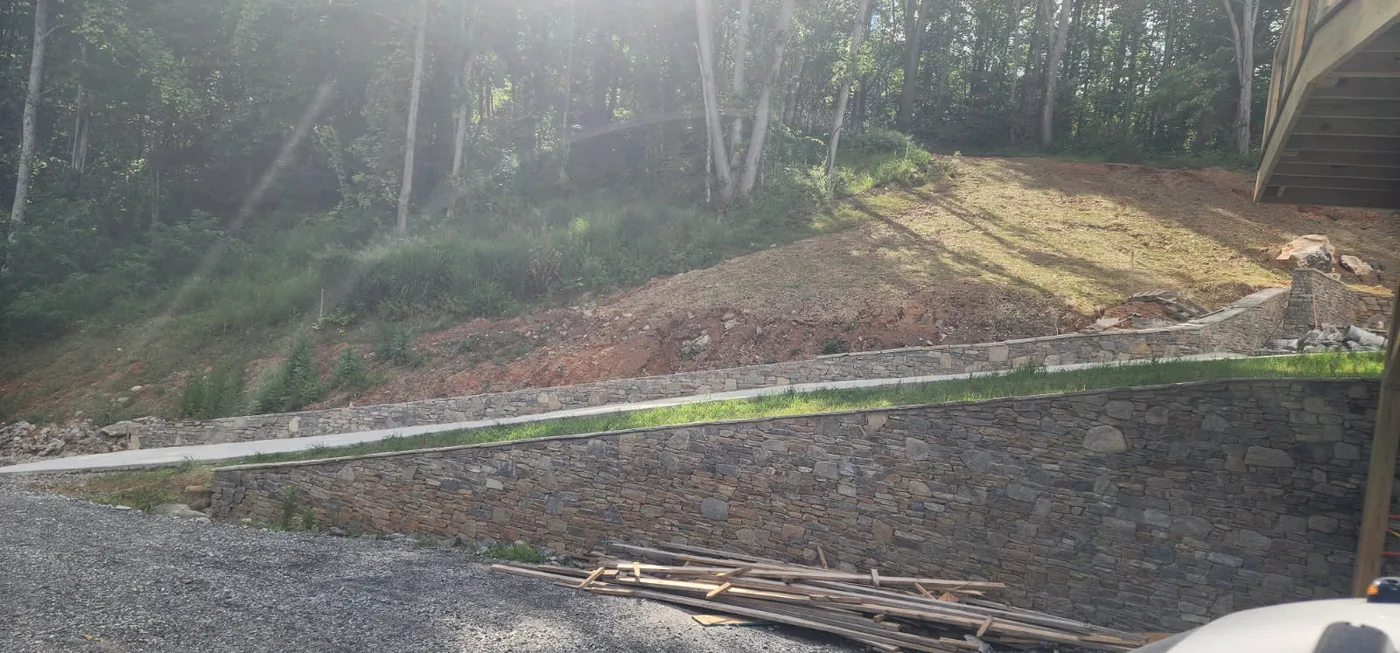
Drive the ridge roads above Waynesville and you will notice something about the nicer patios: most of them sit against a wall. That is not decoration. Yards here fall away from the house, and leveling a patio pad usually means holding back soil somewhere. Which is fine until the wall gets tall.
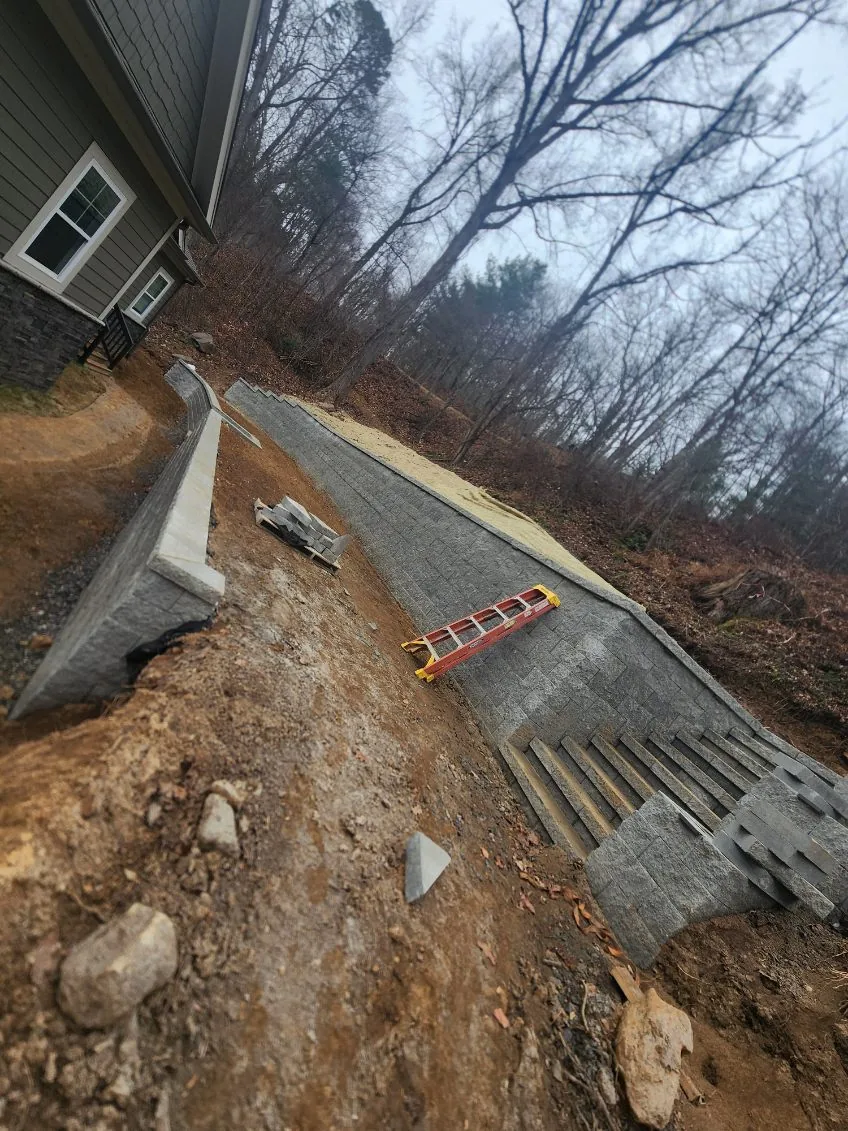
North Carolina's residential code treats retaining walls above roughly four feet of retained height, measured from the bottom of the footing to the top of the wall, as structures that need design by a licensed engineer, and Haywood County inspections follow that. That four-foot line is the single biggest cost swing on patio projects in this county. Below it, a block or dry-stacked wall is a line item. Above it, you add stamped engineering, a permitted wall, deeper footings below frost line, and often geogrid soil reinforcement and drainage behind the wall. On a typical hillside patio, that is frequently several thousand dollars added before a single paver is set.
It also changes who can build it. The state's licensing threshold rules (NC Licensing Board for General Contractors) apply once a job crosses the statutory dollar figure, and engineered wall work is where that line gets tested in practice.
Walk a few of the older neighborhoods off Plott Creek Road or up toward Ratcliffe Cove and you can see the difference between a wall that was engineered and one that was not. The failed ones lean, bow, or have settled toward the house they were supposed to protect. The ones holding up have visible drainage outlets, or a gravel trench behind the cap that tells you soil pressure and water were accounted for. That distinction is not aesthetic. It is arithmetic: the taller the retained soil, the more tons of wet dirt and water press on the wall every time Haywood County gets one of its multi-day mountain rains.
For homeowners on the fence about where their project lands, the honest answer is that no one can tell you from a photo. A mason needs to dig a test hole, find the footing depth of any existing wall, and measure retained height from the actual bottom of that footing. A dry-stacked landscape wall that looks harmless from the patio side can still be retaining more than four feet on the downhill face, and that is the number the code cares about. If you are planning a patio above an existing wall, ask the bidder to measure and document that before they quote, not after.
What homeowners around Waynesville actually pay
Concrete pavers are not the cheapest hardscape in Western North Carolina, and they are not sold by the square foot alone. Base preparation, drainage stone, polymeric sand, edge restraint, cuts, steps, and wall work all sit on top of the paver price. Here is how the scopes break down in this county:
| Scope of work | Typical Haywood range | What drives it |
|---|---|---|
| Small patio, simple grade, basic pavers | $3,800 – $6,500 | square footage, paver tier, access for equipment |
| Mid-size patio, steps or a low seat wall | $7,000 – $14,000 | step count, wall length under 4 ft retained height |
| Patio with engineered wall over 4 ft | $15,000 – $32,000+ | engineering, footing depth, geogrid, drainage tie-in |
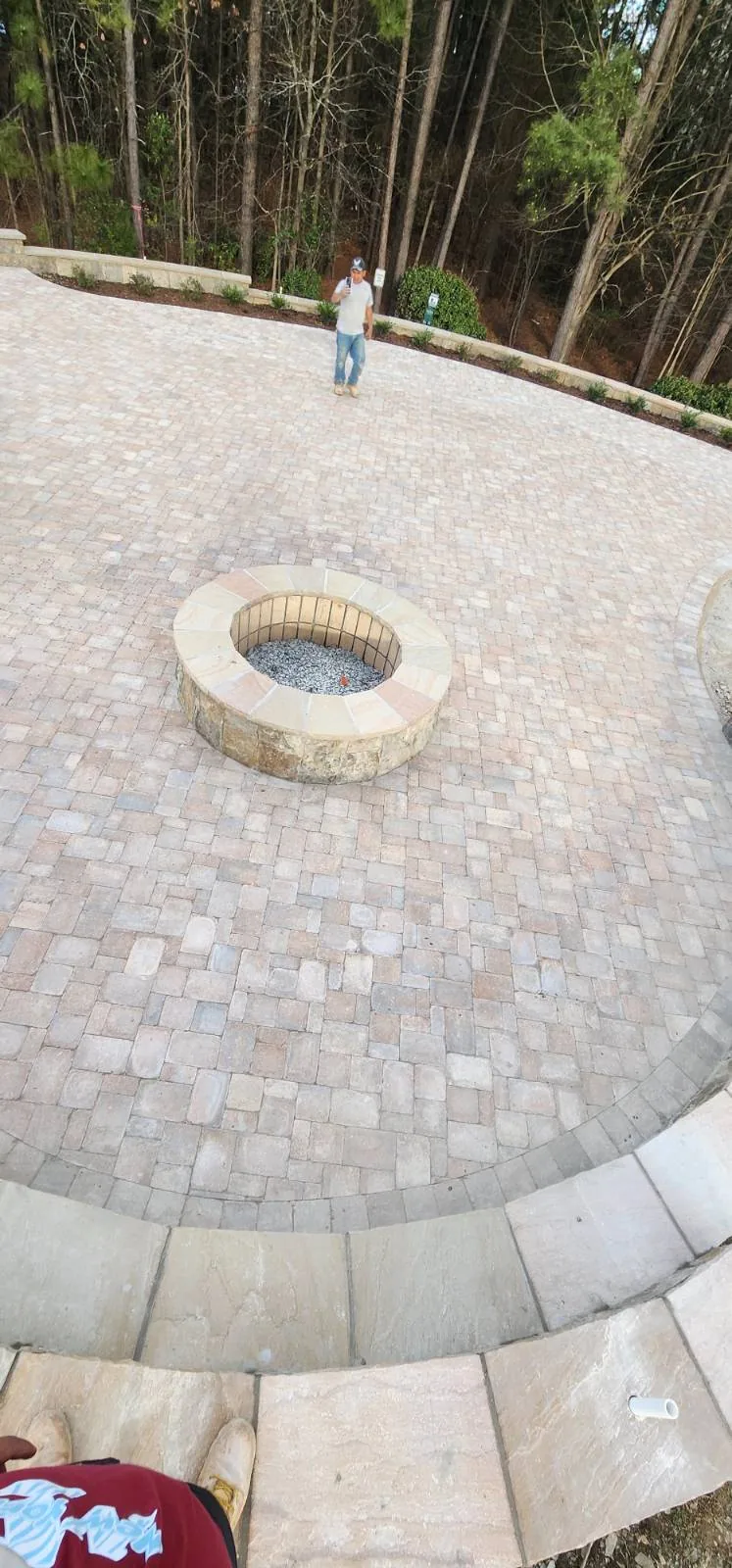
| Premium paver or flagstone-look surface | add $4 – $12 / sq ft | material choice, pattern complexity, cut waste |
Those are working ranges for this county's terrain, not quotes. Be wary of a bidder who names a firm number before walking the slope and checking where water leaves the property.
Access is the quiet variable. In the older streets near downtown Waynesville, a truck and mini-excavator can usually reach a backyard, which keeps excavation and haul-off in the normal range. Out toward Crabtree or up the coves off Highway 276, a driveway too steep or too narrow for a dump truck can push the whole job to wheelbarrow and hand-carry, and that difference shows up in labor hours more than material. Two patios the same size, same pavers, same slope, can price thousands apart for no reason other than how many trips a wheelbarrow has to make.
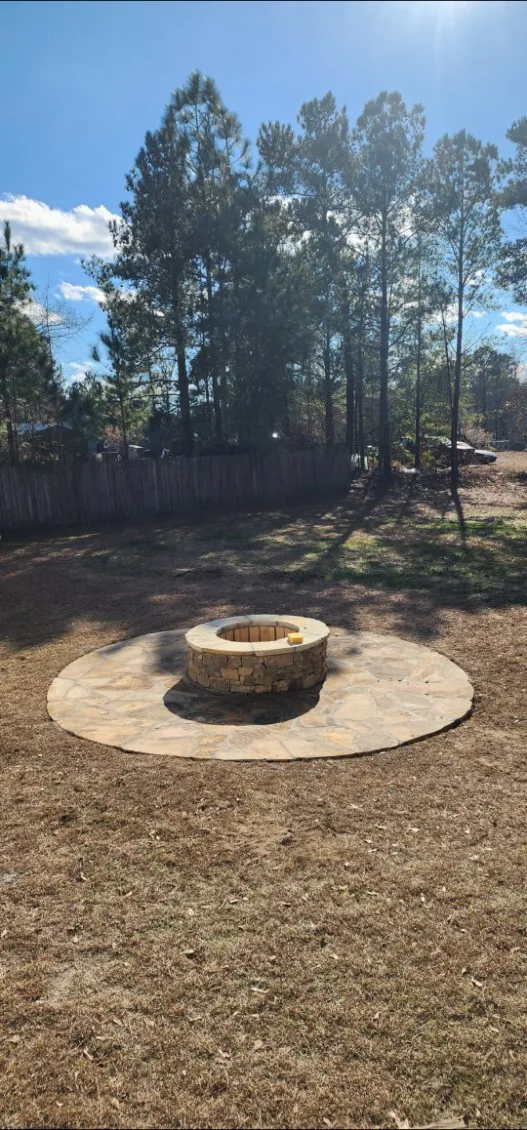
Seating walls under four feet, outdoor kitchen footings, and built-in fire features each add their own line. None of them is exotic in this county, but each one changes the base prep and the sequencing, so a bidder who lumps them into a single per-square-foot number is usually hiding where the money went. Ask for the line items in writing and compare them apples to apples, not total to total.
Why freeze-thaw makes cheap bases expensive here
Waynesville sits in a mountain valley, and the ground here cycles through freeze and thaw far more often than the Piedmont. Water that gets under a patio base, freezes, and lifts is how paver patios fail in Haywood County. A base that would hold up fine in Charlotte will heave and shift here within a few seasons, which is why local builds call for deeper compacted base, proper geotextile separation, and slope away from the house rather than toward it.
That water story is not theoretical. 19 federally declared disaster events have touched Haywood County over a record spanning 1973-2026, most of them storm and flood family, and steep yards shed that rainfall straight toward whatever is downhill. A patio designed without that in mind becomes a drainage problem for the house below it. If your yard already moves water, the retaining wall cost guide for Haywood County covers what the wall-and-drainage combination adds before you pick a surface.
What good local base prep looks like in practice is not glamorous: excavate below the frost-affected zone, compact in lifts, place a separation fabric so native fines do not pump up into the stone, and finish the base so water leaves the patio at a grade that actually carries it away. On the north-facing slopes that stay shaded through winter, the freeze never fully releases, and a shallow base will move every spring. On the south-facing yards that bake in July, the opposite problem shows up: dry, shifting clay that needs moisture conditioning before it will compact at all.
Pavers themselves are not the weak point. The units are dense, and a properly bedded paver handles a Haywood County winter without cracking. When a patio does fail here, the tell is almost always the joints working open, sand washing out, or one corner of the patio sinking, and every one of those traces back to water under the base, not the stone on top.
Permits, codes, and who should be holding the shovel
A ground-level patio on undisturbed soil usually does not need a building permit in North Carolina. A retaining wall above that four-foot line generally does, and the county inspects footing depth and reinforcement on engineered walls before backfill. The governing foundation and structural provisions sit in the NC State Building Code, administered by the Building Code Council, so any contractor telling you walls never need permits on residential work is telling you they have never pulled one.
Two more things worth knowing before you sign. First, if your project includes running gas to an outdoor kitchen or fire feature, that work falls under the state's plumbing, heating, and fire sprinkler licensing board (NC State Board of Examiners), and it is a separate credential from the mason's. Second, any hardscape that changes how stormwater leaves your lot may draw scrutiny under erosion and stormwater rules, and the EPA (epa.gov) publishes homeowner guidance on managing runoff that is worth ten minutes if your yard drains toward a neighbor or a creek.
Inspection timing matters on engineered walls. The footing and reinforcement have to be seen and approved before concrete goes in and backfill goes on, so a wall project that skips that sequence either fails inspection or never gets one. Ask a bidder how they schedule inspection on a wall over four feet, and if the answer is vague, that is your answer about the rest of the job.
For a patio with no wall, no gas, and no grading that changes drainage, most of this is irrelevant and the job is simple. For the hillside patios that define a lot of Haywood County building, it is not, and the paperwork is part of what protects the investment. Pulling a permit is not a red flag. Skipping one is.
Where the money actually goes on a Haywood County patio
Pavers themselves are rarely the biggest line on a local quote. Excavation and haul-off of unsuitable soil, imported compacted base, drainage stone and perforated pipe, edge restraint, and labor for cuts and steps usually add up to more than the surface material. On hillside lots, add machine access limits that force smaller equipment and more hand work, which is why two identical patios a mile apart in this county can price thousands apart.
The honest way to protect yourself: ask every bidder what happens to water that lands on the patio during a hard summer storm, and where it goes afterward. Then compare their answer to the county ranges above. For a broader baseline on surface options, the full paver patio cost guide breaks down material tiers nationally, and if you are weighing natural stone instead, the flagstone patio guide covers how that choice changes base requirements and price.
Beyond water, the other place money hides is design complexity. A running bond rectangle is the fastest and cheapest layout. Herringbone, basketweave, and radial patterns take more cuts and more time, and each curve or diagonal edge adds waste. On a Haywood County slope, curvature is often unavoidable because the patio has to follow the terrace, and a builder who does not charge for that is either eating it or planning to cut corners somewhere less visible.
Finally, plan for what comes after the patio. A well-built paver surface in this county should go years between any real maintenance, but fresh polymeric sand may need topping up after the first hard winter, and a wall with drainage should have the weep points checked after a season of heavy rain. Budget a small annual allowance for that and you avoid the surprise of a settled corner you thought was fixed for good.