What Madison County builds actually use
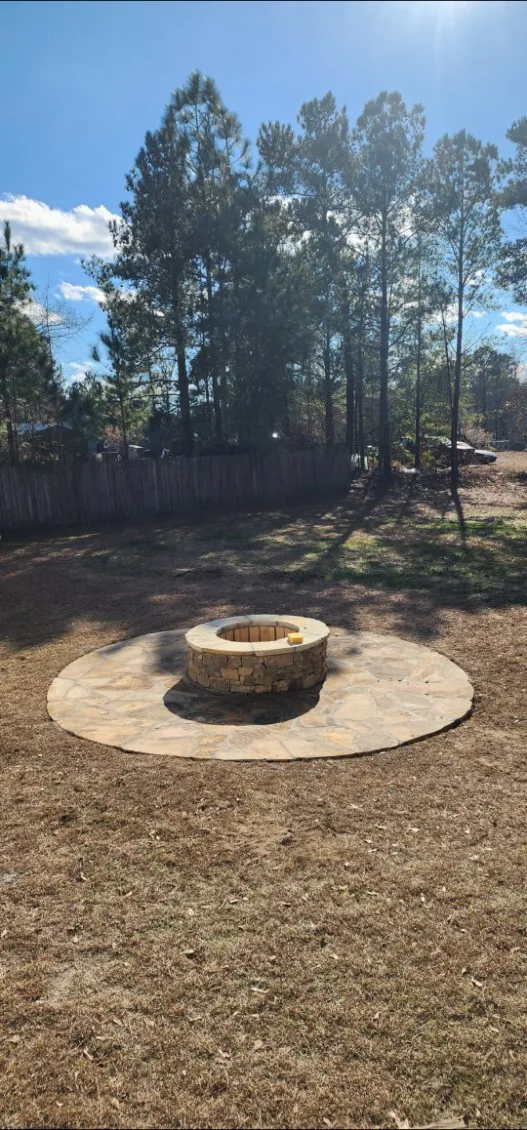
Drive the back roads from Mars Hill down through Marshall and you notice the same thing on almost every improved lot: stone that came off the ground it sits on. Madison County's housing stock is a mix of older farmhouses, mid-century ranches along the French Broad, and a wave of newer builds on ridge and river lots — and the patios that look right on all three tend to be fieldstone, boulder, or block-and-timber rather than the uniform wet-cast pavers you see in a subdivision catalog. That matters for budget. A fieldstone patio sourced partly on-site can beat a mid-grade manufactured paver on material cost, but it burns more labor hours to lay, so the two land in similar territory once the crew is done. Block-and-timber — segmental retaining block for the walls, heavy timber for pergolas and steps — is the value play on a tight slope lot, and it reads as native here in a way it does not in flatland neighborhoods.
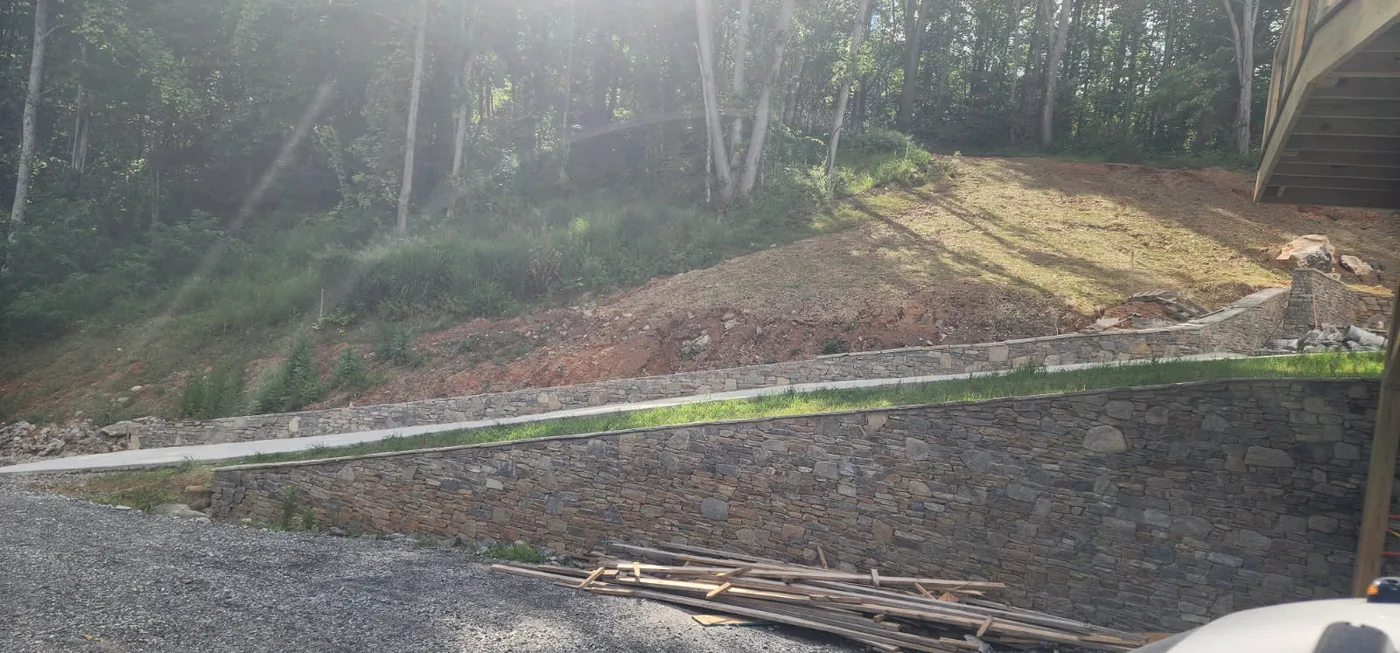
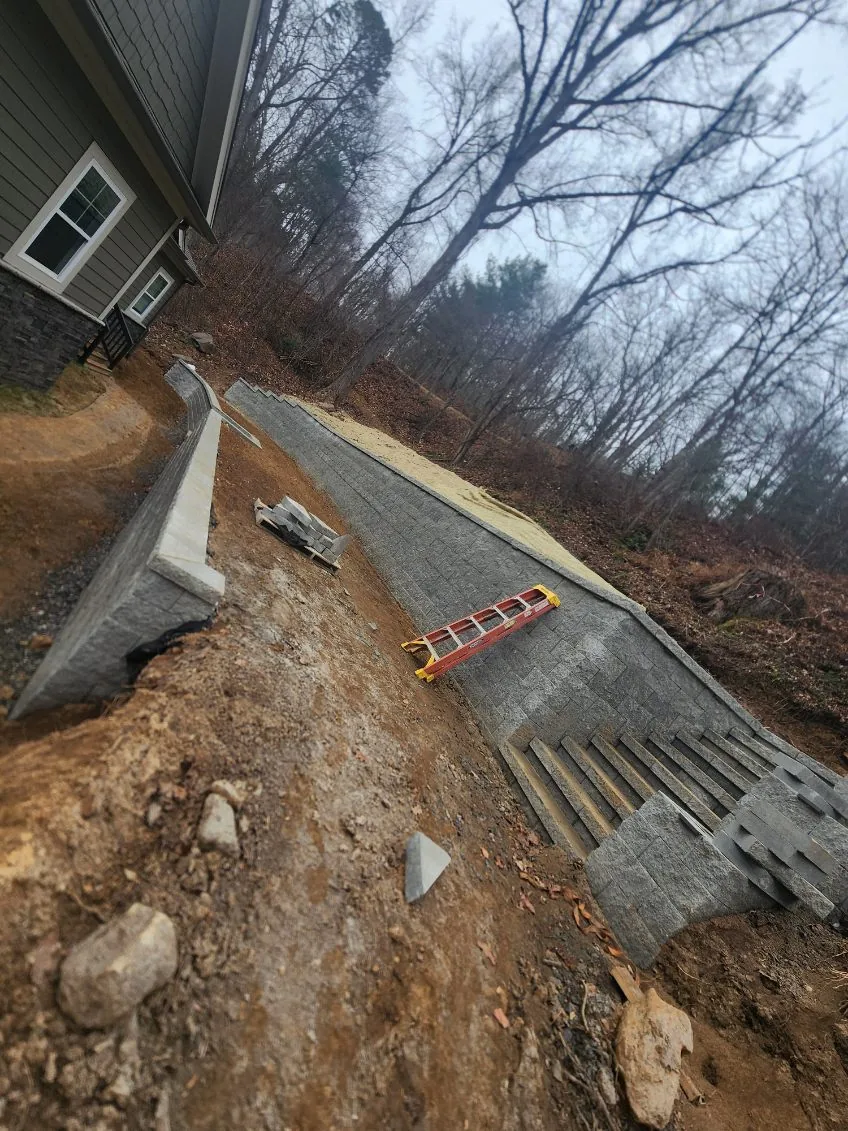
Walk a newer ridge subdivision outside Mars Hill and you see the other side of the coin: builders who clear-cut the lot, left a raw cut bank, and now the homeowner wants a flat place to sit. That is where a terraced build earns its keep, and it is also where we see the most half-finished DIY attempts — a few courses of block stacked without drainage, a layer of sand, pavers laid tight to the house with no fall away from the foundation. Those patios look fine for two summers and then the edge drops. The honest version of this work is less glamorous and more expensive up front, and it is the only version that survives a wet spring in these hollows.
| Scope of work | Typical Madison range | What drives it |
|---|---|---|
| Small block paver patio (under 200 sq ft) | $4,200 – $7,800 | base prep, edge restraint, access |
| Mid-size paver patio (250–400 sq ft) | $7,500 – $13,000 | paver grade, pattern, step count |
| Fieldstone or boulder patio | $9,000 – $16,500 | stone sourcing, thickness, cutting time |
| Terraced patio with retaining wall | $14,000 – $28,000+ | wall height, engineering, drainage tie-in |
| Patio + pergola or timber structure | $18,000 – $35,000+ | span, footing depth to rock, finish |
Those are working ranges for this county, not bids. Any number quoted before someone walks the grade and probes the base is a guess. A Woodfin lot with alley access and a flat backyard prices completely differently from a Weaverville-side ridge parcel where the only way in is a steep gravel drive and the only way to set a wall is by hand. Same square footage, different job.
Why grade and rock change the number
Madison County sits in the Blue Ridge foothills, and a lot of buildable ground here is either cut into a slope or built up on fill. Both cost money. A patio cut into a hillside needs a retaining wall on the low side and drainage behind it, because water that used to sheet off the slope now has a flat surface to sit on and a wall to push against. That work is not optional in this terrain — skip it and the patio heaves or the wall leans within a few seasons. The federal record backs up the water concern: 21 federally declared disaster events have touched Madison County (1978-2026), most of them storm and flood family. That history shows up as saturated subgrades, washed-out base layers, and patios that fail at the edge rather than the middle. Every honest patio quote in this county accounts for where the water goes when it leaves the pavers. Our retaining wall cost guide for Madison County covers what that wall adds on its own.
Rock is the other half of the equation and it is not a metaphor here. A few feet down on many of these lots is weathered schist, gneiss, or a shelf of bedrock that a mini-excavator will not touch. When the digging hits that, either the base depth changes, the wall footing gets pinned to rock with dowels and grout, or the patio gets built up instead of cut in. All three are legitimate. All three change the price, and the change happens after the first day of digging, not before. A quote that assumes dirt all the way down is a quote that will come back with a change order. A quote that walks the lot, pokes the ground with a probe rod, and asks what the neighbor hit when they built their deck is the one you can plan around.
Permits, licensing, and code for hardscape work
A patio itself usually does not require a building permit in North Carolina. A retaining wall over a threshold height does, and so does any attached structure with footings, and Madison County enforces the state residential code through the NC Building Code Council framework. Contractors doing structural or wall work cross into licensing territory under the state's general contractor threshold rules set by the NC Licensing Board for General Contractors once a job value passes the statutory line. If your project includes plumbing for an outdoor kitchen or a fire feature with a water line, the plumber has to hold a license from the NC State Board of Examiners of Plumbing, Heating and Fire Sprinkler Contractors. A patio builder who waves off permits on a tall wall is telling you how they handle everything else too.
Two things trip people up in this county more than anywhere else. First, a terraced wall on a slope lot is often taller than it looks from the street, because the low side is down the hill. Measure the exposed height on the downhill face, not at the top of the patio, and that is the number the code cares about. Second, an outdoor fire feature is a real code conversation, not just a hardscape one. Clearances, chimneys, and gas lines fall under the state fire code administered through the NC Department of Insurance, Office of State Fire Marshal – Engineering Division. Get that right on the front end and the inspection is routine. Get it wrong and the feature gets torn out or re-permitted after the fact, which is the expensive way to learn it.
Picking material against your budget
Three honest trade-offs in this market:
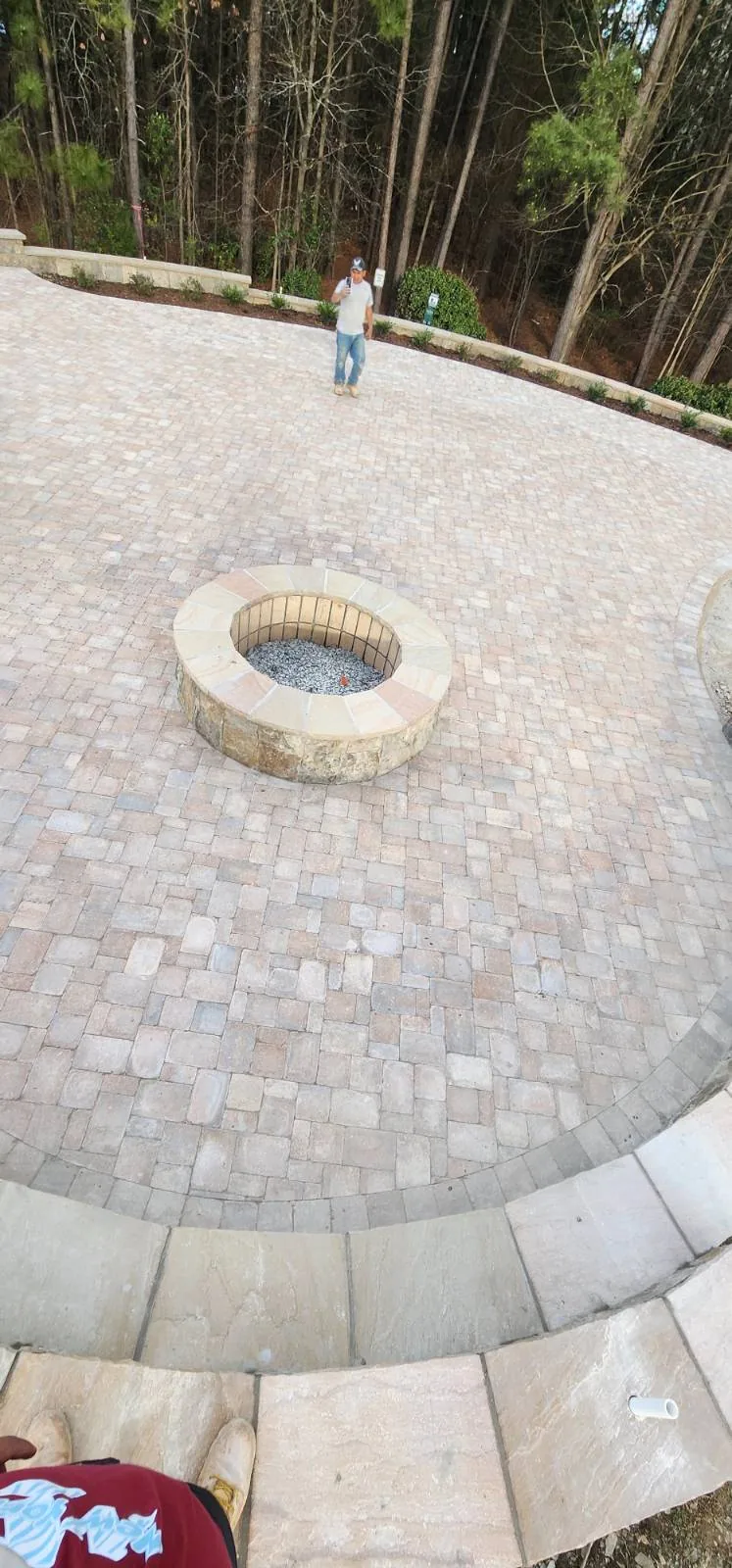
- Manufactured paver vs. fieldstone. Pavers give you a uniform look, predictable pricing, and easy repair. Fieldstone gives you a one-of-a-kind patio that belongs on this land, but costs more in labor and depends on what a stone yard or local source actually has. If you want the fieldstone look without full custom cost, our flagstone patio guide breaks down where the middle ground sits.
- Block-and-timber as the value play. On a sloping Woodfin or Mars Hill lot, a segmental block wall under a timber pergola delivers the most usable outdoor square footage per dollar. It also ages well in this climate.
- Boulder work is a lifestyle choice. Boulder patios and boulder retaining are gorgeous and durable, but they are slow to build and hard to change later. Budget accordingly and commit.
There is a fourth option worth knowing about: mixed material. A block retaining wall with a fieldstone veneer face, or a paver field with boulder steps set into it, lets you spend where it shows and save where it does not. The wall does the structural work in block and wears stone on the visible face. The patio does the flat work in paver and gets its character from the boulders at the edge and the steps. On a hillside lot in this county that combination often lands $2,000 to $5,000 under an all-fieldstone build while reading almost the same from the house.
For the regional picture across the trade, see our full paver patio cost guide.
How to keep a Madison County quote honest
Ask every bidder four things. First, how deep is the base going to be, and what is it made of — a patio on two inches of sand over clay will fail here, and four to six inches of compacted crushed stone is the working standard on our soils. Second, where does the water go when it leaves the pavers — surface pitch, a drain line, or a dry well, and who is responsible for the tie-in. Third, is the wall engineered or just stacked, and does the height trigger a permit under the state code. Fourth, what is the change-order process if they hit rock or soft fill once digging starts, because on these lots they usually hit one or the other. A contractor who answers all four cleanly is worth a premium. One who deflects is not.
Two more things specific to this county. Ask whether the quote includes hauling the spoils off site. A hillside cut generates a surprising volume of dirt and broken rock, and on a narrow ridge drive you may not have anywhere to put it. Disposal is real cost and it belongs in the bid, not on a surprise invoice. And ask how they protect the finished patio during the rest of the project if other trades are still working around the house. A patio that gets driven over by a loaded pickup before the base cures is a patio that never settles right, and that is a conversation that has to happen before week one, not after.
Finally, pay attention to the schedule they propose. In this climate, work that involves excavation and base prep wants to happen in the drier part of the season. A crew that tells you it can cut and build a terraced wall in the middle of a wet spell — and that the rain does not matter — is telling you something about how they think about water. On a slope in Madison County, water is the whole game.